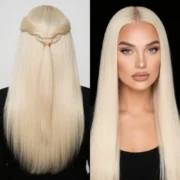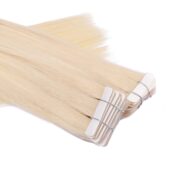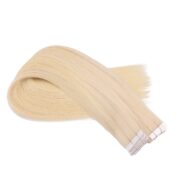

How much do tape hair extensions cost?
Tape-in hair extensions typically cost around $500–$1,000 for a full-head professional installation in the United States, although premium hair, longer lengths, custom colors, and high-end salons can push the total above $1,200. The final price depends on the amount of hair required, the quality of the extensions, the number of tape pieces, and the stylist’s installation and maintenance fees.
The biggest pricing mistake is comparing the cost of the hair with the cost of a complete salon service. Some suppliers quote hair only. Some salons charge separately for installation. Others offer a package that includes the hair, application, blending, and styling.
There is also a recurring cost: tape-in extensions usually need professional removal, re-taping, and reapplication as natural hair grows. This often happens every 6–8 weeks, depending on the installation and the stylist’s recommendation.
This guide explains the cost of tape-in extensions from the first purchase to ongoing maintenance. It also covers the differences between standard and invisible tape-ins, the effect of hair weight and pack size, and how salons and wholesale buyers can compare supplier quotations.
If you are comparing product specifications before purchasing, explore the ALOVEHAIR Tape-In Extensions collection for standard and professional tape-in options.
How Much Do Tape-In Hair Extensions Cost in 2026?
For a full-head professional installation in the US, a practical starting budget is approximately $500–$1,000, with higher prices possible for long, premium, or customized extensions.
The following ranges are general planning references. They are not fixed salon rates, and the exact total depends on what each quote includes.
| Cost Component | Indicative US Budget | What It Usually Includes |
|---|---|---|
| Hair for a full set | $250–$700 | Tape-in extension hair; quantity and length affect the price |
| Initial installation labor | $150–$400 | Professional application, excluding hair when priced separately |
| Initial hair + installation | $400–$1,100+ | A combined first appointment; some salon packages cost more |
| Maintenance / reapplication | $100–$300 per appointment | Removal, cleaning, replacement tape, and reinstallation; services vary |
| Removal only | $50–$250 | Professional removal without necessarily including reinstallation |
| Replacement tape | Depends on tape type and quantity | New adhesive tabs for a reusable set |
Published price guides do not always use the same pricing method. For example, a detailed 18–20-inch retailer calculation places hair and installation at approximately $530–$970, while a service marketplace lists tape-in installation labor separately from the hair. Other salon guides show wider price ranges because they include different service levels and locations.
Before booking, ask for an itemized quote. You should know whether the price includes the hair, the installation, a blending cut, styling, removal, replacement tape, and future maintenance.

What Is Included in the Price of Tape-In Extensions?
A complete tape-in service usually involves more than buying a few packs of hair. Understanding each cost component helps you avoid unexpected charges.
1. The Hair Extensions
The hair itself is often the largest product cost. Prices vary according to:
- Hair type and material quality
- Remy or non-Remy construction
- Cuticle condition and alignment
- Hair length
- Total weight in grams
- Natural, solid, rooted, or highlighted colors
- Standard or invisible tape construction
Human hair tape-ins generally cost more than synthetic alternatives, but material descriptions matter. A product advertised as “100% human hair” does not automatically have the same sourcing, processing, or quality characteristics as another product with the same label.
For salon clients, ask how many packs are needed to achieve the planned result. For professional buyers, compare the price per gram and the exact product specification rather than relying only on the price per pack.
ALOVEHAIR offers standard tape-in human hair extensions for professional use, with product-specific options for length, color, and packaging.
2. Installation Labor
Tape-in extensions are applied by sandwiching a small section of natural hair between two adhesive extension tabs. The stylist must section the hair, place the tabs accurately, apply even pressure, and check that the finished rows blend naturally.
Installation fees depend on the stylist’s experience, location, the number of tape pieces, and the complexity of the client’s hair.
A simple volume application may cost less than a full-length transformation involving multiple colors and a detailed blending cut.
Ask whether the installation price includes:
- Consultation and color matching
- Washing or preparation
- Application of all tape pieces
- Cutting and blending
- Final styling
Some salons quote an application fee only. Others sell a complete hair-and-service package.
3. Removal and Reapplication
Tape-in extensions move away from the scalp as natural hair grows. The extensions eventually need to be removed and repositioned closer to the roots.
A professional maintenance appointment may involve:
- Applying an appropriate adhesive remover.
- Separating the tape tabs without pulling the natural hair.
- Removing residual adhesive.
- Cleaning and preparing the extension panels.
- Applying fresh replacement tape.
- Reinstalling the extensions at the appropriate distance from the scalp.
- Checking the placement and blending.
The exact process depends on the tape system and the condition of the hair. Ask whether the salon charges one combined fee or separates removal, cleaning, re-taping, and reapplication.
For a closer look at the process, read the step-by-step guide to installing and removing invisible tape extensions.
Standard Tape-In vs. Invisible Tape-In: Which Costs More?
Not all tape-in extensions have the same construction. Standard tape-ins use an adhesive tab attached to a hair weft. Invisible tape-ins are designed to conceal the attachment area more closely, often by covering the base with hair or using a different base construction.
| Comparison | Standard Tape-In | Invisible Tape-In |
|---|---|---|
| Attachment appearance | Flat adhesive tab | Designed to hide the base more discreetly |
| Construction | Conventional pre-taped weft | Hair-covered or specialized thin base, depending on design |
| Main selling point | Practical application and broad availability | More concealed appearance |
| Product cost | Depends on hair and adhesive specifications | May cost more because of construction and processing |
| Best buying consideration | Hair quality, tab size, and adhesive performance | Base thickness, hair coverage, and attachment visibility |
| Maintenance | Professional removal and re-taping | Professional removal and re-taping |
Invisible tape-ins may carry a higher product price, but the difference is not fixed across suppliers. Some standard products made with high-quality human hair can cost more than entry-level invisible designs.
ALOVEHAIR offers a separate Invisible Tape-In Extensions range. Its Cuticle Intact Invisible Tape-In product is designed for salons and stylists looking for a more discreet attachment.
When comparing two products, do not pay a premium based on the word “invisible” alone. Ask for close-up photographs of the base, the adhesive tab, and the hair coverage. A physical sample is even better.

How Many Tape-In Extensions Do You Need?
The amount of hair required has a direct effect on the total price. A client who wants extra volume around the sides may need far fewer extensions than someone seeking a full transformation with added length and density.
There is no single pack count that works for everyone. Natural hair density, head size, length, desired fullness, and the width and weight of each tape panel all matter.
Estimate the Quantity Before Comparing Prices
| Desired Result | What the Stylist Needs to Assess | Cost Implication |
|---|---|---|
| Volume only | Target areas and natural hair density | Usually less hair than a full-length transformation |
| Moderate volume and length | Natural length, density, and blending requirements | A medium amount of hair may be sufficient |
| Full-head length and volume | Head coverage, natural density, and desired length | More packs and higher initial hair cost |
| Very thick or long result | Additional coverage and density through the lengths | Higher product cost and potentially more installation time |
Some manufacturers use packs of 40–50 grams, while other products are sold in larger 100-gram packs. The pack size is not standardized across suppliers.
For example, specific ALOVEHAIR tape-in product listings show a 100g / 40-piece configuration and indicate that a full-head set may require 2–3 packs for that particular product. This is a product-specific reference, not a recommendation for every client or every tape-in system.
Why “Pieces” and “Pairs” Matter
Tape-in extensions are normally applied as a sandwich: one tape panel is placed below a section of natural hair and another panel is placed above it.
However, suppliers do not always describe quantities in the same way. One supplier’s “40 pieces” may refer to individual tape panels, while another may describe a pair or completed sandwich as one piece.
Before comparing two quotes, confirm:
- Does one piece mean one tape panel or one pair?
- How many finished sandwiches can be made from one pack?
- What is the total net hair weight?
- What is the width of each tape panel?
- Is the listed weight for hair only or does it include the attachment base?
This small detail can make a big difference when comparing the cost per application.
7 Factors That Affect Tape-In Hair Extension Prices
1. Hair Quality and Processing
Hair quality is one of the most important price factors. Professional buyers should ask about the hair’s source, sorting, cuticle condition, processing history, and quality-control procedures.
Remy hair generally refers to hair arranged with the cuticles aligned in the same direction. Cuticle-aligned hair can help reduce friction and improve manageability, but the final result also depends on the quality of the raw material and how it is processed.
Be careful with grade labels such as 8A, 10A, or 12A. These are not universal, independently regulated grading standards. Request a physical sample and written specifications instead of treating a grade number as proof of quality.
You can learn more about product selection in ALOVEHAIR’s guide to the best 100% human hair tape-in extensions.
2. Hair Length
Longer hair generally costs more because the supplier needs suitable raw material with enough usable length.
A 16-inch set and a 24-inch set should not be compared as equivalent products simply because they have the same total weight.
When requesting a quote, specify the length you need and ask how the supplier measures it. Also confirm whether the measurement refers to the hair length alone or includes the tape base.
3. Total Hair Weight
More hair usually means a higher material cost. However, the relationship between weight and appearance is not always linear.
A thick natural hairstyle may require more hair to achieve a balanced result, while a fine-haired client may need a lighter set and more careful placement.
For salons, the correct quantity should be determined through a professional consultation. For wholesalers, price comparisons should always use the same total weight and hair length.
4. Color Complexity
Natural black and brown shades are generally easier to compare than complex multi-tone products.
Rooted blondes, balayage, highlights, piano colors, and custom blends may require additional sorting or color development. They may also require more work to match a client’s natural hair.
If you plan to buy several colors, ask whether each shade has the same price and minimum order quantity. A supplier may have different pricing for stock shades and custom-developed colors.
5. Adhesive Quality and Tape Specifications
The tape tab is a small part of the product, but it has a major effect on the application experience.
Important specifications include:
- Adhesive type
- Tab width and thickness
- Bond strength
- Flexibility
- Residue after removal
- Performance under normal washing and styling routines
- Compatibility with replacement tape
A low-cost extension with unreliable adhesive may create more maintenance problems and higher service costs.
Professional buyers should request adhesive samples or test a complete product under realistic application, wear, and removal conditions.
6. Stylist Experience and Location
Salon labor prices vary considerably by city, salon positioning, and stylist experience.
A stylist who specializes in extensions may charge more than a general salon, but the relevant question is whether the service includes accurate sectioning, correct placement, proper blending, and professional removal.
A cheaper installation is not a good value if the tabs are placed too close together, too close to the scalp, or in sections that cannot support the weight.
7. Maintenance and Reuse
Tape-in hair may be reused if the hair remains in good condition and is suitable for another application. However, the original adhesive tabs are normally replaced during maintenance.
The number of successful reuse cycles depends on the hair quality, processing, care routine, removal technique, and storage.
Do not assume that every set will last a fixed number of months. Ask the supplier how the product should be maintained and ask the stylist to assess the hair before each reapplication.

How Much Does Tape-In Maintenance Cost?
Tape-in extensions commonly need professional maintenance every 6–8 weeks, although the schedule may vary according to natural hair growth, product construction, and the stylist’s recommendation.
Published US service guides commonly show maintenance or move-up fees around $100–$300 per appointment. Some salons charge by the number of packs, while others use a flat service price.
| Maintenance Item | What You May Pay For |
|---|---|
| Removal | Separating the extension panels from natural hair |
| Cleaning | Removing adhesive residue from the tabs and preparing the hair |
| Replacement tape | New adhesive tabs for the next application |
| Reapplication | Positioning the extensions again after natural hair growth |
| Blending | Adjusting the haircut or layers after reinstallation |
| Replacement hair | New extension hair if the original set is no longer suitable |
Estimate the Maintenance Cost Over One Year
If you wear tape-ins continuously and maintain them every 6–8 weeks, you may have approximately 6–8 maintenance appointments across a year.
For example:
- Six appointments at $100 each = $600 in maintenance labor.
- Six appointments at $200 each = $1,200 in maintenance labor.
- Eight appointments at $300 each = $2,400 in maintenance labor.
These are simple budget calculations, not a prediction of what every client will pay. Some salons charge less, some charge more, and some offer maintenance packages.
The cost of replacement tape, new hair, removal, and additional color services may be separate.
A more useful way to think about tape-in pricing is:
Total ownership cost = Initial hair + initial installation + maintenance appointments + replacement tape + replacement hair (if needed) + removal + additional salon services.
That is why a tape-in set with a slightly higher initial price may provide better value if it retains its quality through multiple professional reapplications.
Can Tape-In Hair Extensions Be Reused?
Yes, many human hair tape-in extensions are designed for reuse. However, the hair and the adhesive tape have different lifespans.
During maintenance, the stylist removes the old tabs, cleans the extension base, applies new tape, and reinstalls the hair. The original adhesive is not simply expected to last through every application.
The hair may remain usable for multiple reapplications if it has been cared for properly and is still in good condition. Reuse depends on:
- Hair quality and processing
- Heat styling and chemical treatments
- Washing and drying habits
- Brushing and detangling
- Removal technique
- Adhesive residue and base condition
- How the extensions are stored between appointments
For the best result, follow professional care instructions and avoid applying conditioner, oils, or heavy styling products directly to the tape attachment area.
Read the ALOVEHAIR hair extension care and maintenance guide for washing, drying, brushing, and maintenance practices.
Tape-In Extensions vs. Other Hair Extension Methods: Which Is More Cost-Effective?
Tape-ins are often attractive because the initial installation can be relatively quick. However, the lowest initial price does not always mean the lowest long-term cost.
| Extension Method | Main Cost Driver | Maintenance Consideration |
|---|---|---|
| Tape-In | Hair packs and professional application | Removal, re-taping, and reapplication every several weeks |
| Invisible Tape-In | Hair quality and specialized base construction | Similar tape maintenance, with attention to the concealed base |
| K-Tip | Individual bonded strands and installation time | Professional removal and replacement rather than tape move-ups |
| I-Tip | Individual strands and bead application | Bead adjustment and repositioning |
| Hand-Tied Weft | Hair quantity, rows, and installation method | Row maintenance and repositioning |
| Clip-In | Initial purchase of a removable set | No routine salon move-up required |
Choose tape-ins when you want a flat, semi-permanent attachment and can commit to regular salon maintenance. Other methods may be more suitable depending on your lifestyle, styling preferences, and natural hair condition.
For a broader comparison, read different types of human hair extensions.
You can also compare I-Tip hair extensions and K-Tip hair extensions if you are considering individual strand methods instead of adhesive panels.
Clients with fine or thin natural hair should be particularly careful about weight, placement, and attachment size. A stylist should assess the natural hair before recommending a full set. Our guide to hair extensions for thin hair discusses the importance of lightweight products and balanced installation.
How Much Do Tape-In Extensions Cost for Salons and Wholesale Buyers?
The retail cost paid by a salon client is different from the factory price paid by a salon, distributor, or private label brand.
A consumer’s bill may include the hair, installation, blending, and future maintenance. A professional buyer must consider product specifications, customization, packaging, shipping, and the cost of replenishing the same product in future orders.
What Determines the Wholesale Price?
| Wholesale Pricing Factor | Details to Confirm |
|---|---|
| Hair material | Remy, cuticle-aligned, virgin, or other clearly defined specification |
| Hair length | Available lengths and whether custom lengths are possible |
| Total weight | Net hair weight per pack |
| Piece count | Individual tape tabs or completed pairs |
| Tape size | Width, length, thickness, and base material |
| Adhesive | Type, strength, flexibility, and removal performance |
| Color | Stock shades, rooted colors, balayage, or custom blends |
| Packaging | Bulk bags, salon packaging, or retail boxes |
| Branding | Logo labels, custom cards, and private label packaging |
| Order quantity | MOQ by color, length, weight, and product type |
| Shipping | Freight method, destination, and agreed trade terms |
Why the Price per Piece Can Be Misleading
A supplier may quote a low price per piece but provide a different weight, width, or construction from another supplier.
For example, a pack containing 40 tape panels is not automatically equivalent to a pack containing 40 completed sandwiches. The number of usable applications may therefore be different.
To compare quotations, request all of the following:
- Price per pack.
- Total net hair weight.
- Number of individual tape panels.
- Number of completed pairs or sandwiches.
- Hair length and color.
- Tape dimensions and adhesive specification.
- Whether replacement tape is included.
- Packaging and shipping costs.
You can then compare the price per gram and the price per completed sandwich instead of relying on one headline unit price.
ALOVEHAIR Tape-In Manufacturing and Private Label Options
ALOVEHAIR is a China-based hair extension manufacturer supplying professional salons, wholesalers, and hair businesses. Its product range includes standard tape-ins and invisible tape-ins, alongside other extension methods.
The company describes its tape-in products as using Remy human hair and offers different product configurations for professional buyers. Its website also presents customization options for colors, lengths, textures, and packaging.
For buyers comparing product specifications, the standard Tape-In Extensions range and the Invisible Tape-In range are useful starting points.
ALOVEHAIR’s published product listings include a 100g/40-piece configuration for specific tape-in products, with product pages indicating 2–3 packs for a full-head set. These details should be checked against the exact SKU and target application before ordering.
For salon brands and distributors, the company also offers private label and customized packaging discussions. Learn more about the company and its manufacturing background on the ALOVEHAIR About Us page.
Important: Product prices are not publicly displayed for all ALOVEHAIR tape-in SKUs. A reliable quotation should be based on the required length, color, weight, piece count, tape construction, quantity, and packaging. Do not assume that one general MOQ or lead time applies to every customized product.
How to Choose a Tape-In Hair Extension Supplier Without Overpaying
The cheapest supplier is not necessarily the most cost-effective supplier. A professional buyer should evaluate hair quality and adhesive performance together.
1. Request a Complete Product Specification
Do not accept a quotation that only says “100% Remy Tape-In Hair.”
Ask for a written specification showing the material description, length, weight, piece count, tape dimensions, base construction, color, and packaging.
2. Test the Hair and Adhesive Separately
Hair quality and adhesive quality are two different performance factors.
For the hair, check:
- Shedding during combing
- Tangling after washing
- Dryness and changes in texture
- Color consistency
- Root-to-end density
For the adhesive system, check:
- Initial bond strength
- Flexibility during normal wear
- Resistance to ordinary handling
- Residue after professional removal
- Compatibility with replacement tape
A good-looking sample is not enough. The supplier should be able to explain the material and adhesive specifications.
3. Confirm the Reuse Process
Ask how many reapplications the supplier expects the hair to support under the recommended care routine. Confirm which removal products and replacement tapes are compatible.
ALOVEHAIR offers replacement tape accessories for professional buyers. Confirm the dimensions and compatibility before ordering replacement adhesive for a specific extension base.
4. Compare Repeat-Order Consistency
For a salon or private label brand, one successful sample is only the starting point. The supplier should be able to repeat the approved length, color, weight, and tape construction in future orders.
Keep a reference sample and a written specification sheet. Record color references, product measurements, and agreed tolerances.
5. Calculate the Landed Cost
For wholesale orders, the factory price is not the final cost.
Landed cost = Product cost + customization + packaging + freight + insurance (if applicable) + import duties and taxes + other agreed charges.
Use the landed cost to calculate your wholesale selling price and retail margin. This is more useful than comparing factory prices without considering delivery and import expenses.
Questions to Ask Before Buying Tape-In Extensions
Before placing a salon order or choosing a manufacturer, ask these questions:
- Is the hair 100% human hair, and what is the material specification?
- Is the hair Remy or non-Remy?
- What are the available lengths and colors?
- What is the net hair weight per pack?
- How many individual tape panels are included?
- How many completed pairs or sandwiches can one pack make?
- What are the tape tab dimensions and base construction?
- What type of adhesive is used?
- Can the hair be reused with replacement tape?
- What is the recommended maintenance interval?
- What is the MOQ for stock and custom products?
- Are OEM, ODM, and private label packaging available?
- What is the production lead time for the exact specification?
- How does the supplier inspect adhesive performance and color consistency?
- What happens if the bulk order does not match the approved sample?
A reliable supplier should be able to answer these questions clearly and provide product-specific information rather than relying only on general marketing claims.
Frequently Asked Questions About Tape-In Extension Costs
How much do tape-in hair extensions cost for a full head?
A full-head professional installation in the US commonly requires a budget of around $500–$1,000, although longer hair, premium material, custom colors, and high-end salons can cost more. Always confirm whether the quote includes hair, installation, blending, and styling.
How much do tape-in extensions cost without installation?
A full set of tape-in hair may cost approximately $250–$700 as a broad US planning reference. The actual amount depends on length, hair quality, quantity, and brand. Some sellers price by the pack, so check the total grams and number of pieces before comparing products.
How much does it cost to install tape-in extensions?
Salon installation labor is often quoted separately from the hair. Public US service listings show examples around $150–$350, while some retailer pricing guides use a $150–$400 planning range. Your stylist’s quote may differ by location, number of tape pieces, and service complexity.
How often do tape-in extensions need maintenance?
Many professional tape-in systems need maintenance approximately every 6–8 weeks. Some stylists recommend a shorter or longer interval depending on natural hair growth, extension placement, and adhesive performance.
How much does tape-in maintenance cost?
A common US planning range is about $100–$300 per appointment. Confirm whether this includes removal, cleaning, replacement tape, reapplication, and blending, because salons may price these services separately.
Can tape-in hair be reused?
Many human hair tape-in products can be reused if the hair remains in suitable condition. The old adhesive must be removed and replaced before reapplication. The number of reuse cycles depends on hair quality, care, and professional handling.
Are invisible tape-in extensions more expensive?
They may cost more because of their base construction and the work required to create a more concealed attachment. However, the price difference depends on the product and supplier. Compare the actual base design, hair quality, weight, and adhesive specifications.
Are tape-in extensions cheaper than K-tip extensions?
Tape-ins often have a lower initial installation cost because panels can be applied more quickly than individual K-tip bonds. However, tape-ins require regular removal and reapplication, so the long-term cost should be compared over the full period of use.
Do tape-in extensions damage natural hair?
Tape-ins do not automatically damage natural hair, but poor placement, excessive weight, delayed maintenance, and incorrect removal can cause breakage or traction-related problems. A qualified stylist should assess natural hair condition and select an appropriate weight and placement plan.
How much do wholesale tape-in extensions cost?
Wholesale prices depend on hair quality, length, weight, color, tape construction, order quantity, customization, and packaging. A useful quotation should show the price per pack, net grams, piece count, tape dimensions, and whether the quoted pieces are individual tabs or pairs.
Does ALOVEHAIR offer wholesale tape-in extensions?
ALOVEHAIR lists standard and invisible tape-in extensions for professional and wholesale buyers. The company also provides customization and private label options. Contact the manufacturer with your required length, color, weight, piece count, and packaging details to request a product-specific quotation.
Final Thoughts: Compare the Full Cost, Not Just the First Price
Tape-in hair extensions can be a practical option for people who want natural-looking length and volume without the longer installation time associated with some strand-by-strand methods. A realistic budget should include the hair, initial installation, regular maintenance, replacement tape, and possible hair replacement.
For consumers, the best way to avoid unexpected expenses is to request an itemized salon quote and understand the maintenance schedule before installation.
For salons, distributors, and private label brands, the key is to compare suppliers using the same hair weight, length, tape dimensions, piece count, adhesive specification, and packaging requirements.
ALOVEHAIR offers standard and invisible tape-in products for professional buyers, with options for product customization and private label discussions. Start with a clear product specification, request a sample, and confirm the exact commercial terms before placing a bulk order.
Explore the ALOVEHAIR Tape-In Extensions collection or contact the team to discuss your wholesale and private label requirements.

Alove Hair is a professional Chinese manufacturer of premium 100% Remy human hair extensions, wigs, and hair systems. Established in 2014, the company specializes in supplying global salons and distributors with high-quality, cuticle-intact hair products and offers comprehensive OEM/ODM private label services.