
Sew In Extensions Pros and Cons
Sew-in hair extensions are a popular choice for people who want longer, fuller hair without using adhesive bonds. They can create impressive volume, provide a secure attachment, and work particularly well for clients whose natural hair can support a braided or beaded installation.
However, sew-in extensions are not the right solution for everyone. Installation tension, natural hair density, scalp condition, extension weight, and maintenance habits all affect the final result. A sew-in that looks beautiful on the first day may become uncomfortable or cause breakage if the installation is too tight or the hair is left in for too long.
In this guide, we explain the real pros and cons of sew-in extensions, compare them with tape-in, clip-in, and micro ring methods, and share practical advice for choosing the right hair, weight, and maintenance schedule.
What Are Sew-In Hair Extensions?
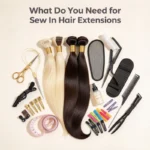
Sew-in hair extensions are wefts of hair attached to a prepared base of natural hair using a needle and thread. In a traditional sew-in, the stylist braids the natural hair into cornrows and sews the wefts onto those braids. Some modern methods use a beaded row or another prepared base instead.
The main difference between sew-in extensions and adhesive methods is how they secure the hair. Sew-ins rely on stitching and a supporting base rather than tape or glue.
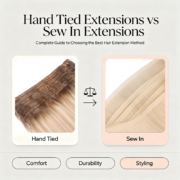
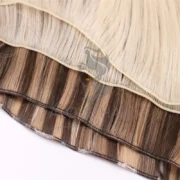
Most sew-in extensions are sold as machine-made or hand-tied wefts. The choice affects the weft’s thickness, flexibility, coverage, and suitability for different installation techniques.
Common types of sew-in extensions
- Machine weft extensions: Made by stitching hair together with a machine. They are generally durable and suit fuller styles.
- Hand-tied weft extensions: Made with a finer, more flexible construction. When installed correctly, they can create a relatively discreet result but require careful handling.
- Genius or flexible wefts: Designed to offer greater flexibility in placement and customization, depending on the manufacturer’s construction.
- Traditional sew-in weaves: Often use braided natural hair as the base and may include a closure or frontal for additional scalp coverage.
The best option depends on the client’s natural hair, desired fullness, styling preferences, and the stylist’s technique.
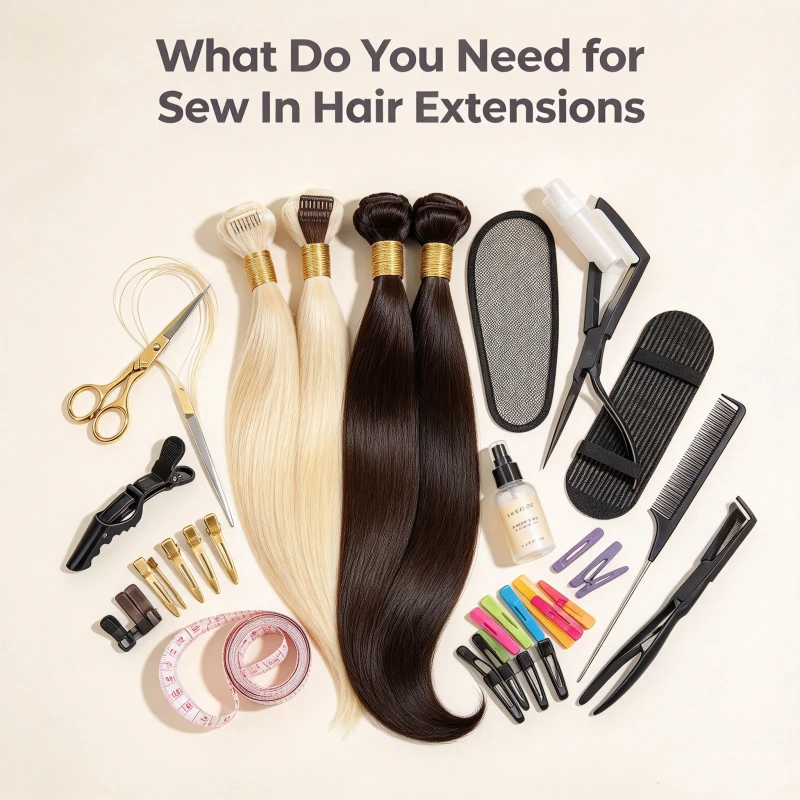
Sew-In Extensions Pros and Cons at a Glance
| Factor | Advantages | Disadvantages |
|---|---|---|
| Volume | Excellent potential for full, thick styles | Excessive hair can create too much weight |
| Attachment | No tape or glue required for a traditional sew-in | Depends on secure braids, stitching, and correct tension |
| Wear time | Can remain installed for several weeks | Requires professional maintenance and removal |
| Styling | Supports many long and voluminous hairstyles | Some installations restrict access to the scalp |
| Hair protection | Can reduce daily manipulation when installed appropriately | Tight braids and continuous tension can damage natural hair |
| Reusability | Quality human hair wefts may be reused | Hair condition and weft construction deteriorate over time |
| Cost | Hair can offer value across multiple installations | Installation, maintenance, and removal add to the total cost |
| Suitability | Often works well for medium, thick, or textured hair | May be unsuitable for fragile, thinning, or tension-sensitive hair |
The key point is that sew-in extensions are not automatically protective or damaging. The outcome depends on the installation method, the load placed on natural hair, and how consistently the wearer follows maintenance advice.

The 7 Main Pros of Sew-In Hair Extensions
1. They Create Noticeable Length and Volume
One of the biggest advantages of sew-in extensions is their ability to create a fuller look. Stylists can distribute multiple wefts across the head to add length, density, or both.
For clients with medium-to-thick natural hair, a sew-in can be especially useful when the goal is a substantial transformation rather than a subtle increase in volume.
The final result depends on more than the amount of hair purchased. Hair length, strand thickness, weft density, color matching, and placement all affect how natural the extensions look.
2. Traditional Sew-Ins Do Not Require Adhesive
Traditional sew-in extensions use thread rather than tape or bonding glue. This makes them an option for clients who prefer to avoid adhesive-based attachment methods.
However, no glue does not mean no risk. Sew-ins can still break if the braids are too tight, the extensions are too heavy, or the installation puts continuous stress on the same sections of hair.
A suitable installation should feel secure without causing pain, persistent pulling, or scalp irritation.
3. They Can Work Well for Textured Hair
People often choose sew-in methods for naturally curly, coily, or textured hair, especially when the natural hair can be braided comfortably.
The braided base provides a stable foundation for the wefts and keeps the natural hair tucked away during daily styling.
Nevertheless, texture alone does not determine suitability. A client with fragile, chemically processed, or thinning hair may not tolerate the same installation as someone with strong, dense hair. A stylist should assess hair and scalp condition before recommending a sew-in.
4. They Offer Flexible Styling Options
Depending on the weft placement and whether the installation includes a closure, frontal, or leave-out section, sew-in extensions can support many looks.
Common styling options include:
- Long, straight hairstyles
- Loose waves and curls
- Full-volume blowouts
- Layered hairstyles
- High-volume ponytails, where the installation permits them
- Natural-looking color blends and dimensional styles
For the most natural result, the extension texture and color should match the client’s own hair as closely as possible. Leave-out installations also require attention to heat styling, because repeated heat exposure can weaken natural hair.
5. Quality Human Hair Wefts May Be Reused
One advantage of investing in quality human hair is that the hair itself may last through more than one installation.
Reuse depends on the original hair quality, weft construction, the removal process, washing, detangling, heat exposure, and storage. A well-maintained weft may remain usable after several installations, while damaged hair or a weakened weft may need replacement much sooner.
For salons, distributors, and private-label brands, evaluating reuse potential is more useful than comparing purchase prices alone.
A practical purchasing formula is:
Cost per successful installation = total hair purchase cost ÷ number of successful installations
For example, if a hair set costs $180 and lasts through three successful installations, its hair cost averages $60 per installation, excluding labor and maintenance. This is an illustrative calculation, not a guaranteed product lifespan.
6. They Can Reduce Daily Hair Manipulation
When installed correctly, a sew-in can reduce the need to attach and remove temporary extensions daily. It can also reduce daily manipulation of the natural hair beneath the installation.
That benefit depends on appropriate tension and maintenance. Natural hair still needs suitable cleansing and care, and the scalp must remain accessible enough to monitor for irritation, buildup, or other problems.
Don’t treat a sew-in as a reason to ignore the natural hair underneath.
7. They Can Offer Good Long-Term Value
Sew-in extensions require an upfront investment in hair and professional installation, but quality wefts may be reusable.
The total value depends on the client’s maintenance schedule, how many times the hair can be reused, and the cost of salon services. A lower-priced set that tangles quickly may cost more over time than a higher-quality set that performs consistently.
For professional buyers, the most important factors are not just price per bundle. They include shedding, tangling, end fullness, color consistency, weft durability, and performance after washing.
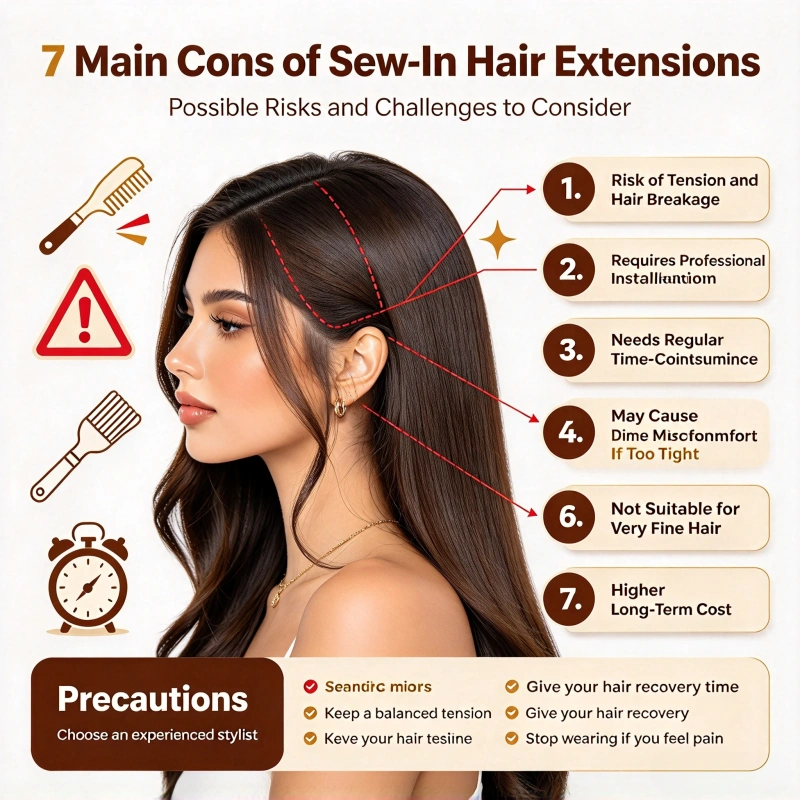
The 7 Main Cons of Sew-In Hair Extensions
1. Incorrect Installation Can Cause Hair Breakage
The most important disadvantage is the risk of excessive tension. If the natural hair is braided too tightly or the extension weight is not appropriate, the installation can place stress on the hair and follicles.
The American Academy of Dermatology warns that tight hairstyles, including weaves and extensions, can contribute to traction alopecia. Prolonged traction may lead to permanent hair loss in some cases.
Warning signs include:
- Persistent scalp pain or tightness
- Headaches after installation
- Redness or irritation around the hairline
- Small bumps around the roots
- Breakage or thinning near the edges
Don’t dismiss these symptoms as normal adjustment. If the installation hurts or causes irritation, contact the stylist promptly and have the tension assessed. Remove or loosen the style when necessary, and seek medical advice if hair loss or scalp symptoms continue.
Source: American Academy of Dermatology, “Hairstyles that pull can lead to hair loss.”
2. Installation and Removal Take Time
Sew-in extensions usually take longer to install than clip-ins. The stylist may need to prepare the natural hair, create a braid or beaded base, position the wefts, sew them securely, and blend the final style.
As a practical planning estimate, a full sew-in appointment may take approximately 2–4 hours, depending on the method, number of wefts, hair preparation, and stylist experience. Complex installations may take longer.
Removal also requires care. Cutting thread without knowing its position can damage natural hair, so clients unfamiliar with the technique should choose professional removal.
3. They Require Regular Maintenance
Sew-in extensions are semi-permanent, not maintenance-free. Wearers need to monitor the condition of the braids, scalp, stitching, and extension hair throughout the wear period.
A common planning range is about 6–8 weeks before removal or reassessment, though the right schedule depends on the installation method, hair growth, scalp condition, and your stylist’s advice.
Do not keep an installation simply because it still looks good from the outside. Matting, loose stitching, excessive tension, and buildup can develop underneath.
4. Cleaning the Scalp Can Be More Difficult
Because much of the natural hair sits beneath the installation, reaching and thoroughly drying the scalp may take more effort.
Inadequate cleansing or leaving the braids damp can contribute to buildup, odor, tangling, and discomfort. Care routines should be adapted to the installation method and the client’s scalp needs.
Practical care tips include:
- Use a suitable cleanser and carefully reach the scalp between rows.
- Avoid aggressive rubbing that tangles the base.
- Rinse thoroughly to prevent product buildup.
- Dry the roots and braided base completely.
- Follow the stylist’s instructions for moisturizing the natural hair.
- Avoid heavy products that leave residue around the wefts.
If the scalp becomes persistently itchy, painful, inflamed, or develops an unusual odor, consult a qualified professional rather than covering up the symptoms with more products.
5. They May Not Suit Fine or Fragile Hair
Sew-ins can be less suitable for clients with very fine, weak, heavily processed, or thinning hair, especially when the natural hair cannot comfortably support the braided base and added weight.
The issue is not simply whether the extensions are lightweight. The stylist must also consider how much natural hair supports each row, how the load is distributed, and whether the hair can withstand continued tension.
For clients with fragile hair, temporary clip-ins worn occasionally—or another lighter method assessed by a professional—may be a more appropriate starting point.
6. They Can Feel Bulky or Uncomfortable
A poorly matched weft, excessive density, or an unsuitable placement can create bulk around the roots. Some clients may also find that sleeping or lying down feels different with a raised track.
Comfort depends on the weft construction, installation technique, placement, and amount of hair added.
For example, a thick machine weft may provide excellent coverage for a full hairstyle, while a finer, flexible weft may be easier to conceal in a more discreet installation. Neither construction is automatically better for every client.
7. The Total Cost Can Be Higher Than Expected
The price of the hair is only one part of the budget. A realistic sew-in cost estimate should include:
- Extension hair or bundles
- Initial installation
- Maintenance or tightening, where required
- Removal
- Cleaning and conditioning products
- Replacement hair when the existing wefts can no longer be reused
A useful comparison is the cost per wear period or successful installation—not just the original price tag.
For salon owners, this same principle applies to inventory. Consistent hair quality, manageable maintenance, and fewer customer complaints can be more valuable than the cheapest wholesale price.
How Long Do Sew-In Extensions Last?
Consider two timelines: how long the installation stays in place and how long the extension hair remains usable.
| Measure | Practical planning range | What affects it |
|---|---|---|
| Time before reassessment or removal | Often around 6–8 weeks | Hair growth, tension, scalp health, installation method |
| Useful life of human hair wefts | Several months to a year or longer in favorable conditions | Hair quality, care, styling, and reuse |
| Installation appointment | Often about 2–4 hours for a full sew-in | Technique, number of rows, preparation, stylist experience |
These are general planning ranges, not guarantees. A stylist may recommend removing it earlier if there is tension, matting, irritation, or deterioration of the base.
The hair may remain in good condition after the first installation, but that does not mean it is safe to leave the same installation in place indefinitely. Hair reuse and installation duration are separate considerations.
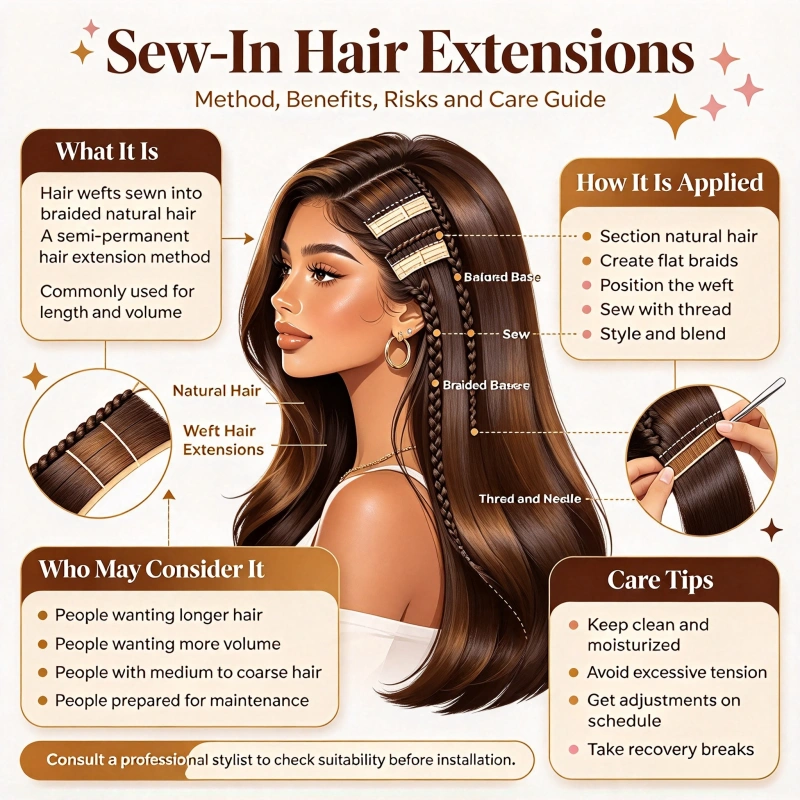
Sew-In vs. Tape-In vs. Clip-In vs. Micro Ring Extensions
Choosing the right method often matters more than choosing the most popular one. Each attachment system distributes weight differently and involves a different maintenance routine.
| Feature | Sew-In | Tape-In | Clip-In | Micro Ring |
|---|---|---|---|---|
| Attachment | Threaded onto a braid or prepared row | Adhesive tabs | Clips attached to natural hair | Small rings or beads |
| Typical wear pattern | Several weeks | Several weeks before move-up | Removed after each wear | Several weeks before maintenance |
| Installation | Professional for most full-head installations | Professional | Often suitable for DIY use | Professional |
| Main advantage | Full coverage and substantial volume | Flat, discreet attachment | Flexible and temporary | No adhesive required |
| Main limitation | Tension and scalp access | Adhesive care and removal | Daily application and removal | Small sections of hair bear the attachment load |
| Common candidate | Hair that can support a braided or beaded base | Clients suited to lightweight adhesive tabs | Occasional users | Clients suitable for strand-by-strand attachment |
Maintenance timing varies by technique and individual hair growth. Do not treat these ranges as interchangeable or assume that one method is universally safer.
Sew-In vs. Tape-In: Which Is Better?
Sew-ins may be a better fit when the client wants substantial volume and has enough healthy natural hair to support the base. Tape-ins can be attractive when a flatter attachment and a different distribution of weight are preferred.
Tape-ins are not automatically damage-free, and sew-ins are not automatically protective. Both can damage natural hair when they are overloaded, installed incorrectly, or removed improperly.
The deciding factors are hair condition, desired density, scalp sensitivity, and the stylist’s ability to install and maintain the chosen method.
Sew-In vs. Clip-In: Which Is Better for Beginners?
Clip-ins are generally easier for occasional wear because you can remove them at the end of the day. They also allow users to experiment with length and color without committing to a semi-permanent installation.
Sew-ins suit people who want a longer-lasting installed style and are willing to arrange professional maintenance.
If you are unsure whether you like extensions, clip-ins can be a practical way to test a color, length, or overall look before investing in a sew-in.
Sew-In vs. Micro Ring: Which Is More Comfortable?
Neither method is comfortable for everyone. Sew-ins distribute weight through a braided or prepared row, while micro rings attach small sections of extension hair to sections of natural hair.
The outcome depends on the weight of the added hair, the amount of natural hair supporting it, placement, and installation tension. Clients with sensitive scalps or fragile hair should discuss these factors with a qualified stylist before choosing either method.
How Much Hair Do You Need for Sew-In Extensions?
No single weight suits every head. The correct amount depends on the client’s natural hair density, desired fullness, extension length, and the coverage needed to blend the wefts.
The following figures are illustrative consultation ranges, not universal salon standards:
| Desired result | Example total extension weight |
|---|---|
| Subtle fullness | 50–80 g |
| Moderate volume | 80–120 g |
| Full, noticeable volume | 120–180 g |
| Extra-dense transformation | 180 g or more, only when suitable |
Longer extensions may require more hair to maintain the appearance of density through the ends. However, adding more weight is not always the answer. Excessive weight can increase tension and make the installation uncomfortable.
Example: Why Weight and Length Must Be Considered Together
Imagine two clients who both want 20-inch extensions.
- Client A has medium-density hair and wants a modest increase in fullness.
- Client B has thick hair and wants a dramatic, full-bodied style.
The same number of bundles may not give both clients the same result. The stylist needs to consider the natural hair’s thickness, the weft density, the length, and how much weight can be supported comfortably.
For a professional consultation, record the target length, total weight, weft construction, color, texture, and installation method. This makes it easier to compare samples and repeat successful orders.
How to Reduce the Risks of Sew-In Extensions
The most useful way to think about sew-in safety is to manage the load on the natural hair rather than focusing only on the extension product.
Before installation
- Ask the stylist to assess natural hair density, breakage, scalp condition, and hairline sensitivity.
- Discuss the amount of length and volume you actually need.
- Choose a weft construction that suits the planned installation.
- Do not install extensions over an irritated scalp or ignore existing hair loss.
- Confirm that the stylist can explain the maintenance and removal process.
During installation
- The braid or prepared base should feel secure, not painfully tight.
- The weight should be distributed evenly, not concentrated in fragile sections.
- The weft should sit securely without pulling excessively on the natural hair.
- Ask the stylist to reassess immediately if you feel pain or persistent pulling.
After installation
- Follow the recommended cleansing and drying routine.
- Detangle gently and support the hair near the roots when brushing.
- Avoid excessive heat, particularly on leave-out hair.
- Arrange maintenance or removal according to the stylist’s recommendation.
- Take a break from tension-based styles if the scalp or natural hair needs recovery.
The American Academy of Dermatology recommends avoiding hairstyles that repeatedly pull on the hair and removing or loosening styles that cause pain or irritation. Persistent traction can lead to hair loss, which may become permanent in advanced cases.
What Should Salons Look for When Buying Sew-In Hair Extensions?
Professional buyers should evaluate a sew-in product based on hair quality, weft construction, customer suitability, and repeat-order consistency.
A product that looks impressive in a product photo may still underperform if the hair tangles after washing, the ends appear thin, or the weft construction does not match the stylist’s installation technique.
1. Hair quality and consistency
Check softness, tangling, shedding, color consistency, and the condition of the ends. If the supplier describes the product as Remy human hair, ask how they source, process, and quality-check the hair. Marketing terminology alone does not establish product quality.
2. Weft construction
Inspect stitching, thickness, flexibility, width, and the integrity of the weft edge. The right construction should suit the intended application rather than simply being the thickest or thinnest available.
3. Length and density
Request samples in the lengths and weights your customers are most likely to buy. Check whether the hair maintains a satisfactory appearance through the ends, particularly in longer lengths.
4. Color and texture options
For salons serving multiple customer groups, a practical color range can be more valuable than a large but inconsistent catalog. Evaluate natural shades, dimensional colors, straight and wavy textures, and the supplier’s ability to repeat the same shade across future batches.
5. Sample testing before bulk orders
A practical internal evaluation period is 7–14 days, during which the team can test washing, detangling, shedding, heat styling, color consistency, and weft durability. This is a suggested purchasing workflow, not a standardized certification period.
Record the test conditions and compare samples against a consistent checklist before placing a large order.
6. OEM, ODM, and private-label support
Brands and distributors may need customized lengths, weights, colors, textures, weft construction, packaging, labels, and product specifications.
Before confirming a bulk order, clarify minimum order quantities, sample approval, production lead time, quality-control criteria, packaging requirements, and the process for handling defects or batch inconsistencies.
For a hair extension manufacturer like Alove Hair, these details connect product development with the needs of salons, extension specialists, wholesalers, and private-label brands.

Frequently Asked Questions About Sew-In Extensions
Are sew-in extensions good for your hair?
They can be suitable for some clients when the installation is appropriate, the weight is manageable, and maintenance is consistent. They can also cause breakage or traction alopecia if installed too tightly or worn despite signs of damage. Suitability should be assessed individually.
Do sew-in extensions damage your hair?
They can. The main concerns are excessive tension, heavy extensions, poor installation, difficult removal, and prolonged wear without appropriate maintenance. Pain, scalp irritation, and hairline breakage are warning signs that should be addressed promptly.
Can you wash sew-in extensions?
Yes, but the method matters. Clean the scalp and extension hair carefully, rinse thoroughly, and ensure the roots and braided base dry completely. Follow the instructions for your particular installation and avoid aggressive scrubbing that can cause tangling.
Can you sleep with sew-in extensions?
Sew-ins are designed for extended wear, so you typically don’t remove them every night. Protect the hair from excessive friction, follow your stylist’s sleeping and care recommendations, and seek reassessment if lying down causes persistent discomfort.
How often should sew-in extensions be removed?
A common planning range is around 6–8 weeks, but the appropriate timing depends on the installation, natural hair growth, scalp condition, and stylist advice. Remove the style sooner if there is pain, matting, irritation, or excessive tension.
Are sew-in extensions better than tape-ins?
Neither method is universally better. Sew-ins can suit clients seeking substantial volume with a suitable braided or prepared base. Tape-ins may suit clients who prefer a flatter attachment. Hair condition, weight distribution, and maintenance habits should determine the choice.
Can sew-in hair extensions be reused?
You may reuse quality human hair wefts if the hair and stitching remain in good condition. The number of successful reuses depends on hair quality, care, removal technique, and wear history. Inspect the wefts before each new installation.
Are sew-in extensions suitable for thin hair?
They may be unsuitable for very fine, fragile, or thinning hair because the installation can place tension on the supporting strands. A qualified stylist should assess the hair before recommending a method. Temporary or lighter alternatives may be a better fit.
Final Verdict: Are Sew-In Extensions Worth It?
Sew-in extensions can be an excellent option for people who want substantial length, volume, and a style that remains installed for several weeks. Their main advantages are adhesive-free attachment in traditional methods, versatile styling, and the potential to reuse quality human hair wefts.
Their disadvantages are equally important: installation takes time, maintenance is necessary, scalp access can be more difficult, and excessive tension can damage natural hair.
The best decision is not simply to choose the method that lasts the longest or creates the most volume. It is to choose a method that matches the client’s natural hair, desired result, maintenance routine, and comfort.
For salon owners and professional buyers, consistent hair quality, suitable weft construction, realistic product specifications, and dependable supplier support are the foundations of a sew-in extension line that customers can return to with confidence.

Jgs is a professional with 12 years of experience in hair extensions, primarily helping importers better understand hair extensions, wigs, toupee, and other related products.


Leave a Reply
Want to join the discussion?Feel free to contribute!