
K-Tips vs Micro-links Hair Extensions: Which One Is Better?
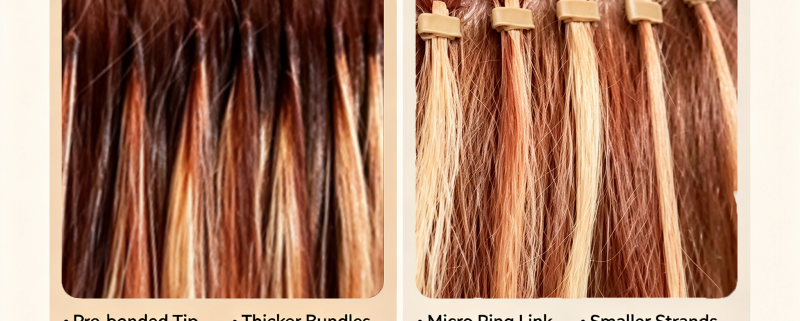
When choosing individual hair extensions, two popular options are K-Tips and Micro-links. Both methods can create natural-looking length, volume, and movement, but their application, maintenance, reusability, and suitability for different hair types are quite different.
So, K-Tips vs Micro-links hair extensions: which one is better?
The answer depends on the client’s hair type, desired look, maintenance preferences, installation requirements, and whether the extensions need to be reused. K-Tips use a keratin bond that is applied with heat, while Micro-links use small beads or links to attach the extension without heat.
For salons, stylists, and professional hair extension buyers, understanding these differences is essential when choosing the right product for each client.
K-Tips vs Micro-links: Quick Comparison
| Feature | K-Tip Hair Extensions | Micro-link Hair Extensions |
|---|---|---|
| Application | Keratin bond + heat | Micro bead/link + pliers |
| Heat required | Yes | No |
| Attachment | Individual keratin tips | Individual strands with beads |
| Reusable | Usually not | Usually yes |
| Adjustment | Requires removal and replacement | Can be tightened or repositioned |
| Installation | Requires professional skill | Requires professional skill |
| Maintenance | Relatively low after installation | Requires regular adjustment |
| Natural movement | Excellent | Excellent |
| Visibility | Very discreet when correctly installed | Discreet when the correct bead size/color is used |
| Best advantage | Long-lasting, natural individual bonds | Reusability and flexible maintenance |
| Suitable for | Many hair types | Many hair types, especially clients avoiding heat |
Both methods can deliver excellent results. The key is matching the extension method with the client’s hair characteristics and lifestyle.
What Are K-Tip Hair Extensions?
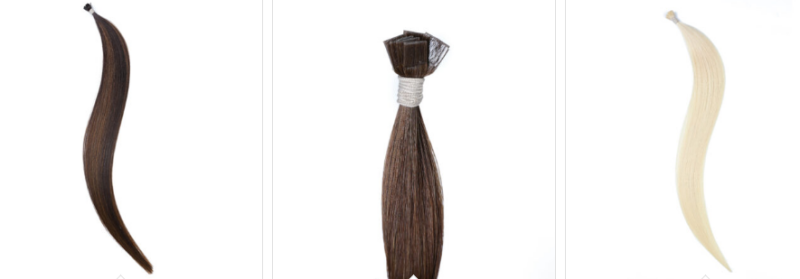
K-Tip hair extensions, also called keratin tip or keratin bond extensions, are individual hair extensions with a small keratin tip attached to the top of each extension strand.
During installation, a professional stylist uses a heating tool to soften the keratin bond and attach the extension to a small section of the client’s natural hair.
Because the extensions are installed strand by strand, the stylist can control placement, density, and direction. This allows K-Tips to provide natural movement and a highly customized result.
Key Features of K-Tips
- Individual strand application
- Keratin-based bonding
- Heat-assisted installation
- Natural movement
- Discreet attachment points
- Suitable for customized placement
- Professional installation recommended
K-Tips are particularly popular when the client wants a long-lasting individual extension system with a natural appearance.
K-Tip Hair Extensions
What Are Micro-link Hair Extensions?
Micro-link hair extensions use small beads, rings, or links to attach individual extension strands to the client’s natural hair.
Unlike K-Tips, Micro-links do not require heat or adhesive during installation. The stylist places the natural hair and extension hair inside a small link and uses professional pliers to secure the connection.
One of the major advantages of this method is reusability. Depending on the hair quality and condition, the extension hair can often be removed, adjusted, and reinstalled.
Key Features of Micro-links
- No heat required
- No keratin adhesive
- Individual strand application
- Adjustable attachment
- Reusable extension hair
- Professional tools required
- Flexible maintenance
This makes Micro-links attractive to clients and salons that prioritize flexibility and the ability to reuse high-quality extension hair.
K-Tips vs Micro-links: What Are the Main Differences?
1. Installation Method
The biggest difference is how the extensions are attached.
K-Tips use a keratin bond, which is softened with heat and bonded around the client’s natural hair.
Micro-links use a small bead or link, which is secured mechanically with pliers.
Therefore, stylists need different tools and techniques for each method.
For salons, this also means that choosing between K-Tips and Micro-links may depend on the stylist’s training, available equipment, and preferred installation system.
2. Heat vs No Heat
K-Tips require heat during installation because the keratin tip needs to be softened before bonding.
Micro-links are installed without heat.
For clients who specifically prefer a no-heat extension method, Micro-links may be a more suitable option.
However, the absence of heat does not automatically mean that Micro-links are safer for every client. Correct sectioning, bead placement, extension weight, and professional installation are still important.
3. Reusability
Reusability is one of the most important differences between the two systems.
K-Tip extensions generally require the old keratin bond to be removed and a new bond to be applied for reinstallation. In many cases, the original bonded tip is not reused.
Micro-link extensions can usually be removed and adjusted by opening the bead or link. If the extension hair remains in good condition, it can often be reused.
For salons, this can make Micro-links attractive as a reusable extension system.
However, reusability ultimately depends on the quality and condition of the hair.
4. Maintenance
K-Tips and Micro-links require different maintenance routines.
With K-Tips, the main consideration is the natural growth of the client’s hair. As the hair grows, the keratin bonds move farther away from the scalp and eventually need to be removed.
Micro-links can be adjusted as the natural hair grows. The stylist can remove and reposition the extensions closer to the scalp.
Therefore:
K-Tips: more fixed once installed.
Micro-links: more adjustable during maintenance.
The best choice depends on whether the client prioritizes a relatively low-maintenance attachment or reusable and adjustable extensions.
5. Natural Appearance
Both K-Tips and Micro-links can look very natural when properly installed.
K-Tips have small individual bonding points, allowing the extensions to move naturally with the client’s hair.
Micro-links can also provide natural movement because they are installed strand by strand. However, bead size, bead color, placement, and sectioning can affect how discreet the final result looks.
For professional stylists, installation technique is just as important as the extension method itself.
Which Is Better for Different Hair Types?
There is no universal best extension method. Hair thickness, density, texture, and condition should all be considered.
K-Tips for Fine Hair
K-Tips can be a good option for fine hair when the stylist selects an appropriate extension weight and installs the bonds correctly.
Because individual strands can be distributed throughout the hair, the stylist can create a customized result rather than adding excessive weight to one area.
However, fine or fragile hair requires careful consultation and professional application regardless of the extension method.
Micro-links for Fine Hair
Micro-links can also work with fine hair, but bead size and extension weight are especially important.
A lightweight micro-link system may be preferable when the client wants a no-heat application.
The stylist should avoid attaching excessive extension weight to small sections of natural hair.
K-Tips for Thick Hair
K-Tips can work particularly well for clients who want substantial length and volume.
Because the extensions are applied strand by strand, the stylist can build density gradually and customize the placement.
For thick hair, selecting sufficient extension weight and density is essential to create a balanced result.
Micro-links for Thick Hair
Micro-links can also be effective for thick hair and allow stylists to create customized volume and length.
Their adjustable nature can be particularly useful for clients who want to maintain the same extension hair over multiple appointments.
K-Tips vs Micro-links: Pros and Cons
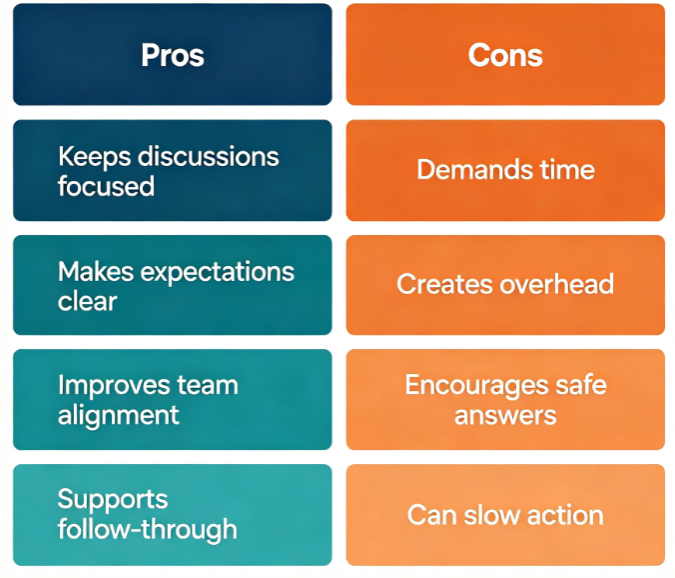
K-Tip Pros
- Natural strand-by-strand appearance
- Excellent movement
- Discreet individual bonds
- Long-lasting wear when properly installed
- Highly customizable placement
- Popular among professional extension stylists
K-Tip Cons
- Requires heat during installation
- Requires professional installation
- Original bonded tips are generally not reusable
- Removal requires the appropriate technique and products
- Incorrect installation can cause unnecessary stress on natural hair
K-Tips Pros and Cons
Micro-link Pros
- No heat required
- No adhesive required
- Adjustable attachment
- Extension hair can often be reused
- Flexible maintenance
- Suitable for salons offering reusable extension systems
Micro-link Cons
- Beads can become visible if incorrectly positioned
- Requires regular maintenance and adjustment
- Incorrect bead size or installation can create tension
- Professional tools are required
- Hair quality may decline after repeated removal and reinstallation
Which Extensions Last Longer?
The answer depends on what you mean by “last longer.”
If you mean how long the extensions can remain installed, both systems can provide long-term wear when professionally installed and properly maintained.
If you mean how many times the same hair can be reused, Micro-links generally have an advantage because the attachment can be opened and the hair can potentially be reinstalled.
However, extension longevity is strongly influenced by:
- Human hair quality
- Cuticle condition
- Hair processing
- Installation technique
- Maintenance frequency
- Brushing habits
- Washing routine
- Heat styling
- Chemical processing
Therefore, the quality of the extension hair can be just as important as the attachment method.
K-Tips vs Micro-links: Which One Is Better for Salons?
For professional salons, the choice should be based not only on client preference but also on business requirements.
Choose K-Tips when your salon focuses on:
- Premium individual extensions
- Natural movement
- Long-term wear
- Discreet bonding
- Customized strand placement
- Clients who prefer keratin-based extensions
Choose Micro-links when your salon focuses on:
- No-heat installation
- Reusable hair
- Adjustable extension systems
- Flexible maintenance
- Clients who prefer removable and reusable extensions
Many professional salons choose to offer both systems rather than limiting themselves to one method.
This allows stylists to recommend the most suitable extension according to the client’s hair type, lifestyle, budget, and desired result.
Why Hair Quality Matters More Than the Attachment Method
When comparing K-Tips and Micro-links, it is easy to focus entirely on the attachment system.
However, the quality of the human hair itself has a major impact on the final result.
High-quality extension hair should have:
- Intact cuticles
- Consistent hair direction
- Natural texture
- Good strength
- Minimal tangling
- Long-lasting softness
- Consistent color
- Reliable density
For premium hair extensions, 100% cuticle-intact human hair can provide important advantages in terms of alignment, smoothness, durability, and overall appearance.
This becomes particularly important for salons and wholesalers purchasing extensions in bulk.
K-Tips and Micro-links for Colored Hair Extensions
Color is another important consideration when selecting extension hair.
Bleaching and coloring can significantly affect the condition of human hair. Poor processing may weaken the cuticle and increase dryness, tangling, and breakage.
For professional colored extensions, controlled processing is therefore essential.
At ALOVE HAIR, we specialize in colored human hair extensions and use cuticle-intact processing techniques. Our experienced production team focuses on maintaining the quality and structure of the hair during the coloring process.
For salons and professional buyers, this can be especially valuable when customers require blonde, fashion, pastel, or other customized colors.
K-Tips vs Micro-links: How Should You Choose?
A simple decision guide is:
Choose K-Tips if:
- You want a highly discreet individual extension system.
- You prefer keratin bonding.
- Heat application is acceptable.
- You want natural movement.
- Reusability is not your primary requirement.
- You are working with a professional stylist experienced in keratin extensions.
Choose Micro-links if:
- You prefer a no-heat application.
- Reusability is important.
- You want adjustable extensions.
- You prefer a mechanical attachment system.
- You want to remove and reinstall the same extension hair when it remains in good condition.
Ultimately, neither method is universally better.
The best choice is the one that matches the client’s natural hair, desired result, lifestyle, and maintenance expectations.
Why Choose ALOVE HAIR for Professional Hair Extensions?
Qingdao ALOVE HAIR PRODUCTS Co., Ltd. has specialized in human hair products since the 1980s.
Originally established as a raw hair collector and supplier, ALOVE has developed into a professional manufacturer and exporter serving hair extension businesses and professionals worldwide.
With more than 15 years of foreign trade experience, we understand the quality requirements of international salons, distributors, stylists, and professional hair companies.
Our Hair Extension Product Range
ALOVE supplies a wide range of professional hair extension products, including:
- Genius Weft
- Micro Weft
- Sew-in Extensions
- Flat Weft
- Hand-tied Weft
- Tape-in Extensions
- I-Tip Extensions
- K-Tip / Keratin Tip Extensions
- Colorful Hair Extensions
- Hair extension tools and accessories
Our flagship Genius Weft is designed for professional applications where high-quality human hair and a natural, comfortable result are important.
100% Cuticle-Intact Human Hair
Our hair is selected and processed with a focus on maintaining the natural cuticle structure.
The result is hair that is:
- Double drawn
- Natural-looking
- Smooth
- Less prone to tangling
- Suitable for professional extension applications
We also have a dedicated team of more than 20 experienced workers specializing in colored hair extensions.
Rather than relying on an ash-bath process, we focus on cuticle-intact processing techniques to help preserve hair quality during coloring.
Professional Wholesale Support
ALOVE works with salons, stylists, distributors, and hair extension businesses in international markets including the United States, United Kingdom, Canada, Australia, Germany, France, Italy, and other European markets.
We can provide:
- Wholesale hair extensions
- Professional extension tools
- Installation accessories
- Custom packaging
- Product customization
- Technical product support
- Flexible solutions for professional buyers
With consistent quality and professional service, ALOVE has achieved a customer retention rate of more than 90%.
K-Tips vs Micro-links: Frequently Asked Questions
Are K-Tips better than Micro-links?
Neither method is universally better. K-Tips offer discreet keratin bonds and natural strand-by-strand movement, while Micro-links provide no-heat application, adjustability, and potential reusability. The best option depends on the client’s hair and preferences.
Are K-Tip extensions damaging?
K-Tips are not inherently damaging when properly selected, installed, maintained, and removed by a trained professional. Excessive extension weight, improper installation, or poor maintenance can increase stress on natural hair.
Are Micro-links better for damaged hair?
Micro-links may be preferred by clients who want to avoid heat or adhesive, but damaged hair still requires professional assessment. No extension method should be considered automatically suitable for severely fragile hair.
Can K-Tip extensions be reused?
The original keratin bond is generally not reused. The hair itself may potentially be reused with a new bonding tip if its condition remains suitable.
Can Micro-links be reused?
Yes. One of the main advantages of Micro-links is that the attachment can usually be opened and the extension hair can potentially be repositioned and reused when it remains in good condition.
Which is more natural, K-Tips or Micro-links?
Both can look very natural when correctly installed. K-Tips provide discreet individual keratin bonds, while Micro-links can also be very discreet when the correct bead size, color, and placement are selected.
Which is better for salons?
Many salons benefit from offering both options. K-Tips can serve clients looking for premium keratin-bond extensions, while Micro-links are useful for clients who prefer no-heat, adjustable, and reusable systems.
Final Verdict: K-Tips vs Micro-links
K-Tips and Micro-links are both professional individual hair extension systems, but they are designed around different priorities.
K-Tips are a strong choice for clients who prioritize discreet bonding, natural movement, and long-term wear.
Micro-links are a strong choice for clients who prioritize no-heat application, adjustability, and reusability.
For salons and professional hair extension businesses, the ideal approach is not to ask which system is universally better, but rather:
Which extension method is the best match for this client’s hair, lifestyle, desired result, and maintenance routine?
And regardless of the attachment method, high-quality human hair remains one of the most important factors determining the final appearance, durability, and customer satisfaction.
For professional wholesale K-Tip, Micro-link, Genius Weft, hand-tied, tape-in, I-Tip, and other human hair extensions, ALOVE HAIR provides customized solutions for salons, stylists, distributors, and hair businesses worldwide. Please feel free to contact us.

Alove Hair is a professional Chinese manufacturer of premium 100% Remy human hair extensions, wigs, and hair systems. Established in 2014, the company specializes in supplying global salons and distributors with high-quality, cuticle-intact hair products and offers comprehensive OEM/ODM private label services.


Leave a Reply
Want to join the discussion?Feel free to contribute!