How to Blend Halo Extensions with Short or Thin Hair (Pro Tips)

“Struggling to make Halo extensions look natural with short or fine hair? You’re not alone! Many women with shorter lengths or thinner strands face the same challenge—how to blend extensions seamlessly without obvious gaps, bulky wefts, or slipping. Unlike longer, thicker hair that easily disguises extension tracks, short or thin hair requires extra care to create that flawless, ‘is-this-even-real?’ look.”

The main obstacle? Concealing the Halo weft (the invisible wire that sits on your head). With short hair, you might lack enough length to cover it completely, risking a visible “ridge.” For thin hair, the natural hair’s fragility can make extensions slip or appear unnaturally dense. Add texture mismatches (like pin-straight extensions on wavy hair), and the struggle gets real.

But here’s the good news: It’s absolutely possible to nail the blend. Whether you’re rocking a bob, growing out a pixie, or dealing with fine strands, this guide reveals dermatologist-approved prep steps, salon-tested styling tricks, and common mistakes to avoid. You’ll learn:

  • How to anchor Halo extensions so they stay put (even on silky-thin hair).
  • Cutting and layering hacks to match your natural hair’s movement.
  • Affordable products (like texturizing sprays and grip headbands) that make all the difference.

“With these pro tips, you’ll achieve a seamless, undetectable look—no matter your hair type!” No more worrying about windy-day mishaps or awkward “hair helmet” moments. Just effortless length and volume, tailored to your hair’s unique needs.

Ready to transform your Halo game? Let’s dive in.

Prep Work: Setting the Stage for Flawless Halo Extensions

The secret to perfectly blended Halo extensions lies in meticulous preparation and smart extension selection. Whether you’re working with short strands or fine, thin hair, taking time to properly prepare will make all the difference in achieving that coveted natural, undetectable look. Let’s dive into the essential prep steps that will transform your extension experience.

Choosing the Right Halo Extensions

Not all hair extensions are created equal—especially when dealing with short or thin hair. The wrong type can leave you with bulky, obvious results or frustrating slippage. Here’s how to pick the perfect match:

For Short Hair:

If your hair falls above your shoulders, standard long extensions (20+ inches) will look unnatural and overwhelm your face. Instead:

  • Opt for shorter lengths (14–18 inches) to maintain proportion.
  • Choose layered styles—these blend better with shorter natural hair and create movement.
  • Consider tape-in or clip-in alternatives if your hair is very short (pixie length), as these offer more precision in placement.

For Thin Hair:

Fine hair requires lightweight solutions that won’t weigh down your natural strands or expose the weft. Look for:

  • Lightweight, thin wefts—bulky tracks will be obvious and uncomfortable.
  • 100% Remy human hair—synthetic hair often looks unnaturally shiny and doesn’t blend well with fine textures.
  • Lighter density—avoid overly thick extensions that create an unnatural contrast with your natural hair.

Color Matching: The Make-or-Break Factor

Even the best extensions will look fake if the color is off. Here’s how to nail the match:

  • Match at the mid-lengths—your roots and ends may vary due to sun exposure or dye, but the mid-shaft is the truest shade.
  • Blend highlights or ombre—if your hair has dimension, opt for extensions with subtle highlights or balayage for a seamless transition.
  • Test in natural light—indoor lighting can distort colors, so always check in sunlight before committing.

Prepping Your Natural Hair

Once you’ve chosen the perfect extensions, it’s time to prep your natural hair for flawless blending. Skipping this step can lead to slippage, visible wefts, or an uneven finish.

Step 1: Wash and Condition (But Skip the Heavy Products)

  • Use a clarifying shampoo to remove buildup, which can make extensions slip.
  • Avoid heavy conditioners near the roots—they can weigh down fine hair and reduce grip.
  • Blow-dry for volume—focus on lifting the roots with a round brush for extra body.

Step 2: Tease for Grip

  • Lightly backcomb the crown area where the Halo wire will sit—this creates a “cushion” for the weft to grip onto.
  • Avoid over-teasing thin hair—gentle teasing is enough; aggressive backcombing can cause breakage.

Step 3: Boost Volume at the Roots

  • Apply a volumizing mousse or spray before styling—this gives fine hair extra body to blend with extensions.
  • Dry shampoo is your friend—a light spritz at the roots adds texture and hold.

Pro Tip: The Silicone Grip Hack

If your hair is super fine or silky, consider using a silicone wig grip band under your Halo extensions. This prevents slipping and keeps everything secure all day.


Final Prep Checklist

Extensions: Short/layered for bobs, lightweight for fine hair.
Color: Perfectly matched (test in sunlight!).
Hair Prep: Clarifying wash, light teasing, root volume boost.

With these steps, your Halo extensions will blend like a dream. Next up: Step-by-step application techniques!

Step-by-Step Blending Techniques for Short & Thin Hair

Achieving a natural blend with Halo extensions requires different approaches for short versus thin hair. Follow these detailed, salon-approved techniques to create seamless, undetectable results every time.

A. For Short Hair: The Art of Disguising the Weft

When working with shorter lengths (chin-length to shoulder-length), the challenge lies in covering the Halo wire without sacrificing volume or creating obvious lines.

  1. Create a “Buffer Layer”
    • Before placing your Halo extension, leave out 1–2 inches of hair at the crown (the area where the wire sits).
    • This reserved section will later be styled over the weft to conceal it completely.
    • Pro tip: Clip the top section up with a jaw clip to keep it separate during application.
  2. Tease the Crown for Maximum Grip
    • Take small horizontal sections at the roots where the Halo will rest.
    • Using a fine-tooth comb, gently backcomb each section to create texture and friction.
    • Avoid over-teasing – you want just enough texture to anchor the wire without causing tangles.
  3. Strategic Bobby Pin Placement
    • Once the Halo is positioned, secure it by sliding 2-3 bobby pins horizontally through the weft and into your teased hair.
    • Insert pins at an upward angle so they grip both the weft and your natural hair.
    • Hide pins by covering them with the reserved “buffer layer” of hair.

Bonus for Bobs: If you have a blunt cut, lightly point-cut the ends of your extensions to mimic your natural haircut.

B. For Thin Hair: Creating Illusion of Density

Fine hair requires special attention to prevent extensions from looking obvious or overwhelming your natural strands.

  1. Modify the Halo Wire for a Snug Fit
    • Use needle-nose pliers to gently flatten the wire’s curve, allowing it to sit closer to your head.
    • This prevents gaps that can expose the weft when hair moves.
    • Important: Wrap the pliers in tissue first to avoid damaging the wire’s coating.
  2. Custom Cutting for Seamless Layers
    • Install the extensions first, then blend by cutting:
    • Focus on face-framing pieces around your cheeks and jawline for the most natural effect.
    1. Separate your natural hair and extensions into vertical sections
    2. Hold both together between your fingers at a 45-degree angle
    3. Snip into the ends to create soft, blended layers
  3. Texture is Your Best Friend
    • Curl or wave both your natural hair and extensions together using a 1-inch barrel iron.
    • Alternate curl directions for lived-in texture.
    • For ultra-fine hair: Try braid waves – braid damp hair overnight for subtle texture that helps camouflage the weft.

Pro Application Tip:
After blending, mist a texturizing spray (like Oribe Dry Texturizing Spray) at the roots and mid-lengths. This creates uniform texture while adding grip – especially helpful for silky hair types.

Troubleshooting Common Issues

Problem: Weft visible at crown?
Fix: Add a crimped root section – just tease and lightly crimp 1-inch vertical sections above the weft.

Problem: Extensions slipping?
Fix: Apply a dot of eyelash glue to the Halo wire’s ends before placing – it dissolves easily with oil-based remover.

Problem: Halo feels tight?
Fix: Gradually bend the wire outward over several days to customize the fit.

Why These Techniques Work

  • Short hair methods focus on optical illusion – using every millimeter of length to disguise the mechanics.
  • Thin hair solutions prioritize weight distribution and texture matching to avoid the “heavy top” effect.
  • All steps are heat-free friendly (except optional curling) to protect delicate strands.

Next Up: Styling hacks to perfect your blend!

Styling Hacks to Enhance Blending: Pro Tricks for Undetectable Extensions

Even with perfectly placed Halo extensions, a few strategic styling tricks can take your look from “pretty good” to “is that really your hair?” These professional techniques help disguise the weft while adding personality to your style.

1. Half-Up Styles: The Ultimate Distraction

  • Ponytails & Buns: A mid-height half-up style lifts hair away from the weft while keeping it covered. For extra security:
    • Tease the crown lightly before gathering
    • Wrap a thin section of hair around the base to conceal the elastic
  • Decorative Clips & Barrettes: Place embellished clips where the Halo wire sits to:
    • Add stylish flair
    • Provide subtle downward pressure that keeps the weft in place

2. Headbands & Scarves: Functional Fashion

  • Wide Headbands (3-4″): The #1 choice for hiding the transition line
    • Fabric headbands with silicone grips work best
    • Position just behind the hairline to cover the wire completely
  • Silk Scarves: Tie in a low knot at the crown to:
    • Conceal the weft
    • Protect hair from friction damage
    • Bonus: Helps blend grown-out roots

3. Root Touch-Up Magic

  • Powder Sprays: Like Boldify or Color Wow, applied at the part to:
    • Camouflage slight color mismatches
    • Fill in sparse areas where skin might peek through
  • Dry Shampoo: Not just for oil – the texture helps blend extension thickness
    • Focus on the “halo zone” where extensions meet natural hair

Pro Tip: Combine these! A headband + half-up ponytail + root spray creates triple insurance against visible wefts while looking intentionally stylish.

Why These Work:
• Distraction theory – eye goes to accessories, not hairline
• Physical coverage – creates literal barriers over trouble spots
• Multi-functional – solves blending while upgrading your style

Perfect For:
✓ Windy days
✓ Special events
✓ Those “I need to look perfect in 5 minutes” moments

Common Mistakes to Avoid With Halo Extensions for Short/Thin Hair

Even with quality extensions, these frequent errors can ruin your seamless look. Here’s how to spot and fix them:

Mistake #1: Placing the Halo Too Far Forward

❌ Problem: Creates unnatural bulk at the hairline and makes the weft visible from the side.
✅ Fix: Position the wire 1.5 inches behind your natural hairline, aligning it with the tops of your ears for balanced distribution.

Mistake #2: Ignoring Texture Matching

❌ Problem: Pin-straight extensions with wavy natural hair creates a stark “helmet effect.”
✅ Fix: Always style extensions with your natural hair using the same tools/techniques. For mismatched textures:

  • Use a flat iron or curling wand on both
  • Apply a texture spray to unify finishes

Mistake #3: Over-Teasing Thin Hair

❌ Problem: Aggressive backcombing weakens already delicate strands, causing breakage.
✅ Fix: Instead of teasing:

  • Use velcro rollers at the crown for lift
  • Try a light-hold texturizing powder at roots
  • Opt for a silicone wig grip instead of relying on friction

Bonus Tip: Never sleep with your Halo in—the pressure against thin hair can cause traction damage over time.

Halo Hair Extensions FAQ: Expert Answers for Short & Thin Hair

Q1: Can you use Halo extensions with pixie-cut hair?

A: Absolutely! While traditional placement can be tricky, try these adaptations:

  • Style in updos (high ponytails or buns) where the weft gets hidden in the gathered hair
  • Use mini clip-ins at the nape to add length before applying the Halo
  • Pro Tip: A textured, piecey style helps disguise any blunt edges

Q2: Do Halo extensions slip with fine hair?

A: They can, but these solutions lock them in place:

  • Silicone wig grip headbands (the #1 slip-stopper)
  • Double-sided wig tape (apply 1″ strips where wire touches temples)
  • Dry shampoo at roots for instant grip (avoid aerosol near the wire)
  • Bonus: Look for Halo brands with adjustable tension wires

Q3: How to make extensions look thicker at the crown?

A: Combat flatness with these tricks:

  1. Double-weft Halos – Two thin layers instead of one thick one
  2. Strategic clip-ins – Place 2-3 clip pieces around the parietal ridge
  3. Backcomb alternatives – Use:
    • Hair fibers (Toppik) at the part
    • Volumizing spray foam before blow-drying

Q4: Can I heat-style my Halo extensions daily?

A: Yes, but protect them:

  • Lower heat settings (max 350°F for human hair)
  • Always use heat protectant (try Olaplex No. 9)
  • Alternative: Opt for heat-free waves like robe tie curls

Q5: How often should I wash Halo extensions?

A: Far less than your natural hair:

  • Every 15-20 wears for optimal longevity
  • Use sulfate-free shampoo focused on mid-lengths to ends
  • Exception: Wash immediately after swimming/sweating

Conclusion: Your Perfect Halo Hair Awaits

Mastering Halo extensions with short or thin hair comes down to three essentials:

  1. Smart Prep – Choose lightweight, properly matched extensions and prep your natural hair with texture and volume
  2. Precision Placement – Position the wire correctly, use grip-enhancing tricks, and customize the fit
  3. Strategic Styling – Employ blending techniques like layers, texture sprays, and accessory camouflage

With these pro methods, you’ll enjoy:
✓ Undetectable length and volume
✓ All-day comfort and security
✓ Confidence in any weather or activity


Professional Halo Extensions Wholesale

As a leading Halo hair extensions manufacturer and wholesaler, we offer:

  • 100% Remy human hair in customizable lengths/colors
  • Ultra-lightweight wefts perfect for fine hair
  • Adjustable wire technology for no-slip wear

Contact us for:
→ Bulk pricing
→ Private label options
→ Style consultations

Email: info@alovehair.com
Website: https://www.alovehair.com/

Transform your hair game with professional-quality extensions – let’s create beauty together!

Why does my hair wefts turn pink and orange

Some clients always had a question about why my hair extensions turn pink and orange after wearing it for a while .

Today we will tell you that what caused it ?

Blonde or light-colored hair extensions (wefts) turn pink primarily due to a chemical reaction between sun protection products, Perfume,Swimming , Strong ultraviolet rays and the dye used on the extensions.Because hair extensions are highly porous and lack natural scalp oils, they absorb these chemicals, leading to discoloration, particularly after sun exposure or swimming.

Here are the main reasons why your wefts are turning pink:

1.Sunscreen (The #1 Culprit): Ingredients like Avobenzone (Butyl Methoxydibenzoylmethane) and Octocrylene, which are found in many sunscreens, react with UV rays and the chemical composition of the hair.

2.Ethanol (alcohol) in perfumes can indeed cause hair (especially bleached hair) to change color, such as turning pink, orange, or reddish.

3.Strong ultraviolet rays

Bleached hair: Cool tones (gray, blue, purple): These artificial pigments are extremely unstable and quickly fade after sun exposure.

Pink/orange showing: The remaining bleached base color (yellow) combines with the incompletely removed red pigment, resulting in an awkward warm orange or residual pink.

4.Hard Water

Water content has a big impact on the colour and texture of your hair extensions. Hard/high mineral content water can leave limescale and residue on your hair. With your natural hair, your scalp produces the necessary oils to counterbalance these minerals. However, as hair extensions are not attached to the scalp, these minerals aren’t able to counterbalance the minerals. Washing your hair extensions repeatedly using this type of water will make them dry and could potentially make them very damaged.

5.Sea Water

A lot of people think salt water is great for your hair, but it can be really damaging for your hair extensions; salt is a natural dehydrator and can potentially strip your hair of moisture and natural oils. This could lead to discolouration as the salt water will remove the hair pigmentation in your hair extension colour and will leave it a different colour to what it was before.

How to Fix and Prevent Pink Extensions

Use Mineral-Based Sunscreen: Switch to sunscreens that do not contain Avobenzone or Octocrylene (zinc oxide or titanium dioxide are safe alternatives).
Use a Clarifying/Chelating Treatment: Products like Malibu C Hard Water Treatment or Malibu C CPR are highly effective at stripping away mineral buildup and reversing the pink tint.
Rinse Immediately: Always rinse your extensions with fresh water immediately after swimming.
Avoid Over-Toning: Be careful with purple shampoos, as extensions can easily turn too grey or purple.

Hand-Tied vs Machine Weft Extensions – Key Differences & Benefits

Hair extensions have become a must-have beauty accessory, offering instant length, volume, and styling versatility. Whether for everyday glam or special occasions, they allow anyone to transform their look effortlessly. Among the many types available, hand-tied and machine weft extensions stand out as two of the most popular choices—but they cater to different needs.

Hand-tied extensions are crafted with precision, creating ultra-thin, seamless wefts for a natural, lightweight feel. Meanwhile, machine weft extensions are durable, cost-effective, and ideal for adding dramatic volume. With so many options, choosing the right type can be overwhelming.

This guide will break down the key differences, benefits, and drawbacks of hand-tied vs. machine weft extensions. By comparing their construction, comfort, longevity, and cost, we’ll help you decide which option works best for your hair type, lifestyle, and budget. Whether you prioritize a flawless blend, affordability, or low maintenance, this comparison will lead you to the perfect choice. Let’s dive in!

What Are Hand-Tied Hair Extensions?

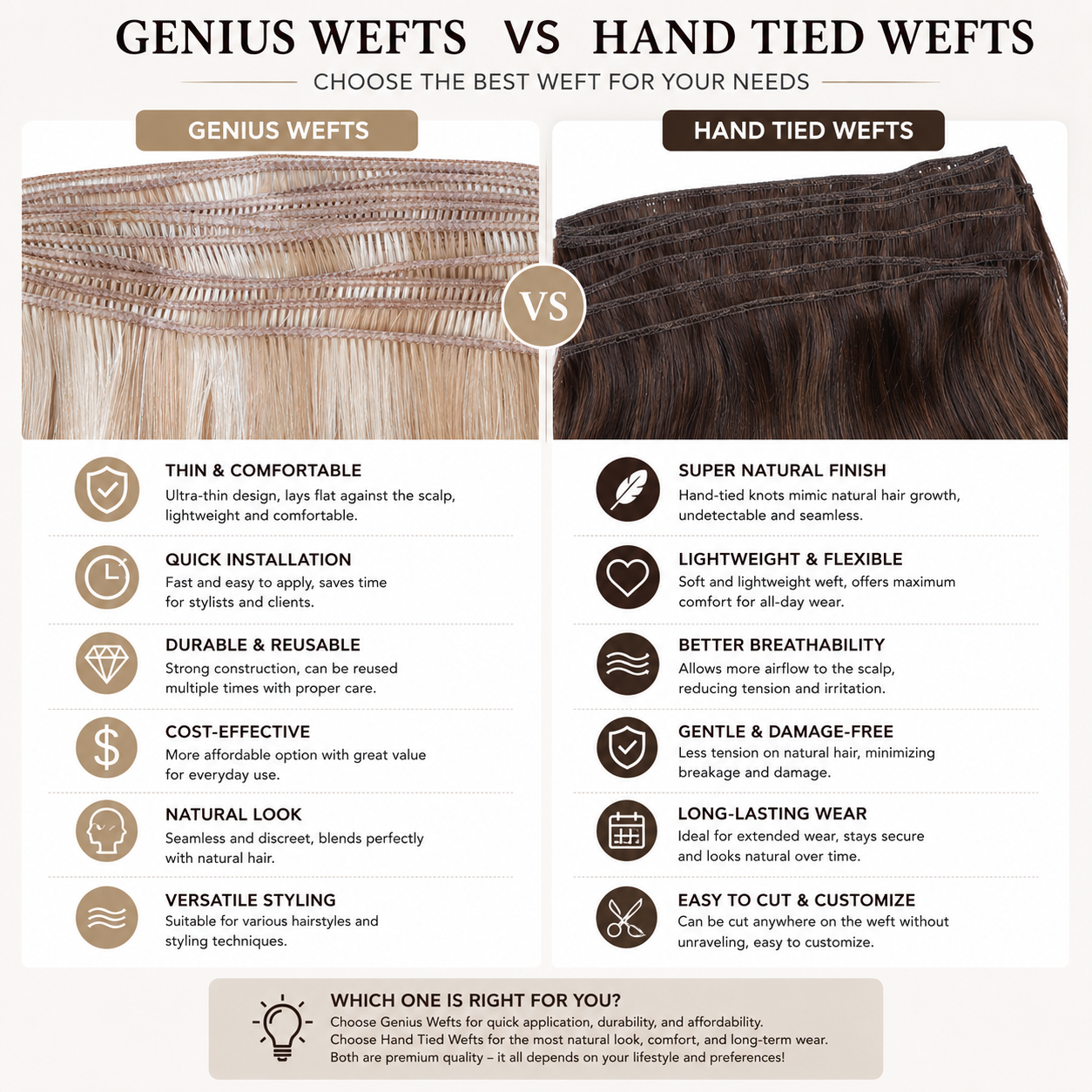
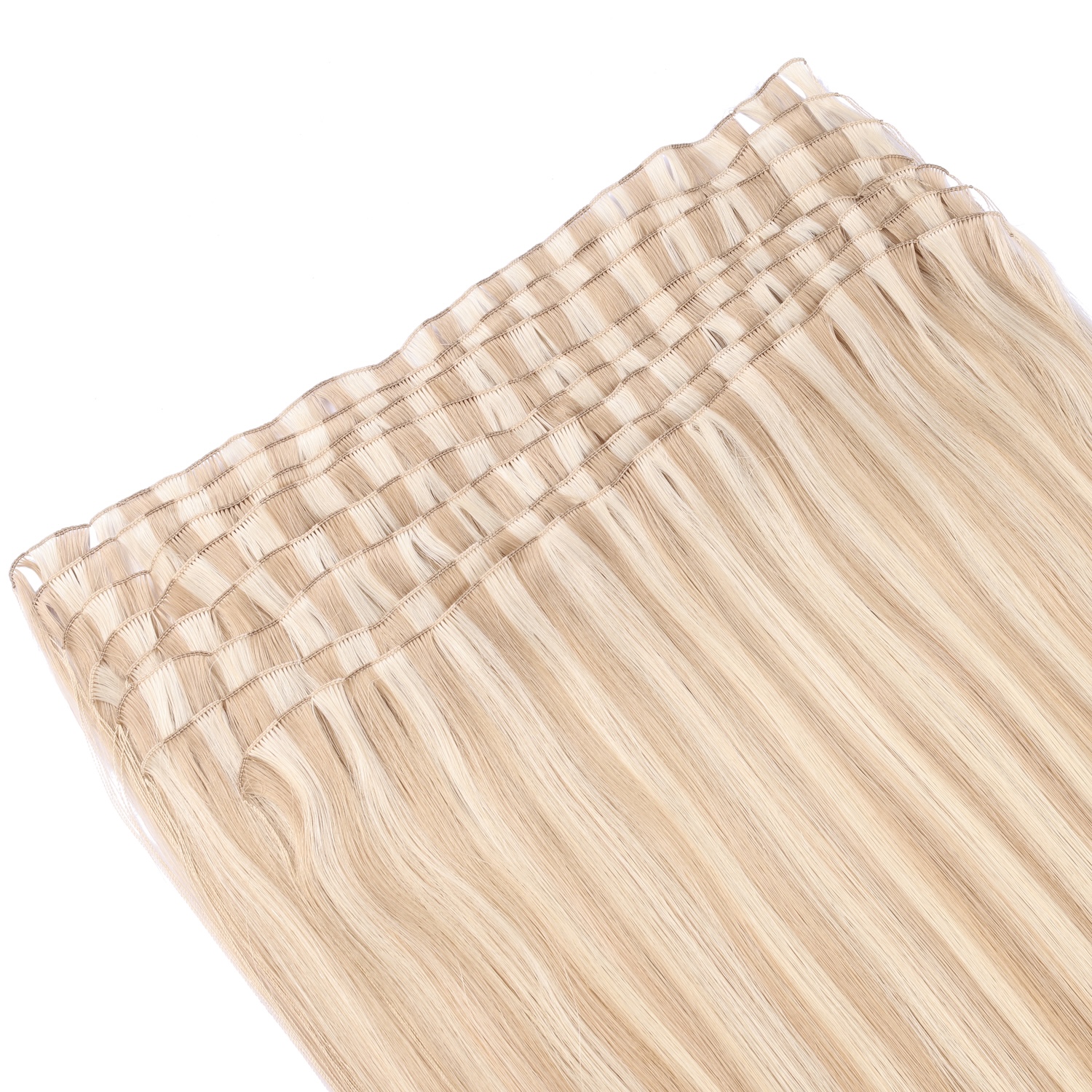
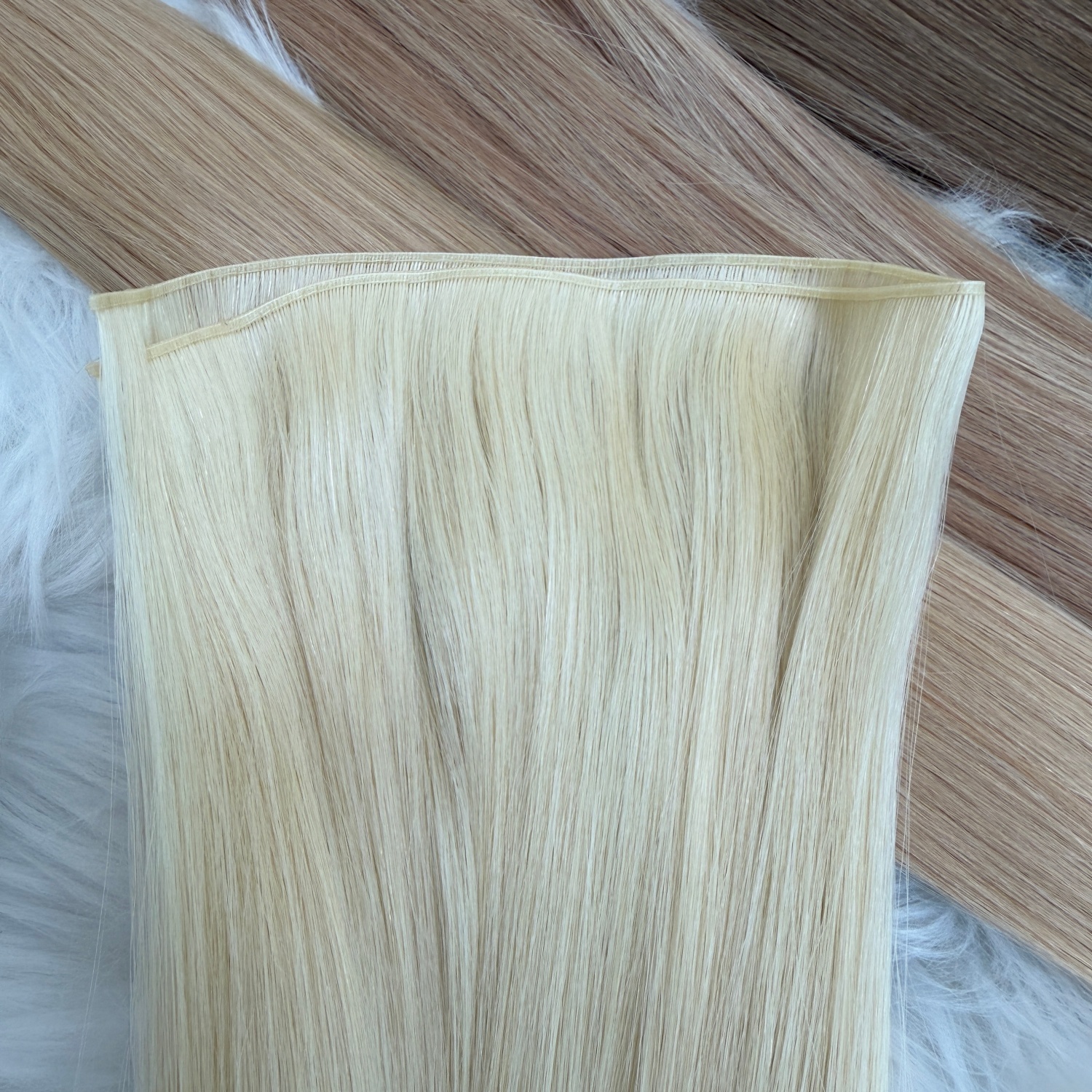
Hand-tied hair extensions are a premium category of hair wefts meticulously crafted by skilled artisans who hand-sew individual strands onto a thin, flexible silicone-based weft. Unlike machine-made alternatives, this labor-intensive process creates an ultra-thin, featherlight base that lies flat against the scalp for an undetectable blend. Each weft is customized with varying densities—thicker at the bottom for volume and gradually thinner toward the top to mimic natural hair growth.

Why They’re Unique:

  1. Seamless Integration – The delicate weft structure eliminates bulkiness, making them ideal for fine or thin hair.
  2. Natural Movement – With no stiff seams, the hair flows freely, behaving like your natural strands.
  3. Scalp Comfort – The lightweight design reduces tension, preventing irritation—perfect for sensitive scalps or long-term wear.

Best For:

  • Clients seeking a “second-skin” feel with no visible tracks.
  • Those prioritizing movement and realism over extreme volume.
  • Stylists who customize placements (e.g., around the crown or hairline).

Pro Tip: Hand-tied extensions require professional installation (typically bead/sewn-in methods) and gentle care to preserve their delicate structure. While higher in cost, their natural look and comfort justify the investment for many.

What Are Machine Weft Hair Extensions?

Machine weft hair extensions are high-quality hair wefts industrially stitched for strength and uniformity. Unlike hand-tied extensions, these wefts are created using specialized sewing machines that bind hair strands tightly to a reinforced fabric or silicone base. This automated process ensures consistent density and durability, making them a popular choice for clients who want long-lasting, voluminous hair without frequent replacements.

How They’re Made:

  1. Hair Preparation – Virgin or Remy human hair is sorted, aligned, and sterilized.
  2. Machine Sewing – Strands are stitched in layered rows onto a sturdy base, creating a thick, uniform weft.
  3. Quality Control – Each weft is inspected for secure stitching and minimal shedding.

Key Advantages:

  • Affordability – Faster production lowers costs compared to hand-tied extensions.
  • High Volume – The dense weft structure adds instant thickness, ideal for clients with medium to thick hair.
  • Longevity – With proper care, machine wefts last 6–12 months, resisting tangling and shedding better than delicate hand-tied wefts.

Best For:

  • Budget-conscious buyers who want salon-quality hair at a lower price.
  • Those needing dramatic volume for ponytails or updos.
  • Long-term wearers who prefer low-maintenance extensions.

Maintenance Tip: Machine wefts are heavier, so proper installation (sewn-in, clip-ins, or tape-in methods) is crucial to avoid scalp strain. Regular conditioning prevents dryness at the stitched base.

Key Differences Between Hand-Tied & Machine Weft Extensions

When choosing between hand-tied and machine weft hair extensions, understanding their fundamental differences in construction, comfort, and performance is crucial. Below, we break down five key comparison points to help you select the best option for your hair goals, lifestyle, and budget.


A. Construction: How They’re Made

Hand-Tied Extensions

  • Delicate, Ultra-Thin Wefts: Each weft is meticulously hand-sewn by a skilled technician, strand by strand, onto a thin, flexible silicone or fabric base.
  • Customizable Density: The hair is distributed unevenly to mimic natural growth—thicker at the bottom and finer toward the top.
  • Labor-Intensive Process: Because they’re handmade, production takes longer, contributing to their higher price.

Machine Weft Extensions

  • Thicker, Tightly Sewn Wefts: Industrial sewing machines bind hair strands in tight, uniform rows onto a reinforced base (usually silicone or polyurethane).
  • Mass-Produced for Consistency: The automated process ensures each weft has the same density, making them sturdier but less flexible.
  • Efficient Manufacturing: Faster production keeps costs lower compared to hand-tied extensions.

Which to Choose?

  • Hand-Tied if you want a featherlight, undetectable finish.
  • Machine Weft if you need durable, high-volume extensions at a lower cost.

B. Comfort & Weight

Hand-Tied Extensions

  • Lighter & More Flexible: The thin weft base reduces scalp tension, making them ideal for all-day comfort.
  • Better for Sensitive Scalps: Less bulk means less pulling, which is great for those prone to irritation.

Machine Weft Extensions

  • Slightly Heavier but Sturdy: The dense stitching adds weight, which can feel noticeable—especially with multiple wefts.
  • Strong Hold for Thick Hair: The extra weight helps anchor extensions securely in coarse or thick hair.

Which to Choose?

  • Hand-Tied if you prioritize lightweight, barely-there comfort.
  • Machine Weft if you have thick hair and don’t mind a firmer feel.

C. Natural Look & Blending

Hand-Tied Extensions

  • Seamless, Lies Flatter: The ultra-thin base blends invisibly, even when hair is pulled up (e.g., ponytails or updos).
  • Ideal for Fine/Thin Hair: Mimics natural hair distribution without visible tracks.

Machine Weft Extensions

  • May Require Extra Blending: The thicker base can be more noticeable on fine hair unless properly layered.
  • Best for Medium to Thick Hair: The density works well with naturally voluminous hair.

Which to Choose?

  • Hand-Tied if you want a flawless, no-trace finish.
  • Machine Weft if you have enough natural hair to conceal the weft.

D. Durability & Longevity

Hand-Tied Extensions

  • Lasts ~3-6 Months with Care: The delicate stitching is prone to loosening over time, especially with frequent styling.
  • Requires Gentle Maintenance: Avoid excessive heat and tugging to prolong lifespan.

Machine Weft Extensions

  • Lasts 6-12 Months: The tight machine stitching resists shedding and withstands more wear and tear.
  • Lower Maintenance: Holds up better to heat, brushing, and repeated washing.

Which to Choose?

  • Hand-Tied if you prefer short-term, high-end extensions.
  • Machine Weft if you want long-lasting, low-fuss wear.

E. Cost Comparison

Hand-Tied Extensions

  • More Expensive ($$$): The handmade process increases labor and material costs.
  • Higher Installation Fees: Often requires a skilled stylist for bead/sewn-in methods.

Machine Weft Extensions

  • Budget-Friendly ($-$$): Mass production makes them more affordable.
  • Versatile Installation: Works with sew-in, clip-in, or tape-in methods at varying price points.

Which to Choose?

  • Hand-Tied if you’re willing to invest in premium quality.
  • Machine Weft if you need cost-effective volume.

Final Verdict

  • Hand-Tied Wins For: Natural look, comfort, and seamless blending (best for fine/thin hair).
  • Machine Weft Wins For: Affordability, durability, and volume (ideal for thick hair or long-term wear).

By weighing these factors—construction, comfort, blending, longevity, and cost—you can confidently choose the right extensions for your needs.

Benefits of Hand-Tied Hair Extensions

Hand-tied hair extensions are the gold standard for clients seeking undetectable, luxurious hair enhancement. Unlike bulkier alternatives, these extensions offer three standout advantages that make them a top choice for stylists and wearers alike.

1. Lightweight & Comfortable for Daily Wear

  • Featherlight Design: The ultra-thin, hand-sewn weft base eliminates bulk, making them virtually weightless on the scalp.
  • Reduced Tension: Unlike thicker wefts, they don’t pull on natural hair, preventing discomfort during long-term wear.
  • All-Day Versatility: Perfect for active lifestyles—sleep, workout, or style without feeling “heavy” or restrictive.

2. Ideal for Fine or Thin Hair

  • Seamless Blending: The delicate weft lies flat against the scalp, creating a no-track illusion—even in updos or high ponytails.
  • No Visible Bulk: Unlike machine wefts, hand-tied extensions won’t create awkward “bumps” or reveal extension lines in sparse hair.
  • Mimics Natural Density: Graduated thickness (thinner at top, fuller at ends) replicates real hair growth patterns.

3. Customizable Placement for a Natural Look

  • Stylist-Friendly: Can be strategically placed around the crown, hairline, or layers for targeted volume where needed.
  • Movement & Realism: The flexible weft allows hair to flow naturally, avoiding the “stiff” look of pre-made tracks.
  • Personalized Styling: Works with various installation methods (beaded, sewn-in, or Halo hybrids) for tailored results.

Pro Tip: While hand-tied extensions require a higher initial investment, their realism and comfort make them a favorite for clients prioritizing quality over quantity. Regular maintenance (every 6–8 weeks) ensures longevity.

Benefits of Machine Weft Hair Extensions

Machine weft hair extensions offer a practical, high-performance solution for those seeking dramatic transformation without breaking the bank. Their durable construction and budget-friendly pricing make them ideal for clients who prioritize volume, longevity, and value. Here’s why they’re a smart choice:

1. More Affordable for High-Volume Needs

  • Cost-Effective Production: Machine-sewn wefts require less labor, making them significantly cheaper than hand-tied extensions—perfect for clients on a budget.
  • Salon-Quality at Lower Prices: Delivers professional-grade thickness without the premium price tag of handmade alternatives.
  • Ideal for Full-Head Applications: Need multiple wefts for maximum volume? Machine wefts provide more hair per dollar compared to delicate hand-tied options.

2. Stronger Hold, Less Prone to Shedding

  • Industrial-Strength Stitching: Tight, reinforced seams prevent strands from loosening, even with frequent washing or styling.
  • Minimal Shedding: The machine-sewn base keeps hair securely in place, maintaining fullness longer than hand-tied wefts.
  • Withstands Heat & Styling: Durable enough for curling, straightening, and updos without compromising integrity.

3. Great for Thick Hair or Long-Term Use

  • Built for Density: The thicker weft structure blends seamlessly with coarse or voluminous natural hair, avoiding a “see-through” effect.
  • Extended Lifespan (6–12 Months): Holds up to daily wear better than delicate hand-tied extensions, making it a long-term investment.
  • Low-Maintenance: Requires less frequent adjustments or replacements, saving time and money over time.

Pro Tip: For best results, pair machine wefts with a professional sew-in or clip-in installation to distribute weight evenly. Regular conditioning keeps the hair soft and tangle-free.

Who Should Choose Hand-Tied Hair Extensions?

Hand-tied extensions are the ultimate luxury choice for clients who value natural aesthetics and comfort over extreme volume. Here’s who benefits most from this premium option:

1. Those with Fine or Thin Hair

  • The ultra-thin, lightweight wefts lie flat against the scalp, creating an undetectable finish that thicker machine wefts can’t match.
  • Blends seamlessly without revealing tracks, even in updos or windy conditions.

2. People Prioritizing Comfort & a Seamless Blend

  • Ideal for sensitive scalps—no bulky seams or tension to cause irritation.
  • Moves and flows like natural hair, making it perfect for clients who want a “no-extensions” look.

3. Willing to Invest in Higher Maintenance

  • Requires professional installation (usually bead or sew-in methods) and salon upkeep every 6–8 weeks.
  • More delicate than machine wefts—gentle care (sulfate-free products, minimal heat) extends longevity.

Best For:

  • Brides, professionals, or anyone wanting invisible, high-end extensions.
  • Those willing to pay more for quality, realism, and scalp comfort.

Who Should Choose Machine Weft Hair Extensions?

Machine weft extensions are the go-to solution for clients who want dramatic volume without compromise. Here’s who benefits most from this durable, budget-friendly option:

1. Those Wanting Volume on a Budget

  • Delivers instant thickness at a fraction of the cost of hand-tied extensions.
  • Ideal for clients who need full-head coverage without luxury pricing.

2. People with Thick or Strong Hair

  • The sturdy, dense wefts blend effortlessly with coarse or voluminous natural hair.
  • Holds up to styling (curling, braiding) without losing shape or shedding excessively.

3. Prefer Low-Maintenance, Long-Lasting Wear

  • Requires fewer salon visits than delicate hand-tied extensions.
  • Lasts 6–12 months with proper care—perfect for clients who don’t want frequent replacements.

Best For:

  • Students, busy professionals, or anyone seeking affordable, high-impact hair.
  • Those with active lifestyles who need durable, hassle-free extensions.

Maintenance & Care Tips for Hair Extensions

Hand-Tied Extensions:

  • Wash gently with sulfate-free shampoo, focusing on the mid-lengths to ends.
  • Avoid excessive tugging or brushing near the wefts to prevent loosening.
  • Use a wide-tooth comb or extension brush, starting from the bottom and working upward.
  • Schedule salon maintenance every 6-8 weeks for tightening and adjustments.

Machine Weft Extensions:

  • Apply hydrating conditioner regularly to prevent dryness at the stitched base.
  • Detangle carefully before washing to minimize stress on the wefts.
  • Secure in a loose braid before sleeping to reduce friction and tangling.
  • Opt for professional removal when reinstalling to maintain weft integrity.

Pro Tip: For both types, avoid high heat near the bonds/wefts and use heat protectant when styling.

Conclusion: Choosing the Right Hair Extensions

Hand-tied and machine weft extensions each offer unique benefits—seamless blending vs. durable volume. Your choice depends on:

  • Hair Type (Fine/thin? Hand-tied. Thick/strong? Machine weft.)
  • Budget (Premium investment? Hand-tied. Affordable fullness? Machine weft.)
  • Lifestyle (Low-maintenance? Machine weft. Ultimate realism? Hand-tied.)

Consult your stylist to match your goals with the perfect extensions.

Alove Hair – Your Trusted Hair Extensions Manufacturer

Alove Hair is a leading Chinese manufacturer specializing in premium Hand-Tied Weft Extensions and Machine Weft Extensions. We use 100% high-quality human hair and advanced craftsmanship to deliver durable, natural-looking extensions for salons and clients worldwide.

Our Hand-Tied extensions offer seamless blending for a lightweight, undetectable finish, while our Machine Weft extensions provide long-lasting volume at a competitive price. With customizable lengths, colors, and densities, we cater to all hair needs.

Global clients welcome! Contact us today for wholesale inquiries, OEM services, and exclusive deals. Elevate your hair business with Alove Hair’s professional-grade extensions.

Email: info@alovehair.com
Website: https://www.alovehair.com/ 

Toupee vs Wig: Cost, Maintenance, and Appearance Compared

Hair loss can affect anyone, and finding the right solution is essential for boosting confidence and improving appearance. Among the most common options are toupees and wigs, two types of hairpieces designed to address different levels of hair loss. A toupee typically covers a smaller area of the scalp, often targeting specific bald spots or thinning regions like the crown or hairline. In contrast, a wig provides full head coverage, suitable for those experiencing more extensive hair loss or seeking a complete change in hairstyle.

Knowing the distinctions between toupees and wigs is crucial because they offer different benefits depending on your needs. Each comes with its own considerations in terms of comfort, cost, upkeep, and natural look. Many people mistakenly use these terms interchangeably, but understanding their unique features can help you choose the most appropriate option that fits your lifestyle and budget.

This article will break down the key differences between toupee vs wig, focusing on cost, maintenance, and appearance. You’ll learn how much each typically costs, what kind of care is required to keep them looking their best, and how natural they appear once worn. With this information, you’ll be better equipped to select the ideal hair replacement solution that matches your personal preferences and restores your self-esteem.

What is a Toupee?

toupee is a small hairpiece or partial wig designed primarily to cover areas of the scalp affected by hair loss, typically where thinning or balding is localized. Unlike full wigs that cover the entire head, toupees are made to blend seamlessly with the wearer’s existing hair, covering only specific spots such as the crown, top, or front hairline. Their main purpose is to restore the appearance of natural hair in these areas, helping individuals regain confidence and improve their overall look.

Toupees are commonly used by men experiencing male pattern baldness, especially those with receding hairlines or bald spots on the crown of the head. However, toupees can also be worn by women facing localized hair thinning or hair loss due to medical conditions or aging. While toupees have been popular for many decades, recent advances in materials and design have greatly improved their comfort, durability, and natural appearance.

The primary users of toupees tend to be men who want to conceal partial hair loss without wearing a full wig. Male pattern baldness typically causes hair to recede from the front or thin on the top, leaving other areas relatively unaffected. A toupee offers a practical solution for these individuals because it can be customized to match their existing hair color, texture, and style. This allows the toupee to blend naturally with their own hair, making it less noticeable to others. Some men prefer toupees because they are less bulky and easier to manage than full wigs, and they can be styled just like real hair.

When it comes to materials, toupees can be made from either synthetic fibers or human hair. Synthetic toupees are generally more affordable and easier to maintain, but they may not look or feel as natural as those made from real human hair. Human hair toupees, although more expensive, offer a highly realistic appearance and can be styled with heat tools, dyed, or treated just like natural hair. High-quality toupees often use Remy human hair, where the cuticles are kept intact and aligned, reducing tangling and prolonging the lifespan of the hairpiece.

The design and construction of toupees have also evolved significantly. Modern toupees often feature breathable bases made from materials such as lace, polyurethane, or monofilament. Lace bases offer a lightweight and nearly invisible appearance at the hairline, making the toupee look more natural. Polyurethane bases provide durability and a skin-like finish, allowing toupees to be attached securely with adhesives or tapes. Monofilament bases simulate the scalp and give the illusion of hair growing directly from the scalp, enhancing realism.

Additionally, many toupees include features that improve comfort and fit. Adjustable straps, clips, or adhesive systems ensure the hairpiece stays securely in place during daily activities. Some toupees are also designed to be water-resistant, allowing users to wear them while swimming or exercising.

In summary, a toupee is a specialized hairpiece designed to cover partial hair loss, primarily used by men with receding hairlines or thinning hair. Made from synthetic fibers or real human hair, toupees are crafted with advanced materials and techniques to provide a natural look, comfortable fit, and durable performance. For those experiencing localized hair loss, a well-chosen toupee can be an effective and stylish solution to restore their hair’s appearance and confidence.

What is a Wig?

wig is a full-head hairpiece designed to cover the entire scalp, replacing all of a person’s natural hair. Unlike toupees, which only cover partial hair loss, wigs provide complete hair coverage and are often used for both cosmetic and medical reasons. Wigs come in a wide variety of styles, lengths, colors, and materials, making them a versatile solution for anyone looking to change their appearance, conceal hair loss, or protect their natural hair.

The primary purpose of a wig is to offer full scalp coverage, whether due to hair thinning, alopecia, chemotherapy, or simply a desire for a new look. Wigs can transform a person’s style instantly and provide confidence by restoring the appearance of a full head of hair. They are available in many styles—from natural and subtle to bold and dramatic—catering to diverse personal preferences and needs.

Typical users of wigs include both men and women across various age groups. Women often wear wigs to manage hair loss caused by medical treatments such as chemotherapy, alopecia, or other health conditions. Wigs can also be a fashion accessory, allowing women to experiment with different hairstyles, colors, and lengths without altering their natural hair. Men also use wigs, especially those experiencing significant hair loss or complete baldness, or those interested in changing their style. Additionally, wigs are popular in entertainment industries—actors, performers, and cosplayers frequently use wigs to achieve specific looks or characters.

Wigs are made from two main types of materials: synthetic fibers and human hair. Synthetic wigs are crafted from man-made fibers designed to mimic the look and feel of real hair. These wigs are usually more affordable, require less maintenance, and hold their style well even after washing. However, they can sometimes appear less natural, and their styling options are limited because heat can damage synthetic fibers.

Human hair wigs, on the other hand, are made from real human hair, offering the most natural appearance and texture. They allow for more styling versatility, including heat styling, coloring, and cutting, just like natural hair. Because of their realism and flexibility, human hair wigs tend to be more expensive and require more maintenance to keep them looking their best.

In terms of design, wigs come in a variety of cap constructions to suit different needs and budgets. Some popular types include lace front wigs, which have a sheer lace panel at the front to create a natural-looking hairline; full lace wigs, which are made entirely of lace for maximum styling versatility; and monofilament wigs, where each hair is individually hand-tied to a thin mesh base, giving a realistic scalp appearance. Traditional cap wigs use a machine-made base and are usually more affordable but may offer less natural movement.

Wigs are also available in countless styles, ranging from short pixie cuts and sleek bobs to long curls and waves. Colors span from natural shades like black, brown, and blonde to vibrant hues like red, blue, or purple. This variety allows individuals to express their personality and style preferences easily.

In summary, a wig is a full-head hairpiece designed to cover the entire scalp, providing a complete hair replacement solution for people experiencing hair loss or those wanting a new hairstyle. Made from synthetic or human hair, wigs come in many styles and cap constructions to suit diverse needs. Whether for medical reasons, fashion, or convenience, wigs offer an effective and versatile way to enhance one’s appearance and confidence.

Cost Comparison: Toupee vs Wig

When deciding between a toupee and a wig, one of the most important considerations is cost. The price of these hairpieces can vary widely depending on several factors such as material quality, customization, brand, and additional features. Understanding the typical price ranges and what influences costs can help you make a more informed and budget-friendly decision.

Typical Price Range of Toupees

Toupees generally cover smaller areas of the scalp and tend to be less expensive than full wigs. The typical price for a toupee ranges from $200 to $1,500. Synthetic toupees, which are made from man-made fibers, are on the lower end of this spectrum, often costing between $200 and $600. Human hair toupees, which provide a more natural look and greater styling flexibility, usually range from $600 to $1,500 or more, depending on the quality and customization.

Typical Price Range of Wigs

Wigs cover the entire scalp and are usually more complex to make, which reflects in their price. Synthetic wigs typically range from $100 to $1,000, with many affordable options available for casual or short-term use. High-quality human hair wigs can cost anywhere from $500 to $3,000 or more, especially if they are custom-made or come from luxury brands. The price increases with the length of the hair, density, and the craftsmanship involved in creating the wig cap.

Factors Affecting Cost

Several factors influence the final price of both toupees and wigs:

  • Material Quality: Human hair is more expensive than synthetic fibers. Remy human hair, which preserves the cuticle alignment, costs more but offers better durability and appearance.
  • Customization: Custom-made hairpieces tailored to the individual’s scalp shape, hair color, and style preferences cost significantly more than ready-to-wear options.
  • Brand and Manufacturer: Established brands with a reputation for quality often charge premium prices. Luxury or designer wigs and toupees typically fall into a higher price bracket.
  • Cap Construction: Advanced features like lace fronts, monofilament tops, or breathable bases can increase the price due to the complexity and comfort they offer.
  • Length and Density: Longer and thicker hairpieces require more material and labor, increasing the cost.

Budget Considerations and Value

While toupees are generally less expensive, they may require more frequent replacement due to their smaller size and frequent use, potentially adding to long-term costs. Wigs, particularly high-quality human hair wigs, are an investment that often lasts longer with proper care. It’s essential to balance upfront costs with durability, maintenance expenses, and the desired natural look.

Hairpiece TypeMaterialTypical Price RangeCustomizationDurabilityMaintenance Cost
ToupeeSynthetic$200 – $600Low to MediumModerateLow to Moderate
ToupeeHuman Hair$600 – $1,500+Medium to HighModerate to HighModerate
WigSynthetic$100 – $1,000Low to MediumLow to ModerateLow to Moderate
WigHuman Hair$500 – $3,000+Medium to HighHighModerate to High

The choice between a toupee and a wig often comes down to your budget and specific needs. Toupees can be a cost-effective solution for partial hair loss, while wigs offer comprehensive coverage and styling versatility but at a higher price. Evaluating both upfront costs and long-term value will help you choose the best option that fits your lifestyle and financial plan.

Maintenance Requirements

Proper maintenance is essential to keep both toupees and wigs looking their best and to extend their lifespan. However, the care routines and time commitments for each can differ significantly depending on the type of hairpiece and its materials.

Daily Care of Toupees

Toupees require regular cleaning and careful handling, especially since they are often worn daily to cover partial hair loss. Cleaning a toupee typically involves gentle washing with specialized shampoos and conditioners designed for delicate hairpieces. Depending on usage, toupees should be cleaned every 1 to 2 weeks to remove oils, dirt, and product buildup.

Attachment methods also impact maintenance. Many toupees are secured with tapes, adhesives, clips, or combs, which require regular replacement or adjustment to maintain a secure and comfortable fit. Improper attachment can lead to discomfort, damage to natural hair, or slipping during wear.

The lifespan of a toupee depends on the materials and how well it is cared for. Synthetic toupees generally last about 3 to 6 months with regular use, while human hair toupees can last up to a year or more with proper maintenance. Given the frequent wear and partial coverage, toupees often need more attentive care to keep them looking natural and secure.

Maintenance of Wigs

Wigs, offering full head coverage, also demand consistent care but typically follow a slightly different routine. Washing wigs is recommended every 7 to 14 days depending on frequency of wear and exposure to environmental factors like sweat, dust, or styling products. Like toupees, wigs benefit from specially formulated shampoos and conditioners.

Storage is crucial for wigs to maintain shape and prevent tangling. When not worn, wigs should be placed on wig stands or mannequins to preserve their style and prevent damage. Proper storage also helps extend the wig’s lifespan.

Styling wigs varies based on the material. Synthetic wigs hold their shape well but usually cannot withstand heat styling, while human hair wigs can be styled with curling irons, straighteners, and colored or trimmed to suit personal preferences. This flexibility adds to the wig’s maintenance requirements but also its versatility.

Frequency and Difficulty of Upkeep

Overall, toupees often require more frequent maintenance due to their attachment systems and daily wear in localized areas. Wigs, while requiring regular washing and storage care, may involve less daily attention but can demand more effort if heat styling or color treatments are involved.

Convenience and Time Investment

For many users, toupees are convenient for quick partial coverage but require careful handling to avoid slippage. Wigs provide full coverage and styling versatility but may involve more preparation time each day. Ultimately, choosing between the two depends on personal lifestyle, how much time one can dedicate to upkeep, and desired appearance.

Appearance and Natural Look

One of the most important factors when choosing between a toupee and a wig is how natural they look once worn. Both hairpieces aim to restore a realistic hairline and scalp appearance, but they achieve this in different ways due to their design and coverage.

How Toupees Blend with Natural Hair

Toupees are designed to cover partial hair loss, which means they must seamlessly blend with the wearer’s existing hair. This blending is crucial for maintaining a natural look. Modern toupees often use lace fronts or monofilament bases that mimic the scalp’s appearance, allowing hair to appear as if it is growing directly from the skin. The edges of the toupee are carefully crafted to lay flat against the scalp and merge with natural hair, minimizing visible lines or gaps.

Because toupees cover only part of the scalp, matching the color, texture, and density of the wearer’s natural hair is essential. Skilled stylists often customize toupees by trimming, dyeing, or texturizing the hairpiece to ensure it integrates perfectly with the surrounding hair. When done well, toupees are nearly undetectable, giving a very natural and youthful appearance.

Appearance and Coverage of Wigs

Wigs provide full head coverage, which means they replace all natural hair and can completely transform a person’s look. High-quality wigs with lace fronts or full lace caps offer a realistic hairline and scalp simulation, making the wig appear as natural as possible. Monofilament wigs, where each hair strand is individually hand-tied to a mesh base, offer superior realism by mimicking the natural movement of hair.

Since wigs cover the entire scalp, they can be styled in any fashion, allowing users to experiment with different lengths, colors, and cuts without worrying about matching existing hair. This versatility can enhance the overall natural appearance, especially when the wig is chosen to complement the wearer’s face shape and skin tone.

Comfort and Breathability When Worn

Comfort plays a key role in the natural look of toupees and wigs. Breathable bases such as lace or monofilament allow air to circulate, preventing overheating and scalp irritation. Toupees, being smaller, generally feel lighter and cooler, while wigs may feel warmer due to full head coverage, especially in hot weather.

Advancements in materials have made many modern toupees and wigs lightweight and flexible, improving comfort and wearability. A well-fitted hairpiece also prevents unnatural movement or shifting, which is crucial for maintaining a natural look throughout the day.

Tips for Achieving the Most Natural Look

  • Choose the right base: Opt for lace front or monofilament bases that mimic the scalp.
  • Match hair color and texture: Customize the hairpiece to blend perfectly with natural hair or skin tone.
  • Proper fitting: Ensure the toupee or wig fits snugly without gaps or bulges.
  • Styling: Trim and style the hairpiece to suit your natural hair pattern or desired look.
  • Use minimal adhesives: Avoid excessive glue or tape that can create unnatural edges.
  • Regular maintenance: Keep the hairpiece clean and conditioned to maintain shine and softness.

By focusing on these factors, both toupees and wigs can provide a remarkably natural appearance that boosts confidence and comfort.

Pros and Cons Summary

Advantages of Toupees

  • Natural Blending: Toupees cover only partial hair loss and blend with existing hair, offering a subtle, natural look.
  • Lightweight and Comfortable: Smaller size makes them lighter and often more breathable than full wigs.
  • Easier Daily Use: Quicker to put on and remove for those who want occasional coverage.
  • Cost-Effective: Generally less expensive upfront compared to full wigs.

Disadvantages of Toupees

  • Limited Coverage: Only suitable for localized hair loss, not for complete baldness.
  • Attachment Maintenance: Requires adhesives or clips that need regular upkeep.
  • Potential for Slippage: Risk of moving or lifting if not properly secured.
  • Shorter Lifespan: Often replaced more frequently due to daily wear on small area.

Advantages of Wigs

  • Full Coverage: Ideal for those with extensive hair loss or total baldness.
  • Styling Versatility: Wide variety of lengths, colors, and styles to choose from.
  • High Realism: Advanced cap constructions (lace fronts, monofilament) offer very natural appearances.
  • Protects Natural Hair: Can shield natural hair from damage and environmental factors.

Disadvantages of Wigs

  • Higher Cost: Quality human hair wigs can be quite expensive.
  • More Maintenance: Requires regular washing, styling, and careful storage.
  • Can Feel Warm: Full head coverage may feel less breathable, especially in hot weather.
  • Daily Time Investment: Putting on and styling can take longer than toupees.

Which Option Suits Different Lifestyles and Needs?

  • Toupees are best for:
    Individuals with partial hair loss who want a lightweight, natural-looking option. Ideal for those who prefer minimal daily maintenance and quicker application. Good for men with receding hairlines or thinning crowns who want to blend with existing hair.
  • Wigs are best for:
    People with extensive or complete hair loss, including those undergoing medical treatments like chemotherapy. Also great for anyone seeking a full change in hairstyle or color without altering natural hair. Suitable for those willing to invest time and money in maintenance and styling.

Toupees offer a cost-effective, comfortable solution for partial hair loss, while wigs provide full coverage and greater styling flexibility at a higher cost and care level. Choosing between the two depends on the extent of hair loss, lifestyle preferences, and budget.

Conclusion

Toupees and wigs serve different needs when it comes to hair replacement. Toupees provide partial coverage, blending seamlessly with natural hair and offering a lightweight, cost-effective solution for localized hair loss. Wigs, on the other hand, offer full scalp coverage, greater styling versatility, and a more dramatic transformation but often come with higher costs and maintenance demands.

When considering cost, toupees tend to be more affordable upfront, while wigs, especially human hair ones, require a larger investment but can last longer. Maintenance for toupees involves frequent attachment care, whereas wigs need regular washing, styling, and proper storage. In terms of appearance, both can look natural with the right fit and customization, but wigs allow for more style options.

Ultimately, the best choice depends on your lifestyle, budget, and personal preferences. Take time to evaluate your needs, and select the hairpiece that boosts your confidence and fits your daily routine best.

How to Start Your Own Hair Extension Line?

Starting your own hair extension line isn’t just a trend—it’s a serious business opportunity. The global demand for hair extensions continues to grow as more people look for volume, length, and styling flexibility without waiting months (or years) for natural growth.

But here’s the reality: launching a successful hair extension brand takes more than sourcing bundles and posting on social media. It requires strategy, quality control, branding, and a clear understanding of your market.

This guide walks you through every step—from idea to launch and beyond—so you can build a hair extension line that stands out and actually sells.


Why Start a Hair Extension Business?

Before diving in, let’s address the “why.”

The hair extension industry is attractive because:

  • High profit margins (especially with direct sourcing)
  • Repeat customers (hair needs replacement over time)
  • Strong demand across global markets
  • Low barrier to entry compared to many manufacturing businesses

But it’s also competitive. Which means your success depends on how well you differentiate—not just how quickly you start.


Step 1: Define Your Niche (Don’t Try to Sell to Everyone)

One of the biggest mistakes beginners make is trying to serve everyone. That usually leads to blending in—and blending in doesn’t sell.

Popular Niches in Hair Extensions

  • Luxury virgin hair extensions
  • Affordable everyday wear
  • Extensions for thin or fine hair
  • Curly or textured hair (Afro, kinky, coily)
  • Clip-ins for beginners
  • Professional salon-grade extensions

How to Choose Your Niche

Ask yourself:

  • Who is my target customer?
  • What problem am I solving?
  • What makes my product different?

👉 Example: Instead of “hair extensions,” go for “lightweight hand-tied extensions for fine hair.” Much clearer—and much easier to market.


Step 2: Understand the Product (You Can’t Sell What You Don’t Know)

Hair extensions vary widely in quality, construction, and origin.

Key Product Types

  • Clip-in extensions
  • Tape-in extensions
  • Hand tied wefts
  • Machine wefts
  • Keratin (fusion) extensions
  • Wigs and toppers

Key Quality Factors

  • Hair Type: Remy vs non-Remy
  • Origin: Brazilian, Indian, Vietnamese, etc.
  • Processing: Virgin, dyed, chemically treated
  • Cuticle alignment: Determines longevity and tangling

The better you understand these, the better your product positioning—and pricing—will be.


Step 3: Find a Reliable Supplier (This Is Everything)

Your supplier can make or break your brand. Seriously—this is not the place to cut corners.

Where to Source Hair Extensions

  • Direct manufacturers (often overseas)
  • Wholesale distributors
  • Private label suppliers

What to Look For

  • Consistent quality
  • Transparent sourcing
  • Customization options (length, color, density)
  • Low minimum order quantity (MOQ) for beginners
  • Good communication (underrated but critical)

Pro Tip

Order samples from multiple suppliers. Test:

  • Shedding
  • Tangling
  • Longevity after washing
  • Color consistency

If the sample disappoints, imagine 100 customers having the same experience. Not fun.


Step 4: Build Your Brand Identity

You’re not just selling hair—you’re selling a look, a feeling, a transformation.

Key Branding Elements

1. Brand Name

  • Memorable and easy to spell
  • Relevant to beauty or confidence

2. Logo and Visual Style

  • Clean, professional design
  • Consistent color palette

3. Brand Voice

  • Luxurious? Friendly? Professional? Bold?
  • Pick one and stay consistent

4. Packaging

  • Custom boxes, silk bags, or branded wraps
  • First impressions matter (unboxing is marketing)

Step 5: Create Your Product Line

Start simple. You don’t need 50 SKUs on day one.

Recommended Starter Line

  • 3–5 lengths (e.g., 14”, 18”, 22”, 26”)
  • 3–5 colors (natural black, dark brown, balayage options)
  • 1–2 extension types

This keeps inventory manageable while still offering variety.


Step 6: Set Your Pricing Strategy

Pricing is not just about covering costs—it reflects your brand positioning.

Basic Pricing Formula

Cost (product + shipping + packaging) × markup = retail price

Typical Markup Range

  • 2x to 5x depending on brand positioning

Consider

  • Competitor pricing
  • Target audience budget
  • Perceived value

Cheap pricing may attract customers—but it can also signal low quality.


Step 7: Build an Online Presence (Your Digital Storefront)

If your brand doesn’t exist online, it doesn’t exist (harsh but accurate).

Must-Have Platforms

1. Website

  • Shopify or WooCommerce
  • Clean design
  • Mobile-friendly

2. Social Media

  • Instagram (visual storytelling)
  • TikTok (viral potential)

3. Content Strategy

  • Before-and-after transformations
  • Tutorials
  • Customer testimonials

Step 8: Product Photography & Content Creation

Hair extensions are visual products—your images must sell the experience.

What You Need

  • High-quality product photos
  • Lifestyle images
  • Videos showing installation and styling

Content Ideas

  • “Before and after” transformations
  • Styling tutorials
  • Maintenance tips
  • Influencer collaborations

Step 9: Marketing Your Hair Extension Line

Even the best product won’t sell without visibility.

Key Marketing Channels

1. Influencer Marketing

  • Partner with hairstylists and beauty creators
  • Micro-influencers often have better engagement

2. Social Media Ads

  • Targeted ads on Instagram and TikTok

3. SEO Content

  • Blog posts (like this one)
  • Keywords such as:
    • “best hair extensions for thin hair”
    • “how to install hand tied wefts”

4. Email Marketing

  • Build a customer list
  • Offer discounts, tips, and updates

Step 10: Customer Experience (This Is Your Secret Weapon)

Great products get customers. Great experiences keep them.

Focus Areas

  • Fast shipping
  • Clear communication
  • Easy returns
  • Helpful support

Happy customers = repeat business + word-of-mouth marketing.


Step 11: Legal & Business Setup

Not glamorous, but necessary.

Essentials

  • Register your business
  • Choose a business structure (LLC, etc.)
  • Open a business bank account
  • Understand import regulations (if sourcing internationally)

Step 12: Launch Your Brand

Don’t wait for perfection—it doesn’t exist.

Launch Strategy

  • Pre-launch teaser on social media
  • Offer early-bird discounts
  • Send products to influencers before launch
  • Collect reviews quickly

Step 13: Scale Your Business

Once you gain traction:

  • Expand product range
  • Introduce new colors or textures
  • Collaborate with salons
  • Consider wholesale opportunities

Common Mistakes to Avoid

Let’s save you from expensive lessons:

  • Choosing the cheapest supplier
  • Ignoring branding
  • Overloading inventory too early
  • Skipping quality testing
  • Inconsistent marketing


Final Thoughts

Starting your own hair extension line is absolutely achievable—but success comes from doing the fundamentals well.

Focus on:

  • Quality products
  • Clear branding
  • Smart marketing
  • Strong customer experience

Do that consistently, and your brand won’t just exist—it will grow.

And who knows? One day someone might be wearing your extensions, getting compliments, and casually saying, “Oh this? It’s just my hair.” (Technically true… just with a little help.)

Lace Front vs Full Lace Wigs: Pros, Cons, and Key Differences

Finding the perfect wig isn’t just about looks—it’s about comfort, confidence, and how well the style fits your lifestyle. Whether you wear wigs daily, for special occasions, or as a protective style, choosing the right type of wig can make a significant difference in both appearance and experience. With so many wig options available today, two of the most popular and frequently compared types are lace front wigs and full lace wigs.

Both lace front and full lace wigs offer realistic finishes and styling versatility, but they are built differently, feel different when worn, and require different levels of maintenance and application. A lace front wig features sheer lace along the front hairline only, making it ideal for achieving a natural-looking hairline while keeping the rest of the cap constructed for easy wear. In contrast, a full lace wig has lace covering the entire cap, allowing for more flexible styling—including updos and ponytails—with a scalp-like appearance from every angle.

In this guide—Lace Front vs Full Lace Wigs: Pros, Cons, and Key Differences—we’ll explore what sets these two wig types apart. You’ll learn how each is constructed, their unique benefits and drawbacks, and which one may suit your needs best. Whether you’re a beginner or a wig-wearing pro, this article will help you make an informed decision based on your budget, styling preferences, and comfort level. Let’s dive into the world of lace wigs and uncover which type is the perfect match for you.

What Is a Lace Front Wig?

When it comes to achieving a natural-looking hairline and easy styling, lace front wigs are among the most popular choices. Whether you’re new to wigs or a seasoned wearer, understanding what a lace front wig is—and what makes it unique—can help you determine if it’s the right option for you.

Definition and Structure

lace front wig is a type of wig that features a piece of sheer lace sewn along the front edge of the wig cap. The lace, typically stretching from ear to ear, is designed to mimic the natural hairline. Individual hair strands are hand-tied into the lace section, giving the illusion that the hair is growing directly from your scalp. The rest of the cap is usually made of a more durable, machine-made material, such as wefted tracks or mesh, which provides structure and support.

The lace used can vary in color to match different skin tones, and the density of the hair is carefully distributed to create a realistic transition from the lace front to the rest of the wig. The lace itself is thin and breathable, which makes it comfortable to wear and allows for some airflow to the scalp.

Some lace front wigs come pre-plucked (with a natural-looking hairline already shaped), while others may require some customization. Baby hairs are also often added along the front for a more realistic effect.

How It Looks When Worn

One of the biggest appeals of lace front wigs is how realistic and seamless they appear when worn correctly. Because the lace lies flat against the skin and the hair is hand-tied, the front of the wig blends almost invisibly with the wearer’s natural hairline. This makes it ideal for styles where the hair is worn down or slightly pulled back, such as side parts, middle parts, and soft waves.

However, because the lace is only in the front, you are somewhat limited in how you can style the hair. Updos or high ponytails may expose the non-lace parts of the wig cap, making them less suitable for these looks unless the wig is specially designed with additional lace coverage around the perimeter.

When properly installed—with adhesive, wig tape, or a secure glueless method—a lace front wig can stay in place for hours or even days. The hair appears to be growing naturally from the scalp, and many people find the look indistinguishable from real hair.

Common Uses and Who It’s Best For

Lace front wigs are incredibly versatile and widely used across many groups, including:

Everyday wearers: Thanks to their natural look and relatively easy application, lace front wigs are great for people who wear wigs daily, whether due to hair loss, protective styling, or fashion.

Beginners: Lace front wigs are often recommended for new wig users because they offer a balance between realism and ease of use. They typically require less maintenance and application skill compared to full lace wigs.

Cosplayers and performers: For actors, drag performers, and cosplayers who want a believable hairline for characters, lace front wigs are a go-to option. They hold up well under lights and camera close-ups.

People on a budget: Since lace front wigs are more affordable than full lace wigs, they offer an excellent value without sacrificing appearance. They allow users to experiment with different styles and colors without a major financial commitment.

Those who prefer quick styling: Lace front wigs are ideal for people who want a good-looking wig that doesn’t take hours to install or maintain.

Despite their benefits, lace front wigs aren’t perfect for everyone. If you plan to wear your hair in updos or high ponytails often, the limited lace coverage may be a drawback. Similarly, if you need a wig that mimics scalp appearance from all angles, you might want to consider a full lace wig instead.

A lace front wig offers a natural-looking hairline, ease of wear, and affordability, making it an excellent choice for both beginners and experienced wig wearers alike. With proper installation and care, it can dramatically enhance your look while keeping your styling options open—within reason. It’s a great solution if your priority is a realistic front view, easy maintenance, and a wig that delivers high impact without a high price tag.

What Is a Full Lace Wig?

For those seeking the most natural appearance and maximum styling flexibility, full lace wigs are considered the gold standard in the world of wigs. Though they tend to come at a higher price point and require more skill to install, their seamless look and versatility make them a favorite among professional stylists, celebrities, and experienced wig users.

Definition and Structure

full lace wig is a type of wig where the entire cap is made of lace—usually Swiss or French lace—rather than just the front section. This means that individual hair strands are hand-tied throughout the entire cap, not just along the hairline. The result is a wig that mimics the appearance of natural hair growth from all angles, allowing for a highly realistic, 360-degree look.

Unlike lace front wigs, which only have lace at the front of the cap, full lace wigs provide complete lace coverage. This allows the wig to sit flush against your scalp no matter where the part is placed or how the hair is styled. Since the hair is hand-tied onto lace, it can move freely in all directions, adding to the natural look and feel.

Most full lace wigs also include adjustable straps or small combs inside the cap to help secure the wig in place. While some people opt for glue or wig adhesive for a longer-lasting hold, others prefer glueless full lace wig options for daily wear.

Full Lace Coverage and Styling Flexibility

One of the standout features of a full lace wig is its unmatched styling versatility. Because the lace covers the entire scalp area, you can part the hair anywhere—middle, side, or even a zigzag—without revealing wefts or tracks. This makes full lace wigs ideal for anyone who loves changing up their hairstyle regularly.

You can also confidently wear styles that pull the hair away from the face, such as:

High ponytails

Top knots and buns

Braided updos

Space buns

Half-up, half-down styles

These styles would typically expose the base of a lace front wig, but with a full lace wig, the illusion of hair growing from the scalp remains consistent from every angle. This makes them especially useful for high-impact looks, photo shoots, or stage performances where every angle matters.

In addition to styling, full lace wigs are often lighter and more breathable than other types, making them a more comfortable choice for long-term wear—especially in hot or humid climates.

Popular Among Experienced Wig Users or Stylists

While full lace wigs offer numerous benefits, they do come with a steeper learning curve and are often best suited for those with wig experience or the help of a stylist. Installing a full lace wig typically takes more time and precision, especially if you want a flawless, long-lasting result. It often involves:

Careful placement with adhesive or tape

Blending lace with the scalp

Optional bleaching of the knots to further enhance realism

Strategic styling to maintain the natural look

For this reason, full lace wigs are a favorite among professional stylists who work with clients looking for premium results. Celebrities, influencers, and people in the entertainment industry frequently use full lace wigs for red carpets, television appearances, and film work due to their photorealistic quality.

They are also popular among those experiencing hair loss from medical conditions or treatments, as full lace wigs offer complete coverage and comfort while allowing the scalp to breathe.

However, it’s important to note that full lace wigs do require more maintenance and care than other wig types. Because the lace is delicate and the hair is individually tied, improper handling can shorten the lifespan of the wig. Washing, detangling, and storage should all be done with extra care to preserve the quality and longevity of the unit.

A full lace wig is the ultimate choice for those who prioritize realism, styling freedom, and all-around comfort. With its full-lace construction, it provides a scalp-like appearance no matter how you wear it, offering endless options for parting and updos. While it requires more skill to apply and maintain, the end result is a stunningly natural look that’s hard to beat.

If you’re serious about your wig game—whether for everyday wear, professional styling, or stage-ready glam—a full lace wig is an investment that delivers unmatched quality and versatility.

Key Differences Between Lace Front and Full Lace Wigs

While both lace front wigs and full lace wigs are designed to provide a natural appearance, they differ significantly in their construction, styling potential, comfort, application methods, and price. Understanding these key differences is essential when deciding which type is best suited to your lifestyle, styling needs, and budget.

1. Cap Construction

The most fundamental difference between lace front and full lace wigs lies in how they are built.

Lace Front Wigs have lace only at the front portion of the wig—typically from ear to ear. The rest of the cap is usually made from a stronger, machine-stitched material such as wefts or a stretch cap. The lace section allows for a natural-looking hairline, but the back and sides are not hand-tied or lace-based.

Full Lace Wigs, on the other hand, are constructed entirely with lace. The hair is individually hand-tied throughout the entire cap, not just in the front. This full-lace structure allows for more realistic movement and the illusion of hair growing directly from the scalp all over the head.

Because of this, full lace wigs offer superior realism from every angle, while lace front wigs primarily focus on the front view.

2. Styling Options

Styling flexibility is a major factor in choosing a wig, especially if you enjoy experimenting with different looks.

Lace Front Wigs are best suited for styles where the hair flows downward, such as straight styles, curls, or side parts. While you can pull the hair back slightly, styles like high ponytails or updos may expose the wefted back portion of the wig, which can ruin the illusion of a natural scalp.

Full Lace Wigs are the clear winner in terms of styling versatility. Because the lace covers the entire head, you can part the hair anywhere, wear it in high ponytails, buns, braids, or even cornrows without revealing the base of the wig. These wigs are ideal for updos or styles where the hair is lifted off the face and neck.

If you need maximum styling freedom, especially for formal looks, performances, or frequent changes, a full lace wig is the better choice.

3. Breathability and Comfort

Comfort plays a big role in wig wearability, especially for daily use or extended wear.

Lace Front Wigs offer good breathability at the hairline, but the rest of the cap—often made from thicker materials—can trap heat, making them slightly less breathable. However, they are still relatively lightweight and comfortable for many wearers.

Full Lace Wigs are made entirely of lace, which is a thin, lightweight, and breathable material. This means your scalp can “breathe” more easily, reducing sweat buildup and making the wig more comfortable for all-day wear—even in warmer climates.

If scalp comfort and airflow are important to you, full lace wigs have the advantage.

4. Application Process

The ease of applying and securing your wig can influence how often and comfortably you wear it.

Lace Front Wigs are generally easier to apply, especially for beginners. Many come with pre-cut lace, combs, and adjustable straps, and can be worn glueless. While some users prefer adhesive for a firmer hold, lace front wigs typically require less time and skill to install.

Full Lace Wigs demand a bit more expertise. Because they offer 360-degree lace coverage, they often require adhesive or wig tape around the entire perimeter to ensure a seamless, natural finish—especially if worn in updos. This makes the application process longer and more involved, which may be challenging for first-time users.

If you’re looking for quick and beginner-friendly application, lace front wigs are a great place to start.

5. Price Range

Cost is often one of the most important considerations when purchasing a wig.

Lace Front Wigs are generally more affordable. Because the lace is limited to the front of the wig and the rest is machine-made, the production cost is lower. This makes lace front wigs ideal for budget-conscious buyers or those who like to own multiple styles.

Full Lace Wigs are more expensive due to the labor-intensive hand-tying process and the full lace construction. However, the price reflects the added realism, styling flexibility, and craftsmanship.

If you’re seeking a budget-friendly option, a lace front wig is a smart choice. But if you’re ready to invest in top-tier quality and freedom, a full lace wig is worth the price.

The key differences between lace front wigs and full lace wigs come down to cap construction, styling freedom, comfort, ease of use, and price. Lace front wigs are a great starting point for those who want a natural look with simpler maintenance, while full lace wigs are perfect for experienced users who want complete control over their hairstyle and a flawless finish from every angle.

Knowing your lifestyle, experience level, and styling goals will help you choose the right wig type with confidence.

Pros and Cons of Lace Front Wigs

Lace front wigs have become a go-to choice for many wig wearers due to their blend of natural appearance, ease of use, and affordability. But like any beauty product, they come with their own set of advantages and limitations. In this section, we’ll break down the pros and cons of lace front wigs to help you decide if they’re the right choice for your needs.

Pros of Lace Front Wigs

1. More Affordable

One of the biggest benefits of lace front wigs is their cost-effectiveness. Compared to full lace wigs, lace front wigs are significantly more affordable while still offering a realistic look. This makes them a great option for those who are just starting out with wigs, experimenting with new styles, or looking to expand their collection without spending too much.

The reduced cost is mainly due to their construction. Only the front portion of the cap contains hand-tied lace, while the rest of the wig is made with machine-sewn tracks or wefts. This allows manufacturers to offer a high-quality appearance without the labor-intensive production of full lace units.

2. Natural Hairline Appearance

Perhaps the most celebrated feature of lace front wigs is their ability to mimic a natural hairline. The sheer lace at the front blends seamlessly with your skin, creating the illusion that hair is growing directly from your scalp. When properly applied, the lace front can be nearly invisible, especially if it matches your skin tone and is installed with precision.

This makes lace front wigs ideal for styles that show off the front of the hairline—such as center parts, side parts, or slicked-back looks—providing a polished and natural appearance.

3. Easier to Apply for Beginners

If you’re new to wearing wigs, lace front styles are often the best place to start. They are typically easier to apply and manage than full lace wigs. Many lace front wigs come pre-plucked and with baby hairs, saving you time on customization. Some versions are glueless and include adjustable straps and combs, allowing for a secure fit without adhesive.

The simpler application process makes lace front wigs a practical choice for everyday wear, especially for users who want a natural look without spending a lot of time on installation.

Cons of Lace Front Wigs

1. Limited Styling Flexibility

While lace front wigs offer a beautiful, natural hairline, they do come with styling limitations. Since the lace is only at the front, you can’t part the hair freely across the scalp. Deep side parts are possible, but styles like high ponytails, buns, or braided updos may expose the wefted back or sides of the wig cap.

If you enjoy frequently switching up your hairstyle or wearing looks that pull hair away from the face and neck, a lace front wig might not provide the full flexibility you need.

2. Less Breathable in the Back

Another drawback of lace front wigs is that they are typically less breathable than full lace wigs, especially in the back. The cap construction behind the lace front usually consists of thicker, machine-sewn wefts that don’t allow as much airflow to the scalp.

For most users, this isn’t a major issue, especially if the wig is worn for a few hours at a time. However, in warmer climates or for long-term daily wear, this reduced breathability may cause slight discomfort or increased sweating, particularly in the summer.

Lace front wigs strike a strong balance between natural appearance, ease of use, and affordability. They’re especially well-suited for beginners or anyone who wants a high-quality, low-maintenance wig that still delivers a polished, realistic look. While they don’t offer the same level of styling freedom or breathability as full lace wigs, the pros often outweigh the cons—especially for everyday wear or special occasions.

If you’re looking for a wig that offers a beautiful hairline and is easy to work with, lace front wigs are an excellent choice.

Pros and Cons of Full Lace Wigs

Full lace wigs are considered the premium choice among wig types, offering unmatched realism and styling versatility. However, this high-end option comes with certain challenges that may not suit every wearer. Below, we break down the main pros and cons of full lace wigs to help you understand whether they’re the right fit for your hair goals and lifestyle.

Pros of Full Lace Wigs

1. Full Styling Freedom

One of the most significant advantages of a full lace wig is its complete styling flexibility. Because the entire cap is made of lace and the hair is hand-tied, you can part the hair anywhere on the scalp. This allows for a wide range of hairstyles—middle parts, deep side parts, braids, buns, space buns, cornrows, and especially high ponytails and updos.

This 360-degree realism makes full lace wigs ideal for anyone who likes to change their hairstyle frequently or needs a wig that looks natural from every angle.

2. More Natural-Looking from All Angles

Full lace wigs provide the most realistic appearance available. Since the lace covers the entire head and each strand of hair is individually tied, the result is a look that closely mimics natural hair growth, no matter where you’re looking from.

This makes full lace wigs a top choice for professional settings, photography, or performance environments where attention to detail matters—especially around the edges, parting, and nape of the neck.

3. Lightweight and Breathable

Despite their intricate design, full lace wigs are actually lightweight and highly breathable. The lace material allows airflow throughout the scalp, reducing heat buildup and sweat during extended wear. This makes them especially comfortable in warm climates or for users who wear wigs all day long.

Compared to traditional machine-made or lace front wigs, full lace units offer better ventilation and a lighter feel on the head.

Cons of Full Lace Wigs

1. More Expensive

Full lace wigs are typically more expensive than lace front wigs due to their complex construction. Each strand of hair is individually hand-tied into lace, which is a labor-intensive process. The full lace cap adds both realism and versatility—but at a cost.

While the investment may be worth it for serious wig wearers or professionals, the higher price point can be a barrier for those on a budget or just starting out.

2. Requires More Skill to Install

Another drawback is that full lace wigs require more skill and time to apply correctly. Because the lace extends all around the head, most users opt for adhesive or wig tape to secure the wig, particularly when styling in updos or exposing the nape area.

Incorrect application can lead to lifting or visible lace, which compromises the natural appearance. Beginners may find this process intimidating and may need help from a stylist.

3. Longer Application Time

Compared to lace front wigs, full lace wigs generally take more time to apply and style. The process often includes aligning and gluing the lace along all edges, blending it into the skin, and carefully styling the hair. For daily use, this extended prep time may not be practical for everyone.

A full lace wig offers luxury, realism, and styling freedom that few other wigs can match. However, it also demands more in terms of investment, skill, and time. If you’re looking for maximum versatility and a flawless look from every angle—and you’re comfortable with the application process—then a full lace wig is a worthwhile investment.

Which Wig Is Best for You?

Choosing between a lace front wig and a full lace wig ultimately depends on your budget, styling preferences, experience level, and how often you plan to wear the wig. Each type has its strengths, and the best choice will align with your personal needs and lifestyle.

Consider Your Budget

If you’re working with a limited budget or just starting your wig journey, a lace front wig offers excellent value. It provides a natural-looking hairline at a more affordable price. On the other hand, if you’re ready to invest in a premium wig with all the styling flexibility and realism possible, a full lace wig is worth the higher cost.

Think About Styling Needs

Your typical hairstyles will play a big role in your decision. If you prefer simple styles with the hair worn down or parted in front, a lace front wig will serve you well. But if you love high ponytails, buns, braids, or versatile parting, a full lace wig is the better fit due to its 360-degree lace coverage.

Evaluate Your Experience Level

New to wigs? A lace front wig is often easier to apply and manage. It usually comes ready to wear with adjustable straps and minimal adhesive needed. If you’re more experienced or plan to work with a stylist, the full lace wig gives you the freedom and professional-level finish you may want.

Daily Wear vs Special Occasions

For everyday use, lace front wigs are lightweight, quick to apply, and budget-friendly. For special events, performances, or long-term use, full lace wigs provide superior realism and comfort, especially for extended wear.

In the end, the right wig is the one that meets your needs—both practically and stylistically.

Tips for Choosing the Right Wig

Selecting the perfect wig involves more than just style—it’s about fit, comfort, and maintenance. Here are some helpful tips to ensure you choose a wig that looks natural and lasts longer.

How to Measure Your Head Size

Accurate measurement is key to a comfortable wig fit. Use a soft measuring tape and measure:

Around your head: Start at your natural hairline on the forehead, wrap the tape around just above your ears, and back to the starting point.

Front to back: Measure from your hairline at the center of your forehead to the nape of your neck.

Ear to ear: Measure from the top of one ear across your scalp to the other ear.

Compare your measurements with the wig’s sizing chart to find the best fit—common sizes are small, medium, and large. A properly sized wig reduces slipping and ensures a natural look.

Importance of Lace Color and Wig Density

Choosing the right lace color is crucial for blending the wig with your skin tone. Lace comes in shades like light, medium, and dark—select one closest to your complexion for a seamless hairline.

Wig density refers to how thick or full the hair looks. Typical densities range from 130% (light) to 180% (full). If you want a natural everyday look, lighter densities are ideal. For a voluminous style or special occasions, higher densities work better.

Maintenance Tips for Both Wig Types

Proper care extends the life of your wig:

Wash gently with sulfate-free shampoo and conditioner designed for wigs.

Detangle carefully using a wide-tooth comb or fingers.

Store properly on a wig stand or mannequin head to maintain shape.

Avoid excessive heat styling unless the wig is heat-resistant.

Following these tips ensures your lace front or full lace wig stays beautiful, comfortable, and natural-looking for longer.

Conclusion

Choosing between a lace front wig and a full lace wig ultimately comes down to your individual needs and preferences. Lace front wigs offer an affordable, beginner-friendly option with a natural hairline, making them ideal for everyday wear and simpler styles. On the other hand, full lace wigs provide unmatched styling freedom, all-around realism, and superior breathability, though they require more skill to apply and come at a higher price.

Before making your decision, consider your budget, how you like to style your hair, your experience level with wigs, and whether you plan to wear your wig daily or for special occasions. Both types have unique benefits that can suit different lifestyles and preferences.

Taking time to assess what matters most to you will help you find a wig that boosts your confidence, fits comfortably, and enhances your natural beauty. We are a professional wig manufacturer in China, we have both Lace Front and Full Lace Wigs for sale. Bulk orders are welcome!

Hand Tied Weft Extensions Before and After

If you’ve ever looked at those dramatic “before and after” hair transformations and wondered how they go from thin, flat, or uneven hair to full, flowing, glossy perfection—there’s a good chance hand tied weft extensions are behind the magic.

But here’s the truth: the difference between a flawless transformation and a noticeable, uncomfortable one isn’t just the extensions—it’s the method, placement, care routine, and customization.

This guide breaks everything down in detail: what hand tied weft extensions are, what realistic “before and after” results look like, the full installation process, maintenance steps, and how to achieve salon-quality results at home (or at least understand what your stylist should be doing).


What Are Hand Tied Weft Extensions?

Hand tied weft extensions are thin, flexible hair wefts that are carefully sewn by hand into a fine, flat strip. Unlike machine wefts, they’re lightweight, lie closer to the scalp, and are designed to blend seamlessly with natural hair.

They are typically installed using a bead-and-sew method:

  • Small silicone-lined beads are placed along a row
  • A track is created using your natural hair
  • The wefts are then sewn onto this base

The result? A natural, flat, comfortable finish that doesn’t scream “extensions.”


Before and After: What Changes Can You Expect?

Let’s get realistic—this isn’t a magic spell, but it can feel close.

Before: Common Hair Concerns

  • Thin or fine hair lacking volume
  • Uneven lengths from previous cuts
  • Hair breakage or damage
  • Slow hair growth frustration
  • Flat, lifeless appearance

After: Typical Results

  • Instantly fuller, thicker hair
  • Increased length (often 4–10+ inches)
  • Better shape and layering
  • Improved styling versatility
  • Enhanced overall confidence

The transformation is not just visual—it changes how your hair behaves. Styling becomes easier, and volume holds longer.


Why Choose Hand Tied Wefts Over Other Extensions?

There are plenty of extension types out there—tape-ins, clip-ins, fusion bonds—but hand tied wefts stand out for a few key reasons.

Key Advantages

1. Natural Look
The wefts are ultra-thin, making them nearly invisible when installed correctly.

2. Lightweight Feel
You won’t feel like you’re carrying extra weight on your head all day.

3. Less Damage (When Done Properly)
No glue, no heat—just beads and thread.

4. Long-Term Wear
Typically lasts 6–8 weeks before needing adjustment.

5. Reusable Hair
High-quality wefts can be reused multiple times.


Step-by-Step: How Hand Tied Weft Extensions Are Installed

Here’s where things get technical—but understanding this helps you get better results.

Step 1: Consultation and Hair Matching

Before anything touches your hair:

  • Match color precisely (including highlights/lowlights)
  • Determine length and volume needed
  • Evaluate hair density and scalp condition

Skipping this step is like ordering clothes without checking size—possible, but risky.


Step 2: Sectioning the Hair

Hair is divided into clean horizontal sections:

  • Usually 1–3 rows depending on desired volume
  • Lower rows = length
  • Upper rows = volume and blending

Precision here ensures the extensions remain hidden.


Step 3: Creating the Beaded Foundation

  • Small beads are attached to sections of your natural hair
  • Beads are aligned in a row along the scalp
  • Spacing must be even to distribute weight

This creates a “track” that supports the wefts.


Step 4: Sewing the Wefts

  • The hand tied wefts are placed along the bead row
  • A thread is used to sew the weft securely onto the beads
  • Multiple wefts can be layered for more volume

The key here is tension—too tight causes discomfort, too loose leads to slipping.


Step 5: Blending and Cutting

After installation:

  • Hair is trimmed and layered
  • Extensions are blended with natural hair
  • Face-framing pieces are customized

This step is what separates “nice extensions” from “wow, is that all your hair?”


Step 6: Styling the Final Look

The stylist typically:

  • Blow-dries
  • Curls or straightens
  • Shows the final transformation

This is your “after” moment—and yes, it’s usually very satisfying.


Before and After Timeline: What Happens Over Time?

The transformation isn’t just instant—it evolves.

Immediately After Installation

  • Hair looks fuller and longer
  • Slight tightness may be felt (normal for 1–2 days)

After 1–2 Weeks

  • Hair settles naturally
  • Styling becomes easier

After 4–6 Weeks

  • Natural hair growth loosens the beads
  • Extensions may feel lower

After 6–8 Weeks

  • Time for maintenance (move-up appointment)

How to Care for Hand Tied Weft Extensions at Home

If you want your “after” to stay looking like day one, maintenance is everything.

Washing Routine

Frequency: 2–3 times per week

Steps:

  1. Brush before washing
  2. Use sulfate-free shampoo
  3. Wash gently (no aggressive scrubbing)
  4. Condition mid-lengths to ends
  5. Rinse thoroughly

Drying Tips

  • Pat dry with a towel (no rubbing)
  • Air dry when possible
  • If blow-drying, use heat protectant

Never sleep with wet extensions—it can cause tangling and tension damage.


Brushing Technique

  • Use a loop brush or extension-friendly brush
  • Hold the roots while brushing to avoid pulling
  • Start from ends → move upward

Sleeping Care

  • Tie hair in a loose braid or ponytail
  • Use a silk or satin pillowcase

This reduces friction and tangling overnight.


Styling Tips

  • Limit high heat
  • Avoid oils near the bead area
  • Use lightweight products

Heavy products can cause buildup and slipping.


Common Mistakes That Ruin Before-and-After Results

Let’s avoid the extension horror stories.

1. Poor Installation

  • Uneven beads
  • Visible wefts
  • Incorrect tension

2. Wrong Hair Match

  • Color mismatch
  • Texture mismatch

3. Skipping Maintenance

  • Leads to tangling and matting

4. Overloading with Too Many Wefts

  • Causes strain on natural hair

5. Improper Home Care

  • Product buildup
  • Excessive heat damage

Who Are Hand Tied Weft Extensions Best For?

They’re ideal if you have:

  • Fine to medium hair
  • Medium to long natural hair
  • Desire for natural-looking volume and length

They may not be ideal if:

  • Hair is extremely short
  • Scalp is very sensitive
  • Severe hair loss is present

Cost vs Value: Are They Worth It?

Let’s talk numbers (rough estimates):

  • Installation: $200–$800
  • Hair: $300–$1000+
  • Maintenance: $100–$300 every 6–8 weeks

Yes, it’s an investment. But compared to daily frustration with thin or uneven hair, many people find it worth every dollar.


Realistic Before and After Expectations

A quick reality check:

  • Extensions don’t fix damaged natural hair—they enhance appearance
  • Maintenance is required
  • Results depend heavily on the stylist’s skill

That said, when done correctly, the transformation is one of the most natural-looking in the extension world.


Final Thoughts

Hand tied weft extensions are one of the most effective ways to achieve a natural, seamless hair transformation. The “before and after” results can be dramatic—but they’re built on technique, proper installation, and consistent care.

If you:

  • Choose the right hair
  • Work with a skilled stylist
  • Follow a solid maintenance routine

You’ll get results that look effortless—even though there’s quite a bit going on behind the scenes.

And honestly, that’s the goal: hair that looks so good people assume you just “woke up like this”… even if your morning routine tells a slightly different story.

How to Do Hair Care at Home

Healthy hair doesn’t come from expensive salon visits alone—it’s built through consistent, thoughtful care at home. Whether your goal is smoother strands, reduced hair fall, faster growth, or simply shinier hair, a well-structured home hair care routine can deliver impressive results.

This guide walks you through everything: understanding your hair type, building a personalized routine, and mastering step-by-step techniques that actually work. No fluff—just practical, detailed guidance you can start using today.


Why Home Hair Care Matters More Than You Think

Hair is constantly exposed to stress—heat styling, pollution, UV rays, and chemical treatments. Over time, these factors weaken the hair shaft, strip natural oils, and damage the scalp environment.

A proper home routine helps you:

  • Maintain scalp health (the foundation of hair growth)
  • Preserve natural moisture balance
  • Prevent breakage and split ends
  • Extend the life of treatments (color, extensions, etc.)
  • Save money (your wallet will quietly thank you)


Step 1: Identify Your Hair Type (Don’t Skip This)

Before choosing products or routines, you need to understand your hair type. Otherwise, it’s like using winter tires in summer—technically possible, but not smart.

1. Hair Texture

  • Straight (Type 1): Prone to oiliness
  • Wavy (Type 2): Moderate frizz
  • Curly (Type 3): Needs moisture
  • Coily (Type 4): Very dry, fragile

2. Hair Thickness

  • Fine
  • Medium
  • Thick

3. Scalp Type

  • Oily
  • Dry
  • Normal
  • Sensitive

4. Condition

  • Damaged (bleached, heat-styled)
  • Natural/untreated
  • Thinning or hair loss

👉 Once you know this, every step below becomes 10x more effective.


Step 2: Build a Weekly Hair Care Routine

Consistency beats intensity. Here’s a balanced weekly routine:

Daily

  • Gentle brushing
  • Scalp-friendly styling
  • Minimal heat exposure

2–3 times per week

  • Shampoo + conditioner

1–2 times per week

  • Deep conditioning or hair mask

1 time per week

  • Scalp treatment (oil or exfoliation)

Step 3: Proper Hair Washing Technique (Most People Get This Wrong)

Washing your hair is not just about “cleaning.” It’s about protecting the scalp and hair structure.

How to Wash Hair Correctly

1. Detangle Before Washing

  • Use a wide-tooth comb
  • Start from the ends and work upward

2. Use Lukewarm Water

  • Hot water strips natural oils
  • Cold water alone doesn’t clean effectively

3. Apply Shampoo to the Scalp Only

  • Focus on roots
  • Let the foam clean the lengths naturally

4. Massage Gently (30–60 seconds)

  • Use fingertips, not nails
  • Improves blood circulation

5. Rinse Thoroughly

  • Residue = dull, lifeless hair

6. Apply Conditioner to Mid-Lengths and Ends

  • Avoid the scalp (unless it’s a scalp-safe formula)

7. Leave Conditioner for 2–5 Minutes

8. Final Rinse (Cool Water)

  • Helps seal the cuticle → shinier hair

Step 4: Deep Conditioning & Hair Masks (The Game Changer)

If regular conditioner is like daily skincare, a hair mask is your weekly facial.

How to Use a Hair Mask Properly

  1. Apply on damp (not soaking wet) hair
  2. Focus on damaged areas
  3. Comb through for even distribution
  4. Leave for 10–30 minutes
  5. Rinse thoroughly

DIY Hair Mask Ideas

  • Dry Hair: Coconut oil + honey
  • Damaged Hair: Egg + olive oil
  • Dull Hair: Yogurt + aloe vera

Pro tip: Wrap your hair in a warm towel to boost absorption.


Step 5: Scalp Care (Where Real Hair Growth Happens)

Ignoring your scalp is like watering leaves but not roots.

Weekly Scalp Routine

1. Scalp Massage (5–10 minutes)

  • Use natural oils like:
    • Coconut oil
    • Argan oil
    • Castor oil

Benefits:

  • Stimulates blood flow
  • Encourages hair growth
  • Reduces stress (bonus perk)

2. Scalp Exfoliation (Once a week)

  • Removes product buildup
  • Prevents clogged follicles

DIY scrub:

  • Sugar + oil + a few drops of lemon juice

Step 6: Drying Your Hair the Right Way

Rough drying is one of the biggest causes of damage.

What to Do Instead

  • Gently squeeze out water (don’t twist)
  • Use a microfiber towel or cotton T-shirt
  • Avoid aggressive rubbing

Blow-Drying Tips

  • Always use heat protectant
  • Keep dryer 6–8 inches away
  • Use medium heat, not max (your hair isn’t a steak)

Step 7: Daily Hair Protection Habits

Small habits = big difference over time.

1. Brush Smart

  • Use a wide-tooth comb for wet hair
  • Use a soft brush for dry hair

2. Avoid Tight Hairstyles

  • Reduces tension → prevents hair loss

3. Protect While Sleeping

  • Use silk or satin pillowcases
  • Tie hair loosely or braid

4. Limit Heat Styling

  • Flat irons and curling wands weaken protein structure

Step 8: Nutrition & Hydration (Yes, It Shows in Your Hair)

Hair health isn’t just external—it reflects internal health.

Key Nutrients for Hair

  • Protein → hair structure
  • Biotin (Vitamin B7) → growth support
  • Iron → prevents hair thinning
  • Omega-3 fatty acids → shine and hydration

What to Eat

  • Eggs
  • Salmon
  • Nuts and seeds
  • Leafy greens
  • Avocados

And yes—drink enough water. Dehydrated hair is just your body asking for help in a quieter way.


Step 9: Customize Based on Hair Goals

For Hair Growth

  • Regular scalp massage
  • Use lightweight oils
  • Avoid excessive heat

For Damaged Hair

  • Weekly protein + moisture balance treatments
  • Reduce chemical processing

For Oily Hair

  • Wash more frequently (but gently)
  • Use lightweight conditioners

For Dry Hair

  • Reduce shampoo frequency
  • Use leave-in conditioners

Step 10: Common Mistakes to Avoid

Let’s save you from the classics:

  • Overwashing → strips natural oils
  • Using too much product → buildup
  • Skipping conditioner → dryness and breakage
  • Ignoring scalp care → slow growth
  • Heat styling without protection → long-term damage


Bonus: Simple 7-Day Hair Care Plan

Day 1: Oil massage + wash + condition
Day 2: Leave-in care + minimal styling
Day 3: Light scalp massage
Day 4: Wash + conditioner
Day 5: Rest (protective styling)
Day 6: Hair mask treatment
Day 7: Gentle wash + air dry

Repeat weekly and adjust based on your hair response.


Final Thoughts

Great hair isn’t about luck or genetics alone—it’s about habits. A consistent, well-designed home hair care routine can transform your hair over time, no salon required.

Start simple:

  • Wash correctly
  • Treat your scalp well
  • Moisturize consistently
  • Protect daily

Stick with it for a few weeks, and you’ll notice stronger, shinier, healthier hair. And once you see the results, skipping your routine will feel about as appealing as skipping sleep—technically possible, but not worth it.

Top 10 Benefits of Nano Ring Hair Extensions You Need to Know

Nano ring hair extensions are a modern, innovative type of hair extension that use tiny metal rings to attach individual strands of extension hair to your natural hair. Unlike traditional methods that rely on glue, heat, or sewing, nano rings are applied using a small, clamp-like tool—making them one of the safest and least damaging options available. Their discreet size (90% smaller than micro rings) allows them to blend seamlessly into natural hair, especially for people with fine or thin textures.

In recent years, nano ring hair extensions have surged in popularity among both salon professionals and everyday users. Their near-invisible finish, long-lasting wear, and gentle installation make them a favorite choice for those seeking volume, length, or a total hair transformation without compromising hair health.

As the market continues to shift toward safer and more natural-looking hair solutions, understanding the unique benefits of nano ring extensions has never been more important. Whether you’re new to extensions or considering switching methods, knowing what sets nano rings apart can help you make a confident, informed decision about your hair goals. In this article, we’ll explore the top 10 reasons why nano ring hair extensions might be the perfect fit for you.

Nano Ring Extensions

1. Virtually Invisible

One of the standout features of nano ring hair extensions is their incredibly discreet appearance. The “nano” in their name refers to the size of the tiny metal rings used to attach the extensions to your natural hair—these rings are about 90% smaller than traditional micro rings. Because of their compact size and natural color options, they sit close to the scalp and blend seamlessly with your own hair, making them nearly undetectable even up close.

This makes nano ring extensions an ideal solution for people with thin or fine hair, where bulkier extension methods can be more obvious or harder to conceal. The lightweight design of nano rings ensures that the extensions lay flat against the head, maintaining a natural look and feel from every angle. Unlike tape-ins or clip-ins, there’s no visible adhesive, bulky wefts, or awkward bumps to worry about.

For anyone concerned about the extensions being noticeable—whether in bright light, updos, or windy conditions—nano rings provide a high level of confidence and discretion. Whether you’re going for subtle volume or a dramatic transformation, the virtually invisible nature of nano ring hair extensions makes them a top choice for achieving a flawless, undetectable finish.

2. No Heat or Glue Required

One of the biggest advantages of nano ring hair extensions is their gentle, non-damaging application process. Unlike other types of extensions that rely on heat, glue, or harsh adhesives, nano rings are applied using a simple, mechanical method that’s safe for your natural hair.

During installation, a small section of your natural hair is threaded through a tiny metal ring (the nano ring), and a strand of extension hair is inserted into the same ring. The ring is then clamped shut with a special tool, securing the extension in place without the need for any bonding agents or thermal tools. The process is precise and customizable, allowing professional stylists to strategically place extensions where needed for the most natural blend and volume.

Because no glue or heat is involved, there’s no risk of chemical damage, burns, or sticky residue. This makes nano ring extensions a much healthier option for your hair in the long term—especially for individuals who have previously experienced breakage, thinning, or scalp sensitivity from other extension methods. Additionally, the absence of adhesives means the extensions are easier to remove and reposition with minimal disruption to your own hair.

For those looking for a semi-permanent solution that prioritizes hair health and minimizes risk, nano rings offer the perfect balance of beauty and safety. You get gorgeous, long-lasting results without compromising the condition of your natural hair.

3. Reusable and Long-Lasting

Another major benefit of nano ring hair extensions is their excellent durability and reusability. Unlike some types of extensions that are designed for single use or short-term wear, nano ring extensions can be reused multiple times, making them a smart investment for anyone looking for long-term results.

With proper care and professional maintenance, nano ring extensions can last anywhere from 6 to 9 months, or even longer in some cases. The actual hair strands used are typically 100% human Remy hair, which means the cuticles are aligned and intact, allowing for a more natural look and greater longevity. Because there’s no glue or adhesive residue involved, the extensions can be easily removed and reinstalled without damaging the hair strands or the nano rings themselves.

Most wearers will need maintenance every 6 to 8 weeks, depending on how fast their natural hair grows. During these appointments, a stylist will remove the extensions, reposition them closer to the scalp, and re-secure the nano rings. Since the same hair can be used again and again, you’re not constantly replacing expensive bundles or paying for new sets each time.

This reusability not only saves money over time but also reduces waste—making nano ring extensions a more sustainable option compared to disposable or glue-based alternatives. With consistent brushing, moisturizing, and proper washing techniques, you can extend the life of your extensions and keep them looking fresh and silky.

For anyone seeking a long-lasting solution that offers both value and beauty, nano ring extensions are a top-tier choice.

4. Comfortable to Wear

Comfort is a key factor when choosing the right type of hair extensions, and nano ring hair extensions are known for their exceptionally lightweight and discreet feel. Because the rings used are extremely small—significantly smaller than traditional micro rings—they sit flat against the scalp and don’t create bulk or pressure on the roots. This makes them one of the most comfortable semi-permanent extension options available today.

Many users report that after the initial installation and adjustment period, they barely notice the extensions at all. Unlike clip-ins, which can tug or shift throughout the day, or glue-ins that may cause itching or tightness, nano rings offer a more seamless experience. The weight is evenly distributed across small sections of natural hair, minimizing strain and reducing the risk of breakage or discomfort.

This comfortable fit is especially beneficial for those with sensitive scalps or fine hair, who may find other types of extensions irritating or too heavy. As long as the extensions are installed correctly by a trained stylist and maintained regularly, nano rings remain secure and unobtrusive throughout daily activities—even during sleep.

For a beautiful transformation without the heavy, tight feeling, nano ring extensions are a clear winner.

5. Minimal Damage to Natural Hair

One of the most important concerns when choosing hair extensions is how they affect your natural hair. Nano ring hair extensions stand out as one of the least damaging methods available, thanks to their non-invasive, glue-free, and heat-free application process.

Unlike glue-in extensions, which use strong adhesives that can pull and break the hair during both wear and removal, or sew-in weaves that require tightly braided bases and tension on the scalp, nano rings are applied strand by strand using small metal loops. These loops gently clamp the extension to a tiny section of your natural hair without chemicals or tight pulling, significantly reducing the risk of stress, breakage, or scalp irritation.

Since there is no glue or heat involved, there’s also no leftover residue or risk of hair being burned during installation or removal. The process is clean and simple—and with proper maintenance every 6–8 weeks, the extensions can be adjusted and reused without harming your natural hair structure.

For people who are trying to grow out their hair, preserve scalp health, or recover from previous hair damage, nano ring extensions offer a safe, semi-permanent solution that protects rather than compromises hair integrity.

If you want fuller, longer hair without sacrificing the health of your own, nano rings are one of the most hair-friendly options available today.

6. Natural Look and Movement

One of the standout qualities of nano ring hair extensions is how effortlessly they blend with your natural hair, both in appearance and movement. Because they are applied in small, individual strands, nano rings allow for a full range of natural motion—whether your hair is straight, wavy, or curly. There are no bulky wefts, tapes, or stiff bonds to interfere with how your hair flows.

The extensions are typically made from high-quality 100% Remy human hair, which means the cuticle remains intact and aligned in the same direction. This ensures a soft, silky texture that closely matches the feel and shine of your own hair. Once installed correctly by a professional, the nano rings are nearly invisible, and the extensions blend seamlessly—making it almost impossible to tell where your hair ends and the extensions begin.

This natural look is especially important if you want your hair to appear effortless in a variety of styles, from ponytails to beach waves. Whether you’re wearing your hair down or up, the discreet application and realistic movement of nano ring extensions make them a flawless match for real hair.

If you’re after length and volume that looks completely natural, nano rings deliver stunning, believable results.

7. Customizable Color and Length

One of the greatest advantages of nano ring hair extensions is their versatility in color and length, making them suitable for almost any hair type or style preference. Nano rings come in a wide range of shades—from natural tones like blonde, brunette, and black to vibrant, fashion-forward colors like pastel pinks or deep reds. This diversity allows you to find a perfect match for your natural hair or even experiment with a new hue.

For those looking for dramatic length, nano ring extensions are available in various lengths, from short-medium styles to ultra-long locks. You can add volume, length, or even a little extra thickness to your hair, depending on your desired result. Whether you’re looking to subtly enhance your current hair or create a bold transformation, there are plenty of options to choose from.

Another great feature is that nano ring extensions can be dyed and styled just like your own hair. Since they are made from high-quality human hair, you have the freedom to color them, curl them, straighten them, and treat them just like your natural strands. This means you can match your extensions to the exact shade you desire or style them to suit any occasion. Whether you want sleek, straight hair or voluminous curls, nano ring extensions can be tailored to your personal style.

For a customizable, natural-looking hair enhancement, nano rings are the perfect solution.

8. Low Maintenance Once Installed

Once your nano ring hair extensions are installed, one of the key benefits is how easy they are to maintain. Compared to other extension methods that require regular upkeep or frequent adjustments, nano rings allow for a much simpler and more convenient care routine.

The first step in maintenance is basic washing and conditioning. Just like natural hair, nano ring extensions need to be kept clean and moisturized to maintain their shine and texture. Use sulfate-free shampoos and conditioners to avoid drying out the extensions, and be gentle when washing to prevent tangling. It’s also essential to brush your extensions regularly with a wide-tooth comb or a special extension brush to keep them tangle-free and looking smooth.

The nano rings themselves don’t require much attention, as they are designed to stay securely in place. However, it’s important to visit a professional stylist every 6-8 weeks for a routine check-up, where they will reposition the extensions closer to your scalp as your natural hair grows. This ensures the extensions continue to blend seamlessly with your hair and remain comfortable.

For busy individuals, the low-maintenance nature of nano rings is a huge advantage. Once installed, you don’t have to worry about constant styling, adhesive messes, or frequent salon visits. You can focus on your day-to-day activities while still enjoying beautiful, voluminous hair that requires minimal upkeep.

9. Suitable for All Hair Types

One of the standout features of nano ring hair extensions is their versatility, making them a great option for nearly every hair type. Whether you have thin, thick, straight, or curly hair, nano rings can be customized to suit your natural texture and desired look.

For those with thin or fine hair, nano rings are particularly beneficial. The small, discreet rings apply minimal weight to the natural hair, preventing any additional strain or breakage. Since the rings sit flat against the scalp, they create a more natural blend with your fine hair, offering added volume without the bulk that might come with other extension types. The lightweight nature of the extensions ensures that they won’t overwhelm finer strands.

On the other hand, if you have thicker hair, nano rings can help you achieve the volume or length you desire without feeling too heavy. The extension strands are usually applied in smaller sections, which helps evenly distribute the weight and prevents tension on your natural hair.

For curly hair types, nano ring extensions work wonderfully to add both length and volume, seamlessly blending with the natural texture. A stylist can match the curl pattern and even use slightly textured extensions to ensure the best fit and flow.

The role of a skilled stylist is crucial to ensuring that your nano rings are a perfect match. They’ll carefully assess your hair type, texture, and desired result to determine the right length, color, and installation method, making sure the extensions look natural and feel comfortable.

10. Salon or DIY Friendly

While it’s always ideal to have your nano ring hair extensions installed by a professional stylist, the method is also flexible enough to allow for at-home application for those who are more experienced or prefer a DIY approach.

Professional installation ensures the best results, as a stylist has the expertise to select the right color, length, and placement for the most natural blend. They can also ensure that the nano rings are applied securely and with the right amount of tension, preventing damage to your natural hair. A professional can also check the position of the rings every few weeks, ensuring your extensions stay looking fresh and comfortable as your hair grows.

However, for experienced users, nano ring extensions can be applied at home with the right tools and knowledge. There are numerous guides and video tutorials available for those who feel confident in their ability to apply the extensions themselves. If you choose this route, it’s important to invest in high-quality tools (like the clamping tool for nano rings) and ensure you’re using the right technique to avoid causing any damage.

Safety and precision are paramount when applying nano rings, whether in a salon or at home. Improper placement or too much tension can cause breakage or discomfort, so it’s crucial to follow proper instructions. For those who are new to hair extensions, professional application is the safest route to ensure the best results without causing harm to your natural hair.

Conclusion

In conclusion, nano ring hair extensions offer a multitude of benefits, making them a top choice for anyone seeking long-lasting, natural-looking hair enhancements. From their virtually invisible appearance to the minimal damage they cause to natural hair, nano rings stand out as a safer, more comfortable alternative to traditional extension methods. The ability to reuse them, along with their customizable color and length, makes them a versatile and cost-effective solution for various hair types and personal styles.

The low-maintenance nature of nano rings is also a huge plus, especially for busy individuals looking for a beautiful, effortless look. And with their adaptability to different hair textures—whether thin, thick, straight, or curly—nano ring extensions are a perfect fit for just about everyone.

If you’re considering a hair transformation, whether for added volume, length, or a completely new style, nano rings offer a natural, damage-free way to achieve your goals. For the best results, it’s always recommended to consult with a professional stylist who can guide you through the installation process and help you choose the right match for your hair. Alternatively, if you feel confident, you can give DIY application a try, but always prioritize safety and precision.

Nano rings provide an excellent solution for beautiful, healthy hair without compromise.

Nano ring hair extensions manufacturer – Alove Hair

Alove Hair is a leading manufacturer specializing in high-quality nano ring hair extensions at competitive prices. Our products are crafted from 100% full cuticle human hair, ensuring a natural look, smooth texture, and long-lasting wear. With a focus on quality and affordability, we provide premium extensions that are perfect for both hair salons and professional stylists around the world.

Our main markets include the USA, UK, Canada, Australia, Germany, France, Italy, and the broader European market, where we have built a strong reputation for reliability and excellence. We understand the needs of the modern beauty industry, which is why our extensions are designed to be lightweight, easy to apply, and virtually undetectable, offering a seamless, natural blend with clients’ natural hair.

At Alove Hair, we are committed to providing top-tier products without compromising on cost, making our extensions accessible to both professionals and individuals seeking premium quality. Whether you’re a salon owner looking to stock the best products or a stylist in need of high-performance hair extensions for clients, Alove Hair has you covered. We pride ourselves on customer satisfaction, ensuring that every order is fulfilled with attention to detail and care.

I-Tip Hair Extensions vs Microlinks: Pros, Cons, Cost & Maintenance Compared

Hair extensions have become a mainstream beauty trend, offering an easy way to achieve longer, fuller hair without waiting for natural growth. As styling techniques evolve, more people are seeking methods that provide seamless results without causing damage. Two popular techniques that have gained attention are I-Tip Hair Extensions and Microlink Hair Extensions. These two methods are both designed to add length and volume, but they differ in installation, maintenance, and overall impact on hair health.I-Tip Hair Extensions involve small, individual strands of hair that are secured to your natural hair using a small metal bead or cylinder. The “I” shape refers to the tip of the extension that is inserted into the bead, making the method non-damaging, as it doesn’t rely on heat or chemicals. This technique is best for those looking for a natural look and feel.On the other hand, Microlink Hair Extensions also use beads to secure the extensions, but the application process differs slightly. The hair is pulled through a small ring, and the extension is clamped in place. This technique offers a similar result in terms of length and volume but is often preferred for its quicker application and versatility in adjusting to various hair textures.

This article aims to compare I-Tip Hair Extensions vs Microlinks: Pros, Cons, Cost & Maintenance Compared, giving you a comprehensive look at the advantages and disadvantages of each method. Whether you’re considering hair extensions for the first time or are looking to switch up your current method, understanding the differences in cost, maintenance, and suitability for different hair types will help you make an informed decision. By exploring these factors, you’ll be better equipped to choose the best hair extension technique to meet your needs.

What Are I-Tip Hair Extensions?

I-Tip Hair Extensions are a popular, non-permanent method of adding length and volume to natural hair. This extension technique involves individual strands of hair, which are securely attached to your natural hair using a small metal bead or cylinder. The “I” in I-Tip refers to the shape of the hair extension’s tip, which is inserted into the bead before being clamped down. This method is highly favored for its natural look and damage-free approach, as it doesn’t involve heat or glue, which can harm natural hair.

The extensions used in I-Tip applications are made from high-quality human hair, which can be treated, styled, and colored just like natural hair. The extensions are small, individual pieces that blend seamlessly with your natural hair, giving you a voluminous and more natural look. The “I-Tip” name comes from the tiny, thin tips of the extension strands that are inserted into the bead during installation.

Installation Method: Tools and Process

Installing I-Tip Hair Extensions requires specialized tools and careful application. The process involves the following steps:

  1. Preparation: The natural hair is sectioned into small, manageable parts, allowing the stylist to work one section at a time. This step is crucial for even distribution and blending of the extensions with your natural hair.
  2. Insertion of Extensions: Using a small hook tool or needle, the stylist will pull a small section of your natural hair through a small metal bead. The “I-Tip” hair extension is then placed into the bead.
  3. Securing with Bead: The stylist uses a set of specialized pliers to clamp the bead tightly around the natural hair and extension, securing the two together. This bond is firm yet gentle on the natural hair, preventing unnecessary breakage or damage.
  4. Blending and Finishing: After the extensions are applied, the stylist will blend and style the hair to ensure the extensions mix naturally with your own hair. The process is repeated throughout the head, row by row, until the desired length and volume are achieved.

Unlike other extension methods that may require adhesives or glue, I-Tip extensions are highly versatile, allowing users to maintain their natural hair health while achieving a full, voluminous look. The installation process typically takes 2 to 4 hours, depending on the amount of hair being added.

Who Is Best Suited for I-Tip Hair Extensions?

I-Tip extensions are suitable for a wide variety of individuals, though certain hair types and lifestyle factors may make them an even better choice. Here’s a breakdown of who might benefit most from I-Tip extensions:

  1. People with Fine or Thinning Hair: I-Tip extensions are ideal for those with fine or thinning hair because the small, discreet beads don’t add excessive weight to the hair, reducing the risk of damage. The individual strands of extensions blend seamlessly with natural hair, giving the appearance of thicker, fuller locks without looking bulky or obvious.
  2. Individuals Seeking a Natural Look: If you’re looking for a natural, undetectable result, I-Tip extensions are a great option. The individual strands are lighter and more flexible than tape-in or clip-in extensions, allowing them to move and behave like natural hair.
  3. People Who Want Long-Term Extensions Without Heat or Chemicals: Since I-Tip extensions do not require the use of heat or glue, they are an excellent choice for those who are concerned about heat damage or the long-term effects of adhesive-based extensions. This makes them a gentler alternative compared to other methods.
  4. Those with Medium to Long Hair: While I-Tip extensions can be used on short hair, they are typically better suited for individuals with medium to long hair, as the extensions can blend more naturally with longer natural hair.
  5. Active Lifestyles: If you lead an active lifestyle and prefer a secure, long-lasting hair extension method, I-Tip extensions are a good choice. They are durable and stay in place without needing constant adjustments. However, regular maintenance is required to ensure the beads remain securely in place.

I-Tip extensions are a fantastic choice for those looking to enhance their hair without compromising its health. The application is simple, the result is natural, and the extensions can last several months with proper care and maintenance.

What Are Microlink Hair Extensions?

Microlink Hair Extensions are a popular method of adding length and volume to natural hair without the need for heat, glue, or tape. These extensions are attached using small metal beads or rings that secure individual strands of hair to the natural hair. The process involves threading a small section of natural hair through the bead, then attaching a microlink extension and clamping the bead tightly to hold everything in place. This technique is praised for its natural, seamless look and long-lasting results.

Microlink extensions are typically made from high-quality human hair, ensuring that they can be styled, colored, and treated just like natural hair. The individual strands of hair used for microlinks are smaller and more discreet compared to other methods, which helps create a smooth, natural blend with the natural hair.

Installation Method: Tools and Process

The installation of Microlink Hair Extensions involves a few simple steps and requires some specialized tools:

  1. Sectioning the Hair: The natural hair is sectioned into small, manageable parts to make the process easier and more precise. This is important to ensure that the extensions are evenly distributed throughout the scalp.
  2. Inserting the Beads: Using a special loop tool, a small section of natural hair is pulled through a small metal bead. The bead is typically very tiny, about the size of a grain of rice, allowing it to stay discreet and close to the scalp.
  3. Attaching the Extensions: A microlink extension is then threaded into the bead along with the natural hair. Once the extension is in place, the stylist uses specialized pliers to clamp the bead tightly, securing the extension to the natural hair. The bead ensures the extension stays in place without slipping or shifting.
  4. Blending and Styling: After the extensions are installed, the stylist will blend and style the hair to make sure the extensions mix naturally with the natural hair. This may include trimming and shaping the hair to ensure a seamless, cohesive look.

The process typically takes about 2 to 3 hours, depending on the amount of hair being added. It’s a great option for those who want a longer-lasting, more natural-looking hair extension solution.

Who Is Best Suited for Microlink Hair Extensions?

Microlink hair extensions are suitable for a variety of hair types and personal preferences. Here’s a breakdown of who might benefit most from this method:

  1. People with Medium to Thick Hair: Microlinks work best on medium to thick hair, as the method requires a bit more hair volume to secure the beads properly. People with very fine or thin hair may still be able to use microlinks, but it’s essential to ensure that the extensions don’t put too much strain on the natural hair.
  2. Individuals Seeking Versatility: Microlink extensions are highly versatile because they can be removed, adjusted, and reinstalled. This makes them a great option for people who may want to change their hair length, volume, or style over time.
  3. Those Avoiding Heat or Glue: Microlink extensions are perfect for individuals who want to avoid the damaging effects of heat, chemicals, or adhesives. Since microlinks use beads to secure the extensions, they are a gentler alternative to methods like glue-in or tape-in extensions.
  4. Active Lifestyles: If you lead an active lifestyle and are concerned about your extensions slipping or becoming loose, microlinks are a durable choice. Once the beads are clamped, they stay securely in place, even during physical activities. However, regular maintenance is required to ensure they stay intact.
  5. People Seeking a Natural Look: For those who want a subtle, natural look, microlinks are ideal. The individual beads are small and discreet, so the extensions blend seamlessly with the natural hair, offering a more invisible result compared to bulkier extension methods.

Microlink Hair Extensions are an excellent choice for individuals looking for a long-term, natural-looking solution to enhance the length and volume of their hair without the need for glue, tape, or heat.

I-Tip vs Microlinks: Pros & Cons

When it comes to enhancing your natural hair with extensions, I-Tip and Microlink hair extensions are two of the most popular and non-damaging methods. Each technique offers its own unique benefits and some potential drawbacks, making it important to weigh the pros and cons before deciding which method is right for you. Below, we will compare the advantages and disadvantages of I-Tip Hair Extensions and Microlink Hair Extensions to help you make an informed choice.

A. I-Tip Hair Extensions

Pros:

  1. No Heat or Chemicals Used – Less Damage:
    One of the biggest advantages of I-Tip Hair Extensions is that they don’t require the use of heat, glue, or chemicals during the installation process. Unlike methods such as fusion or tape-in extensions, which may cause damage over time due to adhesives or heat application, I-Tip extensions rely on small metal beads to secure the hair. This makes the process gentler on your natural strands, reducing the risk of breakage and maintaining the health of your hair.
  2. Reusable and Eco-Friendly:
    I-Tip extensions can be reused multiple times, which is a major plus for both your wallet and the environment. Since the beads are simply clamped onto the natural hair, they can be removed and reinstalled without causing any harm to the extensions or your hair. This sustainability factor makes I-Tip extensions a great long-term investment, as they last much longer than some other extension methods.
  3. Perfect for Fine or Thin Hair – Natural Appearance:
    I-Tip extensions are especially suitable for those with fine or thin hair. The individual strands blend seamlessly with your natural hair, making them almost invisible. The lightness of the extensions ensures that they don’t add bulk, offering a very natural look. If you’re looking to add volume without sacrificing the authenticity of your hairstyle, I-Tip extensions are a great choice.

Cons:

  1. Installation Process Takes Longer:
    One downside of I-Tip extensions is that the installation process can be time-consuming. Depending on how much hair is being added, the process typically takes 2 to 4 hours to complete. This is longer than other methods like clip-ins or tape-ins, so it might not be ideal for someone who is looking for a quick solution.
  2. Regular Adjustments May Be Necessary:
    I-Tip extensions need to be adjusted every few weeks as the natural hair grows out. The beads that hold the extensions in place gradually move away from the scalp as hair growth occurs. This means that regular touch-ups or maintenance visits are required to ensure that the extensions stay secure and look natural. For those with a busy lifestyle, this might be a downside.
  3. Not Ideal for Extremely Short or Damaged Hair:
    I-Tip extensions are not recommended for individuals with very short or damaged hair. The small beads used to secure the extensions need enough natural hair to hold onto. If your hair is too short or weakened by damage, the beads may not be able to securely fasten the extensions, making the method less effective.

B. Microlink Hair Extensions

Pros:

  1. Works for All Hair Types, Especially Thick Hair:
    One of the most significant advantages of Microlink Hair Extensions is their versatility in accommodating all hair types. They work particularly well for those with thick or coarse hair, as the method can hold up well against the weight of thicker hair textures. Whether you have straight, wavy, or curly hair, microlinks can be customized to fit your needs. For people with naturally thicker hair, microlinks provide a secure and lasting solution.
  2. Faster Installation Time:
    Compared to I-Tip extensions, the installation process for Microlink Hair Extensions is typically faster. Microlinks require less time to install because the beads are slightly larger, and the application process is streamlined. The method typically takes 1 to 2 hours, making it a faster choice for those looking for quicker results. This makes it ideal for people who need extensions but are pressed for time.
  3. No Heat Tools or Chemicals Required:
    Like I-Tip extensions, Microlink Hair Extensions do not rely on any heat or chemicals for installation. The extensions are secured using small beads, so they are considered a safer alternative to methods that require heat fusion or adhesive. This makes microlinks a gentle and non-damaging option for anyone looking to enhance their hair without compromising its health.

Cons:

  1. Regular Maintenance is Required:
    While Microlink Extensions are known for being durable, they still require regular maintenance. As with any extension method, the beads may loosen over time as natural hair grows out. This means the beads need to be tightened, and adjustments may be necessary every 6 to 8 weeks. For people who want a low-maintenance option, this could be a disadvantage.
  2. Metal Beads May Cause Discomfort:
    The small metal beads used to secure the extensions may cause some discomfort, particularly in the early days after installation. As the beads sit close to the scalp, some people might experience mild irritation or tightness. Though this sensation usually subsides after a few days, those with sensitive scalps might find the initial discomfort uncomfortable.
  3. Long-Term Use May Cause Hair Breakage:
    Over time, the constant pressure exerted by the metal beads on the natural hair can lead to hair breakage, especially if the beads are too tight or improperly maintained. For individuals with fine or weak hair, this could be a concern. It’s important to ensure that the beads are properly fitted and that regular adjustments are made to avoid any damage.

Both I-Tip Hair Extensions and Microlink Hair Extensions offer unique benefits and some potential drawbacks, depending on your hair type, lifestyle, and preferences.

  • If you’re looking for a natural look, less damage, and long-term sustainability, I-Tip extensions might be the ideal choice, particularly for those with fine or thin hair. However, the process takes longer and may require more frequent maintenance.
  • On the other hand, Microlinks provide faster application, work well for thicker hair, and also avoid heat or chemicals. They might require regular maintenance and could cause discomfort due to the metal beads, but they are a great option for those seeking a quicker and versatile extension method.

Ultimately, the best choice depends on your hair type, how much time you can dedicate to maintenance, and your desired outcome.

Cost Comparison: I-Tip vs Microlinks

When considering hair extensions, the cost is an essential factor. Both I-Tip and Microlink extensions come with their initial installation costs, along with long-term maintenance expenses. Understanding these costs will help you make an informed decision based on your budget and the longevity of the extensions. Let’s break down the pricing for both methods.

I-Tip Hair Extensions Costs

Initial Costs: Materials and Installation Fee

The initial cost of I-Tip extensions includes both the price of the extensions themselves and the installation fee.

  1. Extension Costs:
    The price of I-Tip hair extensions typically ranges from $200 to $500 or more, depending on the length, quality, and volume of the extensions. High-quality 100% human hair extensions, which are more durable and blend naturally with your natural hair, will generally cost on the higher end. The longer and thicker the hair, the more expensive the extensions will be.
  2. Installation Fees:
    The installation of I-Tip extensions requires a skilled stylist to apply each individual strand of hair to your natural hair using metal beads. This process can take 2 to 4 hours, and installation fees generally range from $150 to $400 depending on the stylist’s experience, location, and the amount of hair being applied. The process is labor-intensive, which can lead to higher installation costs.

Regular Maintenance Costs

Although I-Tip extensions don’t require much upkeep, they do need to be maintained every 6 to 8 weeks to keep them looking fresh. Maintenance involves repositioning the beads as your natural hair grows, which may require removing and reinstalling the extensions.

  • The maintenance fee can range from $100 to $250 depending on how much hair needs to be moved and the stylist’s rates.
  • Since I-Tip extensions are reusable, this maintenance cost is much lower than the initial installation fee.

Microlink Hair Extensions Costs

Initial Costs: Price and Installation Fee

The initial cost for Microlink extensions includes both the price of the hair and the installation service.

  1. Extension Costs:
    Microlink extensions are generally priced similarly to I-Tip extensions, with high-quality human hair extensions costing between $200 to $500 or more, depending on the length, thickness, and quality of the hair. Because Microlinks use individual strands of hair like I-Tip extensions, the cost can vary based on the volume and desired look.
  2. Installation Fees:
    The installation of Microlink extensions typically takes 1 to 2 hours, making it a quicker process than I-Tip extensions. Installation fees are generally in the range of $150 to $300, depending on the stylist and how much hair is being added.

While Microlinks may have slightly lower installation fees due to the faster application time, the difference in cost is not vast when compared to I-Tip extensions.

Regular Adjustment Costs

Like I-Tip extensions, Microlinks need regular adjustments as your natural hair grows. This typically involves tightening the beads to keep the extensions secure and repositioning them.

  • The adjustment cost for Microlinks is usually $100 to $200 per session.
  • Since the extensions need to be adjusted every 6 to 8 weeks, the long-term cost for Microlinks is similar to I-Tip extensions in terms of maintenance.

Long-Term Costs: Comparing I-Tip vs Microlinks

The long-term costs for both I-Tip and Microlink extensions are influenced by the reusability of the extensions, the maintenance schedule, and the type of hair used. Both methods offer reusable hair, which reduces the need to purchase new extensions for each maintenance session. However, both still require regular upkeep, such as repositioning beads and ensuring the extensions stay in place.

  1. I-Tip Hair Extensions Long-Term Costs:Estimated Long-Term Cost (over 12 months):
    • Extensions: $200 – $500
    • Maintenance: $100 – $250 every 6-8 weeks (3-6 maintenance sessions in a year)
    • Total Estimated Yearly Cost: $500 – $1,500
    • Initial Installation: $200 – $500 (depending on hair quality and length)
    • Maintenance: $100 – $250 every 6-8 weeks
    • Reusability: Since I-Tip extensions can last 6-12 months or longer, depending on how well they are maintained, you can continue to use the same hair during this period. This makes I-Tip extensions more cost-effective over time compared to methods that require frequent replacement.
  2. Microlink Hair Extensions Long-Term Costs:Estimated Long-Term Cost (over 12 months):
    • Extensions: $200 – $500
    • Maintenance: $100 – $200 every 6-8 weeks (3-6 maintenance sessions in a year)
    • Total Estimated Yearly Cost: $500 – $1,500
    • Initial Installation: $200 – $500
    • Maintenance: $100 – $200 every 6-8 weeks
    • Reusability: Like I-Tip extensions, Microlink hair extensions can last anywhere from 6 months to a year, depending on how well they are cared for. Reusing the same hair helps lower costs, but the beads may need to be replaced if they become loose or damaged.

Both I-Tip and Microlink hair extensions come with similar initial costs and long-term maintenance expenses. The primary differences lie in the installation process and the duration between maintenance visits.

  • I-Tip extensions may be a bit more costly due to the longer installation time, but they can last longer, making them a good investment for those looking for a more sustainable option.
  • Microlink extensions, on the other hand, are typically quicker to install and may be more suitable for people with thicker hair, though they require similar maintenance and adjustment costs.

The long-term cost for both methods will depend on the quality of the hair, how often you maintain them, and the maintenance required to keep your extensions looking fresh. Both offer a range of costs that can be tailored to fit your budget and desired look.

Maintenance: How to Care for I-Tip and Microlink Extensions

Proper care and maintenance are crucial for keeping I-Tip and Microlink extensions looking fresh and long-lasting. Both methods require specific attention to ensure the extensions remain secure, healthy, and blend seamlessly with natural hair. Below, we’ll discuss how to properly care for each type of extension, including essential maintenance tips.

A. Maintenance for I-Tip Extensions

1. Hair Care and Washing Tips

Proper washing and conditioning techniques are essential for maintaining I-Tip extensions. Here’s how to care for your hair when wearing I-Tip extensions:

  • Gentle Shampooing: Use a sulfate-free shampoo to avoid stripping the hair of its natural oils. When washing, focus on cleaning your scalp rather than scrubbing the extensions directly. This helps prevent tangling and ensures the extensions stay in place.
  • Conditioning: Apply conditioner to the ends of your hair, avoiding the beads where the extensions are attached. Heavy conditioners or oils near the bead area can cause slippage or loosen the extensions.
  • Drying: After washing, pat your hair dry with a towel and avoid rubbing the extensions. Let the hair air-dry or use a blow dryer on a low heat setting. Avoid using high heat on the extension beads as it can cause them to weaken or loosen.
  • Combing: Always use a wide-tooth comb or a brush with soft bristles to detangle the hair, starting from the ends and working your way up. This helps prevent unnecessary pressure on the extensions and reduces the risk of breakage.

2. Tips for Maintaining I-Tip Extension Stability

To ensure the stability of your I-Tip extensions, follow these tips:

  • Avoid Excessive Heat: I-Tip extensions can withstand heat styling, but it’s essential to avoid using high-heat tools directly on the beads or roots of your hair. Always apply a heat protectant before using any styling tools to reduce the risk of damage.
  • Sleeping Care: Tie your hair loosely in a braid or ponytail before bed to prevent tangling or breakage. You may also consider using a silk or satin pillowcase to reduce friction and protect both your natural hair and extensions.
  • Be Gentle with Hair: When brushing or styling, be gentle near the roots where the beads are attached. Pulling or tugging at the beads can cause them to loosen or the natural hair to break.

3. Regular Checks and Adjustments

I-Tip extensions require regular checks to ensure they remain secure and properly positioned. As your natural hair grows, the beads may gradually shift away from the scalp. It’s important to have your stylist check your extensions every 6-8 weeks to ensure they are not too loose. They may need to be repositioned or adjusted to prevent any slippage or discomfort.

Regular adjustments and maintenance appointments are key to keeping your extensions looking their best and maintaining their longevity.

B. Maintenance for Microlink Extensions

1. Avoiding Bead Slippage or Damage

One of the primary concerns with Microlink extensions is ensuring that the metal beads remain secure and do not cause discomfort. To prevent slippage or damage:

  • Avoid Over-tightening: While it’s important that the beads are clamped tightly enough to secure the extensions, over-tightening can cause discomfort and even damage to your natural hair. Make sure the beads are snug, but not too tight.
  • Avoid Excessive Pulling: Just like with I-Tip extensions, avoid pulling or tugging on the hair, as this can loosen the beads or cause them to shift. Be mindful when brushing or styling your hair, and always be gentle near the bead area.
  • Use the Right Products: Certain hair products like oils or serums can cause the beads to slip if applied near the roots. Use lightweight products that don’t build up at the scalp and avoid applying heavy products directly to the bead area.

2. Cleaning and Hair Care Recommendations

Caring for your natural hair and extensions is essential for longevity:

  • Gentle Shampooing: Use a sulfate-free shampoo to cleanse both your natural hair and extensions. Make sure to focus on the scalp and roots where the beads are attached, but avoid massaging or rubbing the bead area directly, as it could weaken or loosen the beads.
  • Conditioning: Apply conditioner to the mid-lengths and ends of your hair, avoiding the bead area to prevent product buildup. You can also use a leave-in conditioner to maintain moisture and shine. Be careful not to use too much conditioner, as it may weigh down the extensions or cause slipping.
  • Drying: After washing, gently towel-dry your hair. Use a blow dryer on a low heat setting to dry your hair, or allow it to air dry. Avoid applying excessive heat directly to the beads, as it may weaken them over time.
  • Brushing: Detangle your hair using a wide-tooth comb or a brush designed for extensions. Start at the ends and work your way upward, being cautious around the bead area to prevent damage.

3. Regular Maintenance Frequency

Like I-Tip extensions, Microlink extensions require regular maintenance to keep them looking their best.

  • It’s recommended that you visit your stylist every 6-8 weeks for a maintenance appointment. This will allow the stylist to check the beads, adjust any loose extensions, and ensure that the natural hair is not experiencing any breakage or stress.
  • During maintenance, the beads will often need to be adjusted or tightened as your natural hair grows. This is a routine part of keeping the extensions secure and ensuring that they remain comfortable.

Proper care and maintenance are essential for the longevity and comfort of both I-Tip and Microlink extensions. Here are the key takeaways:

  • I-Tip extensions require gentle hair care techniques, especially when washing, conditioning, and detangling. Regular adjustments are necessary every 6-8 weeks to maintain the integrity of the beads.
  • Microlink extensions require careful attention to avoid bead slippage and product buildup. Regular visits every 6-8 weeks will help ensure that the beads are secure and the extensions stay comfortable.

By following these maintenance tips and scheduling regular check-ups with your stylist, you can enjoy long-lasting, beautiful extensions that keep your hair looking flawless.

Which One is Right for You?

When deciding between I-Tip and Microlink hair extensions, it’s important to consider your specific needs, hair type, and the results you’re hoping to achieve. Below is a breakdown of which type of extension is best suited for different individuals based on their preferences and lifestyle.

I-Tip Hair Extensions: Best for Those Who Want a Natural Look and Long-Lasting Results

I-Tip extensions are ideal for individuals who are looking to enhance their natural hair with a more subtle and seamless look. This method is especially suitable for:

  • People with Fine or Thin Hair: I-Tip extensions blend well with finer hair textures, as the individual strands are lightweight and can add volume without looking bulky. The result is a natural, fuller appearance that doesn’t weigh down the hair.
  • Those Seeking a Natural Look: If you prefer extensions that blend seamlessly into your natural hair without being too noticeable, I-Tip extensions are the way to go. The beads are discreet, and the application process results in a very natural finish.
  • Those Who Don’t Mind Regular Maintenance: I-Tip extensions require regular adjustments every 6-8 weeks to keep them in place as your natural hair grows. If you don’t mind committing to regular salon visits, this method can provide long-term, stunning results.
  • People Looking for Long-Lasting Extensions: I-Tip extensions are known for their durability. They can be reused and last up to 12 months with proper care, making them a good investment for those who want long-term extensions.

Microlink Hair Extensions: Ideal for Those Seeking a Quicker Solution and Less Frequent Maintenance

Microlink extensions are perfect for individuals who are looking for a faster application process and those who prefer a little less upkeep in terms of maintenance. This method works well for:

  • People with Thicker Hair: Microlinks are versatile and work well with all hair types, especially thicker or coarser hair. The beads are strong enough to hold up against heavier textures, and they blend easily.
  • Those Seeking Quick Length: If you want to add length quickly without the longer installation process, Microlink extensions are a great choice. The installation is faster than I-Tip, typically taking only 1 to 2 hours.
  • Those Who Prefer Less Frequent Maintenance: Microlink extensions may require maintenance every 6-8 weeks, but the installation process tends to be quicker, so you won’t need to spend as much time in the salon. If you want a low-maintenance option that still delivers beautiful results, Microlinks are a good fit.
  • People Seeking Versatility: Microlinks offer more flexibility when it comes to styling, and they can be a better option for those who like to experiment with different looks while maintaining a natural feel.

The choice between I-Tip and Microlink extensions comes down to your specific goals and lifestyle:

  • Choose I-Tip extensions if you want a more natural, seamless look with long-lasting results, and if you’re willing to commit to regular salon visits for maintenance.
  • Opt for Microlink extensions if you’re looking for a quicker, less frequent maintenance solution that works well for thicker hair and offers versatile styling options.

By considering your hair type, maintenance preferences, and desired look, you can determine which extension method will best suit your needs.

Conclusion

Both I-Tip and Microlink extensions offer distinct advantages and are ideal for different types of individuals.

I-Tip extensions are known for their natural, seamless look and are perfect for individuals with fine or thin hair. They are durable and reusable, providing a long-term solution, but require regular maintenance every 6-8 weeks. The process of installing I-Tip extensions can take longer, and while they are environmentally friendly, they may require a higher initial investment.

On the other hand, Microlink extensions are faster to install, making them suitable for people looking for quick length and volume. They are versatile and can be used on all hair types, especially thicker hair. However, they require periodic maintenance to ensure the beads stay in place. The installation process is shorter than I-Tip, and the cost of maintenance is similar.

Choosing the Right Option

  • Budget: If you’re on a tight budget, Microlinks may be a more affordable option due to their quicker installation time, while I-Tips may have a higher initial cost but are a longer-term investment.
  • Hair Type & Desired Look: Consider your natural hair texture and the kind of result you want. I-Tip extensions offer a more natural, long-lasting appearance, while Microlinks offer quick length and volume.
  • Maintenance Time: If you have limited time for regular maintenance, Microlinks may be a better fit due to the less frequent adjustments.

Ultimately, your choice will depend on your personal needs, budget, and hair goals.