
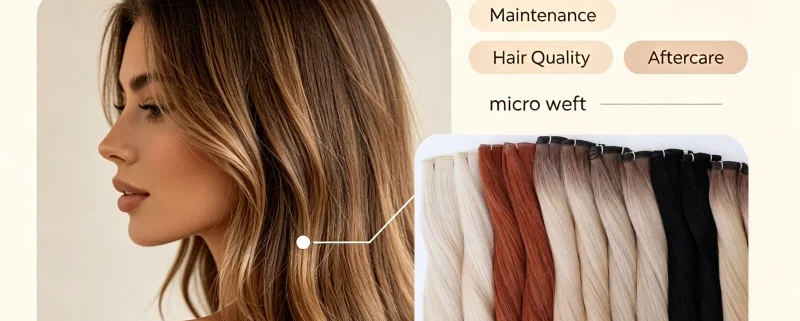
How Long Do Micro Weft Extensions Last?
If you’re considering micro weft hair extensions, one of the most important questions to ask is: how long do micro weft extensions last?
The answer isn’t as simple as giving one number. There are actually two different things to consider: how long micro weft extensions can stay installed in your hair before they need maintenance, and how long the extensions themselves can remain in good condition before they need to be replaced.
In general, micro weft extensions may need to be repositioned or maintained approximately every 6–8 weeks, depending on your natural hair growth and installation. However, high-quality human hair micro wefts can potentially be reused for several months when they are properly installed, maintained, and cared for.
Factors such as hair quality, washing frequency, heat styling, sleeping habits, swimming, daily brushing, and professional maintenance can all affect the overall lifespan of your extensions.
In this guide, we’ll explain how long micro weft extensions last, how often they need maintenance, whether they can be reused, what affects their durability, and how to make them last as long as possible.
How Long Do Micro Weft Extensions Last?
Micro weft extensions generally require maintenance every 6–8 weeks. This is primarily because your natural hair continues to grow after the extensions are installed.
As your hair grows, the micro weft gradually moves farther away from your scalp. Although the hair itself may still be in good condition, the installation can become more difficult to manage. This is when your stylist may recommend removing, adjusting, and repositioning the weft.
However, the 6–8 week period should not be confused with the total lifespan of the extension hair.
A quality human hair micro weft may remain usable beyond one maintenance appointment. Depending on the quality of the hair and how well it is cared for, the same extensions can potentially be reused after professional maintenance.
This means you should think about micro weft lifespan in two ways:
- Maintenance lifespan: approximately 6–8 weeks between adjustments for many wearers
- Overall extension lifespan: potentially several months or longer, depending on quality, care, and frequency of reuse
Your individual experience may be different, so your stylist should evaluate the condition of both your natural hair and the extensions during maintenance appointments.
How Long Do Micro Weft Extensions Stay in Your Hair?
One of the most common reasons people search for “how long do micro weft extensions last” is because they want to know how long they can wear them continuously.
For many people, micro weft extensions can remain installed for around 6–8 weeks before they need to be moved up or repositioned.
The exact timing depends largely on how quickly your natural hair grows.
For example, someone whose hair grows quickly may need an adjustment sooner than someone with slower hair growth. Hair density, the installation technique, the amount of hair used, and the placement of the weft can also affect the maintenance schedule.
You may notice that your extensions need attention when:
- The weft has moved noticeably away from the scalp
- Your roots become difficult to brush
- Hair begins tangling around the attachment area
- The extensions feel loose
- You experience discomfort when styling
- The weft becomes more visible
- Your natural hair has grown significantly underneath the installation
Regular maintenance is important because waiting too long can make the hair more difficult to detangle and manage.
How Long Do Micro Weft Extensions Last Before Replacement?
The answer is different from how long they stay installed.
A micro weft may need to be moved up after several weeks, but that does not automatically mean you need a new set.
If the extension hair is still soft, smooth, manageable, and securely constructed, your stylist may be able to remove it and reinstall it.
The overall lifespan depends on several factors.
Hair Quality
The quality of the original hair is one of the most important factors.
High-quality human hair, particularly hair with intact cuticles, can offer better durability and a more natural appearance. Properly aligned cuticles can also help reduce friction between individual hairs, which may contribute to smoother, more manageable extensions.
Lower-quality hair may become dry, tangled, or brittle more quickly, especially when exposed to frequent washing, heat styling, or chemical processing.
Chemical Processing
Colored and lightened extensions require particular attention.
Bleaching and coloring can affect the structure and moisture balance of hair. Extensions that have been heavily processed may require more careful aftercare than natural, minimally processed hair.
This is especially relevant if you want blonde, balayage, or other customized colors.
Daily Hair Care
How you handle your extensions every day can significantly influence their lifespan.
Aggressive brushing, excessive heat, sleeping with wet hair, and using unsuitable products can all contribute to premature wear.
On the other hand, gentle brushing, appropriate products, and consistent maintenance can help preserve the condition of the hair.
How Often Do Micro Weft Extensions Need Maintenance?
A typical maintenance interval for micro weft extensions is around 6–8 weeks, although there is no universal schedule that works for everyone.
Your stylist may recommend a different schedule based on:
- Your natural hair growth rate
- Hair density
- Extension weight
- Installation technique
- Lifestyle
- Extension condition
- Amount of tangling or shedding
Maintenance usually involves checking the condition of the natural hair and extensions, removing the installation when necessary, and repositioning the weft closer to the scalp.
Regular maintenance can help prevent excessive tangling and keep the extensions looking more natural.
Can Micro Weft Extensions Be Reused?
Yes, micro weft extensions can often be reused, particularly when they are made from high-quality human hair and remain in good condition.
One of the advantages of reusable weft extensions is that you do not necessarily need to purchase a completely new set every time your natural hair grows.
During a maintenance appointment, your stylist can assess whether the hair is suitable for reuse.
The extension may be reusable if:
- The hair remains soft and manageable
- There is limited shedding
- The weft is still structurally sound
- The hair has not become severely tangled or matted
- The ends remain in reasonable condition
- The attachment area can be safely repositioned
However, reuse is not unlimited. Every cycle of installation, removal, washing, and styling contributes to natural wear.
Eventually, the hair may become too dry, thin, tangled, or damaged to provide the desired result.
How Many Times Can Micro Weft Extensions Be Reused?
There is no fixed number of times that applies to every micro weft.
A high-quality set that is carefully maintained may be reused multiple times, while lower-quality or heavily processed hair may have a much shorter usable life.
Instead of focusing only on the number of reuses, pay attention to the condition of the hair.
If the extensions still look healthy and feel smooth after removal, they may be suitable for another installation.
If they have developed severe matting, excessive shedding, brittle ends, or significant texture changes, replacing them may provide a better result.
What Factors Affect How Long Micro Weft Extensions Last?
Several factors work together to determine the lifespan of your extensions.
1. Hair Quality
Quality human hair generally has better durability and a more natural appearance.
Hair with intact cuticles is particularly valued because the cuticles remain aligned in the same direction, which can help the hair feel smoother and reduce unnecessary friction.
2. Installation Quality
Even premium extension hair can become difficult to manage if it is installed incorrectly.
The installation should be appropriate for your natural hair density and condition. Excessive tension or an unsuitable amount of extension hair can create unnecessary stress on the natural hair.
Professional installation is therefore an important part of extension longevity.
3. Natural Hair Growth
Your natural hair growth determines how quickly the installation moves away from the scalp.
Faster-growing hair may require more frequent maintenance, while slower-growing hair may allow a longer interval.
4. Washing Routine
The more frequently extensions are washed, the more exposure they have to water, shampoo, friction, and drying.
This doesn’t mean you should avoid washing your hair. Instead, use a gentle routine designed to keep both your natural hair and extensions clean without unnecessary friction.
5. Heat Styling
Straighteners, curling irons, and high-temperature blow dryers can gradually affect the condition of human hair extensions.
Frequent heat styling may cause dryness and make the ends more vulnerable to breakage.
Always use an appropriate heat protectant and avoid unnecessary high temperatures.
6. Swimming
Salt water and chlorine can affect extension hair.
If you swim regularly, take precautions to reduce exposure and rinse your hair thoroughly afterward.
7. Sleeping Habits
Hair can become tangled when it rubs against your pillow while you sleep.
Sleeping with wet hair can make the problem worse because wet hair is more vulnerable to tangling and mechanical damage.
Allow your hair to dry completely before bed and consider loosely braiding or securing it to minimize movement.
8. Product Selection
Not every hair product is suitable for extensions.
Very heavy products can build up around the hair, while harsh formulas may contribute to dryness.
Choose products that are compatible with your extension type and follow your stylist’s recommendations.
How to Make Micro Weft Extensions Last Longer
If you want to maximize the lifespan of your micro weft extensions, a consistent aftercare routine is essential.
Brush Your Hair Carefully
Start at the ends and gradually work upward toward the roots.
Instead of pulling through a knot, gently loosen the tangled area before continuing.
Brushing aggressively can contribute to unnecessary shedding and damage.
Keep Your Hair Dry Before Sleeping
Never go to bed with soaking-wet extension hair whenever possible.
Allow your hair and the attachment area to dry completely before sleeping.
Use a Gentle Shampoo
Focus shampoo on the scalp and roots rather than aggressively rubbing the lengths.
Allow the product to cleanse the hair as it is rinsed through.
Condition the Lengths
Use conditioner primarily through the mid-lengths and ends.
Avoid applying excessive amounts directly onto the attachment area unless your stylist specifically recommends it.
Minimize Excessive Heat
You can style human hair extensions, but frequent high-temperature styling can shorten their usable lifespan.
Use a heat protectant and choose moderate temperatures whenever possible.
Protect Your Hair During Exercise
Sweat and frequent washing can increase the amount of moisture and friction your extensions experience.
If you exercise regularly, keep your hair secured gently rather than pulling it tightly into a ponytail.
Protect Your Hair When Swimming
Before swimming, consider securing your hair and minimizing unnecessary exposure to chlorine or salt water.
After swimming, rinse your hair thoroughly and follow your normal cleansing and conditioning routine.
Maintain Your Extensions on Schedule
Perhaps the most important step is not waiting too long between maintenance appointments.
As your hair grows, the installation moves away from the scalp. Regular maintenance helps prevent the roots from becoming excessively tangled.
Signs That Your Micro Weft Extensions Need Maintenance
How do you know when it is time for an adjustment?
The following signs can indicate that your extensions need professional attention.
The Weft Has Moved Away From the Scalp
This is one of the clearest signs.
Natural hair growth causes the weft to move downward. Once it has moved significantly, it may be time for repositioning.
Your Roots Are Tangling
If you notice increasing tangling close to the attachment area, don’t simply pull through the knots.
Contact your stylist so the installation can be checked.
The Extensions Feel Loose
Loose extensions may indicate that maintenance is overdue.
A stylist can determine whether the weft can be repositioned or whether a different installation approach is needed.
The Hair Looks Less Smooth
Dryness, frizz, or changes in texture can indicate that the extension hair is experiencing wear.
Improving your aftercare routine may help, but severely damaged hair may eventually need replacement.
The Weft Is Shedding Excessively
Some shedding can occur naturally, but significant shedding may indicate that the weft is reaching the end of its usable life or has experienced excessive mechanical stress.
When Should You Replace Micro Weft Extensions?
There is no single replacement date for every set.
Instead, consider replacing your micro weft extensions when the hair can no longer provide the appearance, texture, and manageability you want.
Common signs include:
- Severe matting
- Persistent tangling
- Excessive shedding
- Very dry or brittle hair
- Damaged ends
- Significant loss of density
- Structural damage to the weft
- A noticeable change in texture
If only the ends are dry or damaged, your stylist may be able to trim and maintain the hair. If the overall condition has deteriorated significantly, replacement may be the better option.
Micro Weft Extensions vs. Other Extension Types
If you’re choosing between different hair extension methods, lifespan is only one factor to consider.
| Extension Type | Typical Maintenance | Reusable | Main Benefit |
|---|---|---|---|
| Micro Weft | Around 6–8 weeks | Often | Volume and length |
| Hand-Tied Weft | Around 6–8 weeks | Often | Lightweight, natural movement |
| Tape-In | Around 6–8 weeks | Often | Flat and discreet application |
| Clip-In | Removed after use | Yes | Temporary styling |
| I-Tip | Around 6–8 weeks | Often | Flexible installation |
The best method depends on your natural hair, desired result, lifestyle, and preferred maintenance routine.
If you want a semi-permanent solution for regular wear, weft extensions can be an attractive option. If you only want extra length or volume occasionally, clip-ins may be more appropriate.
Are Micro Weft Extensions Damaging to Natural Hair?
Micro weft extensions are not automatically damaging, but the installation and maintenance process matters.
The amount of extension hair, placement, attachment method, and tension should all be appropriate for the wearer’s natural hair.
Problems can occur when extensions are too heavy, installed too tightly, or left without proper maintenance for too long.
Proper professional installation and regular maintenance can help reduce unnecessary stress on natural hair.
If you experience persistent pain, significant pulling, or discomfort, have the installation checked by a qualified professional.
Are Human Hair Micro Weft Extensions Worth It?
For people who want long-term length and volume, high-quality human hair micro wefts can offer several advantages.
Unlike synthetic hair, human hair can provide a more natural appearance and can generally be styled similarly to natural hair.
However, the quality of the hair matters.
When comparing different products, consider:
- Whether the hair is 100% human hair
- Whether the cuticles are intact
- Hair density and consistency
- Processing history
- Weft construction
- Color quality
- Reusability
- Aftercare requirements
- Supplier reliability
A lower initial price does not always mean better value. If premium-quality hair can be maintained and reused for longer, its overall cost per wear may be more attractive.
How to Choose High-Quality Micro Weft Extensions
If longevity is one of your priorities, pay attention to the quality of the hair before purchasing.
Look for Cuticle-Intact Human Hair
Cuticle-intact hair is processed with the natural cuticle structure preserved. Properly aligned cuticles can help maintain a smoother feel and reduce friction between hairs.
Consider Double-Drawn Hair
Double-drawn hair contains a higher proportion of strands with similar lengths, creating a fuller and more uniform appearance from root to tip.
This can be particularly desirable for clients looking for a polished, premium result.
Check the Weft Construction
The weft itself should be securely constructed and appropriate for repeated handling.
A strong weft can be particularly important if you plan to remove and reinstall the extensions during maintenance.
Consider Color Processing
If you want blonde, highlighted, or fashion-colored extensions, pay attention to how the hair is processed.
High-quality processing techniques can make a significant difference to the final texture and durability of colored hair.
How Long Do Colored Micro Weft Extensions Last?
Colored micro weft extensions can require more careful maintenance than natural-color extensions, especially when they have undergone significant lightening.
Bleaching can affect the structure and moisture of hair, so highly processed extensions may have a shorter usable lifespan if they are not properly maintained.
This does not mean colored extensions cannot be durable.
The quality of the original hair and the processing technique are both important. High-quality cuticle-intact hair that is professionally processed and properly cared for can maintain a beautiful appearance for an extended period.
For blonde and fashion colors, an appropriate aftercare routine becomes particularly important.
Micro Weft Extensions: Cost vs. Lifespan
When evaluating whether micro weft extensions are worth the investment, consider more than the purchase price.
A better way to think about value is:
Initial cost + maintenance costs + usable lifespan + number of potential reuses
For example, a premium extension that costs more initially but remains soft and manageable through multiple maintenance cycles may provide better long-term value than an inexpensive extension that quickly becomes tangled or dry.
This is particularly important for salons, stylists, and wholesale buyers who need consistent quality for their clients.
Frequently Asked Questions About Micro Weft Extensions
How long do micro weft extensions last?
Micro weft extensions typically need professional maintenance approximately every 6–8 weeks as natural hair grows. The extension hair itself may remain usable for several months or longer depending on quality, installation, maintenance, and aftercare.
How long can you wear micro weft extensions?
Many people can wear micro weft extensions for approximately 6–8 weeks before they need to be repositioned or maintained. The exact timeframe depends on natural hair growth and the condition of the installation.
How often should micro weft extensions be moved up?
A common maintenance interval is around 6–8 weeks, although your stylist may recommend a different schedule depending on your hair growth, density, and extension condition.
Can micro weft extensions be reused?
Yes. High-quality human hair micro wefts can often be removed and reused when they remain in good condition.
How many times can micro weft extensions be reused?
There is no universal number. The potential number of reuses depends on hair quality, processing, installation, removal, washing, styling, and overall care.
Can you wash micro weft extensions?
Yes. Micro weft extensions should be washed as needed using a gentle hair-care routine. Avoid aggressive rubbing and carefully detangle the hair before and after washing.
Can you sleep with micro weft extensions?
Yes. It is generally best to sleep with completely dry hair and loosely braid or secure the hair to minimize friction and tangling.
Can you swim with micro weft extensions?
You can swim with extensions, but chlorine and salt water may affect the hair. Protect your extensions when possible and rinse them thoroughly after swimming.
Do micro weft extensions damage your hair?
They are not inherently damaging, but improper installation, excessive tension, excessive weight, or inadequate maintenance can contribute to problems. Professional installation and regular maintenance are important.
How can I make micro weft extensions last longer?
Use gentle brushing techniques, avoid sleeping with wet hair, minimize excessive heat, use suitable hair-care products, protect your hair when swimming, and follow a regular professional maintenance schedule.
Final Thoughts: How Long Do Micro Weft Extensions Last?
So, how long do micro weft extensions last?
For many wearers, micro weft extensions need to be maintained approximately every 6–8 weeks as the natural hair grows. However, the extension hair itself can potentially last much longer when it is made from high-quality human hair and properly cared for.
The most important factors are hair quality, installation, maintenance, washing, heat styling, daily handling, and aftercare.
If you’re looking for extensions that can provide a natural appearance while offering the potential for reuse, choosing high-quality human hair and following a consistent maintenance routine can make a significant difference.
About ALOVE Hair
Qingdao ALOVE HAIR PRODUCTS Co., Ltd. is a professional human hair supplier with roots in the industry dating back to the 1980s. The company specializes in high-quality cuticle-intact human hair extensions, including Genius Weft, Micro Weft, hand-tied weft, flat weft, tape-in, I-tip, and colorful extensions.
With extensive experience in international trade, ALOVE supplies salons, stylists, and hair businesses across the USA, UK, Canada, Australia, and Europe, providing quality hair extensions, professional accessories, and customized solutions for wholesale customers. Please contact us to obtain our product catalog.

Alove Hair is a professional Chinese manufacturer of premium 100% Remy human hair extensions, wigs, and hair systems. Established in 2014, the company specializes in supplying global salons and distributors with high-quality, cuticle-intact hair products and offers comprehensive OEM/ODM private label services.



Leave a Reply
Want to join the discussion?Feel free to contribute!