Top 10 Hair Extensions Manufacturers in 2026: Complete Guide
Choosing a hair extensions manufacturer is one of the most important decisions for a salon chain, hair extension brand, distributor, or wholesale business. The right supplier affects more than the price per bundle. It influences product consistency, customer satisfaction, repeat purchases, inventory planning, and the reputation of your brand.
However, the phrase “hair extensions manufacturer” covers several different business models. Some companies operate factories and offer OEM or private label production. Others manufacture proprietary professional systems, while some focus mainly on wholesale distribution and salon support.
This guide compares 10 hair extensions manufacturers and manufacturing-led suppliers across China, Vietnam, Italy, and Austria. Instead of treating every company as an identical factory, it explains what each business offers, which buyers may find it useful, and what should be checked before placing a wholesale order.
Whether you are sourcing Genius Wefts, Hand-Tied Wefts, Tape-In Extensions, K-Tips, or a complete private label collection, use this shortlist as a starting point for your supplier evaluation.
Quick Comparison: 10 Hair Extensions Manufacturers to Consider
| Company | Country | Business Positioning | Main Strength | Potential Buyer Fit |
|---|---|---|---|---|
| ALOVE HAIR | China | Human hair extension manufacturer | Cuticle-aligned Remy hair and multiple extension methods | Salons, wholesalers, distributors, private label brands |
| Alpha Hair Extension | China | Factory-direct manufacturer | Broad extension constructions and customization | Brands and distributors |
| APOHAIR | Vietnam | Vietnamese hair manufacturer | Local hair sourcing and factory production | Buyers seeking Vietnamese human hair |
| Hibiscus Hair | China | Hair extension factory | Full-cuticle products and OEM/ODM services | Wholesale buyers and salon brands |
| Indreams Hair | China | Human hair extension factory | Multiple extension methods and technical support | Wholesalers and salon businesses |
| CYhair | Vietnam | Vietnamese hair factory | Vietnamese human hair and product development | Hair businesses focused on Vietnamese hair |
| Newtimes Hair | China | Manufacturer and professional supplier | Extensions, wigs, toppers, and hair replacement systems | Professional buyers and distributors |
| Henan Rebecca Hair Products | China | Diversified hair products manufacturer | Large-scale hair product manufacturing | Buyers sourcing multiple hair product categories |
| Great Lengths | Italy | Premium extension manufacturer and professional brand | Remy hair, traceability, and salon-led systems | Luxury salons and professional stylists |
| Hairdreams | Austria | Premium hair manufacturer and salon system provider | Hair extensions, thickening, and hair solutions | Premium salons and specialist hair businesses |
Selection note: This is a practical shortlist, not an independent laboratory ranking or a verified score of product quality. Company descriptions are based on publicly available company information. Manufacturing arrangements, product specifications, MOQ, pricing, and customization terms should be confirmed directly with each supplier.
1. ALOVE HAIR – Human Hair Extensions Manufacturer in China
Country: China
Business type: Human hair extension manufacturer and private label supplier
Main products: Genius Wefts, Hand-Tied Wefts, Butterfly Wefts, Tape-In Extensions, K-Tips, I-Tips, U-Tips, and related hair products
Potential buyer fit: Salon chains, hair extension brands, wholesalers, distributors, and professional stylists
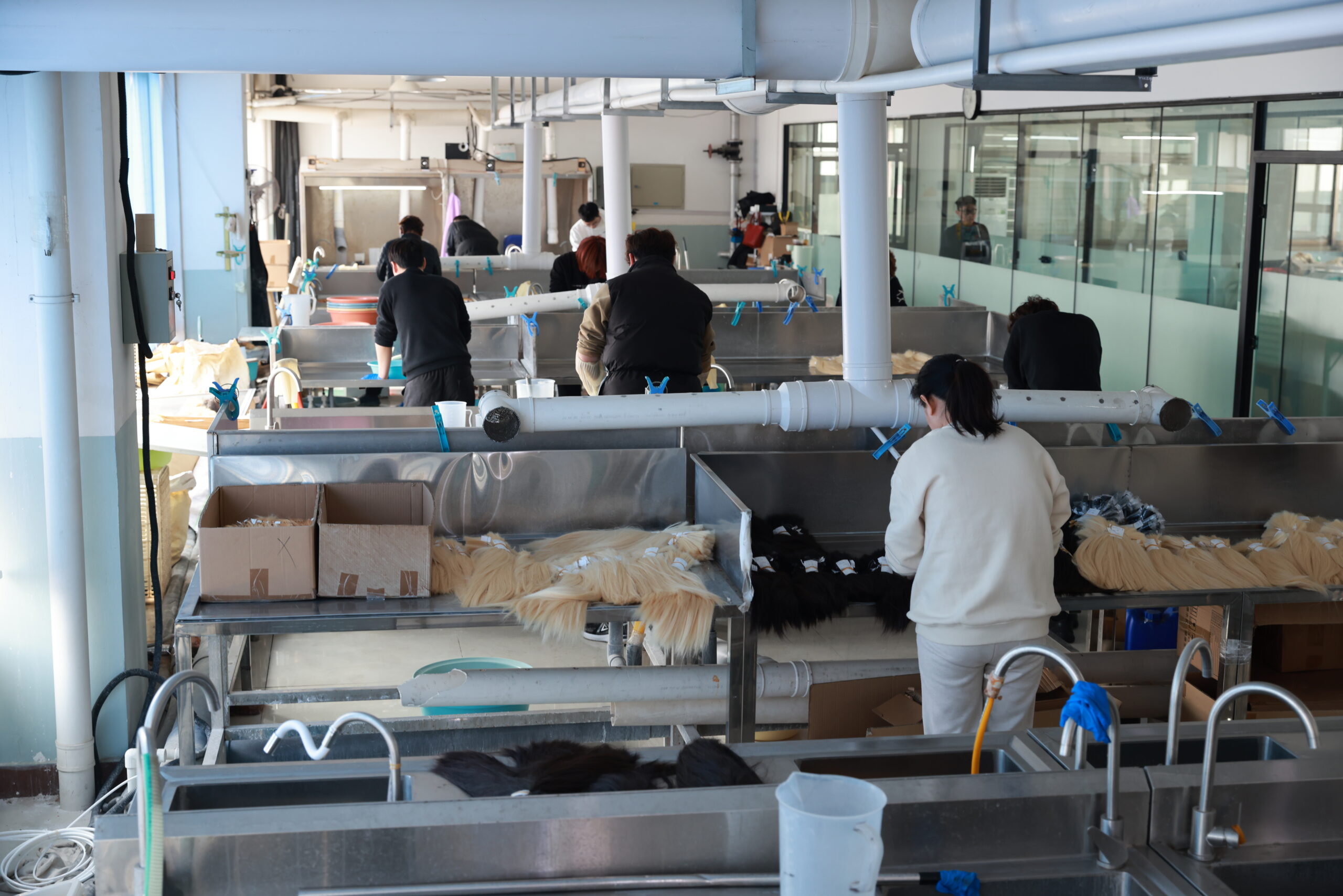
ALOVE HAIR is a Qingdao-based human hair supplier and manufacturer serving professional buyers in international markets. According to the company, its business developed from raw hair collection and supply into customized human cuticle hair manufacturing, and it launched the ALOVE HAIR brand in 2014.
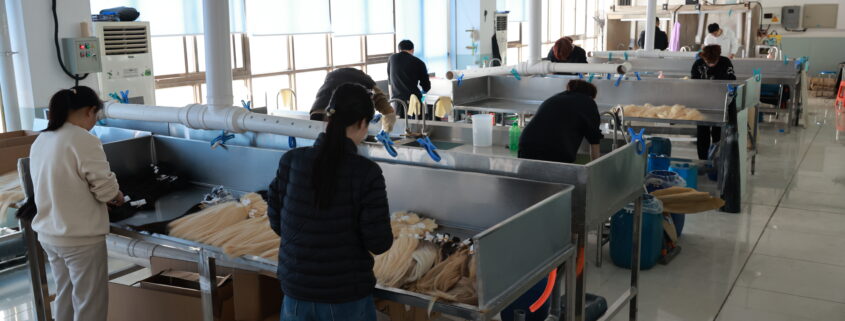
One of ALOVE HAIR’s main product focuses is cuticle-aligned Remy human hair. The company describes its quality process as involving 56 production processes and an internal classification system that divides raw materials into 24 grades for different product requirements. These are company-specific production and grading descriptions, rather than universal industry standards.
Main Product Categories
ALOVE HAIR offers several extension methods, allowing professional buyers to develop more than one product category through a single supplier:
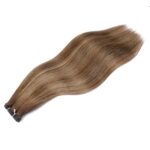
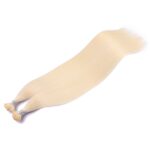
- Genius Wefts: A low-profile weft option for professional sew-in and beaded installations. See the Genius Weft product range.
- Hand-Tied Wefts: A lightweight weft option for stylists who prefer hand-tied construction. Buyers should confirm the exact seam structure and cutting instructions for each model.
- Butterfly Wefts: A different attachment construction for salons looking to expand beyond conventional sewn wefts. Explore the Butterfly Weft collection.
- Tape-In Extensions: Suitable for salons and retailers building reusable tape-in product lines.
- K-Tip and other strand-by-strand methods: Options for professional installations that require individual bonds.
OEM and Private Label Opportunities
For a growing hair extension brand, product customization is often as important as the standard catalogue. ALOVE HAIR provides customization and private label support for professional buyers. Depending on the project, buyers can discuss hair length, weight, color, texture, product construction, and branded packaging.
The exact MOQ, production lead time, and available customization scope should be confirmed for each product and order quantity. A standard-stock item and a newly developed color or construction may have different production requirements.
Why consider ALOVE HAIR?
ALOVE HAIR may suit buyers who want to source several professional extension methods from one manufacturing partner instead of managing separate suppliers for wefts, tape-ins, and bonded extensions. Its product range and customization services are relevant to salons and businesses developing their own extension collections.
Before ordering, request physical samples, confirm the hair specifications in writing, and approve a reference sample for future repeat orders.
Official website: https://alovehair.com/
2. Alpha Hair Extension – Factory-Direct Custom Hair Extensions
Country: China
Business type: Factory-direct hair extension manufacturer
Main focus: Remy hair extensions, wefts, tape-ins, keratin bonds, and other professional methods
Potential buyer fit: Private label brands, wholesalers, and distributors
Alpha Hair Extension is a China-based manufacturer offering a broad selection of human hair extension constructions. Its published product range includes different weft structures, tape-in extensions, keratin-tip products, and other professional application methods.
The company also promotes customization for buyers who need specific colors, textures, lengths, or packaging. This type of supplier can be useful when a business wants to develop several product lines without sourcing every construction from a different factory.
What Buyers Should Evaluate
A broad catalogue does not automatically mean every product is manufactured to the same material specification. Buyers should request details for each product category, including:
- Hair type and sourcing documentation
- Cuticle condition and alignment
- Available lengths and net hair weights
- Weft or bond construction
- Color development and sample approval
- Private label packaging options
- MOQ and production lead time by SKU
Potential advantage: Buyers can explore multiple extension constructions and discuss product customization with one supplier.
What to verify: Ask which production stages are handled in-house and which, if any, are outsourced. Confirm the actual MOQ and lead time for the exact specification you plan to purchase.
3. APOHAIR – Vietnamese Human Hair Manufacturer
Country: Vietnam
Business type: Human hair manufacturer with factory operations
Main focus: Vietnamese human hair extensions and related hair products
Potential buyer fit: Wholesalers, salon suppliers, distributors, and brands targeting Vietnamese hair
APOHAIR focuses on Vietnamese human hair and presents local sourcing as a central part of its business model. The company describes its development from a hair trading business into a manufacturing operation, with a collector network and production facilities in Vietnam.
For buyers who specifically want Vietnamese hair, the supplier’s sourcing model is an important point to investigate. Hair origin can influence the texture, natural color range, available lengths, and the characteristics of the finished product.
What Makes APOHAIR Worth Comparing?
The company describes its manufacturing operations as including hair sorting, processing, extension production, quality inspection, and customized production. Its public materials also state that it works with local collectors and supplies international wholesale buyers.
For a buyer developing a Vietnamese hair collection, the relevant questions include:
- Can the supplier document the stated hair origin?
- Are raw hair and processed hair clearly distinguished?
- Which extension methods are available for the requested hair type?
- Can the supplier maintain the same texture and color across repeat orders?
- What is the process for approving samples before bulk production?
Potential advantage: A sourcing and manufacturing model focused on Vietnamese hair may be relevant to buyers who want to build a product line around that origin.
What to verify: Confirm the origin, material description, and specifications for every product. Do not assume that all products in a supplier’s catalogue use the same hair source.
4. Hibiscus Hair – Full-Cuticle Hair Extension Factory
Country: China
Business type: Hair extension manufacturer
Main focus: Full-cuticle human hair extensions, wefts, tape-ins, keratin extensions, and other wholesale products
Potential buyer fit: Private label brands, distributors, salons, and wholesale buyers
Hibiscus Hair presents itself as a factory specializing in human hair extensions. According to its published company history, its business began with raw hair collection and sales in 1997, developed into human cuticle hair extension manufacturing in 2003, and expanded into OEM and ODM services for international customers in 2008.
The company lists a broad range of extension products, including wefts, tape-ins, clip-ins, and keratin extensions. This makes it relevant to buyers who need more than one attachment method.
What Buyers Should Compare
For a full-cuticle product, the phrase “full cuticle” should be supported by a clear material specification. Buyers should ask how the hair is sorted, processed, aligned, and checked before it is made into extensions.
For wholesale and private label projects, also request:
- Physical samples from the relevant product category
- Custom color and texture options
- Product weight and length specifications
- Packaging and labeling options
- Quality inspection procedures
- Written defect and replacement terms
Potential advantage: Hibiscus Hair is positioned for factory-direct and customized wholesale business.
What to verify: Ask for the production details and commercial terms of your exact product rather than relying on a general statement about the factory’s capabilities.
5. Indreams Hair – Multi-Method Human Hair Extension Factory
Country: China
Business type: Human hair extension factory
Main focus: Wefts, tape-ins, keratin extensions, clip-ins, and other extension products
Potential buyer fit: Wholesale buyers, salon groups, and growing hair businesses
Indreams Hair describes itself as a human hair extension factory with a history dating back to 2003. Its published product range includes Genius Wefts, Hand-Tied Wefts, Machine Wefts, Tape Wefts, keratin-tip extensions, and clip-in products.
This range is useful for businesses that want to compare several application methods or gradually expand their product portfolio.
Product Development and Technical Support
Indreams Hair also promotes research and development, technical support, and training services for professional customers. For salon groups and distributors, technical guidance may be valuable when introducing a new extension method or helping stylists understand installation and maintenance.
Potential advantage: Its catalogue covers multiple extension types, which may help buyers evaluate different product categories through one supplier.
What to verify: Ask whether the factory can produce your target specification consistently, whether custom colors are available, and how it handles repeat-order quality checks.
6. CYhair – Vietnamese Hair Factory
Country: Vietnam
Business type: Vietnamese human hair factory
Main focus: Human hair extensions and wholesale hair products
Potential buyer fit: Wholesalers, distributors, and brands looking for Vietnamese hair
CYhair positions itself as a Vietnamese hair factory serving international hair businesses. Its company information describes a production operation in Ho Chi Minh City, a research and development team, and a focus on Vietnamese human hair.
For buyers comparing Vietnamese suppliers, CYhair provides another option to investigate alongside other Vietnam-based manufacturers.
What to Check Before Buying
When a supplier emphasizes a particular hair origin, buyers should look beyond product photos and request material details. Ask whether the product is made from Vietnamese hair, whether it is Remy or non-Remy, and what processing has been applied.
The sample should also be evaluated for:
- Strand thickness and texture consistency
- Available lengths and usable hair length
- Hair density from root to tip
- Shedding and tangling after washing
- Color consistency between samples and bulk orders
Potential advantage: A Vietnam-based supplier may be relevant to businesses seeking Vietnamese-origin hair products.
What to verify: Confirm the origin claim, hair grade definition, available product methods, and repeat-order specifications before making a long-term sourcing decision.
7. Newtimes Hair – Professional Hair Extension and Hair System Supplier
Country: China
Business type: Manufacturer and professional hair products supplier
Main focus: Hair extensions, wigs, toppers, and hair replacement systems
Potential buyer fit: Salons, clinics, professional stylists, wholesalers, and distributors
Newtimes Hair serves professional customers across several hair product categories. Its company information describes a China-based hair-making facility, a team of hair artisans and quality control specialists, and distribution and service support for international markets.
Unlike a supplier that focuses only on traditional extensions, Newtimes Hair also covers wigs, toppers, and hair replacement systems. This broader product scope may be relevant to businesses serving both hair extension and hair replacement customers.
Why Consider Newtimes Hair?
A broad professional catalogue can simplify sourcing for companies that sell multiple types of hair products. It may also help salons and distributors compare extension products with other hair solutions.
However, buyers should evaluate each category separately. The quality criteria for a tape-in extension are not the same as those for a lace wig, hair topper, or bonded extension.
Potential advantage: A broad product portfolio and professional service positioning.
What to verify: Confirm the manufacturing responsibility, product-specific material specifications, stock availability, return policy, and warranty terms that apply to your order.
8. Henan Rebecca Hair Products – Large-Scale Hair Products Manufacturer
Country: China
Business type: Diversified hair products manufacturer
Main focus: Human hair products, synthetic hair products, wigs, and hair extensions
Potential buyer fit: Buyers sourcing a broad range of hair product categories
Henan Rebecca Hair Products is an established Chinese hair products company with a broad manufacturing and sales portfolio. Public company information describes its business as including the production and sale of hair products, such as human hair products, synthetic fiber hair products, wigs, and extensions.
Unlike a specialist supplier focused mainly on premium Remy extensions for salon brands, Rebecca operates across a wider hair products category.
Who May Consider Rebecca?
Rebecca may be worth evaluating for buyers who need a diversified hair product supplier or are comparing larger manufacturers with broader production capabilities.
However, businesses sourcing premium salon extensions should confirm that the specific product line meets their material and construction requirements. A company’s scale does not automatically indicate that every product category has the same specification or quality level.
Potential advantage: A long-established and diversified hair products manufacturing business.
What to verify: Confirm whether the required extension type is part of the company’s current production offering, and request product-specific samples, specifications, and commercial terms.
9. Great Lengths – Premium Remy Hair Extensions Manufacturer in Italy
Country: Italy
Business type: Premium hair extension manufacturer and professional salon brand
Main focus: Remy human hair extensions and professional salon systems
Potential buyer fit: Luxury salons and professional stylists
Great Lengths is a well-known professional hair extension company with a premium salon positioning. The company states that it has operated since 1992 and sources Remy hair from India through a traceability-focused sourcing process.
Its public company information describes the importance of aligned cuticles and double-drawn hair in its extension production. Great Lengths also identifies its production facility in Nepi, near Rome, and publishes information about its ISO quality, occupational health and safety, and environmental management certifications.
What Makes Great Lengths Different?
Great Lengths is particularly relevant to salons that want an established professional extension system rather than simply purchasing loose hair or generic wholesale wefts.
Its model places emphasis on product quality, professional salon relationships, application techniques, and brand positioning.
Potential advantage: A premium professional system with a clear salon-focused identity and published information about production and certification.
What to verify: Buyers should check the salon partnership requirements, training arrangements, product availability, and distribution conditions in their market. A branded professional system is not necessarily the same as an open OEM or private label manufacturing service.
10. Hairdreams – Premium Hair Extensions and Hair Solutions Manufacturer
Country: Austria
Business type: Premium hair manufacturer and professional salon system provider
Main focus: Hair extensions, hair thickening, and hair loss solutions
Potential buyer fit: Premium salons and specialist hair businesses
Hairdreams has more than three decades of experience in premium human hair products, according to its company information. The company describes its own specialized manufactory, where it combines traditional craftsmanship with modern technology.
Its business extends beyond conventional hair extensions to include hair thickening and solutions for customers experiencing hair loss. Hairdreams also describes a network of partner salons and competence centers in international markets.
Why Consider Hairdreams?
Hairdreams is relevant to professional businesses that want to offer specialized, premium hair services. Its position is different from a factory primarily focused on bulk OEM extension orders.
For salons, the value may come from the product system, professional support, and service model rather than simply the wholesale cost of the hair.
Potential advantage: A specialist premium hair solutions provider with a long manufacturing history.
What to verify: Confirm the professional partnership model, local market availability, training requirements, and the commercial conditions for your salon or distribution business.
Manufacturer vs. Wholesale Supplier vs. Professional Hair Brand
Before comparing prices, identify what type of supplier you actually need. These three business models may look similar online, but they offer different levels of control.
| Supplier Type | What It Usually Provides | Main Benefit | Possible Limitation |
|---|---|---|---|
| Factory-direct manufacturer | Production, product specifications, and possible OEM/ODM services | More control over product development and customization | Requires sample testing and production management |
| Wholesale supplier | Ready-made products, stock, and distribution | Convenient ordering and potentially faster fulfillment | Customization and manufacturing control may be limited |
| Professional hair brand | Branded systems, salon programs, and technical education | Brand recognition and professional support | Less suitable for buyers who need their own brand and packaging |
A company may operate in more than one category. The important question is not what it calls itself, but what it can demonstrate.
For private label projects, ask who controls the production process, who approves the raw material, who handles quality inspections, and who is responsible if a bulk order does not match the approved sample.
How to Choose the Best Hair Extensions Manufacturer for Your Business
The best manufacturer depends on your sales channel, target market, product type, and order volume. A salon chain may prioritize color consistency and stylist support, while an online brand may focus more on packaging, product photography, and repeatable inventory.
1. Define Your Product Category First
Do not start by asking for a general price list. Define the extension method you need.
| Extension Type | Main Construction Consideration | Buyer Questions |
|---|---|---|
| Genius Weft | Seam thickness, flexibility, cuttability, and shedding after cutting | Can the specific weft be cut? What cutting instructions apply? |
| Hand-Tied Weft | Knotting, seam consistency, width, and attachment security | Is the weft designed to be cut or must it remain intact? |
| Machine Weft | Weft thickness, stitching strength, and density | How thick is the seam? Is the width consistent? |
| Tape-In | Tape tab size, adhesive quality, and hair coverage | What tape type is used? Can replacement tape be supplied? |
| K-Tip | Bond shape, keratin quality, and strand weight | What bond size and keratin formula are available? |
| I-Tip / Nano Ring | Tip construction, strand weight, and bead compatibility | What tip size and ring specifications are supported? |
| Butterfly Weft | Base material, attachment structure, and flexibility | What is the base made of? What installation method is recommended? |
For example, a salon developing a weft collection may compare Genius Weft and Hand-Tied products differently from a retailer building a tape-in collection. A business focusing on individual strand extensions should also compare K-Tip products and the related installation requirements.
2. Understand Hair Quality Beyond Marketing Terms
Terms such as Remy, virgin, single donor, double drawn, and full cuticle are common in the hair extension market. They should not be treated as interchangeable.
Ask the manufacturer to explain:
- Whether the hair is 100% human hair
- Whether the cuticles are retained and aligned
- Whether the hair is Remy or non-Remy
- Whether it has been bleached, dyed, or chemically processed
- Whether the stated origin can be documented
- How double-drawn density is defined
- Whether the same material specification applies to every color and length
Do not rely on a grade label alone. Terms such as 8A, 10A, or 12A are not universal, independently regulated quality standards across all manufacturers. A written specification and physical sample are more useful than a grade number without supporting details.
3. Test Samples Before Placing Bulk Orders
A product sample is only the beginning of supplier evaluation. It should be tested under conditions that resemble the way your salon or customers will use the extensions.
A practical evaluation process includes:
Visual inspection: Check the hair color, texture, root-to-end density, length, and attachment construction.
Weight and measurement: Measure the net hair weight, usable hair length, weft width, tip size, or tape tab dimensions, depending on the product.
Combing test: Comb the hair from the ends upward and record shedding, tangling, and changes in smoothness.
Washing test: Wash and dry the sample using a consistent care routine. Compare the texture, color, and manageability before and after washing.
Styling test: Test the product with the styling temperature and techniques normally used by your salon, following the manufacturer’s care instructions.
Construction test: Check whether seams, tapes, bonds, and attachment points remain secure during normal handling and installation.
For weft products, compare the construction of different samples carefully. A Genius Weft sample and a Hand-Tied Weft sample should not be judged only by appearance. Their seam structure, cutting instructions, and intended installation methods may be different.
This is a buyer-side evaluation process, not a universal industry certification test. Keep photographs, measurements, and test notes so you can compare suppliers using the same criteria.
4. Check Color Development and Repeat-Order Consistency
Color consistency is a major concern for salons and hair brands. A small difference between a sample and a bulk order can affect blending, customer satisfaction, and inventory management.
Ask the manufacturer whether it can match your physical color sample or an approved color ring. Confirm how it handles:
- Rooted colors
- Balayage and ombré
- Highlighted and mixed shades
- Ash and cool blondes
- Warm blondes and brunettes
- Custom colors developed for your brand
For example, buyers developing dimensional color collections may compare Balayage Genius Wefts with Balayage Hand-Tied Wefts to decide which construction better fits their target salon market.
Once a bulk sample has been approved, ask the supplier to retain a reference sample or record the color formula and product specifications for future replenishment.
5. Compare OEM, ODM, and Private Label Services
OEM and ODM are not exactly the same.
- OEM: The buyer provides the product specifications, design requirements, or brand standards, and the manufacturer produces according to the agreed brief.
- ODM: The manufacturer provides product development or design support, which the buyer can adapt or sell under its own brand.
- Private label: The finished product is sold under the buyer’s brand, with agreed labeling and packaging arrangements.
Ask what can actually be customized. Possible items include hair length, weight, color, texture, extension construction, logo labels, retail boxes, care cards, and product inserts.
A supplier that offers a logo sticker is not automatically a full OEM/ODM partner. The level of product development and production control should be confirmed in writing.
6. Confirm MOQ, Lead Time, and Replenishment Terms
A low quoted unit price may not be the lowest total cost. A supplier may have different minimum quantities for stock items, custom colors, and newly developed products.
Request a quotation that separates:
| Commercial Item | What to Confirm |
|---|---|
| Sample order | Sample price, shipping cost, and whether the sample fee is refundable |
| MOQ | Minimum quantity by product, color, length, and customization level |
| Unit price | Whether the price includes hair, attachment, and standard packaging |
| Customization | Additional cost for special colors, textures, or construction |
| Lead time | Sample approval time and bulk production time |
| Packaging | Standard packaging versus custom branded packaging |
| Shipping | Shipping method, delivery estimate, and responsibility for import charges |
| Defect handling | Inspection process, replacement policy, and claim period |
Do not accept a general lead-time estimate without knowing whether it applies to stock, semi-custom, or fully customized products.
How to Build a Reliable Hair Extension Supply Chain
Choosing a manufacturer is not a one-time purchasing decision. A long-term sourcing relationship should make quality and replenishment more predictable as your business grows.
A practical supply chain process looks like this:
- Create a product brief. Specify hair type, origin requirements, length, weight, color, construction, packaging, and target market.
- Shortlist three to five suppliers. Include factories that match your material and product requirements.
- Request comparable samples. Use the same specifications for each manufacturer.
- Evaluate the samples. Record measurements, washing results, shedding, tangling, color, and construction.
- Approve a reference sample. Keep the approved sample and specification sheet for future orders.
- Place a pilot order. Check that the bulk production matches the approved version.
- Set up repeat-order controls. Record color references, raw material requirements, acceptable tolerances, and packaging specifications.
For salons using sew-in and beaded methods, the supply chain may also involve accessories and installation tools. Buyers can review compatible beads for sew-in extensions as part of the product and accessories plan.
For tape-in collections, ask about replacement adhesive and maintenance compatibility. A product such as Invisible Tape-In Extensions for salons and stylists should be evaluated with its tape specifications and recommended maintenance process, not just the hair itself.
Which Hair Extensions Manufacturer Is Best for Your Business Model?
There is no single manufacturer that is best for every buyer. Use your business model to narrow the shortlist.
| Your Business Model | Suppliers to Compare First | Main Selection Priority |
|---|---|---|
| New private label hair extension brand | ALOVE HAIR, Alpha Hair Extension, Hibiscus Hair, Indreams Hair | Customization, sample approval, packaging, and manageable MOQ |
| Vietnamese hair product line | APOHAIR, CYhair | Hair origin, sourcing transparency, texture, and batch consistency |
| Salon chain or professional stylist group | ALOVE HAIR, Great Lengths, Hairdreams, Newtimes Hair | Installation performance, technical support, color range, and replenishment |
| Distributor or wholesale business | ALOVE HAIR, Alpha Hair Extension, Hibiscus Hair, APOHAIR, CYhair | Product range, wholesale terms, stock planning, and production capacity |
| Diversified hair products business | Newtimes Hair, Henan Rebecca Hair Products | Product range, category-specific quality, and supply reliability |
For buyers comparing weft suppliers, the existing Genius Weft vs. Hand-Tied Weft comparison can help clarify the differences between the two construction types before requesting samples.
Questions to Ask Before Choosing a Hair Extension Manufacturer
Before signing a supply agreement or placing a large order, ask each shortlisted supplier the same questions:
- Are you the manufacturer, a trading company, or a combination of both?
- Where is the production facility located?
- Which production stages are completed in-house?
- What hair types and sourcing origins are available?
- Can you provide a physical sample with a written specification?
- What are the available lengths, weights, colors, and textures?
- What is the MOQ for standard products and custom products?
- Can you provide OEM, ODM, and private label packaging?
- How do you control color and weight consistency between batches?
- What is the normal production lead time for the requested product?
- What inspection records are available before shipment?
- What happens if the delivered products do not match the approved sample?
A reliable manufacturer should be able to answer these questions clearly. If the supplier cannot explain the product specifications or production process, do not rush into a large order.
Frequently Asked Questions About Hair Extensions Manufacturers
What is the difference between a hair extensions manufacturer and a hair extensions supplier?
A manufacturer produces hair extensions or directly controls the production process. A supplier may manufacture products, buy them from factories, or distribute finished goods. Some companies combine manufacturing and wholesale distribution. Buyers who need OEM or private label products should confirm who controls production and quality inspection.
Which country is best for sourcing hair extensions?
China and Vietnam are important sourcing locations for human hair extensions, while Italy and Austria are associated with established premium professional systems. The best country depends on the required hair origin, product construction, budget, customization needs, and target market. Buyers should evaluate individual factories rather than assume that country alone determines quality.
How do I find a reliable human hair extension manufacturer?
Start by defining your product specifications. Then check the supplier’s manufacturing responsibility, request physical samples, review raw hair and processing details, test product performance, and confirm written commercial terms. A successful sample order should be followed by a pilot bulk order before larger commitments.
What should I check when buying wholesale hair extensions?
Check hair type, sourcing origin, cuticle condition, length, net weight, color consistency, construction quality, packaging, MOQ, lead time, shipping terms, and defect handling. Always compare suppliers using the same product specification.
Do hair extensions manufacturers offer private label services?
Many manufacturing-led suppliers offer private label services, but the scope varies. Some provide logo labels and packaging, while others can customize product construction, colors, lengths, textures, and weights. Request a written description of the services included in the quotation.
How can I make sure bulk hair extensions match the sample?
Keep an approved physical reference sample and a written specification sheet. Record the product method, hair type, color reference, weight, length, attachment dimensions, packaging, and agreed tolerances. Ask the manufacturer to inspect bulk production against those requirements before shipment.
Is a low MOQ always better for a new hair extension brand?
Not necessarily. A low MOQ can reduce the initial inventory commitment, but buyers should also consider unit cost, color availability, production consistency, and the supplier’s ability to replenish the same product later. The best starting quantity is one that allows you to test market demand without creating unnecessary inventory risk.
Final Thoughts: Choose a Manufacturing Partner, Not Just a Hair Supplier
The best hair extensions manufacturer is not necessarily the company with the largest catalogue or the lowest quotation. It is the partner that can deliver the material, construction, color, weight, packaging, and quality consistency your business requires.
For a new hair extension brand, OEM and private label flexibility may be essential. For a salon, installation performance, color matching, and professional support may carry more weight. For a distributor, repeat-order consistency, production planning, and a broad product range may be the deciding factors.
ALOVE HAIR is one option for businesses comparing cuticle-aligned Remy hair extensions, multiple professional extension methods, and customization from a China-based manufacturer. The right next step is to define your product brief, request samples, and confirm the exact specifications and commercial terms before placing a bulk order.
Looking for a hair extensions manufacturing partner? Visit ALOVE HAIR to explore its product range and discuss your wholesale, OEM, or private label requirements.
Alove Hair is a professional Chinese manufacturer of premium 100% Remy human hair extensions, wigs, and hair systems. Established in 2014, the company specializes in supplying global salons and distributors with high-quality, cuticle-intact hair products and offers comprehensive OEM/ODM private label services.