Posts

How Long Do K-Tip Extensions Last? Lifespan, Maintenance & Aftercare Guide

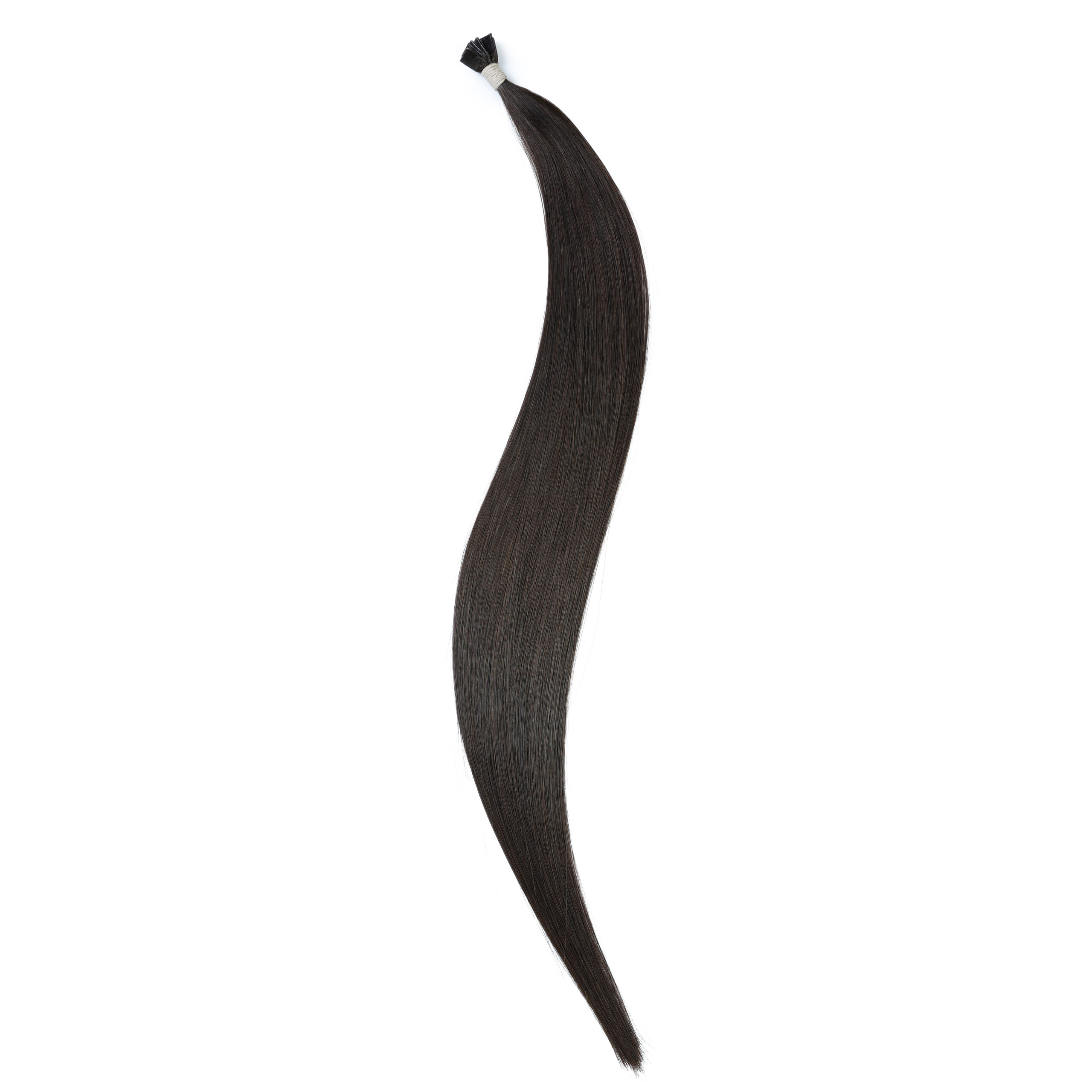
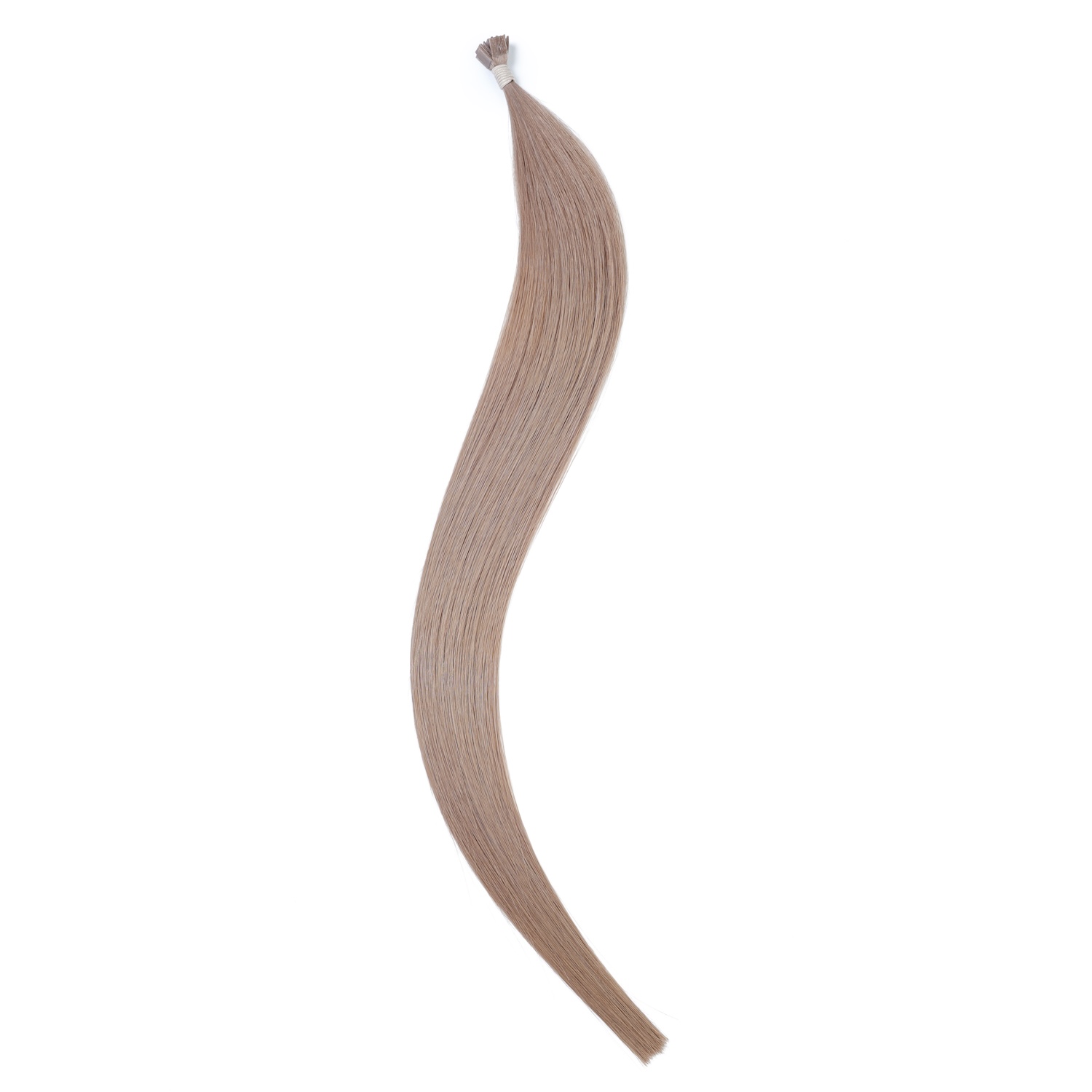
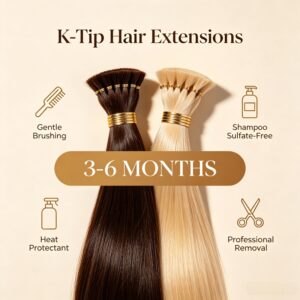
If you are considering K-tip extensions, one of the first questions to ask is: how long do K-tip extensions last? In general, K-tip hair extensions can stay installed for approximately 3–6 months, depending on natural hair growth, installation quality, hair quality, lifestyle, and aftercare. However, the installation lifespan and the lifespan of the extension hair itself are not always the same.

A well-made K-tip extension may stay in good condition beyond one installation cycle, while the keratin bond usually needs to be removed and replaced or re-tipped once the natural hair has grown out enough. Understanding this difference can help you plan maintenance, avoid unnecessary damage, and get better value from your hair extensions.

How Long Do K-Tip Extensions Last?

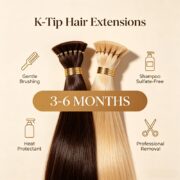
K-tip extensions typically last around 3–6 months per installation when they are professionally installed and properly maintained. Some clients may need removal earlier, while others can maintain their extensions toward the longer end of this range.

The biggest reason is simple: your natural hair keeps growing.

K-tip extensions are attached to individual strands or small sections of natural hair using a keratin-based bond. As the natural hair grows, the bond gradually moves farther away from the scalp. Eventually, the attachment becomes more visible, harder to manage, and more vulnerable to tangling.

A typical K-tip timeline may look like this:

Stage What Usually Happens
0–4 weeks Fresh installation and minimal grow-out
4–8 weeks Natural hair begins moving the bonds away from the scalp
8–12 weeks Professional inspection or maintenance may be useful
3–4 months Noticeable grow-out for many clients
4–6 months Some high-quality installations may remain wearable
6+ months Removal is generally necessary for most installations

These are general guidelines, not guarantees. Hair growth rate, installation technique, product quality, and daily habits can significantly change the actual lifespan.
K-Tip Installation Lifespan vs. Hair Lifespan

This is one of the most important distinctions when discussing K-tip extensions.

How long the K-tip installation lasts refers to how long the extensions can remain attached to your natural hair before professional removal becomes necessary.

How long the extension hair lasts refers to how long the actual human hair remains attractive and usable.

These two periods can be different.

For example, a high-quality human hair K-tip extension may still look good after four months, but the attachment may have grown too far from the scalp. The stylist may therefore remove the extensions even though the hair itself is still in good condition.

Depending on hair quality and construction, some extension hair may potentially be re-tipped and reused after professional removal. However, this depends on the hair’s condition and the manufacturer’s product design. The keratin bond itself should not automatically be assumed to be reusable.

This distinction matters for salons, distributors, and hair brands when evaluating the total value of K-tip extensions.

Why Do K-Tip Extensions Need to Be Removed?

Natural hair growth is the primary reason.

Human hair continuously grows from the scalp. Because the K-tip bond is attached to the natural hair, it moves farther from the scalp as the hair grows.

This creates several potential problems:

  • The bonds become more visible.
  • The hair becomes more difficult to brush.
  • Root tangling can increase.
  • Extensions may experience more movement.
  • The attachment can create additional leverage on natural hair.
  • Styling becomes less convenient.
  • Matting may develop if maintenance is neglected.

Therefore, the end of a K-tip installation is not necessarily caused by the extension hair becoming unusable.

In many cases, the attachment has simply grown too far away from the scalp.
What Factors Affect How Long K-Tip Extensions Last?

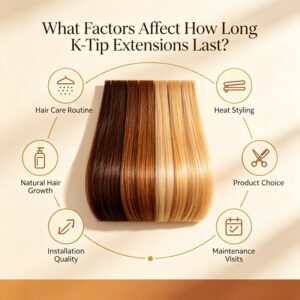
There is no universal expiration date for K-tip extensions. Several factors determine whether an installation lasts closer to three months or closer to six.

1. Natural Hair Growth

Everyone’s hair grows at a different rate.

If your hair grows quickly, the bonds will move away from the scalp faster. Someone with slower-growing hair may be able to keep the same installation for longer.

This is one reason why two people can use the same K-tip extensions but have very different maintenance schedules.

2. Installation Quality

Professional installation strongly influences longevity.

The stylist needs to select appropriate strand sizes, position the extensions correctly, and form the keratin bonds properly.

Poor installation may result in:

  • Loose bonds
  • Uneven attachment
  • Excessive tension
  • Premature shedding
  • Tangling
  • Uncomfortable pulling

A high-quality extension cannot compensate for poor installation technique.

3. Hair Quality

Extension hair quality also matters.

Premium human hair with good alignment, consistent texture, and appropriate processing can generally maintain its appearance better than low-quality hair that has been heavily processed.

For buyers, important specifications include:

  • Hair origin
  • Hair grade
  • Cuticle condition
  • Hair density
  • Texture
  • Color processing
  • Strand consistency
  • Keratin tip quality

For manufacturers and distributors, consistent production quality is especially important because customers expect the second batch to perform like the first.

4. Washing Frequency

Washing your hair does not automatically mean your K-tip extensions will fail prematurely.

However, frequent washing combined with inappropriate products can affect the condition of the hair and bonds.

A suitable extension-care routine should focus on gentle cleansing and thorough drying.

5. Hair Products

Heavy oils, oily conditioners, and some styling products should generally be kept away from the keratin bonds unless a professional specifically recommends them.

Products that accumulate around attachment points may affect grip or make the area harder to maintain.

6. Heat Styling

K-tip extensions can generally be styled, but excessive heat is not ideal.

Do not hold heat tools directly against the keratin attachment for extended periods. Excessive heat can affect the bond and may also accelerate dryness or damage in the extension hair.

7. Swimming

Chlorinated pools and salt water can affect extension hair, especially with frequent exposure.

If you swim regularly, protect the hair as much as possible and rinse it thoroughly afterward.

The same principle applies to both K-tip extensions and other human hair extension systems: water itself is not necessarily the enemy; prolonged exposure combined with poor aftercare is the bigger concern.

8. Brushing Habits

Improper brushing can cause unnecessary stress on extension attachments.

Use a suitable extension brush, and generally detangle the hair from the ends upward rather than pulling aggressively from the roots.
How to Make K-Tip Extensions Last Longer

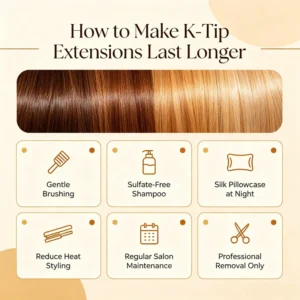
Proper aftercare can help you get closer to the expected lifespan of your installation.

Brush Regularly

Gently detangle the hair daily, especially before sleeping and washing.

Start at the ends and work upward gradually.

Keep the Bonds Clean

Product buildup around the attachment points can make maintenance more difficult.

Use products appropriate for your specific extension system and follow your stylist’s recommendations.

Avoid Excessive Oil Around the Bonds

Apply conditioning products mainly to the lengths and ends, not directly onto the keratin attachments.

Dry the Roots Thoroughly

Do not routinely go to bed with wet hair.

Moisture combined with friction can increase tangling and matting around the attachment areas.

Protect Your Hair While Sleeping

A loose braid or other low-tension hairstyle can help reduce friction while sleeping.

Reduce Excessive Heat

Use appropriate heat protection and avoid prolonged direct heat exposure around the keratin bonds.

Schedule Professional Checks

Even if your extensions still look good, periodic professional inspections can help identify loose bonds, excessive grow-out, tangling, or other problems before they become serious.

Signs Your K-Tip Extensions Need to Be Removed

Don’t wait until the extensions are severely tangled before considering professional removal.

Common signs include:

Significant Grow-Out

If the bonds have moved noticeably away from the scalp, the installation may be reaching the end of its useful period.

Root Tangling

When the natural hair begins tangling around individual bonds, professional maintenance or removal may be necessary.

Loose or Slipping Bonds

Extensions that repeatedly move or slip may no longer be securely attached.

Matting

Matting around the roots is a strong reason to have the extensions professionally assessed.

Excessive Discomfort

Don’t ignore persistent pulling, pain, or unusual tension.

Poor Extension Condition

If the extension hair has become severely dry, tangled, or difficult to manage, keeping it installed longer may not help.

Professional removal is preferable to pulling or cutting out K-tip extensions yourself.

Can K-Tip Extensions Be Reused?

The answer depends on the product and the condition of the extension hair.

In many K-tip systems, the original keratin bond is not designed to be reused, but the extension hair itself may potentially be re-tipped.

Reusability depends on:

  • Hair quality
  • Hair condition after removal
  • Shedding
  • Tangling
  • Previous chemical processing
  • Heat exposure
  • Removal technique
  • Manufacturer specifications

This is an important purchasing consideration for salons and professional buyers.

If you are sourcing K-tip extensions in bulk, ask the manufacturer whether the product is designed for re-tipping and which replacement bonding system it recommends.

How Long Does K-Tip Hair Last Compared With Other Extensions?

K-tip extensions are often selected by customers who want longer-term wear without daily removal.

Extension Type Typical Wear Pattern
K-Tip Approximately 3–6 months
Tape-In Often requires maintenance around 6–8 weeks
I-Tip Often adjusted around 8–12 weeks
Hand-Tied Weft Commonly requires periodic repositioning
Clip-In Removed after daily use

These figures are general industry ranges. Actual performance depends heavily on the installation method, product quality, hair growth, and aftercare.

K-tip extensions can therefore appeal to customers who prefer individual strand placement and fewer full installation appointments.

Are K-Tip Extensions Damaging?

K-tip extensions are not inherently damaging, but incorrect installation, excessive tension, poor maintenance, or improper removal can contribute to hair damage.

The most important factors are:

  • Appropriate extension weight
  • Correct section size
  • Proper bond placement
  • Professional installation
  • Regular maintenance
  • Gentle brushing
  • Correct removal

People with fragile, heavily processed, or particularly fine hair should consult an experienced extension professional before choosing any semi-permanent extension system.

The goal should not simply be to make extensions last as long as possible. The goal is to balance longevity, appearance, comfort, and natural hair health.

K-Tip Extensions vs. Tape-In Extensions

K-tip and tape-in extensions are both popular, but they provide different experiences.

K-tip extensions use individual keratin bonds, allowing the stylist to place individual strands in specific areas. When properly installed, this can provide natural movement and flexibility.

Tape-in extensions use adhesive strips and are installed in larger sections. They can be faster to install and are often repositioned more frequently.

K-tips may be preferable for customers who want:

  • Individual strand placement
  • Natural movement
  • Less visible attachment points
  • Longer periods between complete installations

Tape-ins may be preferable for customers who prioritize quicker installation and regular repositioning.

The best choice depends on the client’s hair, lifestyle, budget, desired appearance, and maintenance preferences.

How to Choose High-Quality K-Tip Extensions

For consumers, the focus should be on hair quality and professional installation.

For salons, distributors, and hair brands, sourcing becomes more complex.

A reliable K-tip extension supplier should be able to provide consistent:

  • Human hair quality
  • Strand weight
  • Hair length
  • Color
  • Texture
  • Keratin tip dimensions
  • Bond strength
  • Packaging
  • Production quality

Wholesale buyers should request samples before committing to a large order. Testing the product through actual salon installation can provide much more useful information than judging product photos alone.

For brands developing their own product lines, OEM and private-label services can also be important. Customized colors, lengths, packaging, labels, and product specifications can help create a differentiated hair extension collection.
Why Choose Alove Hair for K-Tip Extensions?

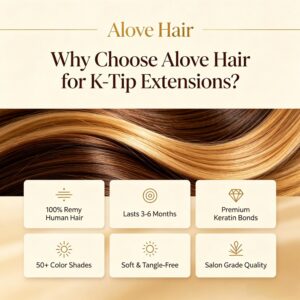
For salons, distributors, wholesalers, and hair brands looking for factory-direct hair products, Alove Hair provides professional hair extension manufacturing and sourcing solutions.

As a direct manufacturer, Alove Hair supports customers with product selection, samples, wholesale orders, and custom requirements. Buyers can discuss specifications such as hair length, color, texture, tip construction, packaging, and other requirements directly with the factory.

This factory-direct approach can be especially useful for businesses that need consistent quality and stable long-term supply rather than purchasing through multiple intermediaries.

Frequently Asked Questions

How long do K-tip extensions last?

K-tip extensions typically last around 3–6 months per installation, depending on natural hair growth, installation quality, extension quality, lifestyle, and aftercare.

Can K-tip extensions last 6 months?

Yes, some installations may remain wearable for approximately six months when the extensions are high quality and properly maintained. However, individual results vary.

How often should K-tip extensions be checked?

A professional check can be useful during the wear period, particularly as the bonds grow away from the scalp. Your stylist can determine the appropriate maintenance schedule based on your hair growth and extension condition.

Can you reuse K-tip extensions?

The original keratin bond is generally not reused, but some extension hair may be re-tipped and reused if it remains in good condition and the product is designed for this purpose.

How can I make K-tip extensions last longer?

Gentle brushing, suitable hair products, proper drying, reduced heat exposure, careful swimming habits, and professional maintenance can help extend the useful life of K-tip extensions.

Do K-tips last longer than tape-ins?

K-tip extensions can provide a longer period between complete installations than tape-in extensions, although actual maintenance schedules vary by person and product.

Can you sleep with K-tip extensions?

Yes. However, hair should be dry and gently detangled before sleeping. A loose braid or low-tension hairstyle can help reduce friction and tangling.

When should K-tip extensions be removed?

They should be professionally assessed when the bonds have grown significantly away from the scalp, become loose, cause tangling, or are no longer comfortable or manageable.

Final Takeaway

So, how long do K-tip extensions last?

For most users, a realistic expectation is around 3–6 months per installation. But the number alone does not tell the whole story.

Natural hair growth determines how quickly the bonds move away from the scalp, while installation quality, extension quality, lifestyle, and aftercare determine how well the hair remains manageable throughout that period.

It is also important to distinguish the lifespan of the K-tip installation from the lifespan of the extension hair. A good-quality human hair extension may remain usable after the original installation is removed, provided the hair is still in good condition and the manufacturer supports re-tipping.

For professional salons, distributors, and hair brands, choosing a reliable manufacturer is equally important. Consistent hair quality, reliable keratin tips, accurate specifications, and factory-direct support can make a significant difference when K-tip extensions become part of a long-term product range.

When properly selected, professionally installed, and carefully maintained, K-tip extensions can offer a natural-looking, flexible, and relatively long-lasting hair extension solution.

What Are K Tip Extensions?

Hair extensions have become one of the most popular beauty solutions for adding instant length, volume, and fullness without waiting months or years for natural hair growth. Among the many extension methods available today—including clip-ins, tape-ins, sew-ins, I-tip, and hand-tied wefts—K Tip Extensions, also known as Keratin Tip Extensions, are widely regarded as one of the most natural-looking and long-lasting options.

Favored by celebrities, professional hairstylists, and salon clients alike, K-Tip extensions blend seamlessly with natural hair while offering exceptional flexibility, durability, and styling freedom. Because each strand is attached individually with a keratin bond, the finished result closely mimics natural hair growth, making the extensions nearly invisible.

Whether you’re considering K Tip extensions for the first time or comparing them with other hair extension methods, this comprehensive guide explains everything you need to know, including what K Tip extensions are, how they work, their history, advantages and disadvantages, suitability for Black hair, before-and-after expectations, maintenance requirements, and how long they typically last.


What Are K Tip Extensions?

K Tip extensions (Keratin Tip extensions) are a type of strand-by-strand permanent hair extension that uses a small keratin adhesive bond to attach extension hair to natural hair.

The “K” stands for Keratin, the natural protein that makes up approximately 90% of human hair. Each extension strand has a small keratin tip that is softened with a professional heating tool and bonded to a small section of the client’s natural hair.

Unlike temporary extension systems that rely on clips, adhesive tape, or sewn wefts, K Tip extensions create hundreds of tiny, discreet bonds throughout the head, resulting in a highly natural appearance with excellent movement.

They are commonly made from:

  • 100% Remy human hair
  • Virgin human hair
  • Premium double-drawn hair
  • Occasionally high-quality synthetic fibers

Human hair remains the preferred choice because it can be washed, curled, straightened, colored (with professional guidance), and styled like natural hair.


The History of K Tip Hair Extensions

Hair extensions have been used for thousands of years. Ancient Egyptians, Romans, and Chinese nobles wore wigs and hairpieces to symbolize beauty and social status.

Modern hair extension technology advanced significantly during the late 20th century. In the 1980s and 1990s, salons began using glue-based bonding methods, which often caused stiffness and damage due to harsh adhesives.

The introduction of keratin bonding technology marked a major breakthrough. By replacing traditional glues with keratin—a protein naturally found in human hair—manufacturers created a safer, more flexible, and more durable attachment method.

During the early 2000s, K Tip extensions gained popularity among celebrities and luxury salons because they provided:

  • Nearly invisible bonds
  • Long-lasting wear
  • Natural movement
  • Better comfort
  • Improved durability

Today, K Tip extensions are considered one of the premium professional salon extension methods available worldwide.


How Do K Tip Extensions Work?

K Tip extensions are installed using a strand-by-strand fusion method.

Step 1: Hair Preparation

The stylist washes and completely dries the client’s hair to remove oils and product residue.


Step 2: Sectioning

Hair is divided into multiple horizontal sections.

Each extension is attached to a small section of natural hair.


Step 3: Heating the Keratin Bond

A professional fusion connector gently heats the keratin tip until it softens and becomes moldable.


Step 4: Bond Formation

The softened keratin wraps around the client’s natural hair.

The stylist rolls the bond between their fingers to create a small, secure cylinder.


Step 5: Cooling

Within a few seconds, the keratin hardens and securely holds the extension in place.

The result is a lightweight, flexible bond that closely resembles the texture of natural hair.


Why Keratin Is Used

Keratin is naturally compatible with human hair.

Compared with older glue systems, keratin offers several advantages:

  • Strong yet flexible bonding
  • Natural appearance
  • Better durability
  • Comfortable wear
  • Reduced stiffness
  • Professional removal with specialized solutions

High-quality keratin bonds are designed to soften only under controlled heat, allowing them to remain stable during everyday washing and styling.


Types of K-Tip Extensions

Several keratin bond shapes are available.

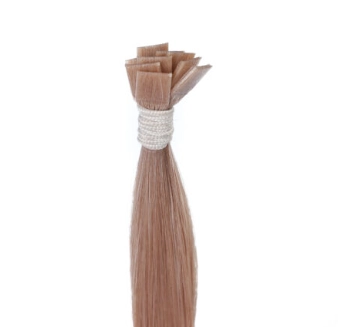
Flat Tips

Ideal for fine hair because they distribute weight evenly.


Nail Tips

The traditional cylindrical keratin tip.

Suitable for most hair types.


Micro K Tips

Smaller bonds designed for thin or delicate hair.


Invisible K Tips

Designed to minimize bond visibility, especially near the hairline.


K Tip Hair Extensions Pros and Cons

Like every extension method, K Tip extensions have strengths and limitations.

Pros

Extremely Natural Appearance

Individual strand placement creates seamless blending.

The bonds are almost invisible.


Long-Lasting

Professional installation can last several months with proper maintenance.


Excellent Movement

Hair moves naturally because each strand is attached independently.


Versatile Styling

Wear your hair:

  • Down
  • In ponytails
  • Braids
  • Updos
  • Half-up styles

without exposing large extension panels.


No Adhesive Tape

Unlike tape-in extensions, there are no wide adhesive strips.


Comfortable

Once installed correctly, many clients barely notice the bonds.


Suitable for Most Hairstyles

Because the bonds are tiny, styling options remain highly flexible.


Cons

Long Installation Time

A full head often requires:

  • 3–5 hours

depending on the desired volume.


Higher Cost

Professional installation and premium human hair make K Tips one of the more expensive extension methods.


Professional Removal Required

Removing keratin bonds should always be performed by a trained stylist to avoid unnecessary hair breakage.


Not Reusable in Most Cases

Unlike I-Tip or tape-in extensions, K Tip extensions generally cannot be reused because the keratin bond is removed during the take-down process.


Heat Installation

Although the heat is localized and brief, professional application is essential to minimize the risk of damage.


K Tip Extensions for Black Hair

Many people ask whether K Tip extensions are suitable for textured or Black hair. The answer is yes, provided the extensions are selected and installed correctly.

Benefits for Black Hair

When matched to the client’s texture, K Tip extensions can provide:

  • Added length
  • Increased volume
  • Fuller protective styles
  • Natural movement
  • Long-lasting results

They are commonly used on:

  • Silk-pressed natural hair
  • Relaxed hair
  • Blow-dried textured hair
  • Fine textured hair

For clients with tightly coiled or highly textured hair, choosing extensions that closely match the natural curl pattern or using professionally textured human hair helps achieve the most seamless blend.

Important Considerations

Because curly and coily hair types can be more prone to dryness and breakage, installation should be performed by an experienced stylist who understands textured hair. The size and placement of each bond should be carefully adjusted to avoid placing excessive tension on delicate strands.


K Tip Extensions Before and After

One of the biggest reasons clients choose K Tip extensions is the dramatic transformation they provide.

Before Installation

Many clients experience:

  • Thin hair
  • Short hair
  • Uneven haircut
  • Limited styling options
  • Lack of volume

After Installation

Properly installed K Tips can create:

  • Longer hair
  • Fuller appearance
  • More balanced density
  • Improved face framing
  • Increased confidence
  • Greater styling flexibility

Because each strand is individually placed, the finished look often appears almost identical to naturally growing hair.


How Long Do K Tip Extensions Last?

One of the most frequently asked questions is:

How long do K Tip extensions last?

The answer depends on several factors.

Average Wear Time

Professionally installed K Tip extensions typically remain in place for:

3–5 months

Some clients achieve up to 6 months with excellent maintenance, though many stylists recommend removal or replacement before that point to prevent excessive tangling near the bonds.

Factors Affecting Longevity

Several factors influence how long the extensions stay in good condition:

  • Hair growth rate
  • Daily brushing habits
  • Washing frequency
  • Product selection
  • Heat styling
  • Swimming
  • Exercise
  • Professional installation quality
  • Hair quality

Premium Remy human hair generally maintains its appearance longer than lower-grade alternatives.


Daily Care Tips

Proper maintenance extends both the life of the extensions and the health of your natural hair.

Brush Carefully

Use a loop brush or extension-safe brush designed to glide around the keratin bonds without snagging them.

Wash Gently

Use sulfate-free, extension-friendly shampoos and conditioners. Focus conditioner on the mid-lengths and ends rather than directly on the keratin bonds.

Avoid Excessive Heat

Always apply a heat protectant before using curling irons, straighteners, or blow dryers. Excessive direct heat on the bonds can weaken them.

Sleep Smart

Tie hair into a loose braid or ponytail before bed to minimize tangling.

Schedule Maintenance

Regular salon checkups help identify loose or tangled bonds before they become problematic.


K Tip Extensions vs Tape-In Extensions

Feature K Tip Extensions Tape-In Extensions
Installation Individual Strands Adhesive Panels
Appearance Very Natural Natural
Longevity 3–5 Months 6–8 Weeks Before Repositioning
Reusability Usually No Yes
Styling Flexibility Excellent Good
Installation Time Longer Faster
Cost Higher Moderate

K Tips are often chosen by clients who prioritize longevity and the most natural strand-by-strand appearance.


K Tip Extensions vs I Tip Extensions

Feature K Tip I Tip
Attachment Keratin Fusion Micro Beads
Heat Required Yes No
Reusable Usually No Yes
Bond Size Small Small
Longevity Excellent Excellent
Salon Maintenance Moderate Higher

I Tip extensions appeal to clients who prefer a heat-free installation and the ability to reuse the hair.


K Tip Extensions vs Clip-In Extensions

Feature K Tip Clip-In
Wear Time Months Daily
Professional Installation Yes No
Daily Removal No Yes
Styling Freedom Excellent Moderate
Natural Look Excellent Good

Clip-ins are ideal for temporary styling, while K Tips are designed for long-term wear.


Are K Tip Extensions Right for You?

K Tip extensions are an excellent option if you:

  • Want a long-lasting solution.
  • Prefer a highly natural appearance.
  • Frequently wear different hairstyles.
  • Are willing to invest in professional installation and maintenance.
  • Want extensions that move like natural hair.

They may be less suitable if you prefer a DIY method, have an extremely limited budget, or want extensions that can be removed and reapplied at home.


Common Myths About K Tip Extensions

Myth 1: They Damage Natural Hair

When applied, maintained, and removed by a qualified professional, K Tip extensions should not inherently damage healthy hair. Most problems arise from improper installation, poor maintenance, or leaving extensions in for too long.

Myth 2: They Look Fake

High-quality Remy human hair that is color-matched and professionally blended can be extremely difficult to distinguish from natural hair.

Myth 3: You Can’t Style Them

K Tip extensions can be curled, straightened, braided, and worn in a variety of updos, provided appropriate heat protection and care are used.


Conclusion

K Tip extensions are one of the most advanced and natural-looking professional hair extension methods available today. By using keratin—the same protein found naturally in human hair—they create discreet, flexible bonds that blend seamlessly with natural strands while providing impressive length, volume, and styling versatility.

From their evolution as an improvement over older glue-based systems to their widespread use in modern salons, K Tip extensions have earned a reputation for delivering durable, comfortable, and beautiful results. They offer numerous advantages, including a highly natural finish, long wear time of approximately 3–5 months, and compatibility with a wide range of hairstyles. They can also be an excellent option for Black hair when matched to the appropriate texture and installed by an experienced stylist.

While K Tip extensions require professional application, careful maintenance, and a higher initial investment than some temporary methods, many clients consider the results well worth the commitment. By understanding the installation process, weighing the pros and cons, following proper aftercare, and choosing high-quality Remy human hair, you can enjoy fuller, longer, and more natural-looking hair with confidence.

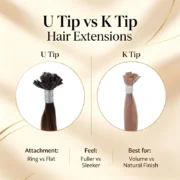
U Tip vs K Tip Hair Extensions

When it comes to creating a seamless, natural-looking volume or length boost for your clients, fusion hair extensions are a go-to professional solution. Among the most popular and effective methods are U Tip and K Tip extensions. Both offer incredible results, but they cater to different needs, installation techniques, and maintenance routines. As a stylist, understanding the nuances between them is crucial for delivering the best service and ensuring client satisfaction.

This comprehensive guide dives deep into the world of U Tip and K Tip extensions. We’ll break down their core differences, compare their pros and cons in detail, provide step-by-step installation protocols, share expert maintenance tips, and even analyze how they stack up against other popular extension types. By the end, you’ll have all the knowledge you need to confidently recommend and work with either system.


What Are U Tip and K Tip Extensions? Understanding the Basics

Before we compare them, let’s define what each type actually is.

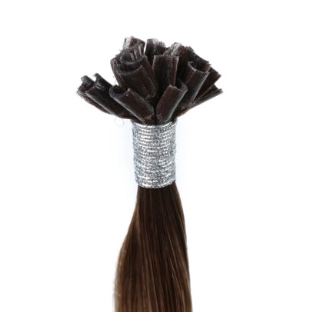
U Tip Extensions, also known as Micro Ring or Cold Fusion extensions, use a small, U-shaped metal or silicone-lined micro ring (or bead) to attach the extension strand to a small section of the client’s natural hair. A special pair of pliers is used to clamp the ring shut, securing the hair without any heat or glue. This method is celebrated for its gentleness on the natural hair shaft.

ALOVE Premium U Tip Extensions — Cold-fusion micro-ring technology for zero-heat, scalp-safe installation. The sleek, pre-flattened tips ensure seamless blending and minimal bulk, while the durable aluminum band provides secure, reusable attachment. Ideal for sensitive scalps and long-term wear (3–5 months).

K Tip Extensions, often referred to as I Tip or Hot Fusion extensions, feature a small, pre-tipped keratin bond at the top of each individual strand. During installation, a stylist uses a specialized heating tool to melt this keratin tip, which is then wrapped around a small section of the client’s natural hair. Once cooled, the keratin hardens into a strong, discreet bond that mimics the look of a natural hair root.

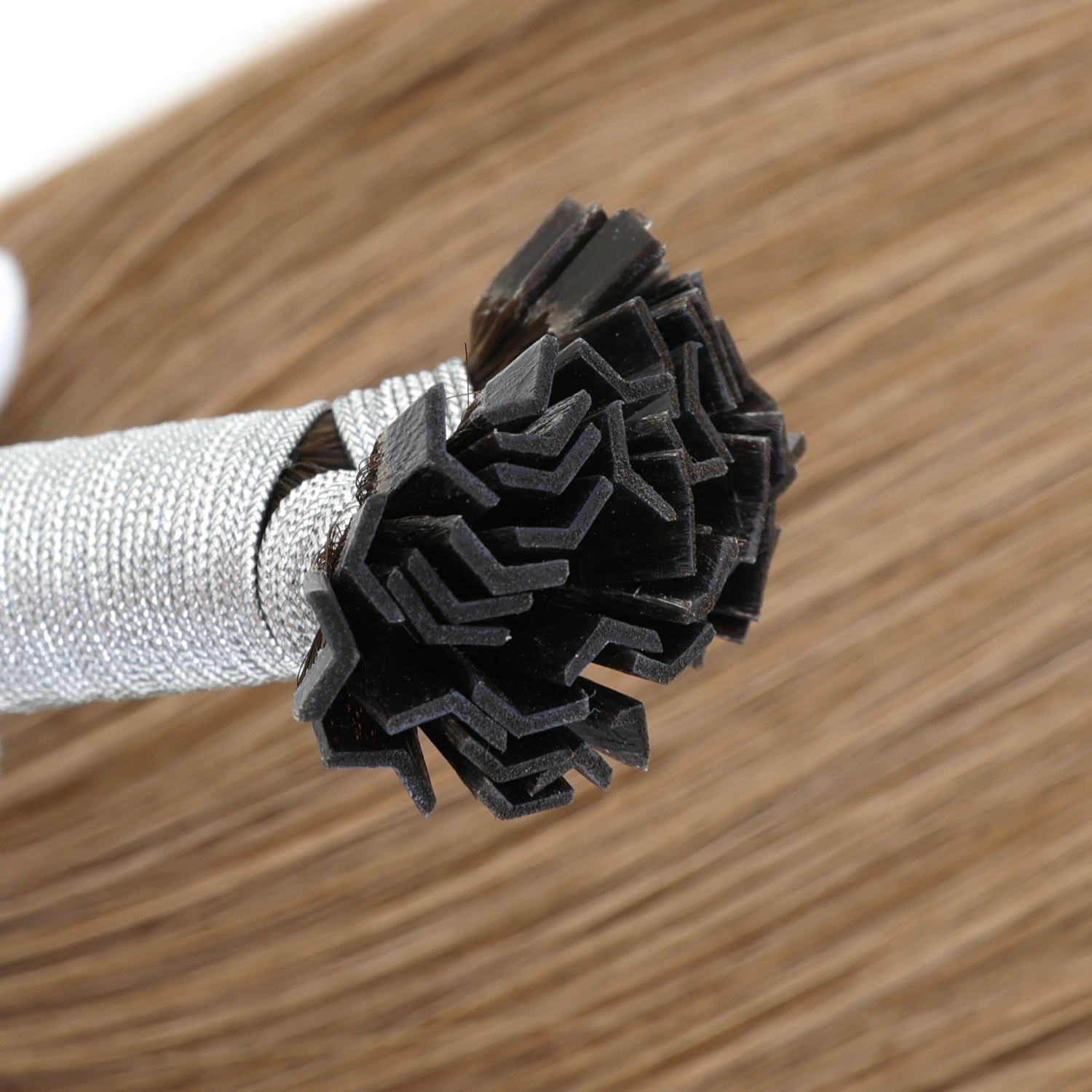
ALOVE Keratin K Tip Extensions — Precision-engineered for professional fusion bonding. Each strand features a pure, medical-grade keratin tip that melts cleanly at low heat (160–180°C), forming a flexible, invisible bond that mimics natural hair growth. Cuticle-intact human hair ensures lasting shine, color retention, and compatibility with balayage or lived-in styling.

At first glance, they might seem similar—both are applied strand-by-strand for a highly customizable result—but their fundamental attachment mechanisms create significant differences in application, feel, and aftercare.


Head-to-Head Comparison: U Tip vs. K Tip

To make an informed decision, let’s examine these two systems across the key factors that matter most to both stylists and clients.

1. Installation Process & Time

  • U Tip: The installation is relatively straightforward and requires no heat. You simply thread the client’s hair through the micro ring, insert the extension strand, and clamp it shut with pliers. Because there’s no waiting for bonds to cool, the process can be quite fast once you’re proficient. It’s also a great option for salons that want to avoid the smell or potential risks associated with heated tools.
  • K Tip: This method demands more technical skill and precision. The stylist must carefully control the temperature of the heating tool to melt the keratin just enough—too much heat can damage the client’s hair, while too little will result in a weak bond. Each bond must then be allowed to cool and set before moving on, which can extend the total appointment time. However, a skilled stylist can achieve incredibly secure and invisible results.

2. Comfort & Feel

  • U Tip: The micro rings are smooth and sit flat against the scalp. Most clients find them very comfortable from day one, with minimal sensation. They are also less likely to cause itching or irritation.
  • K Tip: When installed correctly, the hardened keratin bonds are also very smooth and comfortable. They are designed to feel like a natural part of the hair. However, if a bond is placed too close to the scalp or is slightly uneven, it can sometimes be felt, especially when the hair is pulled back tightly.

3. Natural Look & Blending

  • Both: Both U Tip and K Tip extensions excel in this area. Because they are applied individually, they allow for strategic placement around the head to create perfect blending, add volume exactly where it’s needed, and frame the face beautifully. The bonds themselves are small and discreet, making them virtually invisible when the hair is worn down.

4. Durability & Longevity

  • U Tip: These extensions are known for their strong hold. With proper care, a U Tip application can last 3 to 5 months. The metal or silicone rings maintain their grip well over time.
  • K Tip: K Tip bonds are also very durable and typically last 3 to 4 months. The longevity can be slightly more dependent on the client’s hair care routine, as certain products can degrade the keratin bond over time.

5. Maintenance & Upkeep

  • U Tip: Maintenance is generally easier. The rings don’t degrade with standard hair products, so clients have more freedom with their shampoos and conditioners. The main maintenance task is the “move-up” appointment, where the stylist removes the old rings and re-clamps them higher up the hair shaft as the client’s hair grows out.
  • K Tip: Keratin bonds can be sensitive to oils, silicones, and sulfates. Clients must use sulfate-free, oil-free shampoos and avoid applying conditioner or styling products directly to the bonds. This requires more diligence from the client. The move-up process involves carefully removing the old keratin bond (often by gently cracking it with pliers) and re-applying a new one.

6. Suitability for Different Hair Types

  • U Tip: An excellent choice for clients with fine, thin, or fragile hair. Since no heat or harsh chemicals are involved, it’s the gentlest fusion method available. It’s also ideal for clients who are sensitive to heat or keratin.
  • K Tip: Best suited for clients with medium to thick, healthy hair that can withstand the heat from the application tool. The strong keratin bond provides a secure hold on thicker hair types.

The Ultimate Comparison Table for Quick Reference

Feature U Tip Extensions K Tip (I Tip) Extensions
Attachment Method Cold Fusion (Micro Ring/Clamp) Hot Fusion (Keratin Bond + Heat)
Installation Tools Micro Ring Pliers Keratin Heating Tool, Pliers
Installation Time Faster (No cooling time) Slower (Requires bond cooling)
Skill Level Required Moderate High (Precision with heat required)
Comfort Very High (Smooth, flat rings) High (Smooth bonds when done well)
Best For Hair Type Fine, Thin, Fragile, Sensitive Hair Medium to Thick, Healthy Hair
Longevity 3 – 5 months 3 – 4 months
Maintenance Ease Easier (Less product restriction) More Demanding (Product-sensitive)
Removal Process Simple (Unclamp the ring) Requires care (Crack/remove bond)
Risk of Damage Very Low (No heat/chemicals) Low-Moderate (Heat risk if misused)

Step-by-Step Installation Guides

Installing U Tip Extensions: A Stylist’s Protocol

  1. Preparation: Wash and thoroughly dry the client’s hair. Section the hair using a tail comb, starting from the nape and working upwards. Isolate a small, precise section of hair (about 1-2 inches wide).
  2. Threading: Slide a micro ring onto the isolated section of natural hair, positioning it about 1/4 to 1/2 inch from the scalp.
  3. Insert Extension: Take a single U Tip extension strand and insert its looped end into the micro ring, alongside the client’s hair.
  4. Clamping: Using your micro ring pliers, firmly and evenly clamp the ring shut. Ensure the clamp is tight enough to hold securely but not so tight that it kinks the hair.
  5. Repeat: Continue this process row by row, staggering the placement for a natural look, until the desired volume or length is achieved.

Installing K Tip Extensions: A Stylist’s Protocol

  1. Preparation: Wash and completely dry the client’s hair. It must be 100% dry and free of any oils or products. Section the hair meticulously.
  2. Isolate Hair: Take a very small, precise section of hair (similar in thickness to the extension strand).
  3. Heat the Bond: Turn on your keratin heating tool and let it reach the correct temperature (usually indicated by a light). Hold the K Tip extension and gently melt the very tip of the keratin bond.
  4. Apply: Quickly wrap the melted keratin around the base of the isolated section of natural hair, about 1/4 to 1/2 inch from the scalp. Use the tool or your fingers (with a protective glove) to shape the bond into a smooth, teardrop shape.
  5. Cool & Set: Allow the bond to cool and harden completely before touching it or moving to the next strand. This is critical for a strong hold.
  6. Repeat: Work systematically through the head, ensuring even distribution.

Expert Maintenance Tips for Your Clients

Providing your clients with clear aftercare instructions is key to the longevity of their extensions and their overall satisfaction.

For Both Types:

  • Brushing: Always use a soft-bristle brush or a loop brush, starting from the ends and working up to the roots to prevent tangling.
  • Washing: Wash hair 2-3 times per week. Always wash with the head tilted back to prevent tangling at the bonds/rings.
  • Drying: Gently pat hair dry with a microfiber towel. Never rub vigorously. Blow-dry on a low heat setting, directing the airflow downwards.

Specific for U Tip Clients:

  • You can reassure them that they have more flexibility with their haircare products.
  • Remind them to avoid sleeping with wet hair, as this can cause the rings to loosen over time.

Specific for K Tip Clients:

  • Stress the importance of sulfate-free, oil-free, and silicone-free shampoos and conditioners. These ingredients can break down the keratin bond.
  • Advise them to apply conditioner only from the mid-lengths to the ends, never near the roots or bonds.
  • Recommend avoiding heavy oils, serums, or dry shampoos directly on the bonds.

Professional Aftercare Guide: The Best Hair Care Products for U Tip & K Tip Extensions

To maximize the lifespan and beauty of your clients’ extensions, proper aftercare is non-negotiable. The right products protect both the natural hair and the bonds—especially critical for keratin-based systems. Here’s our curated guide:

For U Tip Clients:
Since U Tip extensions use cold fusion (micro rings), they’re less sensitive to haircare ingredients. Recommend:

  • A gentle, sulfate-free shampoo to maintain scalp health.
  • Any high-quality moisturizing conditioner applied from mid-lengths to ends.
  • A lightweight leave-in detangler to prevent tangling around the rings.

For K Tip Clients:
Keratin bonds are vulnerable to oils, silicones, and harsh detergents. Advise clients to use only:

  • Sulfate-free, oil-free, and silicone-free shampoos – these prevent bond degradation.
  • Conditioner only on the ends, never near the roots or bonds.
  • Avoid dry shampoos, heavy serums, or heat protectants directly on the bonds.

Pro Tip from ALOVE: As a full-spectrum supplier, we offer salon-grade extension care kits designed specifically for fusion methods. Our sulfate-free formulas keep keratin bonds intact while nourishing 100% human hair—ensuring your clients’ investment lasts longer and looks flawless.


How Do They Compare to Other Extension Types?

It’s helpful to understand where U Tip and K Tip stand in the broader landscape of hair extensions.

  • Tape-In Extensions: These are faster to install (in sheets) but require a full removal and re-application every 6-8 weeks. They can be heavier and are less suitable for very fine hair. U/K Tips offer more precise, lightweight placement.
  • Clip-In Extensions: These are for temporary use only and are not a professional, long-term solution. They are great for at-home try-ons but lack the security and natural blend of fusion methods.
  • Sew-In/Weft Extensions: These require braiding the natural hair first, which can be heavy and stressful on the scalp. They are a good option for very thick hair but are less versatile than strand-by-strand methods.

U Tip and K Tip remain the gold standard for clients seeking a long-lasting, natural, and customizable professional extension service.

U Tip & K Tip vs. Tape-In & Clip-In: Which Is Right for Your Client?

While all extension types add length and volume, their suitability varies dramatically. Here’s how professional fusion methods stack up against popular alternatives:

Feature U Tip / K Tip (Fusion) Tape-In Extensions Clip-In Extensions
Installation Strand-by-strand (custom) Sandwiched between tapes Snap-in clips (DIY)
Natural Look ★★★★★ (Invisible bonds) ★★★★☆ (Visible if parted) ★★☆☆☆ (Clips can show)
Longevity 3–5 months 6–8 weeks Same-day use only
Best For Long-term, salon clients Medium-thick hair, quick installs Temporary events, trials
Hair Health Impact Low (if maintained properly) Moderate (tape adhesive stress) None (non-permanent)
DIY Friendly? ❌ (Professional only) ❌ (Best done by pros) ✅ (At-home friendly)
Ideal Client Wants seamless, durable look Needs fast volume boost Trying extensions for first time

The Verdict:
Tape-in and clip-ins serve specific purposes—but for long-lasting, undetectable, fully customizable results, U Tip and K Tip remain the gold standard for professional stylists. They offer unparalleled blending, movement, and versatility, making them the top choice for discerning clients who view extensions as an investment in their everyday confidence.

Why ALOVE Stands Out: We supply not just premium cuticle-intact hair in both U Tip and K Tip formats, but also the professional tools, removers, and aftercare solutions needed for a complete service—from consultation to maintenance.


2026’s Hottest Looks for U Tip & K Tip Clients

Today’s clients don’t just walk into salons asking for “longer hair”—they’re seeking a complete transformation that aligns with the latest fashion aesthetics. As a stylist, staying ahead of these trends isn’t optional—it’s essential for client satisfaction and retention. Fortunately, U Tip and K Tip fusion extensions offer the ultimate canvas for creating 2026’s most in-demand styles, thanks to their strand-by-strand precision and seamless blending.

1. Custom Balayage & Bold Money Pieces

The era of one-dimensional color is over. In 2026, hand-painted balayage and statement money pieces dominate social feeds—and fusion extensions are the perfect tool to execute them flawlessly. Because each U Tip or K Tip strand can be pre-colored or custom-dyed before installation, you can create soft, sun-kissed gradients or dramatic face-framing highlights that grow out naturally without harsh regrowth lines. This level of customization is simply impossible with bulkier methods like tape-ins.

2. Warm, Multi-Dimensional Tones

Cool ash blondes are taking a back seat to rich, warm, and lived-in hues. Think:

  • Caramel brown with golden undertones
  • Deep chestnut with subtle red accents
  • Honey blonde blended with soft beige

These shades not only complement a wider range of skin tones but also add depth and movement. At ALOVE, our premium cuticle-intact human hair is specially processed to maintain natural pigment integrity, making it ideal for these nuanced, multi-tonal looks—without fading or brassiness after a few washes.

3. The “Effortlessly Perfect” Lived-In Look

Clients no longer want hair that screams “extensions.” They crave volume and length that looks like their best hair—just amplified. The “lived-in” aesthetic prioritizes texture, variation, and natural flow over uniformity. With U Tip and K Tip, you can strategically place strands of varying lengths and tones to mimic how real hair grows, creating dimension that moves and blends organically from root to tip.

Why This Matters for Your Salon: Offering trend-forward services backed by high-quality hair (like ALOVE’s ethically sourced, cuticle-aligned extensions) positions you as a style authority—not just a technician. It also increases average ticket value through custom coloring, premium hair upgrades, and bundled aftercare kits.


Top 5 Fusion Extension Installation Mistakes—And How to Avoid Them

Even the highest-quality U Tip or K Tip hair can fail if installed incorrectly. These common errors not only shorten the lifespan of extensions but can also damage the client’s natural hair and lead to costly complaints. As a trusted supplier with decades of industry experience, ALOVE shares these critical pitfalls—and their simple fixes—to help you deliver flawless, long-lasting results every time.

Mistake #1: Using Oversized Sections of Natural Hair

Why it’s a problem: Large sections prevent the bond from fully gripping the natural hair, leading to slippage or premature fallout. It also creates bulkiness at the root.
✅ Pro Solution: Always use a fine-tooth tail comb to isolate small, precise sections that match the width of your extension strand (typically 0.5–1 cm). Less is more—thin sections ensure maximum hold and seamless blending.

Mistake #2: Overheating the Keratin Bond (K Tip Only)

Why it’s a problem: Excessive heat turns keratin into a brittle, glass-like substance that cracks easily—or worse, drips onto the scalp, causing discomfort or burns.
✅ Pro Solution: Use a temperature-controlled heating tool (ideally set between 160–180°C / 320–356°F). Gently melt only the very tip of the bond until it becomes soft and pliable—not liquid. Shape it quickly into a smooth teardrop around the natural hair.

Mistake #3: Placing Bonds Too Close to the Scalp

Why it’s a problem: Bonds touching the scalp cause irritation, restrict natural hair movement, and become visible when hair is pulled back. They also trap moisture and product buildup.
✅ Pro Solution: Maintain a consistent ¼ to ½ inch (0.6–1.3 cm) gap between the bond and the scalp. This allows room for natural hair growth, comfort, and airflow—critical for both U Tip rings and K Tip bonds.

Mistake #4: Skipping the Pre-Wash & Blow-Dry

Why it’s a problem: Oils, silicones, or residue from styling products create a barrier that prevents proper adhesion. Damp hair weakens bond integrity immediately.
✅ Pro Solution: Always wash the client’s hair with a clarifying, sulfate-free shampoo, then fully blow-dry it 100% dry before installation. Never apply extensions to damp or product-coated hair.

Mistake #5: Random or Uneven Placement

Why it’s a problem: Clumping bonds in one area creates tension points, unnatural volume distribution, and an obvious “track” effect.
✅ Pro Solution: Map your placement in advance. Start at the nape and work upward in staggered, horizontal rows—like shingles on a roof. Distribute weight evenly across the head, avoiding concentration along the part line or crown.

Final Tip from ALOVE: Pair your expert technique with premium, cuticle-intact human hair that’s designed for professional fusion methods. Our strands are pre-sorted for consistent diameter and texture, making precise sectioning and flawless blending effortless.


Frequently Asked Questions (FAQs): U Tip vs K Tip Extensions

Q: Which is more painful—U Tip or K Tip?
A: Neither should be painful when installed correctly! U Tip is completely heat-free, making it ideal for sensitive scalps. K Tip uses brief, localized heat that shouldn’t touch the skin—only the bond. Discomfort usually stems from improper placement too close to the scalp.

Q: Can I swim, sweat, or work out with these extensions?
A: Yes—but with precautions. Always tie hair in a loose braid before swimming or intense exercise. Rinse thoroughly with fresh water afterward to remove chlorine, salt, or sweat. For K Tip clients, avoid prolonged exposure to saltwater or excessive oil-based sunscreens near the bonds.

Q: My client has short hair—can she still get U Tip or K Tip extensions?
A: Ideally, natural hair should be at least 4–6 inches long to securely anchor the bonds without visibility. For shorter styles, consider tape-in or clip-in alternatives. However, skilled stylists can sometimes apply micro-tips strategically for subtle lengthening on layered cuts.

Q: Can ALOVE’s hair extensions be dyed or permed?
A: Absolutely! Our 100% cuticle-intact human hair is virgin-grade and highly resilient. It can be safely colored (up to 2–3 levels darker or lighter) or gently permed by a professional. Because we use a proprietary ash-bath-free bleaching process, the cuticle remains sealed—resulting in stronger, shinier, tangle-free hair that withstands chemical services better than standard Remy hair.


Why Choose Qingdao ALOVE HAIR PRODUCTS Co., Ltd. for Your U Tip & K Tip Needs?

As a professional stylist, the quality of the hair you use is just as important as your technique. That’s where Qingdao ALOVE HAIR PRODUCTS Co., Ltd. comes in.

Since the 1980s, ALOVE has been a trusted global supplier of luxury human hair extensions. Our commitment to quality is unmatched:

  • 100% Cuticle Intact Hair: Our U Tip and K Tip strands are made from premium, double-drawn, cuticle-intact human hair. This means the hair is aligned in the same direction, preventing tangles and ensuring a silky, natural flow that lasts.
  • Specialty in Colored Hair: We are experts in processing colored hair extensions without damaging the cuticle. Our 20+ skilled workers use a proprietary, ash-bath-free bleaching technique to create vibrant, healthy-looking colors that won’t fade quickly.
  • Complete Professional Toolkit: We don’t just sell hair; we support your entire service. We offer all the necessary professional tools, including high-quality pliers for U Tip installation and reliable heating tools for K Tip applications, along with removers, tape rolls, and custom packaging solutions.
  • Global Trust: With a 90%+ customer retention rate and a strong presence in the USA, UK, Canada, Australia, and Europe, ALOVE is the partner you can rely on for consistent, salon-grade quality.

By choosing ALOVE, you’re not just buying extensions; you’re investing in a partnership that empowers you to deliver exceptional results to your clients, every single time.


In conclusion, both U Tip and K Tip extensions are powerful tools in a stylist’s arsenal. Your choice should be guided by your client’s unique hair type, lifestyle, and your own technical expertise. With the right knowledge and the highest quality hair from a trusted supplier like ALOVE, you can master both techniques and build a reputation for flawless, beautiful hair transformations.

Get a sample kit of ALOVE’s premium cuticle-intact hair—complete with installation guides and color swatches. See (and feel) the difference quality makes.

K-Tip Extensions Manufacturer

Premium K-Tip Extensions Manufacturer: The Gold Standard for Professional Salons in Europe and North America

In the world of professional hair enhancements, K-Tip (Keratin Tip) extensions remain the “Gold Standard” for versatility, durability, and a natural feel. Unlike temporary methods, K-Tips offer a long-term solution that allows for 360-degree movement, making them a favorite for high-end stylists from London to Los Angeles.
As a leading K-Tip Extensions Manufacturer, Alove Hair combines the finest raw human hair with advanced bonding technology. We don’t just produce extensions; we provide the professional tools that empower stylists to create life-changing transformations.

1. What Makes Our K-Tip Extensions Superior?
The quality of a K-Tip extension is defined by two elements: the Hair and the Bond. At Alove Hair, we have perfected both.
A. 100% Luxury Virgin Remy Hair
We exclusively use high-grade human hair with 99% cuticle integrity. By keeping the cuticles intact and unidirectional, we eliminate the friction that leads to tangling and matting. Our K-Tips maintain their natural silkiness and luster for 12 to 18 months, significantly outperforming the industry standard.
B. Genuine Italian Keratin Bonds
The bond is the most critical technical component. Many manufacturers use cheap glue or synthetic resin, which can slip or damage the client’s hair.
  • The Alove Hair Difference: We use 100% Medical-Grade Italian Keratin. This keratin mimics the natural protein structure of human hair.
  • Performance: Our bonds are incredibly durable, shed-proof, and resistant to heat and oils. When it’s time for removal, they break down cleanly with a professional solvent, leaving zero damage to the client’s natural hair.

2. Technical Excellence: The Cold Dye Advantage
What truly sets Alove Hair apart from other Chinese manufacturers is our signature Cold Dye Technology.
Traditional “Hot Dyeing” uses high heat and aggressive acids to process hair in a single day, which “cooks” the hair and destroys its elasticity.
    • Our Slow-Process Philosophy: We pigment our hair at room temperature over a 21-to-30-day cycle.
    • The Result: The hair retains its natural moisture and strength. Our blonde shades—crucial for the European and North American markets—stay vibrant, cool-toned, and healthy, wash after wash.


3. The Manufacturer’s Edge: Why Partner with Alove Hair?
Choosing a factory-direct partner like Alove Hair provides your business with stability and a competitive edge.
56-Process Quality Control
Every batch of K-Tips undergoes a rigorous 56-step inspection. We test everything from the bond’s “pull-strength” to the hair’s pH balance. This consistency is why Hair Education platforms trust us; they know the hair will perform exactly as demonstrated in their classes.
OEM & Private Label Services
We help you build your brand. Whether you are a celebrity stylist or a large salon chain, we provide:
  • Custom Bonding Shapes: U-Tip, Flat-Tip, or I-Tip configurations.
  • Exclusive Color Blending: Custom root smudges, balayages, and piano-mixes that match modern trends.
  • Bespoke Packaging: Professional design services to make your brand stand out.

4. Why K-Tips are Booming in Europe and North America
The demand for K-Tips in the West is driven by the desire for “The Invisible Install.”
    • Seamless Integration: K-Tips are small and can be customized by the stylist. They are perfect for the “Micro-Bond” technique, which is trending in Europe for clients with thinning hair at the crown and temples.
    • Lifestyle Compatibility: North American and European clients are active. K-Tips allow for high ponytails, swimming, and intensive gym sessions without the extensions being visible.
    • Longevity and Value: Clients in these markets view extensions as a long-term investment. They prefer the 3–5 month wear time of K-Tips over more frequent maintenance methods.


5. Maintenance: Educating the Professional Stylist
As a manufacturer, we support our partners with the science of maintenance. Because our hair is Cuticle Intact, it behaves like real hair. While it may feel dry if not conditioned (since it has no natural scalp oils), it is easily restored. We empower stylists to teach their clients the “Cold Dye Care” routine: sulfate-free products, avoiding oil on the bonds, and low-heat styling.

Conclusion: Partner with Excellence
In a crowded market, quality is the only true differentiator. As a dedicated K-Tip Extensions Manufacturer, Alove Hair is committed to delivering the world’s most resilient, beautiful, and professional-grade keratin extensions.
By combining the science of Italian Keratin with the artistry of Cold Dyeing, we provide the foundation for your salon’s success.
Elevate your professional inventory today.

How Much Do K Tip Extensions Cost?

K-tip hair extensions typically cost around $500 to $2,500 or more for a professionally installed set in the United States. The final price depends on how much hair you need, the quality and length of the extensions, the number of individual keratin bonds, your stylist’s labor rate, and your location.

However, the price of the hair itself is not the same as the price of a complete K-tip installation. Some suppliers sell hair separately, while salons may quote a package that includes hair, application, blending, and styling. Removal, replacement hair, and aftercare can add to the long-term cost.

In this guide, we break down K-tip extension prices by cost component, explain how grams and strand counts affect your budget, compare professional installation with wholesale hair sourcing, and show you what to ask before accepting a quote.

Whether you are a salon client planning your first installation, a stylist setting service prices, or a hair brand sourcing K-tip extensions, this guide will help you compare costs more accurately.

How Much Do K-Tip Extensions Cost in 2026?

For a professionally installed K-tip set in the US, a reasonable initial planning range is approximately $500–$2,500+. This is a broad market reference, not a guaranteed salon rate or a standardized national average.

Cost Component Indicative US Price Range What It Covers
Hair only for a full-head set $300–$800 Human hair extensions in the quantity required for the client’s target result
Installation labor $300–$1,000+ Strand-by-strand application by a professional stylist
Complete installed set $500–$2,500+ Hair and installation, depending on the salon’s package
Removal or removal and reapplication Varies; published estimates may range from $100–$600 Removing bonds, preparing the hair, and possibly reinstalling suitable hair

These figures are planning references drawn from published retailer, salon, and cost-guide examples. They do not represent a controlled national price survey. The ranges also should not simply be added together: some salons bundle hair and labor, while others charge separately.

For example, a salon may quote $1,200 for hair and installation together. Another may quote $650 for installation only, with the hair purchased separately. The lower headline number is not necessarily the lower final cost.

A useful rule is to ask for an itemized quote showing the hair quantity, hair price, installation labor, finishing services, and removal policy.

Hair Cost vs. Installation Cost: What Are You Actually Paying For?

The first step in comparing K-tip prices is understanding what the advertised price includes.

1. K-Tip Hair Cost

K-tip extensions are sold in individual pre-bonded strands. The hair price depends on several specifications:

  • Hair type and quality
  • Hair length
  • Total net weight
  • Weight per strand
  • Color and color-processing complexity
  • Keratin bond design
  • Supplier and retail channel

A small retail pack may look inexpensive, but it may not contain enough hair for a full-head transformation. Some online listings show prices for individual packs or small quantities rather than a complete set.

For a useful comparison, check the total grams included in the package. A 20-gram pack should not be compared directly with a 50-gram or 100-gram order based only on the displayed price.

The ALOVEHAIR K-Tip collection includes different keratin-tip products for professional salons and wholesale buyers. Product specifications and quotations should be checked by the exact length, strand weight, color, and bond type.

2. K-Tip Installation Labor

Unlike tape-in or weft extensions, K-tips are applied strand by strand. The stylist must section the natural hair, position each extension, form the bond, and distribute the extensions to create a balanced result.

Installation labor can account for a substantial part of the total bill.

The price may include:

  • Hair preparation and sectioning
  • Bond placement and application
  • Customizing the bond size where appropriate
  • Blending and haircutting
  • Styling and finishing

Some salons charge according to the number of strands, while others use a package price or an hourly service rate. Ask whether the quoted installation fee includes the haircut and final styling.

A professional installation may take several hours. The exact time depends on the number of bonds, the client’s natural hair, the desired result, and the stylist’s working method.

3. Removal and Replacement Costs

K-tip bonds are not moved up in the same way as many tape-in or beaded weft systems. When the extensions need to be removed, a professional uses an appropriate bond-removal method.

The original keratin bond is broken during removal. Whether the hair itself can be cleaned and rebonded depends on its condition, the product construction, and the salon’s process. Do not assume that every K-tip set can be reused.

Before installation, ask:

  • Is removal charged separately?
  • Is removal included when purchasing a new set?
  • Can the removed hair be rebonded?
  • Does the stylist recommend replacing the hair after one wear cycle?
  • What is the cost of a new set if the original hair cannot be reused?

For budgeting, it is safer to confirm the replacement plan before booking rather than assume the original hair will be reusable.

How Hair Weight and Strand Count Affect K-Tip Cost

One of the most overlooked factors in K-tip pricing is the relationship between total grams and the number of individual bonds.

Two K-tip sets can contain the same total hair weight but have different strand counts. A smaller amount of hair per strand means more individual bonds are needed to reach the same total weight. This can affect application time and, when a salon charges per strand or by labor time, the installation fee.

Example: How Many K-Tip Strands Are in 100 Grams?

The following calculations use three illustrative strand weights: 0.5g, 0.8g, and 1.0g.

Total Hair Weight At 0.5g per Strand At 0.8g per Strand At 1.0g per Strand
50g 100 strands About 63 strands 50 strands
100g 200 strands 125 strands 100 strands
150g 300 strands About 188 strands 150 strands
200g 400 strands 250 strands 200 strands

These are mathematical examples, not recommendations for how much hair every client should install. Actual requirements depend on natural hair density, length, desired fullness, hairstyle, and the stylist’s placement plan.

ALOVEHAIR’s published product specifications include K-tip options around 0.5g, 0.8g, and 1.0g per strand, with product-specific configurations. See the premium keratin-tip extension specifications and the Flat K-Tip product range.

Why Strand Count Matters to Your Budget

Imagine two sets that both contain 100 grams of hair:

  • Set A uses 100 strands at 1.0g each.
  • Set B uses 200 strands at 0.5g each.

The total hair weight is the same, but Set B has twice as many bonds to install. If your salon charges by the strand, or if the smaller bonds require more placement time, the labor cost may be higher.

This is why you should ask the stylist or supplier for both the total grams and the weight per strand. A quote based only on “200 pieces” is incomplete unless you know how much hair each piece contains.

7 Factors That Make K-Tip Extensions More or Less Expensive

1. Hair Quality and Material

Human hair extensions vary in sourcing, processing, cuticle condition, and sorting. Remy and cuticle-aligned hair are commonly positioned in the professional market because hair direction and material condition are important to manageability.

However, labels such as “premium,” “luxury,” or “10A” are not universal, independently regulated quality grades. Ask the supplier to explain the actual material specification rather than relying on a grade label alone.

For a closer look at the advantages and limitations of the method, read our guide to K-tip hair extensions pros and cons.

2. Hair Length

Longer extensions generally cost more because they require longer usable hair and may involve more demanding material selection.

For example, 18-inch and 24-inch K-tip products should not be compared as equal-value items, even when the packaging weight is identical.

When asking for a quote, confirm the usable hair length rather than relying only on the product title. Also ask whether the stated length is measured before or after the keratin bond.

3. Total Hair Weight

More grams mean more hair material. A client who wants a small volume adjustment may need much less hair than someone seeking a dramatic length and density transformation.

However, more grams do not automatically mean a better result. The stylist needs to assess the client’s natural hair and distribute the extension weight appropriately.

4. Bond Size and Design

K-tip bonds are available in different shapes and sizes. Traditional nail-tip, flat-tip, and smaller customized bonds may differ in appearance, flexibility, and application requirements.

Bond design can also affect how much hair is included in each strand. A supplier should specify both the hair weight and the bond construction.

For salons considering different strand-by-strand methods, compare I-Tip hair extensions with K-tips before selecting a product line. I-tips use a different attachment system and do not use the same heat-fused keratin bond.

5. Color and Customization

Natural black or brown shades may be easier to source than complex custom blends. Rooted colors, balayage, highlights, and multi-tone shades can require additional sorting, color development, and matching.

Color work can also increase salon labor. A stylist may need to combine several shades or perform additional toning to blend the extensions with the client’s natural hair.

For brands and professional buyers, ask whether the quoted price covers a standard stock shade or a custom color.

6. Stylist Experience and Location

Installation prices vary by salon, region, and the experience of the extension specialist. A salon in a high-cost metropolitan area may charge more than a salon in a smaller market.

The price alone does not prove that a stylist is more qualified. Review previous work, ask about training and experience with K-tips, and discuss removal procedures before choosing a provider.

7. Finishing Services and Aftercare

Some quotes include a consultation, haircut, blending, and styling. Others cover installation only.

Additional charges may include:

  • Custom color matching or toning
  • Haircut and blending
  • Removal
  • Replacement hair
  • Professional aftercare products
  • Follow-up appointments
  • Taxes and gratuity

Before comparing two salons, make sure both quotes cover the same services.

What Is the Long-Term Cost of K-Tip Extensions?

The initial installation price is only one part of the budget. You also need to consider how long the set is expected to remain in place, when it should be removed, and whether the hair can be reused.

Professional sources commonly describe K-tip wear periods of around three to four months, although the appropriate schedule varies with hair growth, bond condition, installation quality, and care.

Unlike some reusable extension methods, K-tips are not normally moved up by simply repositioning the original bonds. Removal and replacement planning should therefore be part of the original consultation.

Calculate Your First-Year K-Tip Budget

Use this formula to estimate the total cost:

First-year cost = Initial hair + installation labor + removal + replacement or rebonding + color and blending services + aftercare products + taxes and gratuity.

Ask your salon to estimate the number and type of appointments you are likely to need. A first installation, a removal-only appointment, and a removal-and-reinstallation appointment are different services and may have different prices.

A useful quote should explain:

Cost Item Question to Ask
Initial hair How many grams and strands are included?
Installation Is the fee per strand, hourly, or a package price?
Blending Is cutting and styling included?
Removal Is it charged separately?
Rebonding Can the removed hair be reused, and what does that service cost?
Replacement hair Should I budget for a completely new set?
Aftercare Which products are essential, and what is optional?

K-Tip vs. Other Extension Methods: Which Costs Less?

K-tips are not always the most economical option for every client. The right comparison depends on the desired result, installation time, maintenance schedule, and whether the hair can be reused.

Method Typical Cost Consideration Reinstallation Consideration
K-Tip Individual bonds and longer installation time can increase labor Removal and new bonds or replacement hair may be required
I-Tip Individual strand application without heat-fused keratin Suitable hair may be reusable after professional maintenance
Tape-In Hair and adhesive panels are purchased together Refit and replacement tape may be needed
Hand-Tied Weft Hair quantity and row installation influence the price Hair may be reused if it remains in suitable condition
Genius Weft Weft weight, length, and construction influence the hair cost Reuse depends on hair condition and installation system

For more detail, read our K-Tip vs. Weft comparison. You can also compare Hand-Tied Weft extensions and Genius Weft hair if your priority is a different installation method or a reusable hair system.

Clients with fine or thin natural hair should not choose a method based on price alone. The amount and distribution of extension hair need to be assessed professionally. Our guide to hair extensions for thin hair explains why weight distribution and installation planning matter.

How Much Do K-Tip Extensions Cost for Wholesale Buyers and Salons?

Retail salon prices and factory wholesale prices are two different cost structures.

A salon client pays for the finished service, which may include the hair, installation, blending, styling, and future removal. A salon owner or distributor purchasing K-tip extensions from a manufacturer needs to calculate the product cost, customization cost, inventory requirement, packaging, freight, and retail margin.

What Determines the Wholesale Price of K-Tip Hair?

For a manufacturer, K-tip pricing usually depends on the exact product specification and order requirements.

Wholesale Pricing Factor Details to Confirm
Hair material Remy, cuticle-aligned, virgin, or other specified material
Length 16″, 18″, 20″, 22″, 24″, or custom length
Weight per strand For example, 0.5g, 0.8g, or 1.0g, depending on the SKU
Total quantity Total grams, number of strands, and quantity per color
Bond design Flat-tip, nail-tip, or another specified keratin shape
Color Natural shades, solid colors, rooted shades, or custom blends
Packaging Bulk packaging, salon packaging, or custom retail packaging
Branding Logo labels, custom boxes, and private label requirements
Shipping Freight method, destination, and agreed trade terms

A wholesale quote should clearly state whether the price is calculated per strand, per pack, or per gram. It should also specify whether packaging and customization are included.

ALOVEHAIR K-Tip Manufacturing and Private Label Options

ALOVEHAIR is a China-based human hair extension manufacturer supplying professional salons, wholesalers, and hair businesses. Its K-tip range includes different strand weights, lengths, colors, and bond configurations for professional applications.

The company lists cuticle-intact Remy human hair and offers product customization and private label packaging. Its K-Tip product collection is a starting point for comparing available products and specifications.

For wholesale buyers, ALOVEHAIR’s website FAQ currently indicates:

  • Sample MOQ: 100 grams per color
  • Suggested bulk quantity: 500–1,000 grams per color
  • Typical sample lead time: 1–2 weeks
  • Typical bulk production lead time: 2–3 weeks, depending on order details
  • Private label service: Custom packaging and branding support

These are general website guidelines, not a guaranteed MOQ or lead time for every K-tip specification. Confirm the actual terms for your chosen length, strand weight, color, and packaging before placing an order.

For a broader view of the company’s manufacturing capabilities and product range, visit ALOVEHAIR.

How to Compare K-Tip Supplier Quotes Without Overpaying

A low price per strand may not represent the best value if the hair weight, bond construction, or color specification is different.

Use the following checklist when requesting quotations from two or more manufacturers.

Step 1: Use the Same Product Specification

Send each supplier the same requirements:

  • Hair type and material specification
  • Length
  • Weight per strand
  • Total grams
  • Bond shape and size
  • Color reference
  • Texture
  • Packaging and branding requirements

Without a consistent specification, the prices are not directly comparable.

Step 2: Request Physical Samples

Evaluate the hair and bond construction before confirming a bulk order. Check strand weight, usable length, color consistency, texture, shedding, tangling, and bond appearance.

For professional use, test the product using the installation and removal methods recommended by the manufacturer. Do not compare products using an installation process that is unsuitable for one of them.

Step 3: Confirm Repeat-Order Consistency

A successful sample does not guarantee that every future batch will match. Ask the manufacturer how it records color references, hair specifications, and approved samples for repeat orders.

Step 4: Calculate the Landed Cost

For a wholesale order, the final cost is not just the factory quotation.

Landed cost = Product cost + customization + packaging + freight + insurance (if applicable) + import duties and taxes + other agreed charges.

This is the figure that should be used when calculating salon retail prices or distributor margins.

Frequently Asked Questions About K-Tip Extension Costs

Are K-tip extensions expensive?

K-tip extensions are generally a higher-investment method because the hair is applied strand by strand and installation requires professional time. A complete salon installation in the US may fall around $500–$2,500 or more, depending on hair quantity, quality, stylist, and location.

How much does K-tip hair cost without installation?

The price depends on the supplier, length, material, total grams, and number of strands. Some online prices refer to small packs rather than enough hair for a full head. Ask for the price per gram and the total quantity included before comparing products.

How much does it cost to install K-tip extensions?

Installation labor varies according to strand count, stylist experience, and local service rates. Some salons charge per strand, while others quote a flat or package price. Ask whether blending, cutting, and styling are included.

How many K-tip extensions do I need for a full head?

There is no universal strand count. The number depends on the weight per strand, the client’s natural hair density, the desired length and fullness, and the stylist’s placement plan. Ask for the estimated total grams and strand count during the consultation.

Are 0.5g or 1g K-tip strands better?

Neither is automatically better. Smaller strands can allow more detailed placement, while heavier strands can reduce the total number of bonds needed for the same hair weight. The appropriate size depends on the client’s natural hair and the stylist’s technique.

How long do K-tip extensions last?

Professional guidance commonly gives a wear period of around three to four months before removal or replacement, but the actual schedule depends on hair growth, bond condition, and maintenance. The extension hair itself may have a different usable lifespan from the original bond.

Can K-tip extensions be reused?

Do not assume that every K-tip set can be reused. The bond is broken during removal, and the condition of the hair determines whether it can be rebonded. Ask the salon and manufacturer whether reuse is supported for the exact product.

Are K-tip extensions more expensive than tape-ins?

They can be more expensive initially because K-tips require strand-by-strand application and usually take longer to install. Tape-ins use adhesive panels and may have different maintenance and reuse costs. Compare the full service cycle rather than just the price of the hair.

Does ALOVEHAIR offer wholesale K-tip extensions?

Yes. ALOVEHAIR lists K-tip products for professional and wholesale buyers, with different specifications and private label options. The exact price depends on length, strand weight, color, bond design, quantity, and packaging. Contact the company for a quotation based on your product brief.

Final Verdict: Budget for the Complete K-Tip Service, Not Just the Hair

K-tip extensions can cost around $500–$2,500 or more for a professionally installed set in the US. The most important variables are the total hair weight, strand size, hair quality, installation labor, color complexity, and the services included in the quotation.

For clients, the best way to control spending is to request an itemized salon quote and understand the removal and replacement plan before installation.

For salons, stylists, and distributors, the key is to compare manufacturers using the same hair specifications and calculate the full landed cost instead of choosing a supplier based only on the lowest price per strand.

ALOVEHAIR provides K-tip extension options for professional buyers, including different hair weights, lengths, colors, and private label possibilities. A detailed product specification is the best starting point for an accurate wholesale quotation.