

How Much Do K Tip Extensions Cost?
K-tip hair extensions typically cost around $500 to $2,500 or more for a professionally installed set in the United States. The final price depends on how much hair you need, the quality and length of the extensions, the number of individual keratin bonds, your stylist’s labor rate, and your location.
However, the price of the hair itself is not the same as the price of a complete K-tip installation. Some suppliers sell hair separately, while salons may quote a package that includes hair, application, blending, and styling. Removal, replacement hair, and aftercare can add to the long-term cost.
In this guide, we break down K-tip extension prices by cost component, explain how grams and strand counts affect your budget, compare professional installation with wholesale hair sourcing, and show you what to ask before accepting a quote.
Whether you are a salon client planning your first installation, a stylist setting service prices, or a hair brand sourcing K-tip extensions, this guide will help you compare costs more accurately.
How Much Do K-Tip Extensions Cost in 2026?
For a professionally installed K-tip set in the US, a reasonable initial planning range is approximately $500–$2,500+. This is a broad market reference, not a guaranteed salon rate or a standardized national average.
| Cost Component | Indicative US Price Range | What It Covers |
|---|---|---|
| Hair only for a full-head set | $300–$800 | Human hair extensions in the quantity required for the client’s target result |
| Installation labor | $300–$1,000+ | Strand-by-strand application by a professional stylist |
| Complete installed set | $500–$2,500+ | Hair and installation, depending on the salon’s package |
| Removal or removal and reapplication | Varies; published estimates may range from $100–$600 | Removing bonds, preparing the hair, and possibly reinstalling suitable hair |
These figures are planning references drawn from published retailer, salon, and cost-guide examples. They do not represent a controlled national price survey. The ranges also should not simply be added together: some salons bundle hair and labor, while others charge separately.
For example, a salon may quote $1,200 for hair and installation together. Another may quote $650 for installation only, with the hair purchased separately. The lower headline number is not necessarily the lower final cost.
A useful rule is to ask for an itemized quote showing the hair quantity, hair price, installation labor, finishing services, and removal policy.
Hair Cost vs. Installation Cost: What Are You Actually Paying For?
The first step in comparing K-tip prices is understanding what the advertised price includes.
1. K-Tip Hair Cost
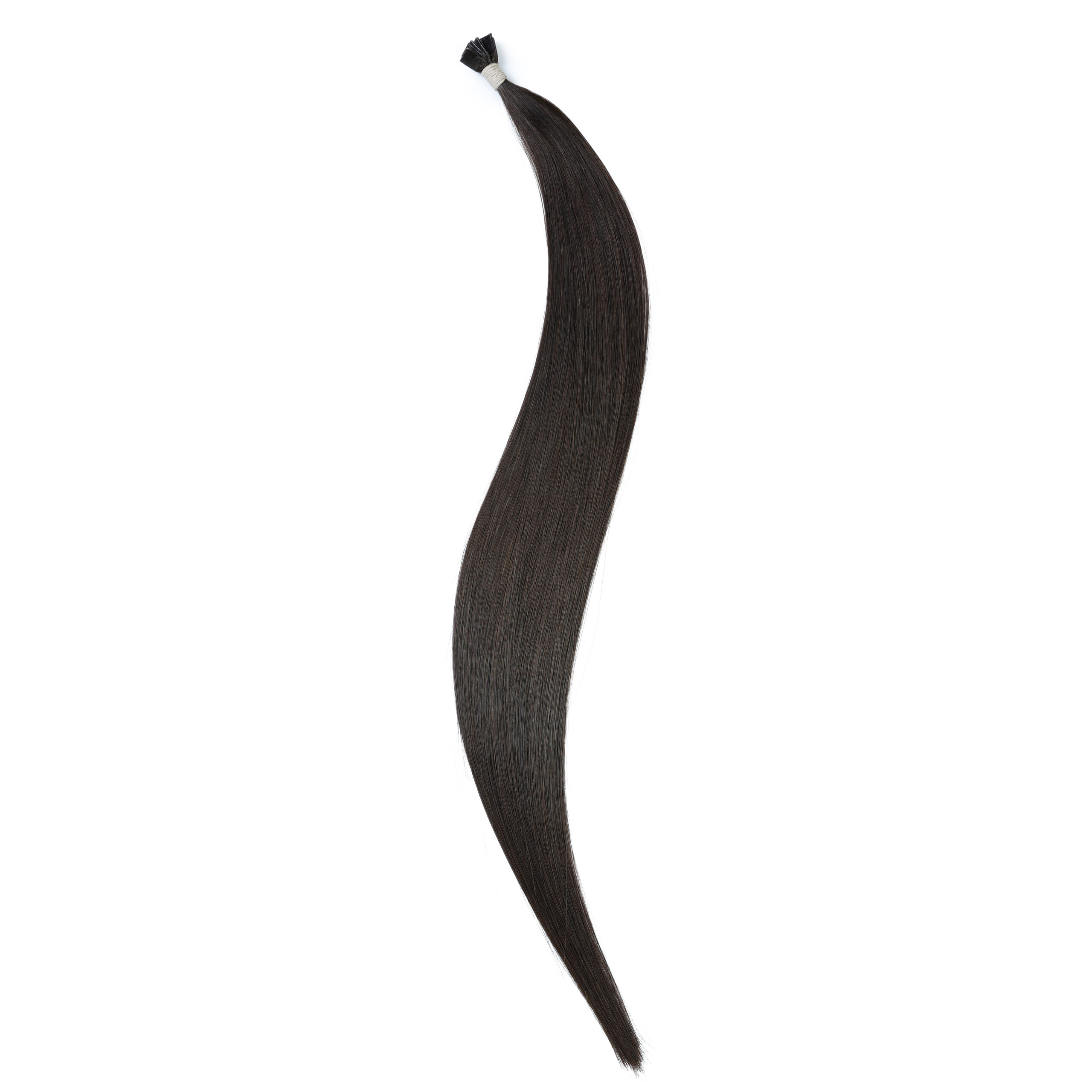
K-tip extensions are sold in individual pre-bonded strands. The hair price depends on several specifications:
- Hair type and quality
- Hair length
- Total net weight
- Weight per strand
- Color and color-processing complexity
- Keratin bond design
- Supplier and retail channel
A small retail pack may look inexpensive, but it may not contain enough hair for a full-head transformation. Some online listings show prices for individual packs or small quantities rather than a complete set.
For a useful comparison, check the total grams included in the package. A 20-gram pack should not be compared directly with a 50-gram or 100-gram order based only on the displayed price.
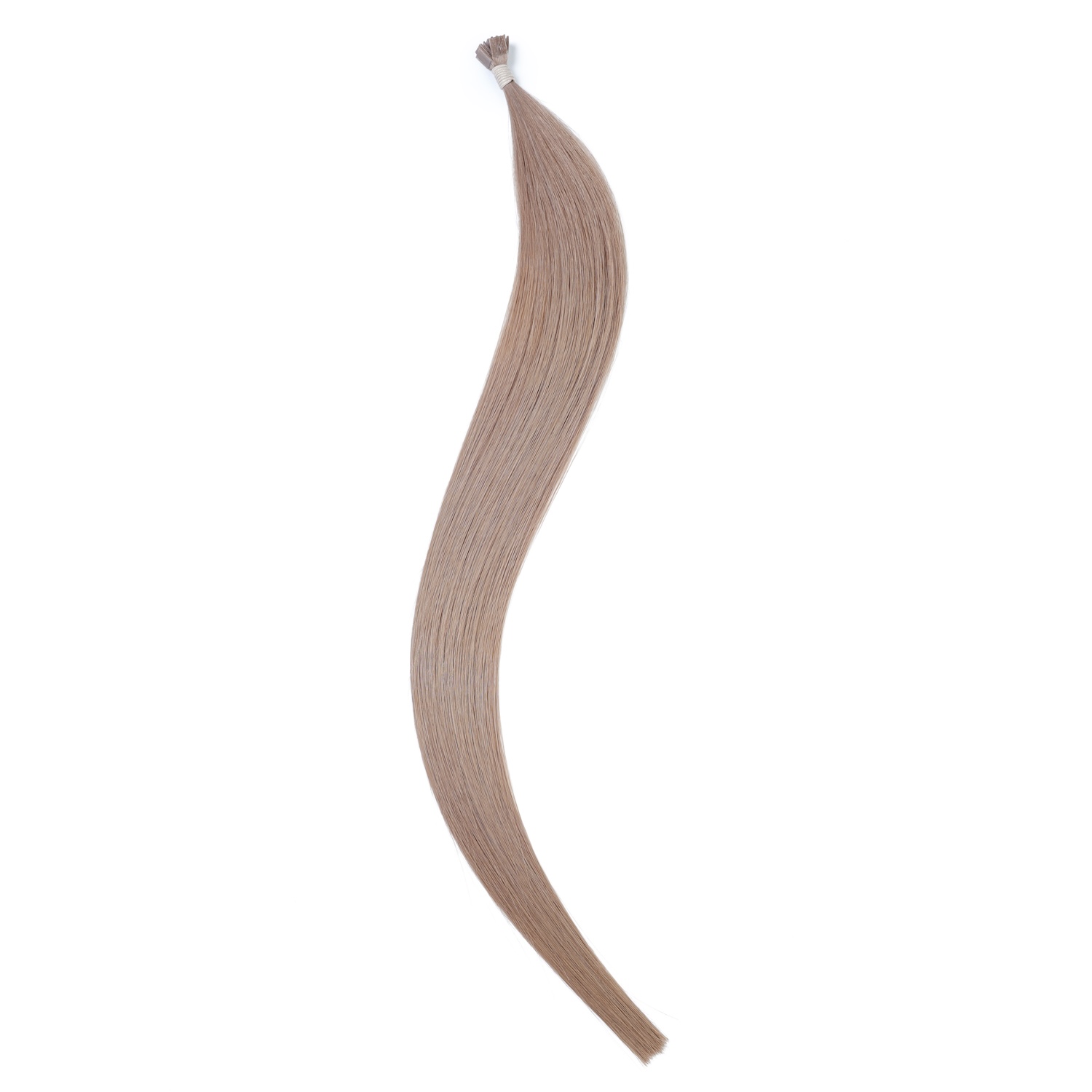
The ALOVEHAIR K-Tip collection includes different keratin-tip products for professional salons and wholesale buyers. Product specifications and quotations should be checked by the exact length, strand weight, color, and bond type.
2. K-Tip Installation Labor
Unlike tape-in or weft extensions, K-tips are applied strand by strand. The stylist must section the natural hair, position each extension, form the bond, and distribute the extensions to create a balanced result.
Installation labor can account for a substantial part of the total bill.
The price may include:
- Hair preparation and sectioning
- Bond placement and application
- Customizing the bond size where appropriate
- Blending and haircutting
- Styling and finishing
Some salons charge according to the number of strands, while others use a package price or an hourly service rate. Ask whether the quoted installation fee includes the haircut and final styling.
A professional installation may take several hours. The exact time depends on the number of bonds, the client’s natural hair, the desired result, and the stylist’s working method.
3. Removal and Replacement Costs
K-tip bonds are not moved up in the same way as many tape-in or beaded weft systems. When the extensions need to be removed, a professional uses an appropriate bond-removal method.
The original keratin bond is broken during removal. Whether the hair itself can be cleaned and rebonded depends on its condition, the product construction, and the salon’s process. Do not assume that every K-tip set can be reused.
Before installation, ask:
- Is removal charged separately?
- Is removal included when purchasing a new set?
- Can the removed hair be rebonded?
- Does the stylist recommend replacing the hair after one wear cycle?
- What is the cost of a new set if the original hair cannot be reused?
For budgeting, it is safer to confirm the replacement plan before booking rather than assume the original hair will be reusable.
How Hair Weight and Strand Count Affect K-Tip Cost
One of the most overlooked factors in K-tip pricing is the relationship between total grams and the number of individual bonds.
Two K-tip sets can contain the same total hair weight but have different strand counts. A smaller amount of hair per strand means more individual bonds are needed to reach the same total weight. This can affect application time and, when a salon charges per strand or by labor time, the installation fee.
Example: How Many K-Tip Strands Are in 100 Grams?
The following calculations use three illustrative strand weights: 0.5g, 0.8g, and 1.0g.
| Total Hair Weight | At 0.5g per Strand | At 0.8g per Strand | At 1.0g per Strand |
|---|---|---|---|
| 50g | 100 strands | About 63 strands | 50 strands |
| 100g | 200 strands | 125 strands | 100 strands |
| 150g | 300 strands | About 188 strands | 150 strands |
| 200g | 400 strands | 250 strands | 200 strands |
These are mathematical examples, not recommendations for how much hair every client should install. Actual requirements depend on natural hair density, length, desired fullness, hairstyle, and the stylist’s placement plan.
ALOVEHAIR’s published product specifications include K-tip options around 0.5g, 0.8g, and 1.0g per strand, with product-specific configurations. See the premium keratin-tip extension specifications and the Flat K-Tip product range.
Why Strand Count Matters to Your Budget
Imagine two sets that both contain 100 grams of hair:
- Set A uses 100 strands at 1.0g each.
- Set B uses 200 strands at 0.5g each.
The total hair weight is the same, but Set B has twice as many bonds to install. If your salon charges by the strand, or if the smaller bonds require more placement time, the labor cost may be higher.
This is why you should ask the stylist or supplier for both the total grams and the weight per strand. A quote based only on “200 pieces” is incomplete unless you know how much hair each piece contains.
7 Factors That Make K-Tip Extensions More or Less Expensive
1. Hair Quality and Material
Human hair extensions vary in sourcing, processing, cuticle condition, and sorting. Remy and cuticle-aligned hair are commonly positioned in the professional market because hair direction and material condition are important to manageability.
However, labels such as “premium,” “luxury,” or “10A” are not universal, independently regulated quality grades. Ask the supplier to explain the actual material specification rather than relying on a grade label alone.
For a closer look at the advantages and limitations of the method, read our guide to K-tip hair extensions pros and cons.
2. Hair Length
Longer extensions generally cost more because they require longer usable hair and may involve more demanding material selection.
For example, 18-inch and 24-inch K-tip products should not be compared as equal-value items, even when the packaging weight is identical.
When asking for a quote, confirm the usable hair length rather than relying only on the product title. Also ask whether the stated length is measured before or after the keratin bond.
3. Total Hair Weight
More grams mean more hair material. A client who wants a small volume adjustment may need much less hair than someone seeking a dramatic length and density transformation.
However, more grams do not automatically mean a better result. The stylist needs to assess the client’s natural hair and distribute the extension weight appropriately.
4. Bond Size and Design
K-tip bonds are available in different shapes and sizes. Traditional nail-tip, flat-tip, and smaller customized bonds may differ in appearance, flexibility, and application requirements.
Bond design can also affect how much hair is included in each strand. A supplier should specify both the hair weight and the bond construction.
For salons considering different strand-by-strand methods, compare I-Tip hair extensions with K-tips before selecting a product line. I-tips use a different attachment system and do not use the same heat-fused keratin bond.
5. Color and Customization
Natural black or brown shades may be easier to source than complex custom blends. Rooted colors, balayage, highlights, and multi-tone shades can require additional sorting, color development, and matching.
Color work can also increase salon labor. A stylist may need to combine several shades or perform additional toning to blend the extensions with the client’s natural hair.
For brands and professional buyers, ask whether the quoted price covers a standard stock shade or a custom color.
6. Stylist Experience and Location
Installation prices vary by salon, region, and the experience of the extension specialist. A salon in a high-cost metropolitan area may charge more than a salon in a smaller market.
The price alone does not prove that a stylist is more qualified. Review previous work, ask about training and experience with K-tips, and discuss removal procedures before choosing a provider.
7. Finishing Services and Aftercare
Some quotes include a consultation, haircut, blending, and styling. Others cover installation only.
Additional charges may include:
- Custom color matching or toning
- Haircut and blending
- Removal
- Replacement hair
- Professional aftercare products
- Follow-up appointments
- Taxes and gratuity
Before comparing two salons, make sure both quotes cover the same services.
What Is the Long-Term Cost of K-Tip Extensions?
The initial installation price is only one part of the budget. You also need to consider how long the set is expected to remain in place, when it should be removed, and whether the hair can be reused.
Professional sources commonly describe K-tip wear periods of around three to four months, although the appropriate schedule varies with hair growth, bond condition, installation quality, and care.
Unlike some reusable extension methods, K-tips are not normally moved up by simply repositioning the original bonds. Removal and replacement planning should therefore be part of the original consultation.
Calculate Your First-Year K-Tip Budget
Use this formula to estimate the total cost:
First-year cost = Initial hair + installation labor + removal + replacement or rebonding + color and blending services + aftercare products + taxes and gratuity.
Ask your salon to estimate the number and type of appointments you are likely to need. A first installation, a removal-only appointment, and a removal-and-reinstallation appointment are different services and may have different prices.
A useful quote should explain:
| Cost Item | Question to Ask |
|---|---|
| Initial hair | How many grams and strands are included? |
| Installation | Is the fee per strand, hourly, or a package price? |
| Blending | Is cutting and styling included? |
| Removal | Is it charged separately? |
| Rebonding | Can the removed hair be reused, and what does that service cost? |
| Replacement hair | Should I budget for a completely new set? |
| Aftercare | Which products are essential, and what is optional? |
K-Tip vs. Other Extension Methods: Which Costs Less?
K-tips are not always the most economical option for every client. The right comparison depends on the desired result, installation time, maintenance schedule, and whether the hair can be reused.
| Method | Typical Cost Consideration | Reinstallation Consideration |
|---|---|---|
| K-Tip | Individual bonds and longer installation time can increase labor | Removal and new bonds or replacement hair may be required |
| I-Tip | Individual strand application without heat-fused keratin | Suitable hair may be reusable after professional maintenance |
| Tape-In | Hair and adhesive panels are purchased together | Refit and replacement tape may be needed |
| Hand-Tied Weft | Hair quantity and row installation influence the price | Hair may be reused if it remains in suitable condition |
| Genius Weft | Weft weight, length, and construction influence the hair cost | Reuse depends on hair condition and installation system |
For more detail, read our K-Tip vs. Weft comparison. You can also compare Hand-Tied Weft extensions and Genius Weft hair if your priority is a different installation method or a reusable hair system.
Clients with fine or thin natural hair should not choose a method based on price alone. The amount and distribution of extension hair need to be assessed professionally. Our guide to hair extensions for thin hair explains why weight distribution and installation planning matter.
How Much Do K-Tip Extensions Cost for Wholesale Buyers and Salons?
Retail salon prices and factory wholesale prices are two different cost structures.
A salon client pays for the finished service, which may include the hair, installation, blending, styling, and future removal. A salon owner or distributor purchasing K-tip extensions from a manufacturer needs to calculate the product cost, customization cost, inventory requirement, packaging, freight, and retail margin.
What Determines the Wholesale Price of K-Tip Hair?
For a manufacturer, K-tip pricing usually depends on the exact product specification and order requirements.
| Wholesale Pricing Factor | Details to Confirm |
|---|---|
| Hair material | Remy, cuticle-aligned, virgin, or other specified material |
| Length | 16″, 18″, 20″, 22″, 24″, or custom length |
| Weight per strand | For example, 0.5g, 0.8g, or 1.0g, depending on the SKU |
| Total quantity | Total grams, number of strands, and quantity per color |
| Bond design | Flat-tip, nail-tip, or another specified keratin shape |
| Color | Natural shades, solid colors, rooted shades, or custom blends |
| Packaging | Bulk packaging, salon packaging, or custom retail packaging |
| Branding | Logo labels, custom boxes, and private label requirements |
| Shipping | Freight method, destination, and agreed trade terms |
A wholesale quote should clearly state whether the price is calculated per strand, per pack, or per gram. It should also specify whether packaging and customization are included.
ALOVEHAIR K-Tip Manufacturing and Private Label Options
ALOVEHAIR is a China-based human hair extension manufacturer supplying professional salons, wholesalers, and hair businesses. Its K-tip range includes different strand weights, lengths, colors, and bond configurations for professional applications.
The company lists cuticle-intact Remy human hair and offers product customization and private label packaging. Its K-Tip product collection is a starting point for comparing available products and specifications.
For wholesale buyers, ALOVEHAIR’s website FAQ currently indicates:
- Sample MOQ: 100 grams per color
- Suggested bulk quantity: 500–1,000 grams per color
- Typical sample lead time: 1–2 weeks
- Typical bulk production lead time: 2–3 weeks, depending on order details
- Private label service: Custom packaging and branding support
These are general website guidelines, not a guaranteed MOQ or lead time for every K-tip specification. Confirm the actual terms for your chosen length, strand weight, color, and packaging before placing an order.
For a broader view of the company’s manufacturing capabilities and product range, visit ALOVEHAIR.
How to Compare K-Tip Supplier Quotes Without Overpaying
A low price per strand may not represent the best value if the hair weight, bond construction, or color specification is different.
Use the following checklist when requesting quotations from two or more manufacturers.
Step 1: Use the Same Product Specification
Send each supplier the same requirements:
- Hair type and material specification
- Length
- Weight per strand
- Total grams
- Bond shape and size
- Color reference
- Texture
- Packaging and branding requirements
Without a consistent specification, the prices are not directly comparable.
Step 2: Request Physical Samples
Evaluate the hair and bond construction before confirming a bulk order. Check strand weight, usable length, color consistency, texture, shedding, tangling, and bond appearance.
For professional use, test the product using the installation and removal methods recommended by the manufacturer. Do not compare products using an installation process that is unsuitable for one of them.
Step 3: Confirm Repeat-Order Consistency
A successful sample does not guarantee that every future batch will match. Ask the manufacturer how it records color references, hair specifications, and approved samples for repeat orders.
Step 4: Calculate the Landed Cost
For a wholesale order, the final cost is not just the factory quotation.
Landed cost = Product cost + customization + packaging + freight + insurance (if applicable) + import duties and taxes + other agreed charges.
This is the figure that should be used when calculating salon retail prices or distributor margins.
Frequently Asked Questions About K-Tip Extension Costs
Are K-tip extensions expensive?
K-tip extensions are generally a higher-investment method because the hair is applied strand by strand and installation requires professional time. A complete salon installation in the US may fall around $500–$2,500 or more, depending on hair quantity, quality, stylist, and location.
How much does K-tip hair cost without installation?
The price depends on the supplier, length, material, total grams, and number of strands. Some online prices refer to small packs rather than enough hair for a full head. Ask for the price per gram and the total quantity included before comparing products.
How much does it cost to install K-tip extensions?
Installation labor varies according to strand count, stylist experience, and local service rates. Some salons charge per strand, while others quote a flat or package price. Ask whether blending, cutting, and styling are included.
How many K-tip extensions do I need for a full head?
There is no universal strand count. The number depends on the weight per strand, the client’s natural hair density, the desired length and fullness, and the stylist’s placement plan. Ask for the estimated total grams and strand count during the consultation.
Are 0.5g or 1g K-tip strands better?
Neither is automatically better. Smaller strands can allow more detailed placement, while heavier strands can reduce the total number of bonds needed for the same hair weight. The appropriate size depends on the client’s natural hair and the stylist’s technique.
How long do K-tip extensions last?
Professional guidance commonly gives a wear period of around three to four months before removal or replacement, but the actual schedule depends on hair growth, bond condition, and maintenance. The extension hair itself may have a different usable lifespan from the original bond.
Can K-tip extensions be reused?
Do not assume that every K-tip set can be reused. The bond is broken during removal, and the condition of the hair determines whether it can be rebonded. Ask the salon and manufacturer whether reuse is supported for the exact product.
Are K-tip extensions more expensive than tape-ins?
They can be more expensive initially because K-tips require strand-by-strand application and usually take longer to install. Tape-ins use adhesive panels and may have different maintenance and reuse costs. Compare the full service cycle rather than just the price of the hair.
Does ALOVEHAIR offer wholesale K-tip extensions?
Yes. ALOVEHAIR lists K-tip products for professional and wholesale buyers, with different specifications and private label options. The exact price depends on length, strand weight, color, bond design, quantity, and packaging. Contact the company for a quotation based on your product brief.
Final Verdict: Budget for the Complete K-Tip Service, Not Just the Hair
K-tip extensions can cost around $500–$2,500 or more for a professionally installed set in the US. The most important variables are the total hair weight, strand size, hair quality, installation labor, color complexity, and the services included in the quotation.
For clients, the best way to control spending is to request an itemized salon quote and understand the removal and replacement plan before installation.
For salons, stylists, and distributors, the key is to compare manufacturers using the same hair specifications and calculate the full landed cost instead of choosing a supplier based only on the lowest price per strand.
ALOVEHAIR provides K-tip extension options for professional buyers, including different hair weights, lengths, colors, and private label possibilities. A detailed product specification is the best starting point for an accurate wholesale quotation.

Alove Hair is a professional Chinese manufacturer of premium 100% Remy human hair extensions, wigs, and hair systems. Established in 2014, the company specializes in supplying global salons and distributors with high-quality, cuticle-intact hair products and offers comprehensive OEM/ODM private label services.


