How to Make a Hair Topper: Complete Guide Step-by-Step
Hair toppers have become one of the fastest-growing products in the global hair replacement industry. They are widely used by women and men experiencing hair thinning, hair loss, alopecia, gray hair coverage issues, or volume reduction at the crown area. Compared with full wigs, hair toppers provide a lighter, more breathable, and more natural solution because they blend with the wearer’s own hair.
As demand continues to grow, many salons, hair brands, wholesalers, and beauty entrepreneurs want to understand how hair toppers are made. Manufacturing a high-quality hair topper requires much more than simply attaching hair to a base. The process involves material selection, base design, ventilation techniques, knotting methods, color processing, density control, quality inspection, and customization.
This complete guide explains how to make a hair topper step by step, including professional manufacturing techniques, tools, materials, and the entire production process used in the hair extension industry.
What Is a Hair Topper?
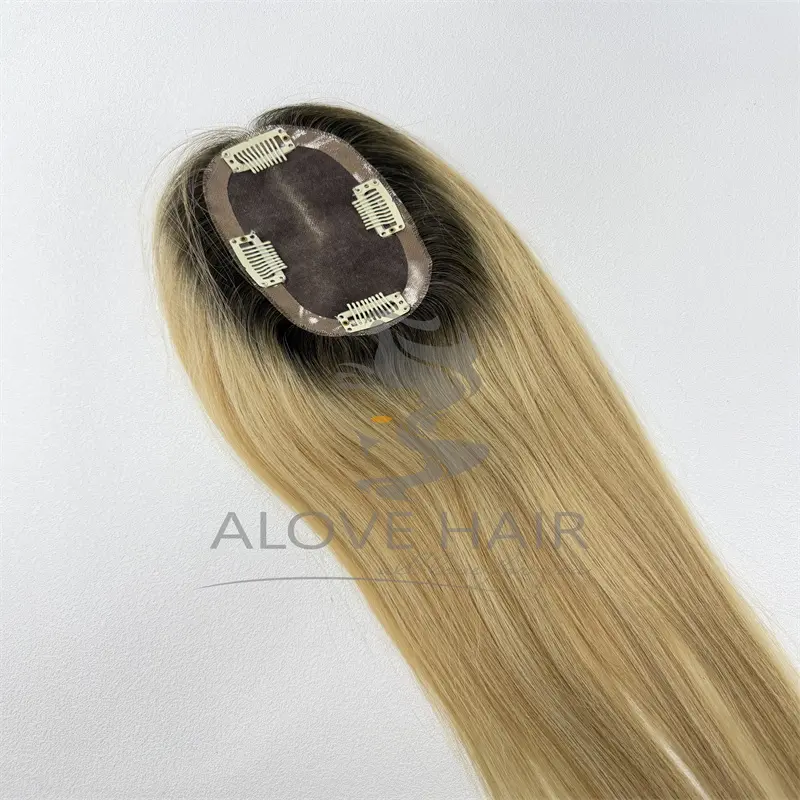
A hair topper is a partial hair replacement system designed to cover thinning hair or bald areas on the top or crown of the scalp. Unlike full wigs, toppers blend with natural hair to create additional volume and coverage.
Hair toppers are commonly used for:
- Female pattern hair loss
- Thinning crown hair
- Gray hair coverage
- Fine hair enhancement
- Alopecia support
- Postpartum hair thinning
- Fashion styling
Modern hair toppers are available in different base constructions, including:
- Silk base toppers
- Mono toppers
- Lace toppers
- PU base toppers
- Fishnet toppers
- Integration toppers
Each type requires different manufacturing methods.
Main Materials Needed to Make a Hair Topper
The quality of a hair topper depends heavily on raw materials.
Human Hair
Most premium toppers use:
- 100% Remy human hair
- Virgin human hair
- Cuticle intact hair
High-quality hair provides:
- Natural shine
- Better lifespan
- Tangle-free performance
- Easier styling
Some low-cost toppers use synthetic fibers, but professional salons and premium customers generally prefer human hair because it looks more realistic and lasts longer.
Hair Topper Base Materials
The base structure determines comfort, breathability, realism, and durability.
Common base materials include:
| Base Type | Main Features |
|---|---|
| Lace Base | Lightweight and breathable |
| Mono Base | Durable and natural looking |
| Silk Base | Most realistic scalp appearance |
| PU Base | Thin skin-like appearance |
| Fishnet Base | Flexible and breathable |
| Integration Base | Blends with existing hair |
Choosing the correct base is one of the most important steps in manufacturing.
Tools Used to Make Hair Toppers
Professional hair topper factories usually use specialized tools.
Common tools include:
- Ventilating needle
- Knotting hook
- Wig block
- Canvas head
- Scissors
- Sewing machine
- Hair hackle
- Hair drawing mat
- Clips
- Elastic bands
- Adhesive materials
Handmade toppers require highly skilled workers because knotting hair manually is time-consuming and technically difficult.
Step 1: Designing the Hair Topper
Every topper starts with design planning.
Manufacturers first determine:
- Base size
- Hair density
- Hair direction
- Hair length
- Color
- Curl pattern
- Hairline shape
Determining Base Size
Hair topper sizes vary depending on coverage needs.
Common topper sizes include:
| Size | Coverage Area |
|---|---|
| 2×3 inch | Small thinning area |
| 5×5 inch | Medium crown coverage |
| 6×7 inch | Large top coverage |
Larger toppers require more hair and more complex construction.
Step 2: Preparing the Hair Material
Hair preparation is critical for product quality.
Sorting Hair
Manufacturers separate hair based on:
- Length
- Color
- Texture
- Curl pattern
Premium factories often use single donor hair to maintain consistency.
Step 3: Hair Cleaning and Disinfection
Before production, the hair must be cleaned thoroughly.
The cleaning process removes:
- Dust
- Oil
- Dirt
- Bacteria
Hair is usually washed with:
- Professional shampoo
- Conditioning treatment
- Disinfecting solution
This step improves hygiene and product lifespan.
Step 4: Aligning Hair Cuticles
High-quality toppers use Remy hair with aligned cuticles.
Factories carefully align hair in one direction to prevent:
- Tangling
- Matting
- Frizz
Poor cuticle alignment is one of the biggest reasons low-quality hair toppers fail.
Step 5: Choosing the Base Construction
Different base structures require different manufacturing techniques.
Silk Base Topper Manufacturing
Silk base toppers are known for:
- Realistic scalp appearance
- Invisible knots
- Luxury finish
Manufacturing requires:
- Multi-layer fabric construction
- Knot concealment
- Precision ventilation
Silk toppers are among the most labor-intensive products to produce.
Lace Base Topper Manufacturing
Lace toppers focus on:
- Breathability
- Lightweight comfort
- Natural hairline
Hair is hand-knotted onto lace mesh using ventilating needles.
Advantages include:
- Good airflow
- Natural movement
- Comfortable wear
Mono Base Topper Manufacturing
Mono toppers use monofilament mesh.
Benefits include:
- Strong durability
- Natural scalp visibility
- Long lifespan
Mono bases are common in medical hair replacement systems.
Step 6: Making the Hairline
The hairline is one of the most important parts of a topper.
A realistic hairline requires:
- Graduated density
- Fine knots
- Natural direction
- Soft transitions
Factories often use:
- Single knots
- Bleached knots
- Baby hair effect
to improve realism.
Poor hairlines make toppers look artificial.
Step 7: Ventilating Hair into the Base
Ventilation is the process of knotting individual hairs into the topper base.
This is one of the most important manufacturing stages.
Hand Ventilation Process
Workers use ventilating needles to pull hair through the base material and tie knots manually.
Advantages of hand ventilation include:
- Natural movement
- Realistic density
- Flexible styling
- Better hair direction control
However, the process is extremely time-consuming.
A high-quality handmade topper may require:
- 30-100+ working hours
depending on complexity.
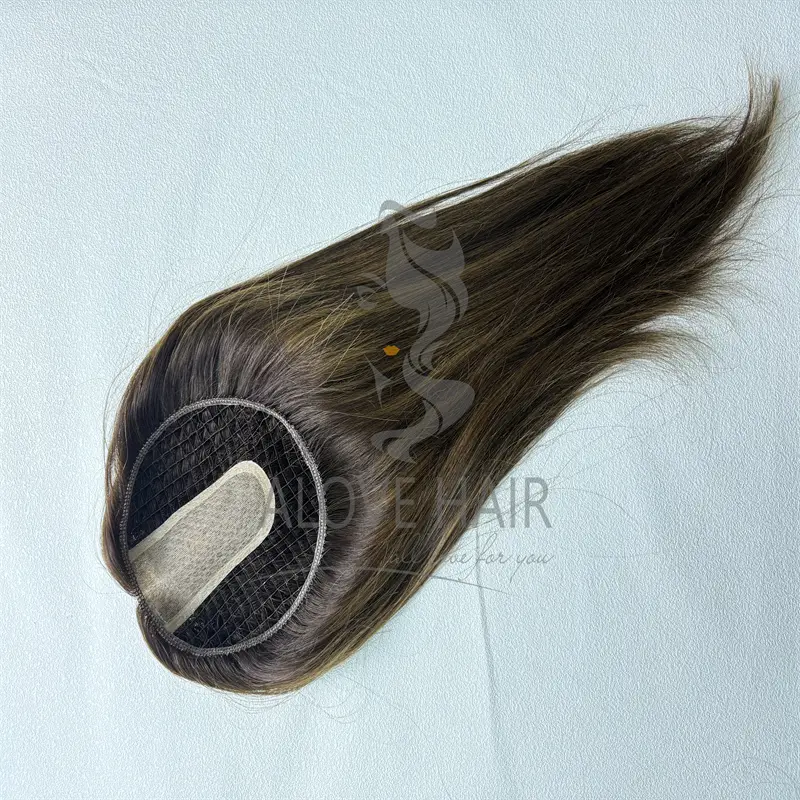
Step 8: Knotting Techniques
Different knot types affect realism and durability.
Single Knot
Advantages:
- Natural appearance
- Smaller knots
- Better invisibility
Disadvantages:
- Less durable
Single knots are often used in front hairlines.
Double Knot
Advantages:
- Stronger hold
- Better durability
Disadvantages:
- More visible
Double knots are commonly used in areas requiring stronger durability.
Step 9: Density Control
Hair density determines how thick the topper appears.
Factories must carefully balance:
- Natural appearance
- Coverage
- Comfort
Typical density categories include:
| Density | Appearance |
|---|---|
| Light Density | Natural thin hair |
| Medium Density | Normal volume |
| Heavy Density | Full glamorous look |
Too much density can make toppers look unnatural.
Professional manufacturers customize density based on customer requirements.
Step 10: Creating Natural Hair Direction
Hair direction affects styling flexibility and realism.
Manufacturers carefully ventilate hair according to:
- Free part
- Middle part
- Side part
- Crown swirl
Proper direction creates natural movement and easier styling.
Step 11: Bleaching Knots
Bleaching knots reduces knot visibility.
The process lightens the tiny knots at the base to create the illusion that hair is growing directly from the scalp.
Bleached knots are especially important for:
- Lace toppers
- Front hairlines
- Light-colored hair systems
Improper bleaching can weaken knots and increase shedding.
Step 12: Adding PU Perimeter or Clips
Many toppers include additional support systems.
PU Perimeter
Polyurethane edges improve:
- Durability
- Adhesive compatibility
- Shape stability
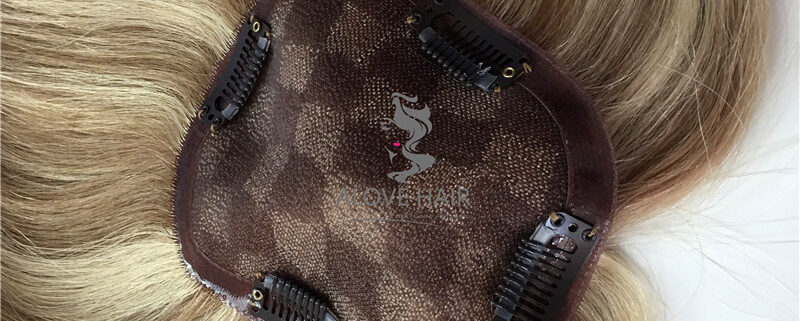
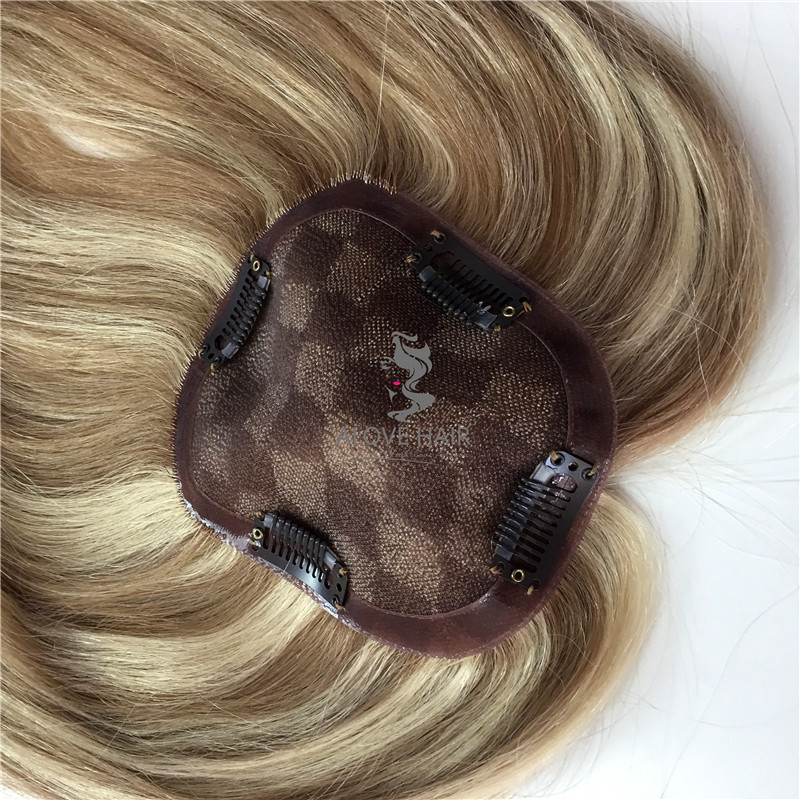
Clips Installation
Most hair toppers use pressure-sensitive clips.
Clips help:
- Secure the topper
- Prevent slipping
- Simplify daily wear
Factories sew clips carefully to avoid scalp discomfort.
Step 13: Cutting and Styling the Hair
After ventilation, the hair topper enters the styling stage.
Stylists shape the topper by:
- Trimming
- Layering
- Texturizing
- Curling
- Straightening
This stage creates the final appearance.
Step 14: Coloring Process
Hair toppers are available in many colors.
Factories may produce:
- Solid colors
- Ombre colors
- Balayage colors
- Highlighted colors
- Rooted colors
- Gray blending colors
Professional coloring requires:
- Color consistency
- Low damage processing
- Moisture protection
Low-quality dyeing may shorten product lifespan.
Step 15: Washing and Conditioning
After production, toppers undergo final washing.
The process includes:
- Deep cleaning
- Conditioning
- Softening treatment
This improves:
- Shine
- Texture
- Manageability
Premium factories use salon-grade products during this stage.
Step 16: Quality Inspection
Quality control is essential in professional manufacturing.
Inspectors check:
- Shedding
- Knot strength
- Hair density
- Color accuracy
- Hair direction
- Base defects
- Tangling resistance
High-end factories usually perform multiple inspections before shipment.
Step 17: Packaging the Hair Topper
Packaging protects the topper during transportation.
Professional packaging may include:
- Satin bags
- Hair nets
- Storage boxes
- Brand labels
- Care instructions
Luxury packaging improves customer experience and brand value.
Handmade Hair Toppers vs Machine Made Hair Toppers
Handmade Hair Toppers
Advantages:
- More realistic
- Better movement
- Softer appearance
- Higher quality
Disadvantages:
- Higher cost
- Longer production time
Machine Made Hair Toppers
Advantages:
- Lower price
- Faster production
Disadvantages:
- Less natural appearance
- Reduced flexibility
Most premium toppers are handmade.
How Long Does It Take to Make a Hair Topper?
Production time depends on:
- Base type
- Hair density
- Hair length
- Customization level
Typical production times:
| Product Type | Production Time |
|---|---|
| Basic Mono Topper | 3-7 days |
| Lace Topper | 5-10 days |
| Silk Base Topper | 10-30 days |
| Custom Handmade Topper | 20-60 days |
Luxury custom toppers require extensive handwork.
Common Problems During Hair Topper Manufacturing
Factories often encounter challenges such as:
Hair Shedding
Caused by:
- Weak knots
- Poor ventilation
- Low-quality hair
Tangling
Usually caused by:
- Non-Remy hair
- Damaged cuticles
- Chemical overprocessing
Unnatural Density
Too much density creates a wig-like appearance.
Poor Hairline Design
Unrealistic hairlines reduce product quality significantly.
How to Make High-Quality Hair Toppers
Premium hair toppers require:
- Cuticle intact Remy hair
- Skilled ventilators
- Realistic density
- Strong knots
- Soft natural hairline
- Proper base selection
Factories with experienced workers usually produce more realistic products.
Hair Topper Customization Options
Many customers prefer customized toppers.
Popular customization options include:
- Hair color
- Hair density
- Base size
- Hair texture
- Curl pattern
- Hair length
- Gray hair percentage
OEM and private label customization are increasingly popular in the global beauty market.
How to Start a Hair Topper Business
Many entrepreneurs enter the topper industry because demand continues growing.
Important steps include:
- Finding reliable factories
- Testing samples
- Building private labels
- Creating color systems
- Developing salon partnerships
- Marketing through social media
Hair toppers have become one of the highest-growth categories in the hair replacement market.
Future Trends in Hair Topper Manufacturing
The industry continues evolving rapidly.
Popular future trends include:
- Ultra-thin skin bases
- Invisible knots
- AI color matching
- Lightweight integration systems
- Medical-grade toppers
- Sustainable hair sourcing
Customers increasingly demand products that are:
- More realistic
- More comfortable
- Easier to wear
- Longer lasting
Factories that invest in innovation usually gain stronger market competitiveness.
Conclusion
Making a high-quality hair topper is a highly skilled and labor-intensive process that combines craftsmanship, material science, and beauty design.
The manufacturing process includes:
- Hair selection
- Base construction
- Ventilation
- Knotting
- Density control
- Hairline creation
- Coloring
- Styling
- Quality inspection
Every stage affects the final product’s realism, comfort, durability, and performance.
Premium hair toppers made from cuticle intact Remy human hair with professional handmade ventilation provide the best results for customers experiencing hair thinning or hair loss.
As the global demand for hair replacement solutions continues growing, high-quality hair topper manufacturing remains one of the most important and fastest-growing sectors in the beauty and hair extension industry.

Alove Hair is a professional Chinese manufacturer of premium 100% Remy human hair extensions, wigs, and hair systems. Established in 2014, the company specializes in supplying global salons and distributors with high-quality, cuticle-intact hair products and offers comprehensive OEM/ODM private label services.