How Long Do Tape In Extensions Last?
If you are considering tape-in hair extensions, one of the first questions is simple: how long do tape-in extensions last?
The answer depends on what you mean by “last.”
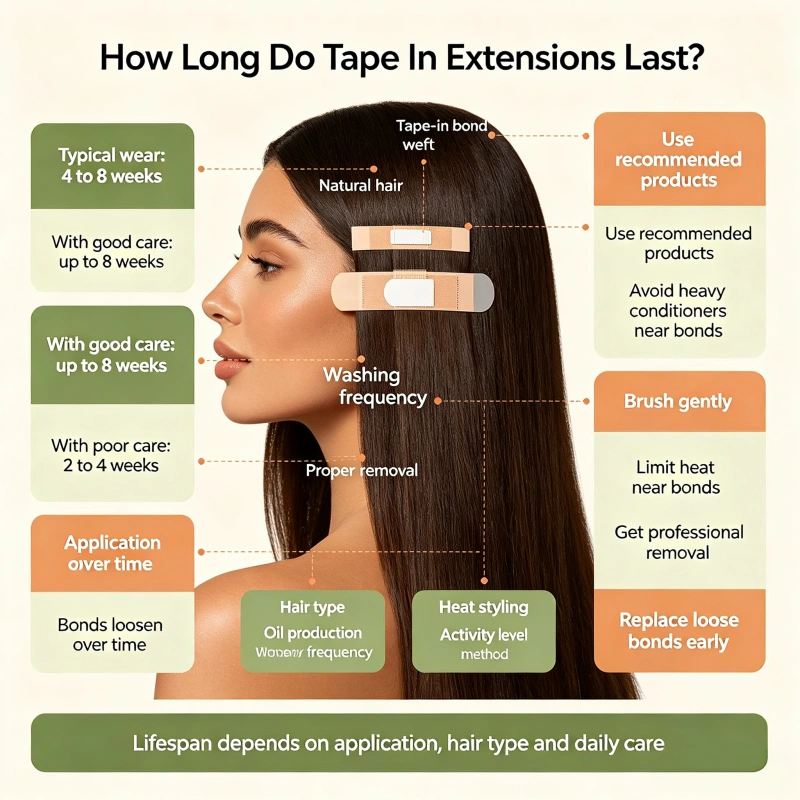
A quality tape-in extension has two different lifespans. The adhesive installation typically lasts around 6–8 weeks before the extensions need to be removed and moved up or re-taped. High-quality, properly maintained human hair can last about 6–12 months or longer.
This distinction is important for both salon clients and wholesale buyers. You are not necessarily replacing the hair every 6–8 weeks. In many cases, you can remove the same tape-in hair, fit it with new tape, and reinstall it several times.
For a professional hair extension business, therefore, the better question is not simply “How long do tape-ins last?” but:
How many installation cycles can the hair provide before the quality drops below salon standards?
How Long Do Tape-In Extensions Last?
Under normal conditions, tape-in extensions generally need a move-up or reinstallation every 6–8 weeks. As natural hair grows, the adhesive attachment moves farther away from the scalp, making the extension more difficult to manage and blend.
The hair itself can often be reused for approximately 6–12 months, depending on hair quality, installation, removal, washing, heat styling, and maintenance.
| Tape-In Lifespan | Typical Time |
|---|---|
| One installation | 6–8 weeks |
| Common reuse cycles | 2–4 times |
| Hair lifespan | 6–12 months |
| Premium hair with careful care | 12 months+ possible |
| Replacement tape | Every reinstallation |
Treat these figures as practical ranges rather than guarantees. Different hair qualities, adhesive systems, installation techniques, and customer routines can produce very different results.
Why Do Tape-In Extensions Need to Be Moved Up After 6–8 Weeks?
The main reason is natural hair growth, not necessarily hair deterioration.
When tape-ins are first installed, the adhesive sits relatively close to the scalp. As the client’s natural hair grows, the attachment gradually moves downward.
After several weeks, the extension may:
- Sit too far from the scalp
- Become more visible
- Be harder to brush
- Become more prone to tangling
- Put additional leverage on the natural hair
- Interfere with washing and styling
A 6–8 week maintenance schedule is therefore commonly used to keep the installation manageable.
Some clients may need maintenance earlier, particularly if they wash frequently, exercise heavily, have oily scalps, or experience adhesive slippage.
Does the Hair Need to Be Replaced Every 6–8 Weeks?
No.
This is one of the biggest misconceptions about tape-in extensions.
You normally replace the adhesive tape during maintenance, while the extension hair can potentially be reused.
For example:
First installation → 6–8 weeks
Remove → clean → apply fresh tape → reinstall
Second installation → another 6–8 weeks
If the hair remains healthy, you can repeat this process.
Some professional sources report approximately 2–4 reuse cycles, while other suppliers recommend around 2–3 cycles. The actual number depends heavily on the quality and condition of the hair.
How Many Times Can Tape In Extensions Be Reused?
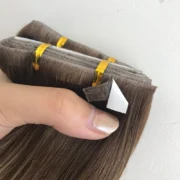
High-quality human hair tape-ins can commonly be reused 2–4 times, provided that the weft, hair strands, and adhesive base remain in good condition.
For example, a 120g tape-in set might be used as follows:
| Cycle | Approximate Period | Action |
|---|---|---|
| 1st install | Weeks 0–8 | Original tape |
| 2nd install | Weeks 8–16 | Fresh replacement tape |
| 3rd install | Weeks 16–24 | Fresh replacement tape |
| 4th install | Weeks 24–32 | Fresh replacement tape |
This gives a potential usable period of approximately 6–8 months.
A higher-quality set with careful maintenance may last longer, while heavily processed or poorly maintained hair may need replacement much sooner.
What Determines How Long Tape In Extensions Last?
Several factors influence the lifespan of tape-in extensions.
Hair Quality
Human hair quality is one of the biggest factors.
High-quality Remy human hair with aligned cuticles generally performs better than heavily processed or mixed-direction hair.
The hair should remain:
- Soft
- Easy to brush
- Relatively tangle-free
- Smooth after washing
- Strong at the ends
Poor-quality hair may become dry, tangled, or brittle after only a few maintenance cycles.
Adhesive Quality
The tape itself is also critical.
A high-quality adhesive should provide reliable bonding without becoming excessively sticky, brittle, or difficult to remove.
For manufacturers, tape quality should be tested separately from the hair.
Installation Technique
Incorrect installation can shorten the life of both the adhesive and the hair.
The stylist needs to control:
- Section thickness
- Tape alignment
- Pressure
- Attachment position
- Distance from the scalp
- Hair quantity between the adhesive tabs
Too much natural hair between the tabs can weaken the bond, while too little hair can create excessive tension.
Washing Frequency
Frequent washing can reduce the lifespan of the adhesive.
Clients who wash their hair daily may experience a shorter bonding period than clients who wash two or three times per week.
Heat Styling
High temperatures can gradually dry human hair and weaken its appearance.
Repeated use of:
- Flat irons
- Curling irons
- Hot brushes
- High-temperature blow dryers
can reduce the usable lifespan of the extension hair.
Chemical Processing
Bleaching and repeated coloring can significantly affect extension longevity.
Hair that has already undergone heavy chemical processing generally has less room for additional treatment.
For wholesale buyers, clearly state the difference between natural, colored, and heavily bleached hair in the product specification.
How to Make Tape In Extensions Last Longer
If the goal is to extend the useful life of a tape-in set, aftercare matters.
1. Use Extension-Friendly Shampoo
Avoid applying heavy oils or silicone-rich products directly to the adhesive area.
Products should be concentrated mainly on the mid-lengths and ends.
2. Brush Gently
Use an extension-friendly brush and start from the ends before gradually moving upward.
Do not pull aggressively through the attachment points.
3. Dry the Roots Properly
Leaving the tape area wet for extended periods can affect the adhesive.
After washing, gently remove excess water and dry the attachment area thoroughly.
4. Reduce Excessive Heat
Human hair can be heat styled, but repeated high temperatures accelerate dryness.
A practical salon recommendation is to keep heat exposure moderate and always use heat protection.
5. Sleep With the Hair Controlled
Loose hair can create friction and tangling during sleep.
A loose braid or low ponytail can help reduce unnecessary movement.
6. Schedule Maintenance Before the Extensions Become Difficult to Manage
Waiting until the tapes are severely grown out can increase tangling and make removal more difficult.
For many clients, a 6–8 week maintenance appointment is a useful starting point.
Tape In Extensions vs Clip Ins: Which Lasts Longer?
Tape-ins and clip-ins have completely different usage patterns.
Clip-ins are normally removed at the end of the day. Tape-ins remain installed for several weeks.
| Feature | Tape-In | Clip-In |
|---|---|---|
| Wear pattern | Semi-permanent | Temporary |
| Installation | Professional | DIY or professional |
| Typical wear period | 6–8 weeks | One day |
| Maintenance | Every 6–8 weeks | Remove after use |
| Reusability | 2–4+ cycles | Often many uses |
| Best for | Regular wear | Occasional wear |
| Daily installation | No | Yes |
| Adhesive | Yes | No |
If the customer wants to wake up with extensions already installed, tape-ins are more convenient.
If the customer only needs extensions for weddings, parties, photography, or occasional styling, clip-ins may make more sense.
Tape-In Extensions vs. Sew-In Wefts
Sew-in extensions can stay in for about 6–12 weeks, depending on the hair, braid structure, scalp condition, and maintenance routine.
Tape-ins generally have a shorter maintenance interval of around 6–8 weeks, but they offer a flatter attachment and can be easier to install and remove.
| Feature | Tape-In | Sew-In |
|---|---|---|
| Typical maintenance | 6–8 weeks | 6–12 weeks |
| Attachment | Adhesive tape | Sewn weft |
| Installation | About 45–120 min | Often 2–4+ hours |
| Heat during installation | No | No |
| Attachment profile | Very flat | More substantial |
| Reusable hair | Yes | Yes |
| Fine hair | Often suitable | Depends on hair strength |
| Best for | Flat, lightweight installation | Larger-volume applications |
The best option depends on hair type and the stylist’s preferred installation method.
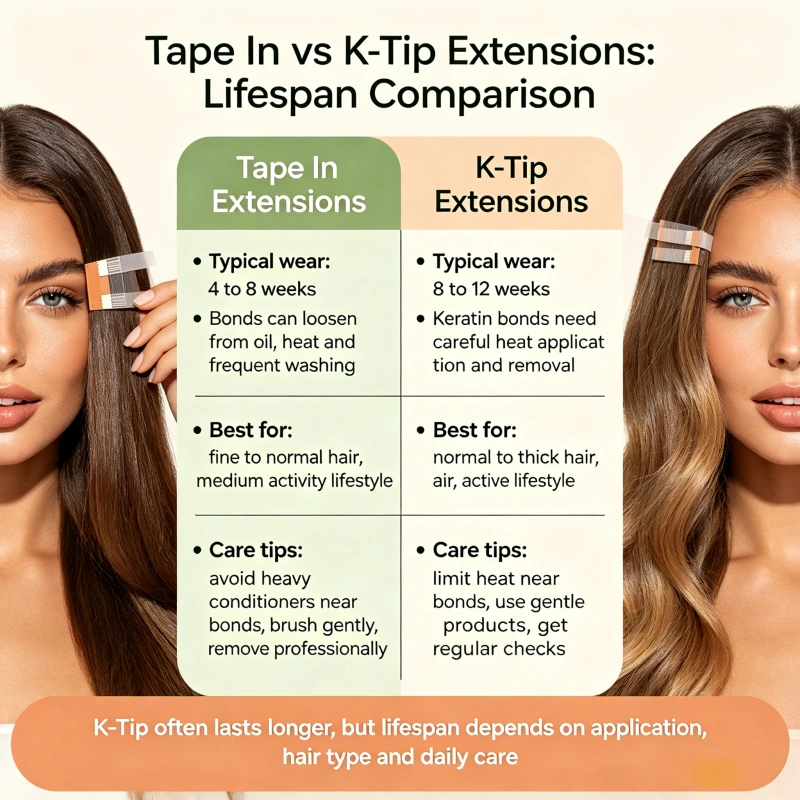
Tape In Extensions vs K-Tip Extensions
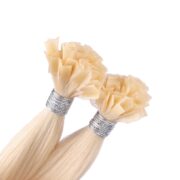
K-Tip or keratin-tip extensions are individual strands attached using a keratin bond.
They can generally stay installed for about 3–4 months before replacement or major maintenance, although timing varies by hair growth and installation.
Tape-ins therefore require more frequent maintenance but can be applied faster and repositioned more easily.
| Feature | Tape-In | K-Tip |
|---|---|---|
| Maintenance interval | 6–8 weeks | About 3–4 months |
| Attachment | Adhesive tape | Keratin bond |
| Application | Faster | Longer |
| Reuse | Yes | Usually more limited |
| Appearance | Flat | Individual strands |
| Best for | Fine-medium hair and volume | Strand-by-strand customization |
For salons, K-Tips may be more attractive when clients want highly customized strand placement, while tape-ins can be more efficient for larger areas.
How Much Do Tape-In Extensions Weigh?
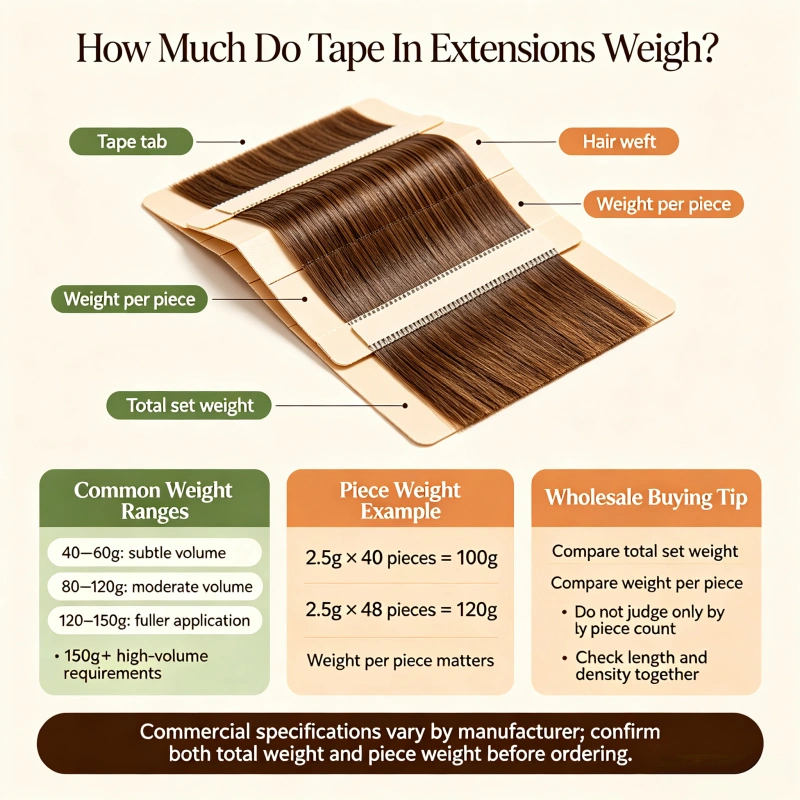
Tape-in extensions are commonly sold in different weights depending on hair length, density, and target customer.
Commercial specifications may include approximately:
- 40–60g for subtle volume
- 80–120g for moderate volume
- 120–150g for fuller applications
- 150g+ for high-volume requirements
These are product examples, not universal standards.
A manufacturer may also offer different piece weights.
For example:
2.5g × 40 pieces = 100g
2.5g × 48 pieces = 120g
This is why wholesale buyers should compare weight per piece and total set weight, not simply the number of tape tabs.
How Many Tape-In Extensions Do You Need?
No single number works for every client.
The required quantity depends on:
- Natural hair density
- Desired length
- Desired volume
- Extension weight
- Hair length
- Weft width
- Piece weight
- Application area
For example, a client looking for subtle volume may need approximately 40–60g, while a fuller transformation may require 100–150g or more.
A salon should determine the amount during consultation rather than using one fixed quantity for every customer.
Does Longer Hair Make Tape-In Extensions Last Less?
Often, yes.
Longer extensions face more friction and mechanical stress.
For example, 20–24 inch hair generally requires more careful maintenance than a shorter 14–16 inch set because the longer ends experience more brushing, rubbing against clothing, and heat exposure.
Longer hair can also become more noticeable when dry or damaged.
For wholesale buyers, the longer the extension, the more important it becomes to evaluate:
- End thickness
- Hair density
- Cuticle condition
- Shedding
- Tangling
- Chemical processing
A 24-inch extension that becomes thin and dry after a few weeks may provide less value than a well-made 18-inch extension that remains healthy through several reuse cycles.
Is Remy Hair Better for Long-Lasting Tape-Ins?
Generally, high-quality Remy human hair is a strong choice for reusable tape-ins because it’s processed to maintain consistent hair direction and quality.
However, “Remy” alone does not guarantee a long lifespan.
Wholesale buyers should also ask:
- Is the hair cuticle aligned?
- Is it single-donor or mixed-source?
- Has it been bleached?
- Has it been silicone coated?
- How many times has it been chemically processed?
- What is the actual usable length?
- What is the shedding rate?
The manufacturing process matters as much as the label.
What Is the Most Cost-Effective Tape-In Specification?
For a salon or distributor, the cheapest tape-in is rarely the best purchasing decision.
A better calculation is:
Cost per installation cycle = Product cost ÷ expected number of successful installations
For example, suppose:
Set A: $120 and lasts for 1 installation
Set B: $180 and lasts for 3 installations
The initial price of Set B is higher, but the approximate hair cost per installation is:
$180 ÷ 3 = $60 per installation
Compared with:
$120 ÷ 1 = $120 per installation
This illustrates why buyers should evaluate total usable value, not simply factory price.
Of course, the calculation should also include replacement tape, shipping, salon labor, processing losses, and any unusable hair.
What Should Wholesale Buyers Ask a Tape-In Manufacturer?
Before placing a bulk order, request a complete product specification.
1. Hair Type
Confirm:
- 100% human hair
- Remy or non-Remy
- Cuticle direction
- Single-donor or mixed-source
2. Weight
Request:
- Weight per piece
- Number of pieces
- Total weight per pack
For example:
2.5g × 40 pieces = 100g
3. Length
Ask whether the stated length represents the longest strand or the majority of the hair.
This matters particularly for longer extensions.
4. Tape Specification
Ask for:
- Tape dimensions
- Tape thickness
- Adhesive type
- Replacement tape availability
- Adhesive performance testing
5. Color Range
For salon and distributor orders, ask whether the supplier offers stock shades or custom colors.
A range of 30–50+ shades can help brands target multiple markets, while custom coloring can be added for premium orders.
6. Hair Processing
Ask whether the hair is:
- Natural
- Dyed
- Bleached
- Highlighted
- Balayage
- Ombre
The more heavily processed the hair, the more carefully you should evaluate its expected lifespan.
7. Sample Testing
Before a bulk order, request samples and conduct:
- Washing tests
- Brushing tests
- Tape adhesion tests
- Heat-styling tests
- Shedding tests
- Color consistency checks
A 7–14 day sample test can reveal problems that are difficult to identify from photographs.
Alove Hair Tape In Extensions for Wholesale Buyers
Alove Hair manufactures and supplies human hair tape-in extensions for salons, distributors, and private-label hair brands.
Our tape-in specifications can be customized according to the buyer’s target market, including:
- 10–26 inch lengths
- 100g, 113g, 120g and customized weights
- Approximately 2.5g per piece
- 40-piece packs
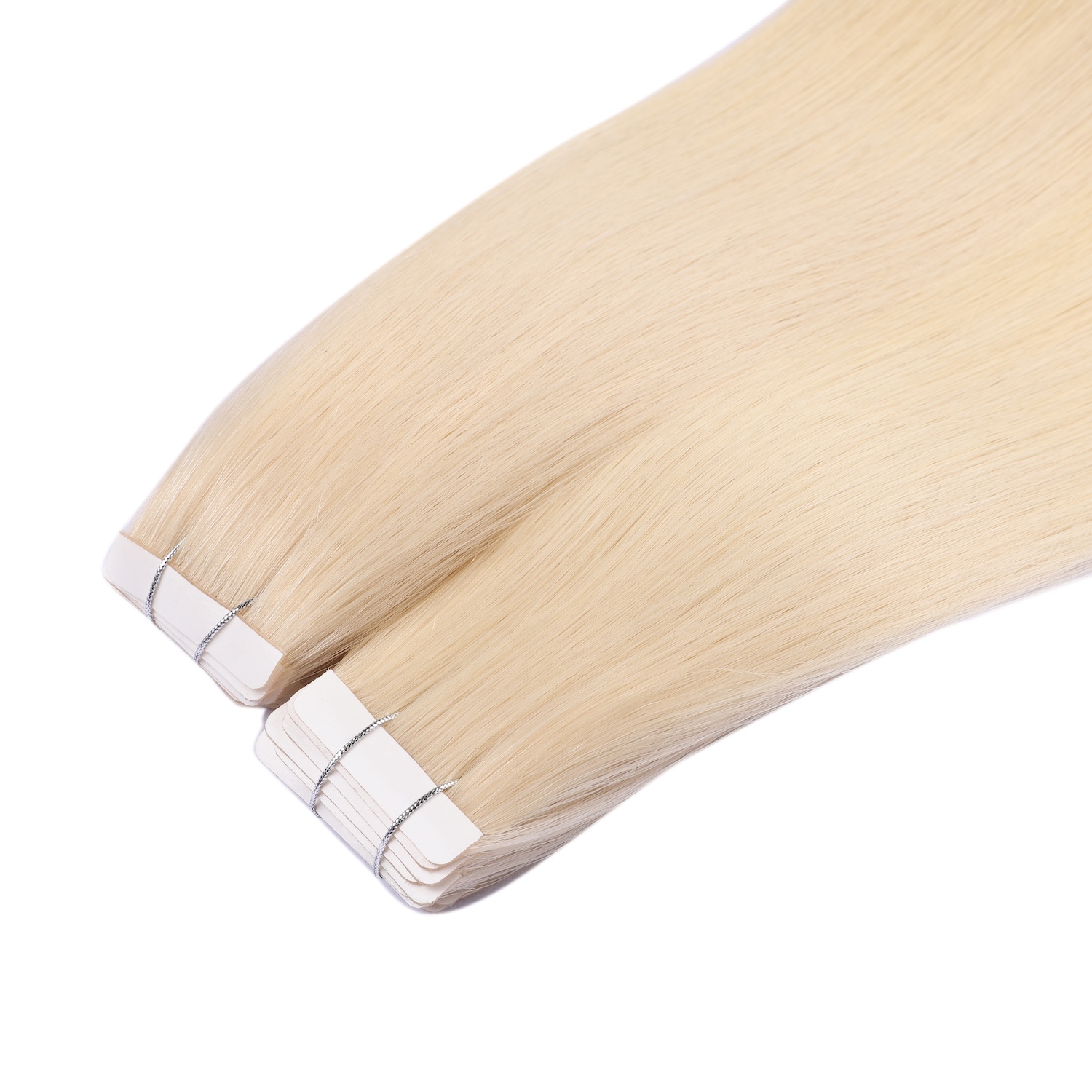
- 1 × 4 cm or approximately 0.8 × 4 cm mini tape-in options
- Italy white tape or American blue tape options
- 50+ color options
- Straight, wavy and customized textures
- Human Remy hair
- OEM/ODM
- Private-label packaging
For wholesale customers, the goal isn’t simply to supply a low-cost tape-in. The product needs to deliver a consistent combination of hair quality, weight, tape performance, color consistency, packaging, and repeatability.
For brands selling tape-ins in multiple markets, we can also customize product specifications for different price levels and customer segments.
Tape In Extensions Buying Checklist
Before purchasing wholesale tape-in extensions, use this checklist:
| Item | What to Confirm |
|---|---|
| Hair | 100% human / Remy |
| Length | Actual usable length |
| Weight | Weight per piece + total weight |
| Pieces | Number per pack |
| Tape | Size, adhesive and replacement availability |
| Colors | Stock + custom colors |
| Processing | Natural, dyed or bleached |
| Hair density | Fullness from root to ends |
| Shedding | Sample test |
| Tangling | Wash and brushing test |
| Reuse | Expected number of cycles |
| Packaging | Standard or private label |
| MOQ | Sample and bulk MOQ |
| Lead time | Production schedule |
| OEM/ODM | Available customization |
Frequently Asked Questions
How long do tape-in extensions last?
Tape-in extensions generally stay installed for approximately 6–8 weeks before they need to be moved up or reinstalled. The human hair itself can often last 6–12 months or longer with proper care.
Can tape-in extensions be reused?
Yes. You can often remove the hair, clean it, fit it with fresh replacement tape, and reinstall it. High-quality hair may be reusable for approximately 2–4 installation cycles.
Do you replace tape-in extensions every 6 weeks?
Usually, you replace or reposition the installation, not necessarily the hair. We apply fresh adhesive tape during the maintenance appointment.
Can tape-ins last 3 months?
A single installation generally isn’t meant to stay in place for three months. Some extension hair can remain usable for several months through multiple maintenance cycles.
How often should tape-in extensions be moved up?
A practical maintenance interval is approximately 6–8 weeks, although some clients may need an earlier appointment depending on natural hair growth, washing frequency, scalp oil, exercise, and adhesive performance.
How long do 100% human hair tape-ins last?
Good-quality human hair tape-ins can often last about 6–12 months, depending on hair quality and maintenance. Premium hair may last longer.
How many grams of tape-in extensions do I need?
A subtle application may use around 40–60g, while moderate-to-full applications commonly fall around 80–150g+. The correct weight depends on the client’s natural hair density, desired length, and volume.
Are tape-ins better than clip-ins?
They serve different purposes. Tape-ins are designed for semi-permanent wear over several weeks, while clip-ins are removed after use. Tape-ins are more convenient for regular wear, while clip-ins offer greater flexibility.
Are tape-ins better than sew-ins?
Tape-ins provide a flat adhesive attachment and generally require maintenance every 6–8 weeks. Sew-ins can last longer for some clients but involve braiding and sewing. Hair type and desired volume should determine the choice.
Can tape-in extensions damage natural hair?
Improper installation, excessive weight, tension, adhesive problems, or aggressive removal can contribute to hair breakage. Professional installation and appropriate extension weight are important.
Final Answer: How Long Do Tape-In Extensions Last?
For most professional applications, a useful rule of thumb is:
6–8 weeks per installation + approximately 6–12 months of usable hair life.
The important distinction is that the tape does not last as long as the hair. The adhesive usually needs replacing every maintenance cycle, while high-quality human hair can potentially be reused several times.
For salons and wholesale buyers, don’t evaluate tape-in extensions based only on factory price. Compare hair quality, grams per piece, total set weight, length, tape performance, color consistency, reusability, and expected installation cycles.
A $100 tape-in set that survives one installation may be less economical than a $150–$200 set that can be professionally retaped and reused several times.
For manufacturers and private-label brands, the most competitive tape-in product is therefore not necessarily the cheapest one. It is the product that delivers consistent hair quality and adhesive performance across multiple installation cycles while matching the target customer’s price point.

Alove Hair is a professional Chinese manufacturer of premium 100% Remy human hair extensions, wigs, and hair systems. Established in 2014, the company specializes in supplying global salons and distributors with high-quality, cuticle-intact hair products and offers comprehensive OEM/ODM private label services.