
The Advantages and Disadvantages of Hand Tied Extensions
Hand-Tied Extensions have become one of the most respected premium products in the professional hair extension industry. Once considered a niche solution used only by luxury salons, they are now widely adopted by salon chains, independent hairstylists, hair extension brands, distributors, and consumers seeking natural-looking, lightweight hair enhancements.
However, despite their growing popularity, Hand Tied Extensions are not the perfect solution for every application. Their strengths and limitations become much clearer when examined through the lens of the industry’s historical development, manufacturing technology, salon service evolution, distribution channels, consumer purchasing behavior, and even the physical structure of the product itself.
This article explores the advantages and disadvantages of Hand Tied Extensions from multiple perspectives to help professional buyers make informed decisions.

Hand-tied extensions cross-section
The History of Hand Tied Extensions
Hair extensions have existed for thousands of years. Historical records show that ancient Egyptians, Romans, and Chinese nobility used human hair pieces to symbolize wealth, beauty, and social status. Early methods were simple and primarily decorative.
Modern hair extensions began to evolve rapidly during the late twentieth century. Machine-made wefts became the dominant product because they could be produced efficiently and sold at affordable prices. These wefts met the growing demand of salons but often sacrificed comfort and natural appearance.
As salon clients became more educated and beauty standards shifted toward seamless, undetectable enhancements, professional stylists began looking for alternatives. Hand-Tied Extensions emerged as a premium solution because they addressed the biggest complaints associated with traditional machine wefts: bulky seams, excessive weight, and limited flexibility.
During the 2010s, social media platforms transformed the industry. High-definition photography and close-up videos made extension quality more visible than ever before. Clients wanted extensions that looked invisible under bright lighting and during everyday styling. Hand Tied Extensions fit this demand perfectly, becoming a preferred option in high-end salons.
Today, they are recognized as one of the most refined weft systems available, although newer innovations such as Genius Wefts continue to build upon the same design philosophy.
Why the Market Shifted Toward Hand Tied Extensions
The popularity of Hand Tied Extensions was not driven solely by fashion. It reflected broader changes in consumer expectations.
Years ago, many customers accepted visible extension lines if they achieved longer hair. Modern consumers expect much more. They want:
- Natural movement
- Lightweight comfort
- Invisible installation
- Longer product lifespan
- Better hair quality
- Easier styling
- Less damage to natural hair
As disposable income increased and premium beauty services became more accessible, many consumers became willing to invest more for higher-quality products. This shift encouraged salons and manufacturers to focus on craftsmanship rather than simply reducing production costs.
Physical Advantages of Hand Tied Extensions
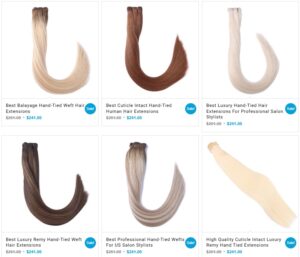
From an engineering perspective, Hand Tied Extensions are designed differently from machine-made wefts.
Each strand is individually tied by skilled technicians rather than sewn by automated equipment.
This manufacturing method creates several physical advantages.
Ultra-Thin Weft Construction
One of the defining characteristics is the extremely thin weft edge.
A thinner weft means:
- Less visible attachment points
- Better scalp conformity
- Improved flexibility
- More comfortable installation
For clients with fine hair, this difference is immediately noticeable.
Lightweight Design
Because less stitching material is used, Hand Tied Extensions weigh less than traditional machine wefts.
Lower weight reduces:
- Pressure on hair follicles
- Scalp discomfort
- Tension during daily movement
This makes them particularly suitable for clients with naturally fine or delicate hair.
Better Hair Movement
Individual hand tying allows the hair fibers to move more naturally.
The result includes:
- Better flow
- Softer appearance
- Improved blending
- More realistic styling
Professional photographers often prefer Hand Tied Extensions because they produce more natural movement during photoshoots.
Superior Comfort
Many clients report forgetting they are even wearing extensions after a few days.
The flexible weft conforms closely to the head, reducing pressure points created by thicker machine-made wefts.

Advantages for Professional Salons
From a salon perspective, Hand Tied Extensions provide several competitive benefits.
Premium Service Positioning
Offering Hand Tied Extensions allows salons to position themselves in the luxury market.
Premium services typically generate:
- Higher service prices
- Better profit margins
- Increased customer loyalty
- Stronger word-of-mouth marketing
Better Client Retention
Satisfied extension clients often return every six to ten weeks for maintenance.
These recurring appointments create stable revenue streams while strengthening long-term customer relationships.
Excellent Before-and-After Results
Hand-tied extensions produce dramatic yet natural transformations.
These visual results perform exceptionally well on Instagram, TikTok, Pinterest, and salon websites, helping attract new clients.
Advantages for Hair Brands
For private-label brands, Hand-Tied Extensions represent a premium product category.
Compared with entry-level extensions, they offer:
- Higher perceived value
- Stronger brand differentiation
- Better customer satisfaction
- Increased repeat purchases
Luxury positioning also enables brands to maintain healthier profit margins without competing solely on price.
Advantages for Distributors
Wholesale distributors benefit from stable market demand.
Professional salons continue purchasing replacement hair and maintenance products throughout the year.
Additional advantages include:
- Repeat orders
- Brand partnerships
- Lower return rates
- Strong demand in premium markets
Distributors carrying high-quality Hand Tied Extensions often establish closer relationships with salon owners because product performance directly affects salon reputations.
Consumer Psychology Behind Hand Tied Extensions
Understanding consumer psychology explains why Hand Tied Extensions remain popular despite their higher price.
Comfort Equals Luxury
Modern consumers associate physical comfort with premium quality.
Lightweight extensions create a subconscious perception that the product is more advanced and professionally designed.
Natural Appearance Builds Confidence
Invisible extensions reduce anxiety about others noticing them.
Consumers increasingly value authenticity over dramatic transformation.
Natural beauty has become a dominant trend, making seamless extensions more desirable.
Investment Mentality
Rather than viewing extensions as a short-term purchase, many consumers now consider them a beauty investment.
If properly maintained, premium human hair extensions can last many months, making higher initial costs easier to justify.
The Disadvantages of Hand-Tied Extensions
Despite their strengths, Hand Tied Extensions are not without limitations.
Higher Manufacturing Cost
Hand tying requires experienced technicians and significantly more production time than automated machine wefts.
Consequently, manufacturing costs are considerably higher.
Longer Installation Time
Professional installation usually requires more precision and takes longer than some alternative extension methods.
This increases labor costs for salons.
Cannot Be Cut Freely
Traditional Hand Tied Wefts should generally not be cut across the seam because doing so can weaken the hand-tied structure and lead to hair shedding.
This limits customization compared with newer products like Genius Wefts.
Skilled Installation Required
Improper installation may result in:
- Uneven tension
- Client discomfort
- Reduced lifespan
- Potential stress on natural hair
Training is essential for achieving optimal results.
Premium Pricing Limits Some Markets
Because of higher manufacturing and installation costs, Hand Tied Extensions may be less attractive in highly price-sensitive markets where consumers prioritize affordability over premium features.
Market Competition and Industry Evolution
The hair extension industry continues to evolve.
Today’s premium market includes:
- Machine Wefts
- Flat Wefts
- Hand Tied Extensions
- Genius Wefts
- Tape-In Extensions
- Keratin Bond Extensions
Among these options, Hand Tied Extensions continue to occupy an important position due to their craftsmanship and reputation for natural results.
However, newer products such as Genius Wefts have addressed some traditional limitations by offering similar thinness while allowing stylists to cut the weft without unraveling, increasing installation flexibility.
Rather than replacing Hand Tied Extensions, these innovations have expanded the range of solutions available to salons and consumers.
Should You Choose Hand Tied Extensions?
The answer depends on your priorities.
Hand Tied Extensions are an excellent choice if you value:
- Natural appearance
- Lightweight comfort
- Premium craftsmanship
- Long-term wear
- Professional salon installation
They may be less suitable if your primary concerns are:
- Lowest purchase price
- Fast DIY installation
- Minimal maintenance
For many clients, the improved comfort, seamless appearance, and premium experience justify the higher investment.
Conclusion
The success of Hand Tied Extensions reflects more than a technological improvement—it mirrors the evolution of the global beauty industry and changing consumer expectations. As salons shifted from simply adding length to creating invisible, personalized transformations, and as consumers became more informed and quality-conscious, demand naturally moved toward lighter, more refined extension systems.
From a physical standpoint, their ultra-thin construction, lightweight feel, and natural movement remain key advantages. From a business perspective, they help salons, brands, and distributors differentiate themselves in the premium market and build long-term customer loyalty. At the same time, higher production costs, specialized installation, and limited cuttability are important considerations.
For businesses seeking to serve the high-end segment, Hand Tied Extensions continue to represent a reliable and profitable product category. Understanding both their strengths and limitations enables manufacturers, distributors, salons, and consumers to make informed decisions in an increasingly competitive hair extension market.

Jgs is a professional with 12 years of experience in hair extensions, primarily helping importers better understand hair extensions, wigs, toupee, and other related products.


Leave a Reply
Want to join the discussion?Feel free to contribute!