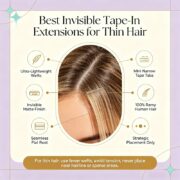
Best Invisible Tape In Extensions for Thin Hair: A Complete Buying Guide
Finding the best invisible tape in extensions for thin hair is not simply about choosing the thinnest tape or the lightest hair available. For fine or low-density hair, the right extension system needs to balance weight, attachment size, flexibility, coverage, hair quality, and natural appearance.
Invisible tape-in extensions are popular because their flat, discreet construction can help minimize visible attachment points. However, not every invisible tape-in product is suitable for thin hair. The wrong weight or installation can create unnecessary tension, visible tabs, or an unnatural transition.
This guide explains what makes invisible tape-in extensions suitable for thin hair, how to choose the right specifications, and what salons, stylists, wholesalers, and private-label brands should look for when sourcing professional products.
Quick Answer: What Are the Best Invisible Tape In Extensions for Thin Hair?
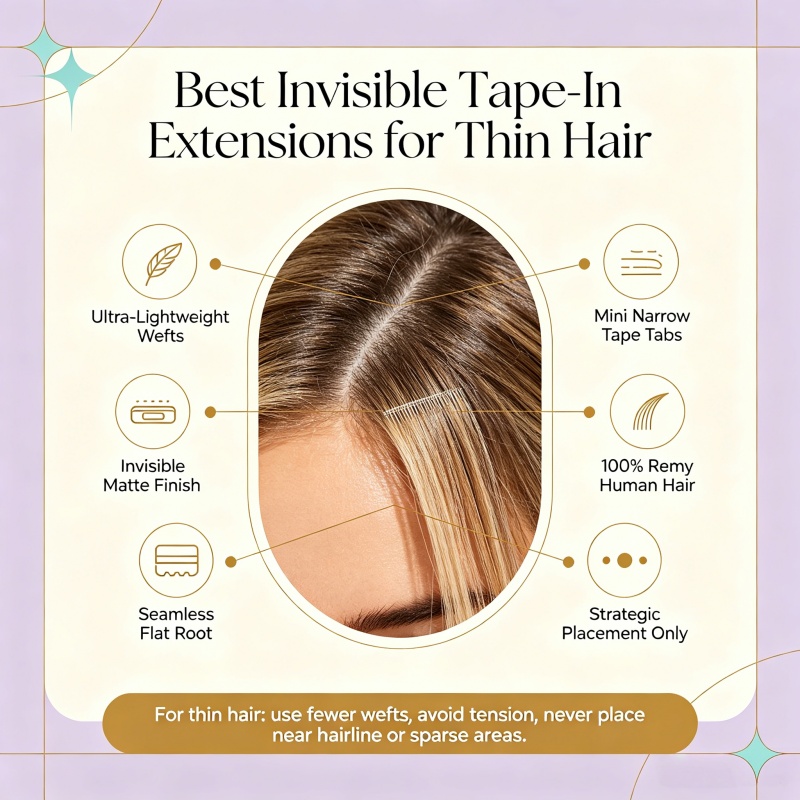
For clients with fine or thin hair, the best invisible tape-in extensions generally combine:
- A thin, low-profile base
- Lightweight hair per piece
- Flexible attachment construction
- High-quality human hair
- Reliable but manageable adhesive
- Accurate color matching
- Appropriate section size
- Professional installation
- Balanced weight distribution
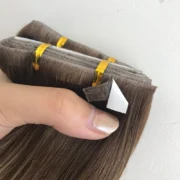
Invisible or seamless tape systems are often preferred because the base can lie relatively flat against the natural hair, helping reduce bulk and improve concealment.
But “invisible” does not automatically mean “suitable for every thin-haired client.” Natural hair density, scalp coverage, hairline strength, and the total extension weight still need to be evaluated.
Fine Hair vs. Thin Hair: Why the Difference Matters
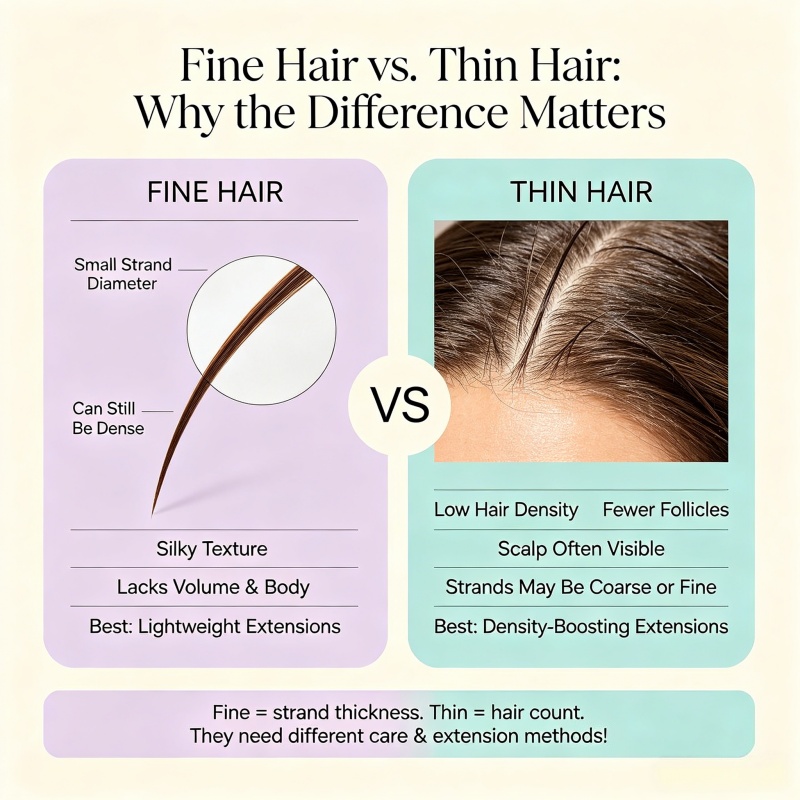
One of the most important things to understand before choosing extensions is that fine hair and thin hair describe different conditions.
Fine Hair
Fine hair refers primarily to the diameter of individual strands. A person can have very fine strands but still have a relatively high overall hair density.
Thin Hair
Thin hair usually refers to lower overall density, meaning there are fewer hairs covering a particular area of the scalp.
A client can therefore have:
- Fine strands with high density
- Fine strands with low density
- Thick strands with low density
- Thick strands with high density
This distinction matters because the same tape-in extension may work well for one client but be inappropriate for another.
For low-density hair, stylists should pay particular attention to whether enough natural hair is available to cover the attachment and support the extension weight. Current professional guidance also emphasizes evaluating density, scalp coverage, hairline strength, and shedding rather than choosing extensions based on strand diameter alone.
Why Invisible Tape In Extensions Work Well for Fine Hair
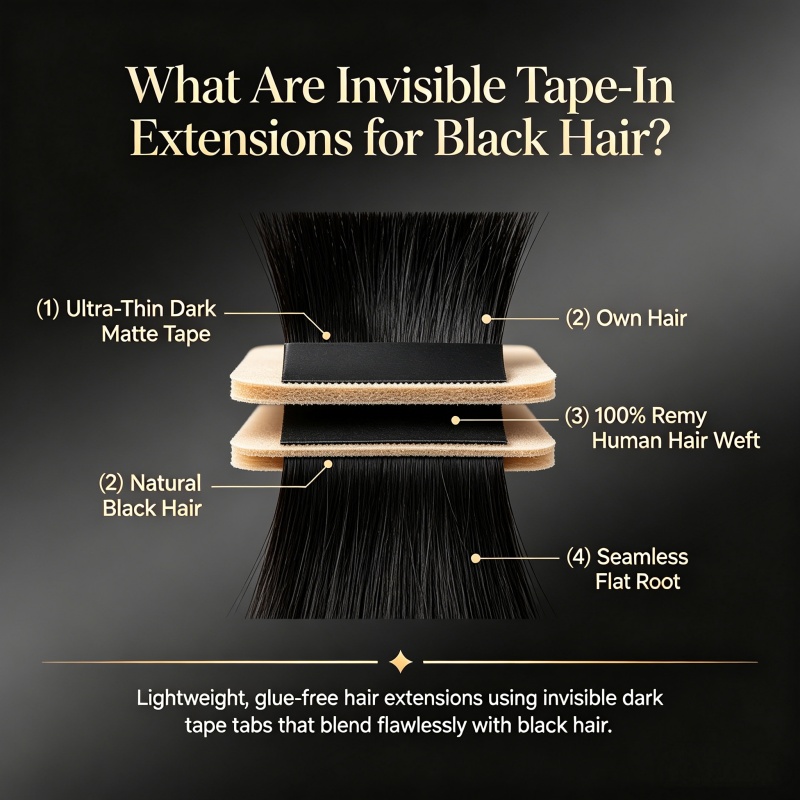
Invisible tape-in extensions are designed around one major objective: reducing the visual and physical bulk of the attachment.
Compared with traditional extension constructions, an ultra-thin tape or PU base can sit closer to the head.
This can provide several benefits for fine hair.
1. A Flatter Attachment
A flat base is easier to conceal beneath fine natural hair.
2. Less Visible Bulk
Traditional thick wefts can sometimes create a ridge that becomes visible when the hair moves. A low-profile base can reduce this problem.
3. Natural Root Appearance
Some invisible systems use injection or hand-attached construction to create a more natural-looking transition between the extension and scalp.
4. Lightweight Customization
Manufacturers can produce different weights and sizes, allowing salons to select a specification according to the client’s hair density.
5. Suitable for Volume Enhancement
Instead of adding excessive length and weight, stylists can use carefully selected lightweight pieces to create subtle fullness.
Professional sources currently describe invisible/seamless tape systems as particularly useful for fine hair because the base is thin and discreet, although suitability still depends on the amount of natural hair available to cover the attachment.
What Makes the Best Invisible Tape-In Extensions for Thin Hair?
When comparing products, do not focus on the word “invisible” alone.
Instead, evaluate the complete construction.
1. Lightweight Hair Weight
Weight is one of the most important specifications.
Thin hair does not necessarily need the largest possible amount of extension hair. More hair is not always better.
A lighter extension can be easier to support and may provide enough volume without creating excessive tension.
For manufacturers and professional buyers, it is useful to offer several weight options rather than a single standard specification.
2. Thin and Flexible Base
The base should lie flat and flex naturally with the head.
A rigid or excessively thick base can become easier to see when the client moves their hair.
3. Good Hair Distribution
The hair should be distributed evenly across the tape area.
Uneven density can create a bulky attachment while leaving the ends looking too thin.
4. High-Quality Human Hair
For premium salon extensions, human hair provides a more natural appearance and allows greater styling flexibility.
Cuticle-aligned hair can also help provide a smoother texture and reduce friction between individual strands.
5. Reliable Adhesive
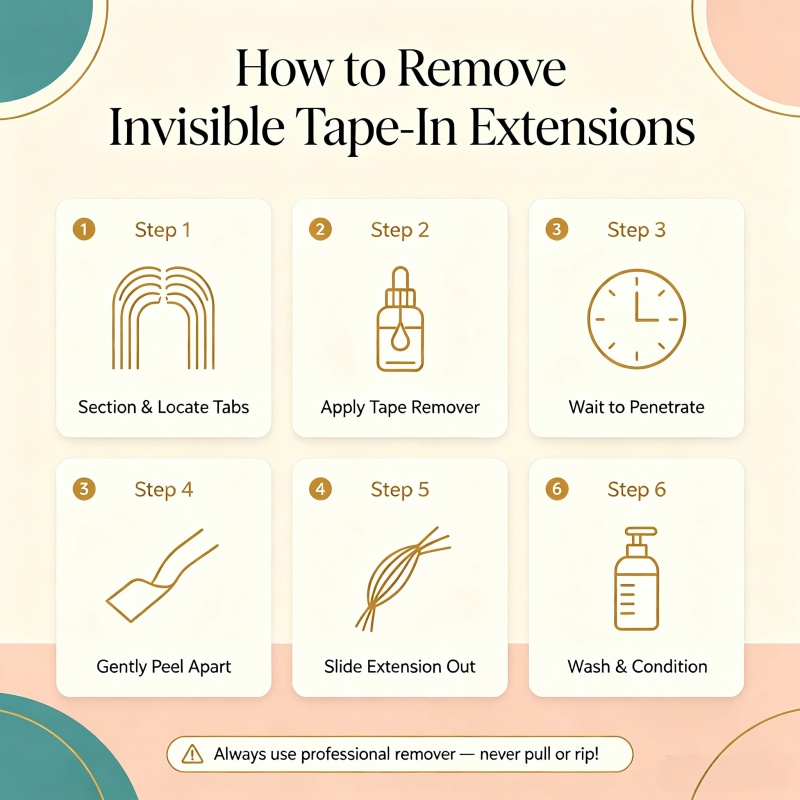
The adhesive needs to hold securely while still allowing professional removal and maintenance.
Poor-quality tape can slip prematurely, while overly aggressive adhesive can complicate removal.
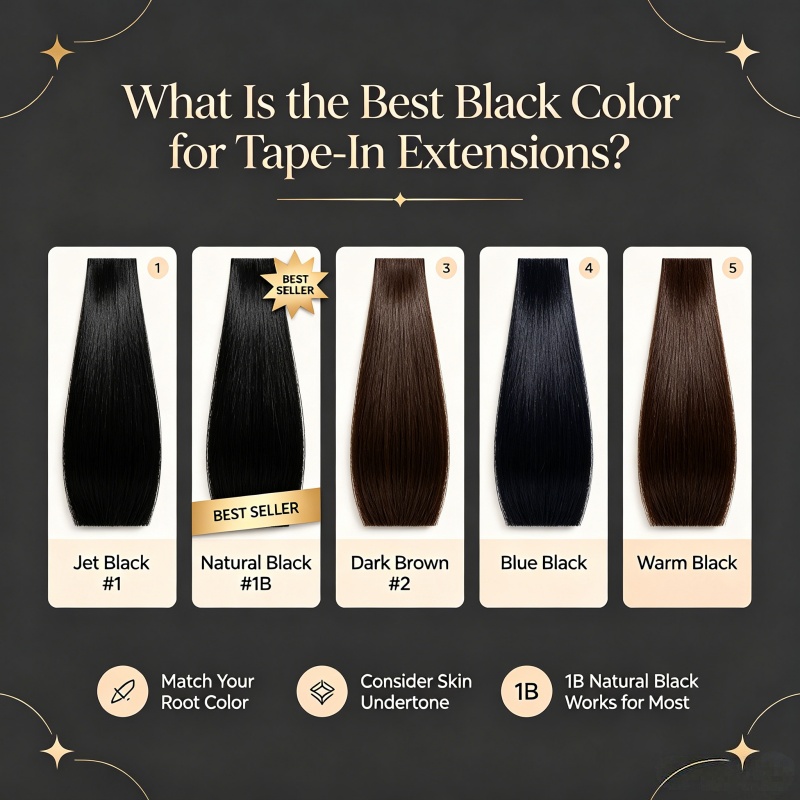
6. Accurate Color Matching
For thin hair, color mismatch can make the extension more noticeable.
This is especially important around:
- The parting
- Hairline
- Crown
- Temples
- Short layers
A wide color range is therefore valuable for professional salons.
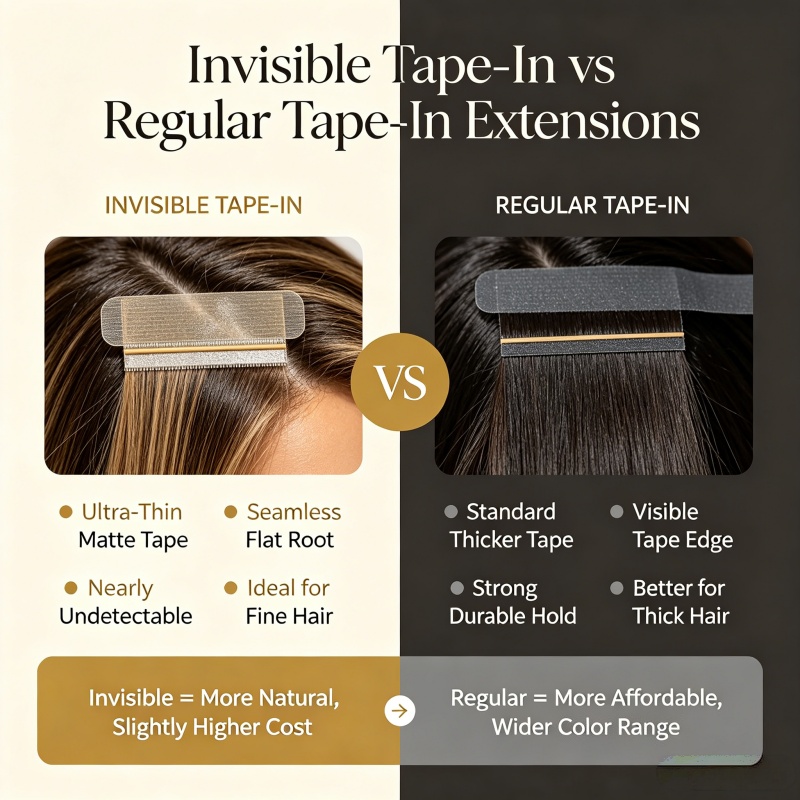
Invisible Tape In Extensions vs. Regular Tape-In Extensions
The two systems may look similar at first, but the construction can be different.
| Feature | Invisible Tape In Extensions | Standard Tape-In Extensions |
|---|---|---|
| Base | Thin/discreet | Usually more visible |
| Profile | Low | Low to medium |
| Root appearance | More natural | Depends on construction |
| Fine Hair | Very suitable when properly specified | Can work with suitable weight |
| Visibility | Very low when correctly installed | May be more noticeable |
| Styling | Flexible | Flexible |
| Customization | High | High |
| Premium Positioning | High | Medium to high |
Invisible tape-ins are particularly attractive for clients who prioritize a discreet finish, including people who frequently wear their hair down, in ponytails, or in other styles where attachment points may otherwise become visible.
What Weight Should You Choose for Thin Hair?
There is no universal weight that works for every thin-haired client.
This is an important point for content because many articles simplify the answer by giving one gram number. In reality, the appropriate weight depends on:
- Natural hair density
- Strand diameter
- Hair length
- Scalp coverage
- Number of attachment points
- Placement
- Desired result
- Client lifestyle
The better approach is to consider weight per attachment and total installed weight, rather than looking only at the weight of an entire package.
For example, a client who wants subtle volume may need a considerably lighter installation than someone with relatively dense hair who wants substantial additional length.
The goal should be controlled weight distribution, not simply the lowest possible number.
Are Invisible Tape Ins Good for Very Thin Hair?
They can be, but “very thin” requires additional caution.
If the natural hair is extremely low-density, there may not be enough hair to safely cover or support the tape attachment.
In this situation, the problem is no longer simply finding a more invisible extension.
The stylist should consider:
- Whether the attachment can be completely concealed
- Whether enough natural hair can support the extension
- Whether the client has weak areas around the temples
- Whether the scalp is already visible
- Whether the client is experiencing active shedding
- Whether another extension method would be more appropriate
This distinction is important because a product marketed as “best for thin hair” should not be interpreted as universally suitable for every person with hair loss or very low density.
Best Invisible Tape In Extensions for Fine Hair Around the Hairline
The hairline and temple areas require extra attention.
These areas generally have less natural hair available to cover an extension, making an attachment easier to see.
For this reason, salons may prefer:
- Smaller attachment sections
- Lower weight per piece
- Very thin bases
- Careful placement away from vulnerable edges
- Conservative installation
Micro tape systems can also be considered for targeted areas, although using many small attachments is not automatically better. The total number of attachment points and total weight still matter.
How to Make Invisible Tape In Extensions Look Natural on Thin Hair
Even the highest-quality product can look obvious if the installation is poor.
Match the Color Correctly
The extension should match the client’s natural hair, especially around the mid-lengths and ends.
Avoid Overloading
Do not install more extension hair than the natural hair can reasonably support.
Leave Appropriate Coverage
There should be enough natural hair above the tape to conceal the attachment.
Blend the Ends
If the client’s natural hair is significantly thinner at the ends, blending can help create a smoother transition.
Consider the Client’s Hairstyles
A client who wears a low ponytail has different concealment requirements from someone who frequently wears a high ponytail.
Use Professional Installation
Correct sectioning and placement are essential for both appearance and comfort.
How Long Do Invisible Tape In Extensions Last?
The service life of invisible tape-in extensions depends on two different factors:
the lifespan of the hair and the lifespan of the adhesive attachment.
These should not be treated as the same thing.
The tape may need to be replaced as the natural hair grows, while the human hair itself may remain reusable if it is properly maintained.
Professional maintenance is commonly scheduled around the natural hair-growth cycle, with some salon guidance citing approximately 6–8 weeks between move-up appointments.
Factors affecting longevity include:
- Hair quality
- Washing frequency
- Heat styling
- Swimming
- Product buildup
- Brushing habits
- Adhesive quality
- Removal technique
- Storage
- Re-taping quality
How to Care for Invisible Tape In Extensions on Thin Hair
Good maintenance is particularly important when working with fine hair.
Brush From the Ends Up
Use an extension-friendly brush and gently work upward.
Avoid Pulling the Tape
Never aggressively brush through the attachment.
Keep Heavy Oils Away From the Tape
Oil can affect some adhesive systems.
Control Heat
Excessive heat can shorten the life of human hair extensions.
Dry the Attachment Area
Avoid leaving the roots and tape area wet for long periods.
Schedule Regular Maintenance
Professional inspection can identify slipping, tangling, or excessive tension before the problem becomes more serious.
Who Should Not Choose Invisible Tape In Extensions?
Invisible tape-in extensions are not automatically the best solution for everyone with thin-looking hair.
Extra caution is appropriate when a client has:
- Active hair shedding
- Very weak roots
- Extremely low-density areas
- Significant scalp sensitivity
- Severe breakage
- Insufficient hair to cover the attachment
- Weak temple or hairline areas
The key question should be:
Can the natural hair safely support and conceal the chosen extension system?
If the answer is no, choosing a more “invisible” tape will not solve the underlying problem.
What Should Salons Look for When Buying Invisible Tape In Extensions?
Professional salons should evaluate more than product photographs.
Before placing a wholesale order, request samples and test:
Hair Quality
Check softness, density, shedding, tangling, and texture consistency.
Tape Construction
Examine thickness, flexibility, width, and overall finish.
Adhesive Performance
Test adhesion under realistic salon conditions.
Color Accuracy
Compare the extension against real client hair rather than relying only on online color charts.
Weight
Check the actual weight per piece and per package.
Reusability
Ask whether the extension can be re-taped and how many maintenance cycles the manufacturer recommends.
Customization
A professional supplier should ideally offer:
- Custom colors
- Custom lengths
- Custom weights
- Custom tape specifications
- Custom packaging
- Private labels
- OEM/ODM services
Why Buy Invisible Tape In Extensions Directly From a Manufacturer?
For salons, distributors, and private-label brands, buying directly from a manufacturer can provide greater control over product specifications.
Instead of selecting a fixed retail product, B2B buyers can discuss:
Hair type → Weight → Tape construction → Color → Length → Packaging → Branding
This is especially useful when developing a dedicated product range for fine or thin hair.
A manufacturer can potentially produce different versions for:
- Fine hair
- Medium-density hair
- Volume enhancement
- Length enhancement
- Hairline applications
- Salon professional use
- Wholesale distribution
Alove Hair: Invisible Tape In Extensions Manufacturer
Alove Hair is a professional hair extension manufacturer and wholesale supplier serving salons, distributors, wholesalers, and private-label hair brands worldwide.
For buyers searching for the best invisible tape in extensions for thin hair, Alove Hair can develop products around different hair lengths, colors, weights, tape constructions, and packaging requirements.
This allows professional buyers to build a product line rather than relying on a single standard specification.
For example, a private-label brand could develop:
Lightweight Invisible Tape-In Extensions → Multiple Black/Brown/Blonde Shades → Different Lengths → Custom Packaging → Branded Wholesale Collection
Before placing a large order, buyers should request samples and evaluate the actual hair quality, base construction, adhesive performance, weight, color consistency, and blending effect.
Invisible Tape In Extensions for Thin Hair: Buying Checklist
Before choosing a product, ask these questions:
| Question | Why It Matters |
| Is the base thin and flexible? | Helps reduce visible bulk |
| How much does each piece weigh? | Helps control total load |
| Is the hair 100% human hair? | Provides a more natural appearance |
| Are the cuticles aligned? | Can improve smoothness and manageability |
| Is the adhesive reliable? | Reduces slipping |
| Are multiple weights available? | Supports different hair densities |
| Are multiple colors available? | Improves blending |
| Can the product be re-taped? | Can reduce long-term replacement costs |
| Can the factory customize it? | Useful for private-label brands |
| Can I test samples first? | Helps verify quality before bulk purchasing |
Frequently Asked Questions
What are the best invisible tape in extensions for thin hair?
The best option is generally a lightweight, low-profile tape-in system made with quality human hair and a discreet, flexible base. Choose the exact weight based on the client’s natural hair density.
Are invisible tape-ins better than regular tape-ins for thin hair?
They can provide a more discreet appearance because the base is designed to sit flatter and reduce visible bulk. However, proper weight and installation are still essential.
Are tape-in extensions safe for thin hair?
They can be suitable for some clients with fine or low-density hair when properly selected and professionally installed. Clients with active shedding or extremely weak hair should receive a professional suitability assessment first.
Can invisible tape-ins add volume without adding too much length?
Yes. Lightweight pieces can be used strategically to increase fullness without necessarily creating dramatic additional length.
How often should invisible tape-ins be maintained?
Maintenance timing depends on hair growth and the attachment system. Many professional installations are maintained around every 6–8 weeks.
Can I sleep with invisible tape-in extensions?
Yes, but the hair should be gently managed before sleeping. Keeping the hair dry, reducing friction, and using a loose braid can help minimize tangling.
Can thin hair use 20-inch or longer tape-ins?
It can, but longer hair generally increases the amount of extension hair and therefore the potential weight. The stylist should select the total weight based on the client’s natural density rather than choosing length alone.
What is the difference between fine hair and thin hair?
Fine hair describes the diameter of individual strands, while thin hair generally refers to lower overall hair density. A person can have fine strands without having low-density hair.
Can Alove Hair customize invisible tape-in extensions?
For B2B customers, customization can be discussed for factors such as hair length, color, weight, tape construction, labels, and packaging.
Final Takeaway
The best invisible tape in extensions for thin hair are not necessarily the extensions with the smallest tape or the lowest package weight. The best solution is one that balances low-profile construction, appropriate weight, high-quality human hair, reliable adhesive, accurate color matching, and professional installation.
For fine hair, the priority should be a natural blend without unnecessary bulk. For low-density hair, prioritize safe weight distribution and sufficient natural hair coverage.
For salons and professional buyers, working directly with a manufacturer such as Alove Hair also makes it possible to develop different weights, colors, lengths, and private-label specifications for different customer groups.
In other words, when it comes to thin hair, less bulk and better engineering usually beat “more hair.”

Jgs is a professional with 12 years of experience in hair extensions, primarily helping importers better understand hair extensions, wigs, toupee, and other related products.