
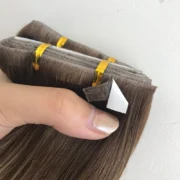
Invisible Tape In Extensions Black Hair: Complete Guide
Invisible tape in extensions for black hair are designed to add length, volume, and fullness while keeping the attachment points as discreet as possible. For clients with black or very dark hair, the appearance of the tape, weft, and color transition is particularly important because dark hair can make poorly matched extensions more noticeable.
High-quality invisible tape-ins combine a thin attachment system with premium human hair, accurate color matching, lightweight construction, and reliable adhesive. Professional salons, hair extension specialists, wholesalers, distributors, and private-label hair brands can use them.
This guide explains how invisible tape-in extensions work with black hair, which shades to choose, how to install and maintain them, and what buyers should consider when sourcing them from a manufacturer.
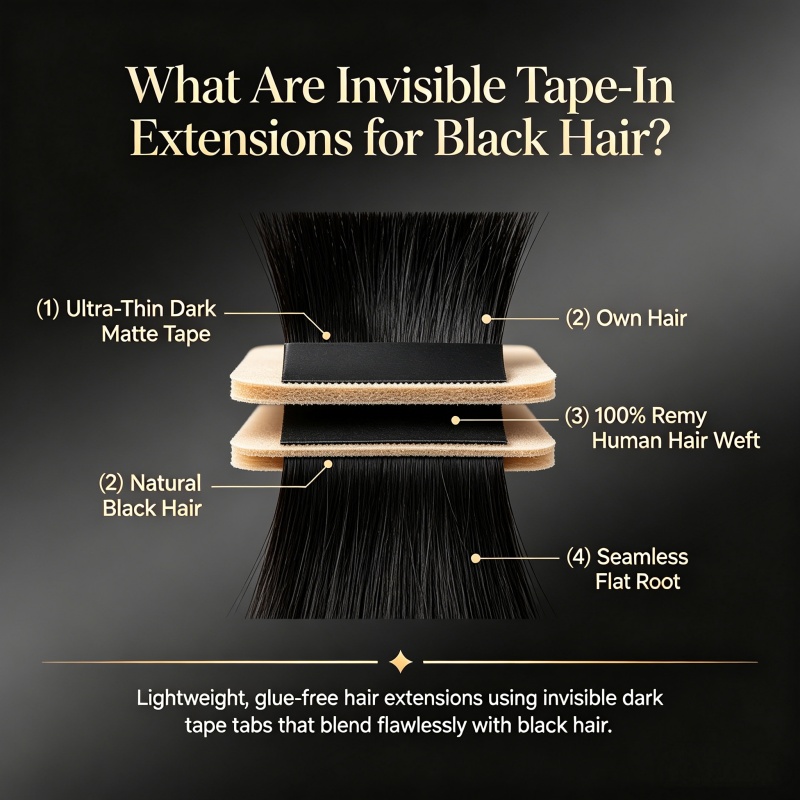
What Are Invisible Tape In Extensions for Black Hair?
Invisible tape-in extensions are a type of semi-permanent hair extension featuring a thin adhesive section that attaches to the client’s natural hair. Unlike bulky extension methods, tape-in systems are designed to lie relatively flat against the hair.
For black hair, the goal is to create a transition where the extension hair, adhesive area, and natural hair blend together without creating an obvious attachment point.
A professional invisible tape-in extension generally includes:
- 100% human hair
- Thin and flexible tape tabs
- High-quality adhesive
- Lightweight weft construction
- Multiple black and dark-brown shades
- Different lengths and weights
- Remy or cuticle-aligned hair options
- Reusable tape systems
- OEM and private-label options
The best product is not necessarily the thickest or heaviest extension. For black hair, natural blending and discreet attachment are often more important than maximum hair volume.
Why Are Invisible Tape-In Extensions Popular for Black Hair?
Black hair creates several specific challenges for hair extension installation.
Because the natural hair is dark, a visible tape edge, bulky attachment, or poorly matched extension can stand out. This is particularly noticeable when the client wears their hair straight, in a high ponytail, or in a hairstyle that exposes the sides and back of the head.
Invisible tape-ins help solve this problem through their low-profile construction.
1. Flat Attachment
The thin tape section can sit close to the natural hair, reducing unnecessary bulk.
2. Natural Blending
When the extension color closely matches the client’s black hair, the transition can become difficult to notice.
3. Lightweight Feel
Tape-in extensions distribute their weight across a section of natural hair instead of concentrating it at one small attachment point.
4. Fast Salon Installation
Compared with some other extension methods, tape-ins can be relatively efficient for professional installation and maintenance.
5. Suitable for Volume and Length
Stylists can use different numbers of tape-in pieces depending on whether the client wants subtle volume or significant additional length.
What Is the Best Black Color for Tape-In Extensions?
One of the most important purchasing decisions is color matching.
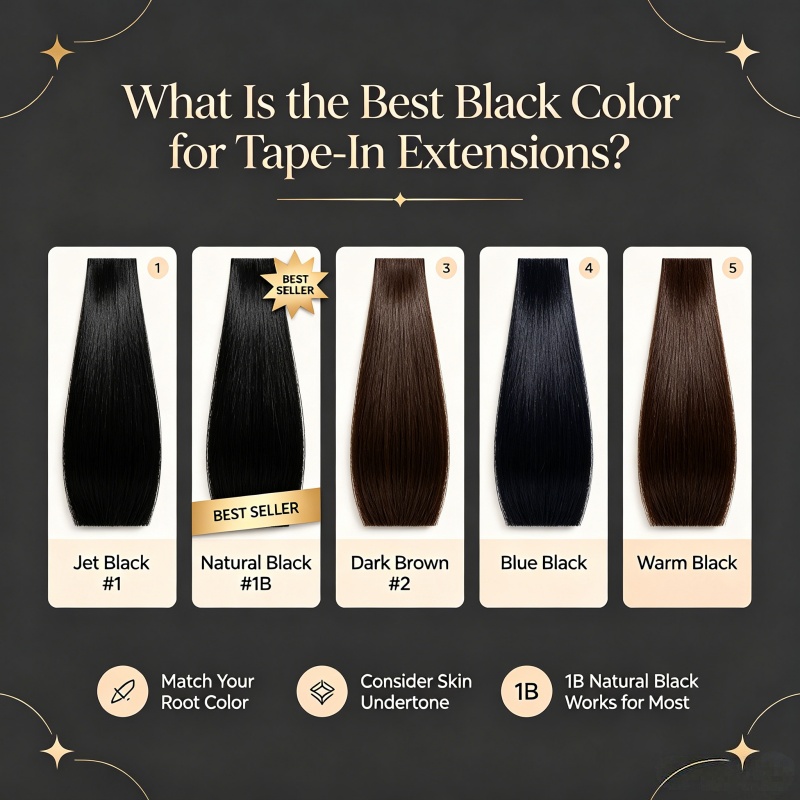
“Black” does not always mean exactly the same shade. Natural hair can range from deep black to softer black or very dark brown.
Common shades include:
| Shade | Typical Appearance | Suitable For |
|---|---|---|
| Natural Black | Soft, natural-looking black | Most natural black hair |
| Jet Black | Deep, intense black | Very dark dyed hair |
| Soft Black | Slightly softer black tone | Natural-looking results |
| Off Black | Black with subtle brown undertones | Dark brown/black hair |
| Dark Brown | Deep brown | Brown-black natural hair |
| Black with Highlights | Black base with lighter tones | Colored or highlighted hair |
For professional salons and wholesale buyers, offering several black shades is more practical than relying on a single “black” color.
Natural Black vs Jet Black
This is a common source of confusion.
Natural black generally looks softer and may have subtle brown undertones. Jet black is deeper and more intense.
If a client has naturally black hair, natural black may provide a more seamless transition.
If the client’s hair has been dyed a very dark black, jet black may be a better match.
When there is uncertainty, stylists should compare the extension against the mid-lengths and ends of the client’s hair rather than matching only the roots.
How to Make Invisible Tape-In Extensions Look Natural on Black Hair
Choosing a good extension is only one part of the process. Installation and blending greatly affect the final result.
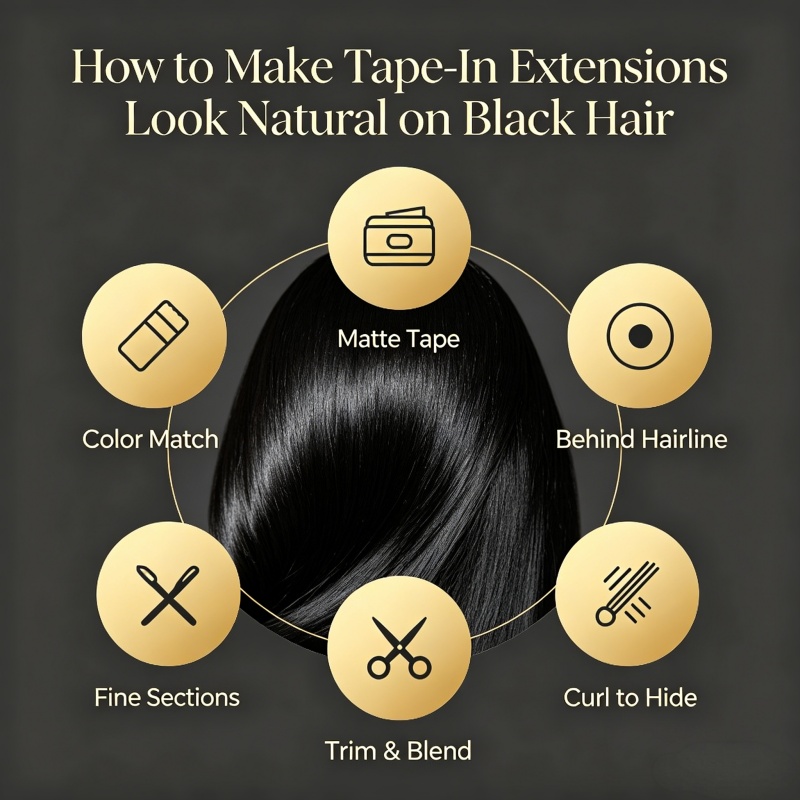
Choose the Correct Color
Match the extension to the client’s actual hair color.
Do not automatically select the darkest available black.
Select an Appropriate Weight
Fine or fragile hair should not be overloaded with excessive extension weight.
For clients with thinner hair, a lighter tape-in system can provide volume without creating unnecessary bulk.
Place Extensions Correctly
Stylists should leave enough natural hair between sections and avoid placing extensions too close to the scalp.
The objective is a secure attachment that remains comfortable while allowing the natural hair to move normally.
Blend the Ends
After installation, the stylist can trim or blend the extension hair with the natural hair.
This is particularly important when the client’s natural hair is shorter or has multiple layers.
Consider the Hairstyle
If the client frequently wears ponytails or updos, attachment placement needs additional consideration.
Position extensions so the tape sections remain concealed when the hair is pulled back.
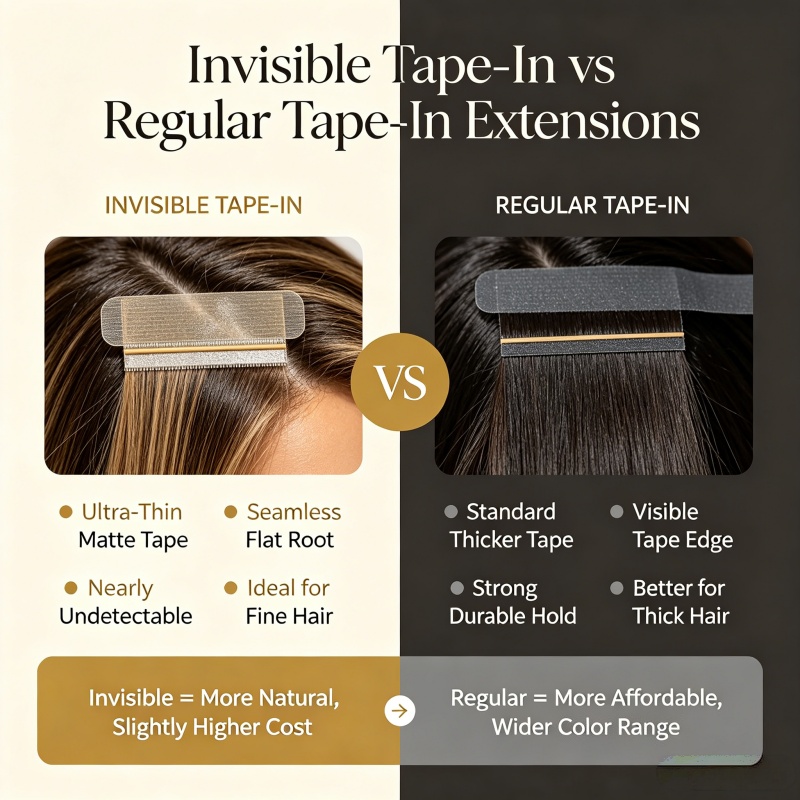
Invisible Tape In Extensions vs Regular Tape In Extensions
Although both products use adhesive attachment, their construction can differ.
| Feature | Invisible Tape In Extensions | Standard Tape In Extensions |
|---|---|---|
| Attachment Profile | Very thin | Usually thicker |
| Visibility | Designed to be discreet | May be more noticeable |
| Comfort | Lightweight | Depends on construction |
| Blending | Excellent when properly matched | Good |
| Black Hair | Particularly suitable | Suitable |
| Natural Appearance | High | Varies by product |
| Salon Use | Yes | Yes |
| Reusability | Depends on tape system | Often reusable |
| Customization | High | High |
The term “invisible” should not be interpreted as literally undetectable in every situation. Hair density, installation technique, color matching, hairstyle, and product construction all affect visibility.
Are Invisible Tape-In Extensions Good for Thin Black Hair?
They can be, but you need to choose the right product.
Thin black hair requires particular attention because excessive weight or poorly positioned extensions may make the attachment more visible.
For fine hair, consider:
- Lightweight tape tabs
- Thin weft construction
- Smaller extension sections
- Appropriate total weight
- Professional installation
- Accurate color matching
- Regular maintenance
A good supplier should be able to provide different weights rather than offering only one standard specification.
For example, a salon may prefer a lightweight option for clients seeking volume and a heavier option for clients with sufficient natural hair density.
What Hair Should You Choose for Black Tape In Extensions?
For premium salon applications, human hair is generally preferred because it provides a more natural appearance and greater styling flexibility than synthetic alternatives.
Important quality factors include:
Hair Origin
Suppliers may offer different hair sources and classifications. Buyers should ask the manufacturer for clear information about the actual hair material rather than relying only on marketing terminology.
Cuticle Direction
Cuticle-aligned hair can help provide a smoother texture and reduce friction between individual strands.
Hair Processing
Excessive chemical processing can affect softness, strength, and longevity.
Hair Density
The extension should have consistent density from top to bottom.
Shedding and Tangling
Professional buyers should test samples before placing large wholesale orders.
How Long Do Invisible Tape-In Extensions Last?
The lifespan of tape-in extensions depends on the hair quality, adhesive system, maintenance routine, installation, and frequency of use.
The extension hair itself can potentially be reused, while the adhesive tape may need replacement during maintenance.
Many professional users schedule maintenance approximately every 6–8 weeks, depending on natural hair growth and the specific installation system.
The exact replacement cycle can vary.
Factors that may shorten service life include:
- Frequent heat styling
- Aggressive brushing
- Excessive washing
- Swimming
- High heat
- Poor-quality adhesive
- Improper removal
- Heavy product buildup
- Sleeping with wet hair
For wholesale buyers, it is important to distinguish between the lifespan of the human hair and the lifespan of the adhesive attachment.
How to Care for Invisible Tape-In Extensions
Good maintenance can help preserve both appearance and hair quality.
Brush Gently
Use an extension-friendly brush and start at the ends, then work upward gradually.
Avoid Excessive Heat
Control heat styling, especially if the extensions have already been colored or otherwise processed.
Use Suitable Hair Products
Avoid applying oily or heavy products directly to the adhesive area.
Dry Thoroughly
Leaving the attachment area wet for extended periods may affect the adhesive and overall installation.
Sleep Carefully
A loose braid or low ponytail can help reduce friction while sleeping.
Schedule Professional Maintenance
Regular salon maintenance allows the stylist to check the attachment, remove the old tape, clean the hair, and reinstall the extensions when appropriate.
Can Black Invisible Tape-In Extensions Be Dyed?
Some human hair extensions can be colored, but buyers should be careful when considering additional chemical processing.
Darkening hair is generally less demanding than significantly lightening it. Bleaching black or very dark hair can be more aggressive and may affect hair quality.
For salons and distributors, it is usually better to source the required black shade directly from the manufacturer whenever possible.
A professional factory can potentially provide:
- Natural black
- Jet black
- Soft black
- Black-brown
- Custom dark shades
- Rooted colors
- Ombre combinations
- Highlighted black
This reduces the need for unnecessary post-production processing.
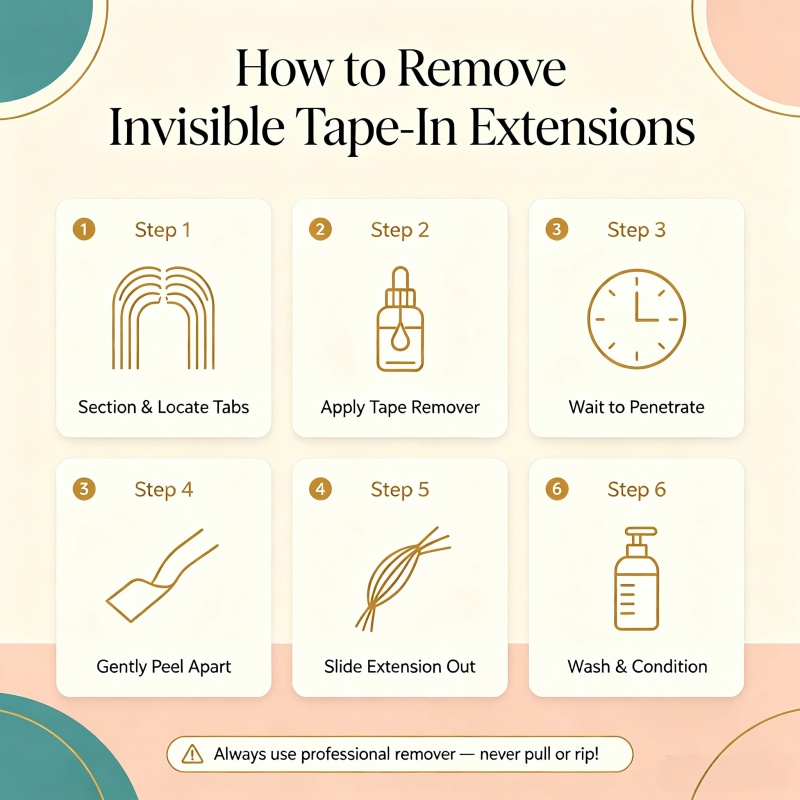
How to Remove Invisible Tape-In Extensions
Tape-in extensions should be removed professionally rather than pulled away from the natural hair.
A professional removal process generally involves:
- Applying an appropriate extension adhesive remover.
- Allowing the remover to penetrate the adhesive.
- Separating the tape gently.
- Removing adhesive residue.
- Cleaning and conditioning the natural hair.
- Preparing the extension for new tape if the system is reusable.
- Reinstalling the extensions if the hair remains suitable.
Incorrect removal can cause unnecessary pulling, tangling, or hair breakage.
What Should Wholesale Buyers Look for in a Black Tape-In Extension Supplier?
For salons, distributors, and hair brands, product quality is only one part of supplier selection.
A reliable manufacturer should be able to provide clear information about:
Hair Quality
Ask whether the product is human hair and request samples before bulk production.
Color Options
Check whether the factory offers multiple black shades.
Tape Quality
Adhesive performance is critical because poor tape can lead to slipping or premature replacement.
Weft Construction
The tape section should be thin, neat, and consistent.
MOQ
Private-label buyers should confirm the minimum order quantity for stock products and customized products separately.
Customization
Ask whether the manufacturer supports:
- Custom lengths
- Custom weights
- Custom colors
- Custom tape
- Custom labels
- Custom packaging
- Logo printing
- OEM/ODM production
Production Capacity
A factory should be able to maintain consistent specifications between sample orders and repeat bulk orders.
Why Buy Invisible Tape In Extensions Directly From a Manufacturer?
Buying directly from a manufacturer can give professional buyers greater control over product specifications and branding.
For example, a hair brand may want to develop its own black shade collection rather than simply resell standard colors.
A direct manufacturer can potentially support:
Product development → Sampling → Color approval → Bulk production → Custom packaging → Export
This can simplify the supply chain and make it easier to maintain consistency across repeated orders.
Alove Hair: Invisible Tape In Extensions Manufacturer
Alove Hair provides hair extension manufacturing and wholesale solutions for international salons, distributors, wholesalers, and private-label brands.
For buyers looking for invisible tape-in extensions for black hair, product development can be customized around different hair lengths, colors, weights, tape specifications, and packaging requirements.
The factory model is particularly suitable for B2B customers that need more than standard retail products.
Potential customization options include:
- Black and dark-color collections
- Different hair lengths
- Different extension weights
- Custom tape specifications
- OEM packaging
- Private-label branding
- Custom color development
- Bulk wholesale orders
For a new hair brand, ordering samples first is recommended. Buyers can evaluate the hair texture, color accuracy, tape strength, weft construction, shedding, and overall appearance before moving to larger production.
How to Choose the Best Invisible Tape In Extensions for Black Hair
The best product depends on the customer’s natural hair and intended use.
For fine black hair, prioritize lightweight construction and discreet attachment.
For thick black hair, a higher-density extension may be appropriate.
For natural black hair, compare natural black and soft black shades.
For dyed black hair, match the extension to the mid-lengths and ends rather than assuming jet black is correct.
For salons, focus on consistency, installation efficiency, adhesive performance, and maintenance.
For wholesale buyers, focus on MOQ, quality control, customization, packaging, production capacity, and repeat-order consistency.
For private-label brands, OEM/ODM capability becomes particularly important.
Frequently Asked Questions
Are invisible tape-in extensions good for black hair?
Yes. Invisible tape-in extensions can be an excellent option for black hair because their thin attachment profile can help create a discreet appearance when the extension color and installation are properly matched.
What is the best black color for tape-in extensions?
There is no single best black shade for everyone. Natural black, soft black, jet black, and black-brown can all be suitable depending on the client’s natural or dyed hair color.
Are invisible tape-ins suitable for thin black hair?
They can be suitable when lightweight extensions are selected and professionally installed. Avoid using excessive weight on fine natural hair.
Can you straighten black tape-in extensions?
If the extensions are made from suitable human hair, they can generally be styled with heat. However, excessive heat can reduce hair longevity, so temperature control and heat protection are recommended.
How often should tape-in extensions be moved up?
Many users have professional maintenance approximately every 6–8 weeks, but the ideal schedule depends on natural hair growth, installation, and the specific tape system.
Can I reuse invisible tape-in extensions?
Many tape-in systems can be reused by replacing the adhesive tape, provided the extension hair remains in good condition. The manufacturer’s specific instructions should be followed.
Do invisible tape-ins damage natural black hair?
The extension method itself does not automatically mean hair damage. Excessive weight, improper installation, poor removal, or inadequate maintenance can increase the risk of hair breakage.
Can Alove Hair make custom black tape-in extensions?
For B2B buyers, Alove Hair can discuss custom specifications, including hair color, length, weight, tape specifications, labeling, and packaging.
Final Takeaway
Invisible tape in extensions for black hair are a practical solution for clients who want additional length and volume without prominent attachment points. The most important factors go beyond choosing the darkest possible hair color. A successful result depends on accurate color matching, lightweight construction, quality human hair, reliable adhesive, proper installation, and regular maintenance.
For salons and professional buyers, sourcing directly from an experienced manufacturer can also provide greater flexibility in colors, specifications, packaging, and private-label development. By selecting the right product according to hair density and application requirements, invisible tape-ins can provide a comfortable and natural-looking extension solution for black hair.

Jgs is a professional with 12 years of experience in hair extensions, primarily helping importers better understand hair extensions, wigs, toupee, and other related products.


