
How Many Bundles Do You Need for a Sew-In?
Choosing the right number of hair bundles is one of the most important steps when planning a sew-in. Buy too few, and you may end up with thin-looking ends, incomplete coverage, or an unfinished installation. Buy too many, and you could spend more than necessary on hair you may never use.
So, how many bundles do you need for a sew-in?
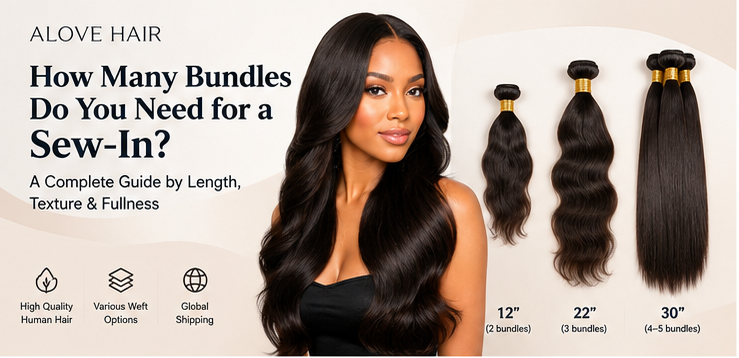
Most full sew-in installations require 2–4 bundles of human hair, with 3 bundles being a common starting point for medium-length styles. However, the exact amount depends on your desired hair length, bundle weight, natural hair density, texture, installation method, and the fullness you want to achieve.
For longer styles, especially 24 inches and beyond, 4 or more bundles may be needed to maintain balanced volume from roots to ends.
In this guide, we will break down how many bundles you need for different hair lengths, explain how closures and frontals affect your selection, and show you how to choose the right weft extensions for a natural, full-looking sew-in.
Quick Answer: How Many Bundles Do You Need for a Sew-In?
For most standard full sew-ins using approximately 100g per bundle, the following chart is a practical starting point.
| Hair Length | Recommended Bundles | Total Hair Weight | Best For |
|---|---|---|---|
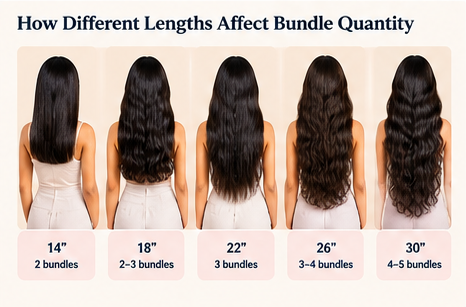
| 10–14 inches | 2 bundles | 200g | Short styles and bobs |
| 16–18 inches | 2–3 bundles | 200–300g | Shoulder to chest length |
| 20–22 inches | 3 bundles | 300g | Medium-long styles |
| 24–26 inches | 3–4 bundles | 300–400g | Long, full hairstyles |
| 28–30 inches | 4–5 bundles | 400–500g | Extra-long hairstyles |
| 32 inches and longer | 4–5+ bundles | 400–500g+ | Very long, high-density styles |
Important: These are general planning estimates, not fixed installation requirements. They assume approximately 100g per bundle and a full-head installation with standard to medium-full density.
Your stylist may recommend a different quantity depending on your head circumference, braid pattern, natural hair thickness, weft construction, and desired finished appearance.
If you want a natural everyday look, you may need less hair. If you prefer thick, voluminous hair with full ends, consider the higher end of the recommended range.
1. How Many Bundles Do You Need for Different Hair Lengths?
Hair length is one of the biggest factors affecting bundle quantity.
Generally, longer extensions require more hair to maintain consistent fullness. This is because the same amount of hair weight is distributed across longer strands, which can result in less visual density toward the ends.
Here is a closer look at the most popular sew-in lengths.
10–14 Inch Sew-In: 2 Bundles
If you prefer a short bob, shoulder-length hairstyle, or natural-looking everyday volume, two bundles are often sufficient.
Shorter extensions usually create fuller-looking ends because the hair does not need to extend as far down.
Two bundles can work well for:
- Short bob sew-ins.
- Chin-length hairstyles.
- Shoulder-length styles.
- Natural-volume installations.
- Clients who want subtle length and fullness.
If you have thick natural hair or prefer an especially full bob, your stylist may recommend a third bundle.
16–18 Inch Sew-In: 2–3 Bundles
For medium-length hairstyles, two to three bundles are a common choice.
This length is popular because it offers a balance between natural movement, manageable maintenance, and visible length.
Consider three bundles if:
- You prefer fuller ends.
- You want a voluminous body wave style.
- Your natural hair is thick.
- Your installation covers most of the head.
Two bundles may be enough for a lighter-density style or a smaller installation area.
20–22 Inch Sew-In: 3 Bundles
Three bundles are a reliable starting point for many 20–22 inch sew-ins.
At this length, using only two standard 100g bundles may result in less fullness than expected, particularly if you want a full-head installation.
Three bundles can provide:
- Balanced volume throughout the hairstyle.
- Better coverage for larger installation areas.
- Fuller-looking ends.
- More flexibility when blending natural hair with extensions.
If you prefer extra-thick, dramatic hair, ask your stylist whether a fourth bundle is appropriate.
24–26 Inch Sew-In: 3–4 Bundles
Long hairstyles require more careful planning.
Although three bundles may work for some 24-inch installations, four bundles are often a better starting point when you want fuller ends and consistent volume.
At this length, consider:
- Your preferred density.
- Whether you are choosing straight or textured hair.
- The actual weight of each bundle.
- Whether your stylist plans a full or partial sew-in.
One important consideration is hair quality. Double drawn hair can provide fuller-looking ends than hair with a more tapered strand distribution.
Therefore, the number of bundles alone does not determine how thick your finished hairstyle will look.
28–30 Inch Sew-In: 4–5 Bundles
If you love waist-length or extra-long hairstyles, plan on approximately four to five standard 100g bundles.
Long extensions need additional attention because you want enough hair to maintain volume throughout the length, not just around the roots.
For a more luxurious result, discuss double drawn hair and the appropriate weight per bundle with your stylist.
32 Inches and Longer: 4–5+ Bundles
Extra-long sew-ins require a customized quantity recommendation.
The correct amount depends heavily on the product specifications and the finished density you want.
At these lengths, it is particularly important to confirm:
- Actual grams per bundle.
- Available weft width.
- Hair strand thickness.
- Drawn quality.
- Desired end fullness.
For extra-long styles, do not rely on a standard three-bundle recommendation without checking the specifications.
How Different Lengths Affect Bundle Quantity
2. Does Hair Texture Affect How Many Bundles You Need?
Yes. Hair texture changes the way extensions appear after installation.
Straight, body wave, loose wave, and deep wave extensions can create different visual results even when they have similar lengths and weights.
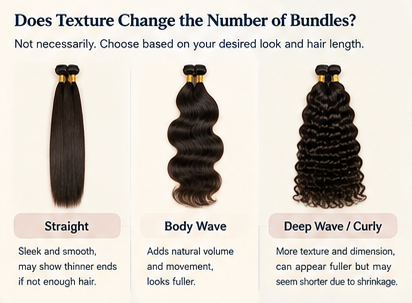
However, textured hair does not automatically require more bundles. Curl pattern, shrinkage, coverage, and desired fullness all matter.
Straight Hair
Straight extensions lie relatively flat and show the full length of the hair.
Because there is less visual expansion from curls or waves, straight sew-ins may reveal thinner ends more easily if the hair quantity is insufficient.
For a sleek, full straight hairstyle, consider the upper end of the recommended bundle range.
Body Wave Hair
Body wave extensions offer a balance between smoothness and volume.
The wave pattern creates movement and some additional visual fullness, making body wave a popular option for sew-ins.
Keep in mind that the waves can make the installed hair appear shorter than straight hair of the same labeled length.
Deep Wave and Curly Hair
Deep wave and curly extensions create more texture and dimension.
Their curl patterns can make the hairstyle appear fuller, even without adding another bundle.
However, the visible length may be shorter because of curl shrinkage.
If your priority is achieving a particular finished length, discuss stretched length versus natural curl length with your stylist before purchasing.
The key is to choose your bundle quantity based on the actual style you want, rather than assuming every texture requires the same amount of hair.
Does Texture Change the Number of Bundles?
3. How Many Bundles Do You Need for a Sew-In with a Closure or Frontal?
Your installation method also affects the amount of hair you need.
A traditional sew-in with leave-out, a closure sew-in, and a frontal sew-in do not cover the same areas of the head.
Sew-In with Leave-Out
A leave-out sew-in uses a section of your natural hair around the parting or hairline to blend with the extensions.
The amount of extension hair required depends on how much of the head is covered.
For a standard full-head installation, approximately 2–4 bundles may be appropriate depending on length and fullness.
Sew-In with a Closure
A lace closure covers a specific section of the top of your head, creating a defined parting without requiring natural hair to be left out in that area.
A 4×4 or 5×5 closure may reduce the amount of weft coverage needed, but it does not automatically mean you should purchase one fewer bundle.
For example:
- A 16–18 inch installation may work with 2–3 bundles.
- A 20–22 inch installation may need around 3 bundles.
- A 24–26 inch installation may require 3–4 bundles.
The closure should be considered separately from the bundle weight and coverage requirements.
Sew-In with a Frontal
A lace frontal generally covers a wider portion of the front hairline than a closure.
Because it contributes to the overall coverage of the installation, the required bundle quantity may differ from a traditional leave-out sew-in.
For a natural-looking result, your stylist should calculate the amount of weft hair needed after considering the frontal’s coverage and the desired density.
Professional tip: Never subtract one bundle automatically just because you are using a closure or frontal. The correct quantity depends on the actual installation design.
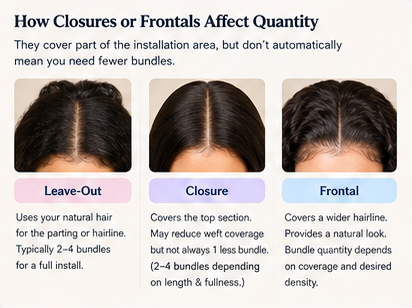
How Closures or Frontals Affect Quantity
4. Is 2 Bundles Enough for a Sew-In?
Yes, two bundles can be enough for certain sew-in styles.
However, whether two bundles are sufficient depends on the length, weight, and desired fullness.
Two bundles are generally more suitable for:
- Shorter lengths, such as 10–14 inches.
- Medium-length styles with lighter density.
- Partial sew-ins.
- Smaller installation areas.
- Clients who prefer natural rather than dramatic volume.
For 20-inch or longer full sew-ins, two standard 100g bundles may not provide the coverage or fullness you expect.
If you want a thick, full hairstyle, three bundles are generally a safer starting point for medium lengths.
5. Are 3 Bundles Enough for a Full Sew-In?
For many clients, yes.
Three standard 100g bundles provide approximately 300g of extension hair, which is a practical starting point for many full sew-ins between 16 and 22 inches.
Three bundles can be suitable when:
- You want a natural but full hairstyle.
- Your head size is average.
- Your chosen weft has suitable coverage.
- Your natural hair does not require unusually large coverage.
- Your desired style is not excessively thick.
For longer lengths, particularly 24 inches and beyond, you may need four bundles to achieve the same level of fullness.
Remember that three 50g packs contain only half the hair weight of three 100g bundles.
Always compare total grams rather than relying on the number of packages.
6. Why Hair Bundle Weight Matters More Than Bundle Count
This is one of the most overlooked parts of choosing sew-in extensions.
Many buyers focus on how many bundles they need without checking how much hair each bundle actually contains.
But bundle count alone does not tell you how much extension hair you are purchasing.
For example:
| Bundle Configuration | Total Hair Weight |
|---|---|
| 2 × 50g bundles | 100g |
| 2 × 100g bundles | 200g |
| 3 × 100g bundles | 300g |
| 4 × 100g bundles | 400g |
| 3 × 150g bundles | 450g |
As you can see, three bundles do not always mean the same amount of hair.
When comparing suppliers, check:
1. Weight per bundle
Confirm whether the listed weight is 50g, 100g, 120g, 150g, or another specification.
2. Weft width
The width of the weft determines how much head coverage each piece can provide.
3. Hair length
Longer strands distribute the same hair weight over a greater length, potentially reducing the visible fullness at the ends.
4. Hair density and drawn quality
Single drawn and double drawn hair have different strand distributions.
Double drawn hair generally contains a higher proportion of strands at similar lengths, helping create fuller-looking ends.
This is particularly important for clients who want long extensions without a noticeably thin finish.
If you are comparing different weft products, explore ALOVE’s Machine Weft Extensions to understand the available weft formats and product specifications.
7. Does Double Drawn Hair Require Fewer Bundles?
Not necessarily, but it can change the amount of hair needed to achieve a particular appearance.
Double drawn hair is processed to create a more consistent length distribution, with fewer shorter strands mixed into the bundle.
This means:
- The ends generally look fuller.
- The hairstyle can maintain a more consistent density.
- Long styles can appear more luxurious.
- The finished look may require less additional volume than a comparable tapered bundle.
However, you should never assume that double drawn hair automatically replaces a specific number of bundles.
The actual result still depends on the weight, weft width, installation area, and desired fullness.
For clients who prioritize thick, consistent ends, choosing high-quality double drawn human hair is often more important than simply adding more bundles.
8. Which Weft Type Is Best for a Sew-In?
The number of bundles is only one part of choosing your extensions. The construction of the weft also affects installation, coverage, comfort, and the final appearance.
Different weft types serve different purposes.
Machine Weft Extensions
Machine wefts are created using machine-stitched construction.
They are commonly selected for their durable track structure and suitability for traditional sew-in installations.
They may be a practical choice for clients who want:
- Strong weft construction.
- Full coverage.
- A variety of lengths and textures.
- A traditional sew-in installation.
Explore ALOVE Machine Weft Hair Extensions for product specifications and available options.
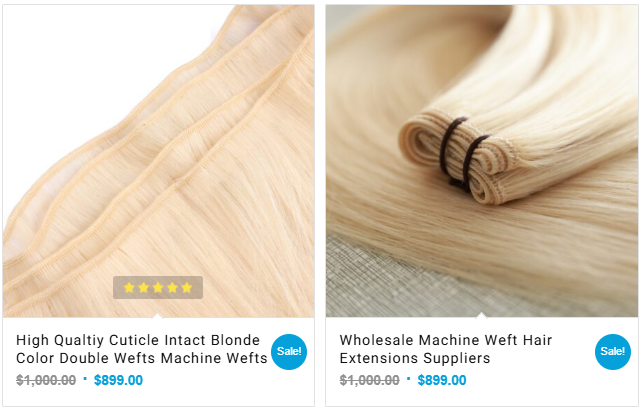
Machine wefts
Hand-Tied Weft Extensions
Hand-tied wefts are designed with a slim, lightweight construction.
They are often considered by stylists who prioritize discreet attachment and natural blending.
However, traditional hand-tied wefts have specific cutting limitations. They should be handled according to the manufacturer’s installation recommendations.
Discover ALOVE Hand-Tied Weft Hair Extensions for more information.
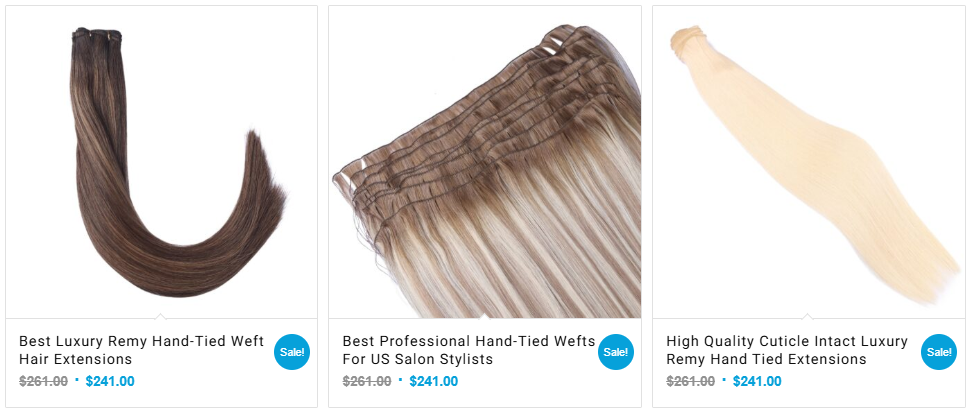
Hand-tied wefts
Genius Weft Extensions
Genius Weft is ALOVE’s flagship product category.
It combines a slim weft profile with a flexible construction designed for professional customization.
Depending on the specific product specifications, its advantages may include:
- A thin, flexible weft structure.
- Natural-looking blending.
- Customizable track placement.
- Cuttable construction.
- 100% cuticle-intact Remy human hair options.
- Double drawn options for fuller-looking ends.
For professional stylists, the ability to customize weft placement can make it easier to plan coverage across different head shapes and installation designs.
Explore ALOVE Genius Weft Hair Extensions to learn more about the product.
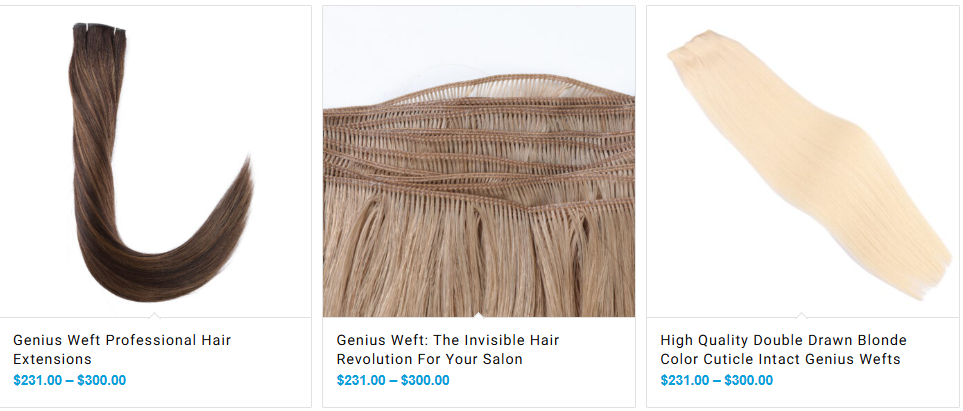
Genius Wefts
The important point is that weft construction and bundle quantity should be considered together. A suitable product should provide the right combination of weight, coverage, flexibility, and finished density.
9. How to Choose the Right Number of Bundles for Your Hair Type
Your natural hair condition also plays an important role in determining the right installation plan.
For Fine or Thin Hair
If your natural hair is fine, the goal should not simply be to add as much extension hair as possible.
A professional stylist should evaluate your natural hair strength, scalp condition, and ability to support the planned installation.
A lighter, appropriately distributed installation may be more suitable than adding excessive weight.
Read our guide to Sew-In Hair Extensions for Thin Hair for more information.
For Thick Hair
Clients with naturally thick hair may need additional extension coverage to create a seamless transition between their natural hair and the added wefts.
The stylist should consider:
- Natural hair density.
- Desired length.
- Weft placement.
- Total extension weight.
- How well the natural hair blends with the extensions.
For Short Natural Hair
If your natural hair is significantly shorter than the extensions, blending becomes especially important.
The number of bundles should be selected according to the amount of coverage needed and the hairstyle you want to achieve.
Adding more bundles does not automatically solve blending problems. Appropriate layering, texture matching, and professional installation are equally important.
10. How to Avoid Buying Too Many or Too Few Bundles
Before purchasing your sew-in extensions, follow these practical steps.
Step 1: Decide your finished length.
Choose the length you want after installation, not simply the length that looks attractive in a product photograph.
Step 2: Choose your desired fullness.
Decide whether you prefer natural everyday volume, medium fullness, or a dramatic full look.
Step 3: Select your texture.
Straight, body wave, and curly textures create different visual results.
Step 4: Check the bundle weight.
Confirm the exact grams per bundle. Do not assume every supplier uses the same weight.
Step 5: Choose your installation method.
Let your stylist determine whether you are having a traditional sew-in, closure sew-in, frontal sew-in, or another weft installation.
Step 6: Confirm the final quantity with your stylist.
Your stylist can evaluate your head size, braid pattern, coverage requirements, and desired result before you place your order.
One additional recommendation: If you need multiple bundles in the same color and length, purchase them together whenever possible. This makes it easier to maintain consistent product specifications and color matching.
11. Why the Quality of Your Human Hair Bundles Matters
Choosing the correct number of bundles is important, but the quality of the hair determines much of the finished appearance and wearing experience.
Low-quality extensions may become difficult to manage, lose their original texture, or develop tangling and matting problems.
Premium human hair extensions offer a more natural appearance and greater styling versatility when properly manufactured and maintained.
At Qingdao ALOVE HAIR PRODUCTS Co., Ltd., we have been involved in the human hair industry since the 1980s.
Originally established as a raw hair collector and supplier, we developed into a specialized manufacturer and exporter of luxury human hair extensions.
With more than 15 years of foreign trade experience, we serve professional buyers, salons, distributors, and hair brands across the USA, UK, Canada, Australia, and Europe.
Our product advantages include:
100% Cuticle-Intact Human Hair
Our Remy human hair products are designed to maintain aligned cuticles for natural movement, smoothness, and manageable hair quality.
Double Drawn Hair Options
For customers who prefer fuller-looking ends and consistent hair density, we offer double drawn options in selected product ranges.
Professional Color Expertise
With more than 20 skilled workers specializing in colored hair extensions, we focus on professional color processing and cuticle-conscious production techniques without ash-bath processing.
A Complete Range of Weft Products
Our product range includes:
- Genius Wefts.
- Micro Wefts.
- Machine Wefts.
- Hand-Tied Wefts.
- Flat Wefts.
- Sew-In Hair Extensions.
- Tape-In Extensions.
- I-Tip Extensions.
- Colorful Hair Extensions.
We also supply professional extension tools and accessories, including weaving needles, pliers, tape rolls, removers, drawing cards, and customized packaging.
For salons and hair businesses looking for premium products, our Balayage Color Genius Weft Extensions offer another option for creating customized, multidimensional hairstyles.
Whether you are sourcing hair for personal use or building a professional extension business, selecting a reliable manufacturer with consistent product specifications can make a significant difference.
Learn more about ALOVE Hair’s professional hair extension solutions.
12. Frequently Asked Questions About Sew-In Bundles
How many bundles do I need for a full sew-in?
Most full sew-ins require approximately 2–4 standard 100g bundles. Three bundles are a common starting point for medium-length styles, while longer or fuller installations may require four or more.
Is 2 bundles enough for a 20-inch sew-in?
Two bundles may work for a lighter-density or partial installation. However, for a full 20-inch sew-in, three standard 100g bundles are generally a better starting point.
How many bundles do I need for a 24-inch sew-in?
For a 24-inch sew-in, consider approximately 3–4 standard 100g bundles. The final quantity depends on the desired fullness, hair texture, and installation method.
How many bundles do I need for a 30-inch sew-in?
A 30-inch sew-in generally requires around 4–5 standard 100g bundles for a full hairstyle. Extra-full installations may require more.
Can I get a full sew-in with 3 bundles?
Yes. Three 100g bundles can provide approximately 300g of hair, which is suitable for many full sew-ins between 16 and 22 inches.
Does a closure reduce the number of bundles needed?
Sometimes. A closure covers part of the installation area, potentially reducing the amount of weft hair required. However, it does not automatically mean you need one fewer bundle.
Do curly sew-ins need more bundles than straight sew-ins?
Not necessarily. Curly textures can create more visual volume because of their curl patterns, but they may also appear shorter due to shrinkage. The final quantity depends on the desired length and density.
How many grams of hair do I need for a full sew-in?
A common starting point is approximately 200–300g for shorter and medium-length installations, and 300–500g or more for longer or fuller hairstyles.
Always check the actual weight and specifications of the bundles you purchase.
Is double drawn hair better for a sew-in?
Double drawn hair is a good option for clients who prefer fuller-looking ends and a more consistent density throughout the hairstyle. However, the best choice depends on your styling goals, budget, and preferred hair quality.
Can I reuse human hair bundles after removing a sew-in?
Many high-quality human hair wefts can be reused when they are properly installed, removed, cleaned, and maintained. Reusability depends on hair quality, weft construction, and how the extensions are handled.
For more information, read our guide on How Long Do Sew-In Extensions Last? and our Hair Extension Care and Maintenance Guide.
Final Thoughts: Choose the Right Bundles for a Beautiful Sew-In
So, how many bundles do you need for a sew-in?
For most installations, three bundles are a practical starting point. Shorter hairstyles may need only two bundles, while longer styles of 24 inches or more may require four or five bundles to achieve balanced fullness.
However, the best result does not come from buying the most hair.
It comes from choosing the right combination of hair length, bundle weight, texture, density, and weft construction.
If you are a salon owner, professional stylist, or hair extension business looking for reliable human hair products, Qingdao ALOVE HAIR PRODUCTS Co., Ltd. offers professional manufacturing, product customization, and wholesale supply solutions.
With decades of industry experience, cuticle-intact Remy human hair options, and our flagship Genius Weft technology, we are committed to helping professional partners create beautiful hair extension results and build successful businesses.
Looking for a reliable human hair weft supplier? Contact ALOVE Hair to discuss your preferred lengths, weights, textures, colors, and wholesale requirements.

Alove Hair is a professional Chinese manufacturer of premium 100% Remy human hair extensions, wigs, and hair systems. Established in 2014, the company specializes in supplying global salons and distributors with high-quality, cuticle-intact hair products and offers comprehensive OEM/ODM private label services.


