
What is Sew-In Hair Extensions?
In the dynamic world of beauty and personal style, hair extensions have become an indispensable tool for instantly transforming one’s appearance. Among the many techniques available, sew-in hair extensions stand out as a classic, reliable, and versatile method for achieving dramatic length, volume, and even new textures or colors. But what exactly are they, and why have they remained a favorite among stylists and clients for decades?
This comprehensive guide will walk you through everything you need to know about sew-in hair extensions—from their basic structure and installation process to their pros and cons, maintenance tips, and how to choose the right type for your needs. Whether you’re a salon professional looking to expand your service offerings or a client considering your next hair transformation, this article is designed to be your go-to resource.
What Exactly Are Sew-In Hair Extensions?
At its core, a sew-in (also known as a weave) is a semi-permanent hair extension technique where wefts of hair are physically stitched onto your natural hair. The process begins with your stylist creating cornrows—tight, flat braids—along your scalp. These braids serve as a sturdy anchor or “track.” Using a needle and thread, the stylist then sews the wefted hair extensions directly onto these braided tracks.
View related products: Double Drawn Luxury Remy Sew In Clip In Extensions/PU Clip In Extensions
The result is a seamless blend that can add significant length and fullness, all while protecting your natural hair underneath. Because the extensions are sewn in, they are incredibly secure and can last for several weeks with proper care, making them a popular choice for those seeking a long-lasting solution.
The Anatomy of a Weft
The key component of a sew-in is the weft itself. A weft is a strip of hair where individual strands are sewn or tied together along one edge, creating a curtain-like piece of hair. There are different types of wefts, each with its own characteristics:
- Machine Weft: Created by a sewing machine, these wefts are thicker and more durable at the top. They are cost-effective but can be bulkier.
- Hand-Tied Weft: Crafted by hand, these wefts are significantly thinner and more flexible. They lie flatter against the scalp, offering a more natural look and feel, which is ideal for sew-ins.
For a flawless sew-in, hand-tied wefts are generally the preferred choice due to their lightweight and discreet nature.
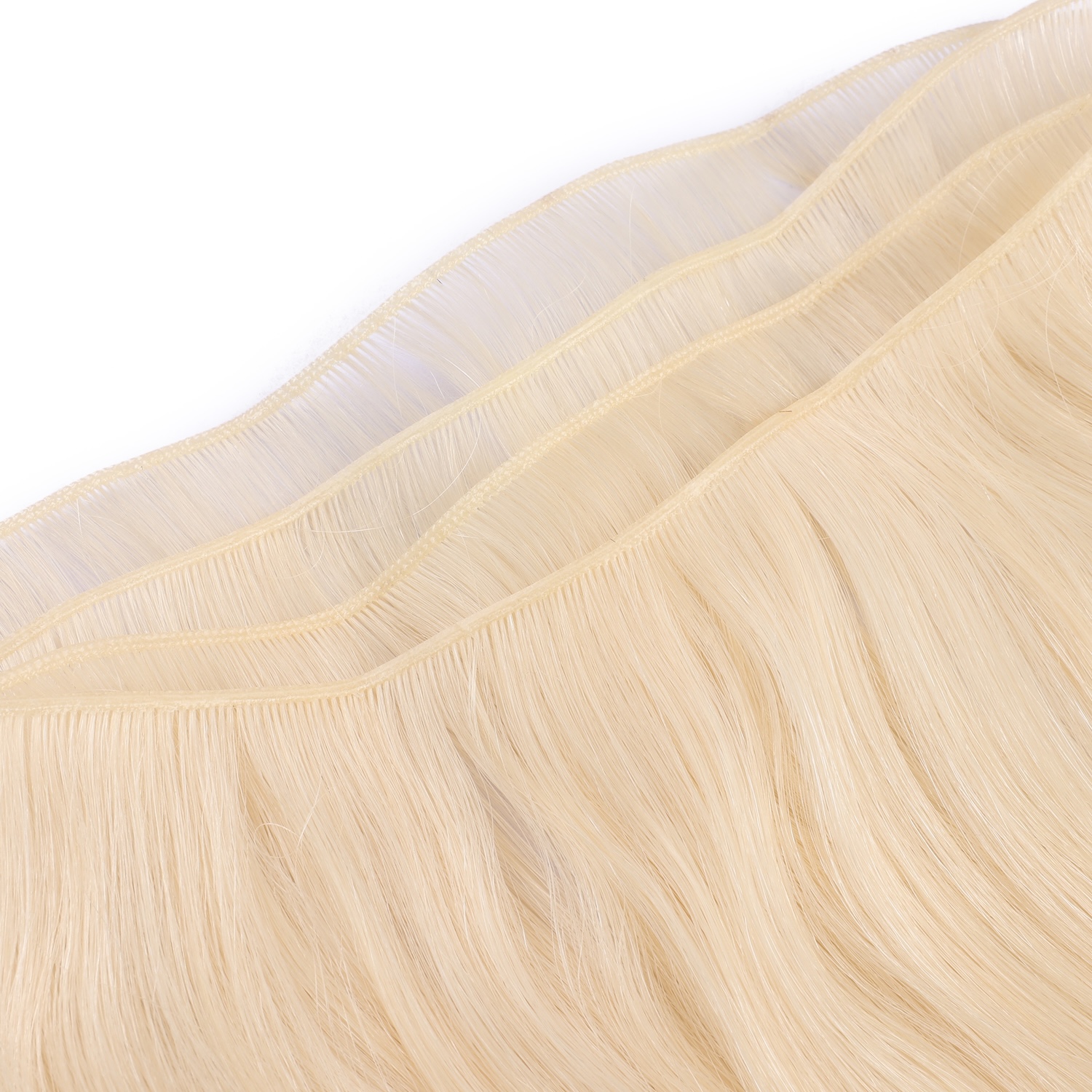
Double drawn hand tied extensions are best choice for thin and short hair women .Thin knit hand sew-in extensions sell very well in USA and Canada market .
A Step-by-Step Look at the Installation Process
Getting a sew-in is a meticulous process that typically takes 2 to 4 hours in a professional salon. Here’s a detailed breakdown of what to expect:
- Consultation & Preparation: Your stylist will consult with you on your desired length, volume, and color. Your natural hair will then be washed and thoroughly dried.
- Sectioning & Braiding: Your hair is parted into sections, and your stylist will create neat, tight cornrows across your scalp. The pattern of these braids is crucial—it determines the final look and ensures the extensions lay smoothly.
- Sewing the Wefts: Starting from the bottom layer, the stylist uses a curved needle and strong thread to sew the weft of extensions onto the braided track. This is done row by row, working upwards.
- Blending & Styling: Once all the wefts are securely attached, any excess thread is trimmed. The stylist will then cut and style the extensions to perfectly blend with your face shape and desired look.
The entire process is non-damaging when performed correctly, as it doesn’t rely on heat, glue, or adhesives that can harm your natural hair.
Pros and Cons: Is a Sew-In Right for You?
Like any beauty treatment, sew-in extensions come with their own set of advantages and considerations. Understanding these will help you make an informed decision.
The Advantages
- Longevity: A well-maintained sew-in can last anywhere from 6 to 8 weeks, offering great value for your investment.
- Protective Styling: Your natural hair is tucked away and braided, shielding it from daily manipulation, heat styling, and environmental damage. This can be a fantastic way to promote healthy hair growth.
- Versatility: Sew-ins provide a stable base for almost any hairstyle—you can wear your hair down, in a ponytail, a bun, or even braid the extensions themselves.
- Full Coverage & Volume: This method is excellent for achieving a very full, voluminous look from root to tip.
The Considerations
- Time Commitment: The installation process is lengthy, and removal also requires a professional to avoid damaging your natural hair.
- Scalp Maintenance: Because your scalp is covered, it can be harder to wash and moisturize. Special care is needed to keep your scalp clean and healthy.
- Potential for Traction: If the cornrows are braided too tightly, it can lead to traction alopecia over time. It’s essential to communicate with your stylist if you feel any discomfort.
To help you compare, here’s a table outlining how sew-ins stack up against other popular extension methods:
| Feature | Sew-In | Tape-In | Clip-In | Fusion (I-Tip) |
|---|---|---|---|---|
| Duration | 6-8 weeks | 6-8 weeks | Temporary (1 day) | 3-6 months |
| Installation Time | 2-4 hours | 30-60 mins | <5 mins | 3-5 hours |
| Natural Look | Very Natural | Very Natural | Less Natural | Extremely Natural |
| Protective for Natural Hair | Yes | No | Yes | No (Heat/Glue) |
| DIY Friendly | No | Somewhat | Yes | No |
| Cost (Initial) | Medium-High | Medium | Low | High |
To learn more about the differences between sew-in hair extensions and other categories, you can also read these two articles:
Tape-In vs Sew-In vs Genius Weft Hair Extensions
Sew-In vs. Flat Weft Hair Extensions: Key Differences & Which Is Better?
Who Is a Sew-In Right For? Understanding Hair Type and Suitability
Sew-in hair extensions are a versatile and transformative option, but they aren’t universally ideal for every individual. Understanding your hair type, scalp condition, and lifestyle is key to determining if this method is right for you.
Ideal Candidates for Sew-Ins:
- Natural Hair Length: You should have at least 3–4 inches (7–10 cm) of natural hair to create secure cornrows that can support the weight of the extensions.
- Healthy Scalp: A clean, irritation-free scalp is essential. If you’re prone to dandruff or occasional dryness, ensure it’s well-managed before installation.
- Commitment to Maintenance: Sew-ins require regular washing, moisturizing, and professional upkeep every 6–8 weeks. Ideal users are those willing to invest time in proper care.
- Desire for Protective Styling: Individuals looking to give their natural hair a break from heat, chemicals, or daily manipulation will benefit greatly from this method.
When to Avoid a Sew-In:
- Severe Hair Thinning or Hair Loss: If you’re experiencing significant shedding, traction alopecia, or medical-related hair loss, adding tension from braids could worsen the condition.
- Scalp Conditions: Active eczema, psoriasis, open sores, or fungal infections make sew-ins unsuitable until the scalp fully heals.
- Extremely Fine or Fragile Hair: Very thin or weak strands may not withstand the tension of tight braiding, increasing the risk of breakage.
- Limited Time for Upkeep: If you cannot commit to bi-weekly washing or salon visits for tightening, a more temporary option like clip-ins might be better.
Always consult with a licensed stylist before booking your appointment—they can assess your hair’s health and recommend the best approach.
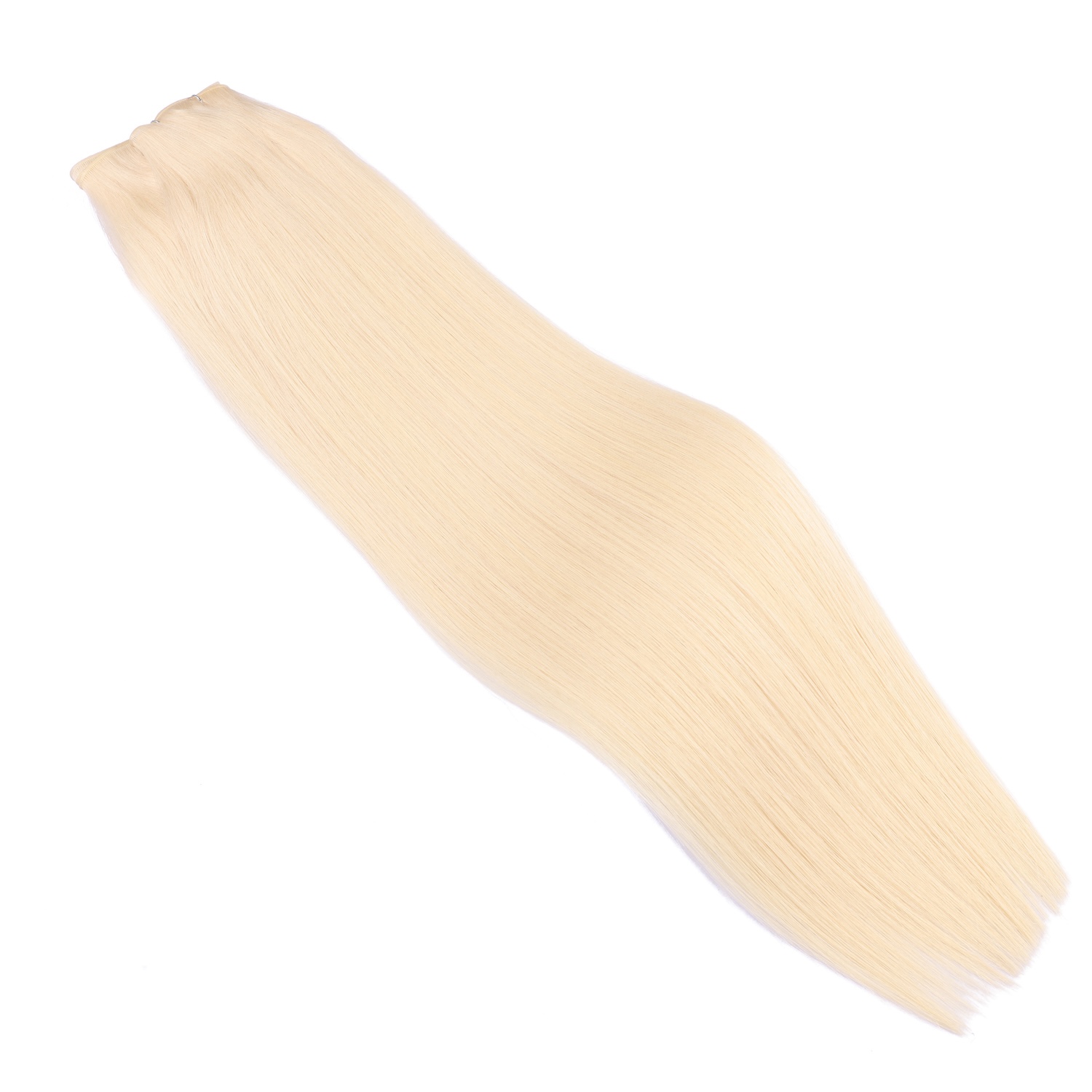
ALOVE HAIR Genius Weft – Premium hand-tied, cuticle-intact human hair extensions in a natural ash blonde with dark root tips for seamless blending.
Popular Sew-In Styles: Finding Your Perfect Look
Not all sew-ins are created equal. Depending on your desired aesthetic, maintenance level, and how much of your natural hair you’d like to incorporate, there are several popular styles to choose from:
1. Full Sew-In
In a full sew-in, all of your natural hair is braided down tightly against the scalp, and wefts of extension hair are sewn over the entire head. This style offers maximum coverage, volume, and length, and is ideal for those seeking a complete transformation or wanting to fully protect their natural hair. Since no natural hair is left out, the look is entirely dependent on the quality and styling of the extensions.
2. Leave-Out Sew-In
This is one of the most popular styles, especially for beginners. A small section of natural hair—typically along the front hairline or part—is left unbraided (“left out”) and used to blend seamlessly with the extensions. The leave-out acts as a natural-looking fringe or perimeter, camouflaging the braided base and creating a more realistic appearance. It’s perfect for clients who want versatility in parting and styling while maintaining authenticity.
3. Lace Front Sew-In
For the ultimate in realism, many stylists combine a lace front wig or closure with a traditional sew-in at the back. The lace front is carefully installed along the hairline, allowing for free parting and a scalp-like illusion, while the rest of the head is covered with sewn-in wefts for volume and length. This hybrid style delivers Hollywood-level results and is favored by influencers and professionals who demand flawless, camera-ready hair.
Each style has its own benefits, and your choice will depend on your budget, desired maintenance, and aesthetic goals. A skilled stylist can help you select the option that aligns perfectly with your vision—and using premium hand-tied wefts like ALOVE HAIR’s Genius Weft ensures every style looks effortlessly natural.
Essential Care & Maintenance Tips
To get the most out of your sew-in and keep both your extensions and your scalp in top condition, follow these key maintenance tips:
- Washing: Wash your hair every 1-2 weeks using a sulfate-free shampoo. Focus the lather on your scalp and let it rinse through the extensions. Always wash in a downward motion to prevent tangling.
- Drying: Gently squeeze out excess water with a microfiber towel. Avoid rubbing. Allow your hair to air dry or use a blow dryer on a cool setting. Make sure your roots are completely dry to prevent mildew.
- Moisturizing: Use a lightweight, oil-free leave-in conditioner or a dedicated scalp oil to keep your scalp hydrated. Apply it directly to your partings and braids.
- Night Care: Sleep on a satin or silk pillowcase, or better yet, tie your hair up in a loose satin scarf or bonnet to minimize friction and tangling.
Sew-In Hair Extensions: Busting Common Myths
Despite their popularity, sew-in hair extensions are surrounded by misconceptions that can deter potential users. Let’s set the record straight with facts backed by professional stylists.
| Myth | Fact |
|---|---|
| “Sew-ins always damage your natural hair.” | When installed correctly by a skilled stylist and maintained properly, sew-ins are actually a protective style. Your natural hair is braided away from daily friction, heat, and manipulation, which can promote healthier growth. Damage typically occurs only from overly tight braiding or neglecting aftercare. |
| “You can’t wash your hair with a sew-in.” | This is false and potentially harmful. Regular washing (every 1–2 weeks) is essential to keep your scalp clean, prevent buildup, and avoid issues like itching or mildew. Use a sulfate-free shampoo and focus on cleansing the scalp, then rinse thoroughly. |
| “Sew-ins are only for people with thick hair.” | While having some natural hair length (3–4 inches) is necessary to create braided tracks, sew-ins can be adapted for various densities. A talented stylist can customize the braid pattern and weft placement to suit fine or medium hair textures. |
| “The extensions will look fake and bulky.” | The final look depends entirely on the quality of the hair and the installation technique. Premium, thin hand-tied wefts—like ALOVE HAIR’s Genius Weft—lay flat against the scalp and blend seamlessly, creating an undetectably natural appearance. |
| “Once it’s in, I don’t need to do anything until it’s time to take it out.” | Ongoing care is crucial. Nightly protection (satin bonnet), regular moisturizing of the scalp, and gentle detangling of the extensions are all part of maintaining a healthy, long-lasting sew-in. |
Why Choose ALOVE HAIR for Your Sew-In Needs?
When it comes to the quality of your extensions, the source matters immensely. Qingdao ALOVE HAIR PRODUCTS Co., Ltd. has been a trusted name in the luxury human hair industry since the 1980s. Our journey from raw hair collectors to a specialized factory has been driven by a relentless pursuit of quality and innovation.
Our flagship product, the Genius Weft, is engineered specifically for the modern stylist and client who demand the best. Here’s what sets our Genius Weft apart:
- 100% Cuticle Intact Human Hair: Our hair is meticulously processed to keep the cuticle layer aligned and intact. This results in hair that is naturally tangle-free, smooth, and retains its luster over time.
- Expertly Colored: Our team of over 20 skilled workers specializes in coloring hair using a gentle, cuticle-intact process—no harsh ash baths. This means our colored extensions are just as healthy and durable as our natural shades.
- Superior Construction: The Genius Weft is a premium hand-tied weft, designed to be ultra-thin and flexible for the most comfortable and natural-looking sew-in possible.
As a professional supplier, we don’t just sell hair; we provide a complete ecosystem for success. We offer a wide range of products—including flat wefts, tape-in, and I-tip extensions—as well as all the necessary tools like pliers, needles, and removers. Our end-to-end support and custom solutions make us the ideal partner for salons and stylists worldwide, from the USA and UK to Europe and Australia.
With a customer retention rate of over 90%, ALOVE HAIR’s commitment to superior quality, competitive pricing, and professional service is proven. When you choose ALOVE, you’re choosing a legacy of excellence that will elevate your craft and delight your clients.

Alove Hair is a professional Chinese manufacturer of premium 100% Remy human hair extensions, wigs, and hair systems. Established in 2014, the company specializes in supplying global salons and distributors with high-quality, cuticle-intact hair products and offers comprehensive OEM/ODM private label services.


