
Hand-Tied vs Machine Weft Extensions – Key Differences & Benefits
Hair extensions have become a must-have beauty accessory, offering instant length, volume, and styling versatility. Whether for everyday glam or special occasions, they allow anyone to transform their look effortlessly. Among the many types available, hand-tied and machine weft extensions stand out as two of the most popular choices—but they cater to different needs.
Hand-tied extensions are crafted with precision, creating ultra-thin, seamless wefts for a natural, lightweight feel. Meanwhile, machine weft extensions are durable, cost-effective, and ideal for adding dramatic volume. With so many options, choosing the right type can be overwhelming.
This guide will break down the key differences, benefits, and drawbacks of hand-tied vs. machine weft extensions. By comparing their construction, comfort, longevity, and cost, we’ll help you decide which option works best for your hair type, lifestyle, and budget. Whether you prioritize a flawless blend, affordability, or low maintenance, this comparison will lead you to the perfect choice. Let’s dive in!
What Are Hand-Tied Hair Extensions?
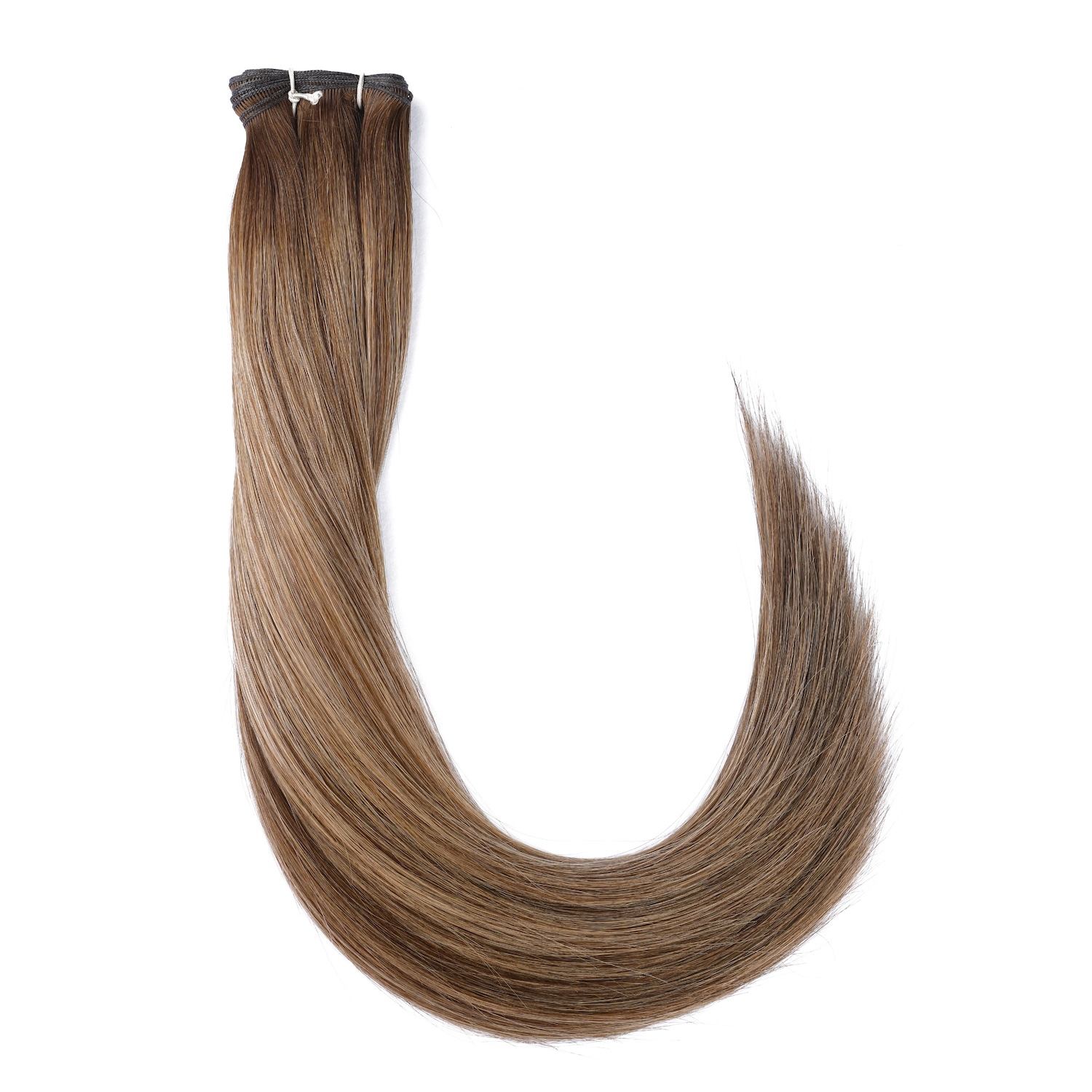
Hand-tied hair extensions are a premium category of hair wefts meticulously crafted by skilled artisans who hand-sew individual strands onto a thin, flexible silicone-based weft. Unlike machine-made alternatives, this labor-intensive process creates an ultra-thin, featherlight base that lies flat against the scalp for an undetectable blend. Each weft is customized with varying densities—thicker at the bottom for volume and gradually thinner toward the top to mimic natural hair growth.
Why They’re Unique:
- Seamless Integration – The delicate weft structure eliminates bulkiness, making them ideal for fine or thin hair.
- Natural Movement – With no stiff seams, the hair flows freely, behaving like your natural strands.
- Scalp Comfort – The lightweight design reduces tension, preventing irritation—perfect for sensitive scalps or long-term wear.
Best For:
- Clients seeking a “second-skin” feel with no visible tracks.
- Those prioritizing movement and realism over extreme volume.
- Stylists who customize placements (e.g., around the crown or hairline).
Pro Tip: Hand-tied extensions require professional installation (typically bead/sewn-in methods) and gentle care to preserve their delicate structure. While higher in cost, their natural look and comfort justify the investment for many.
What Are Machine Weft Hair Extensions?
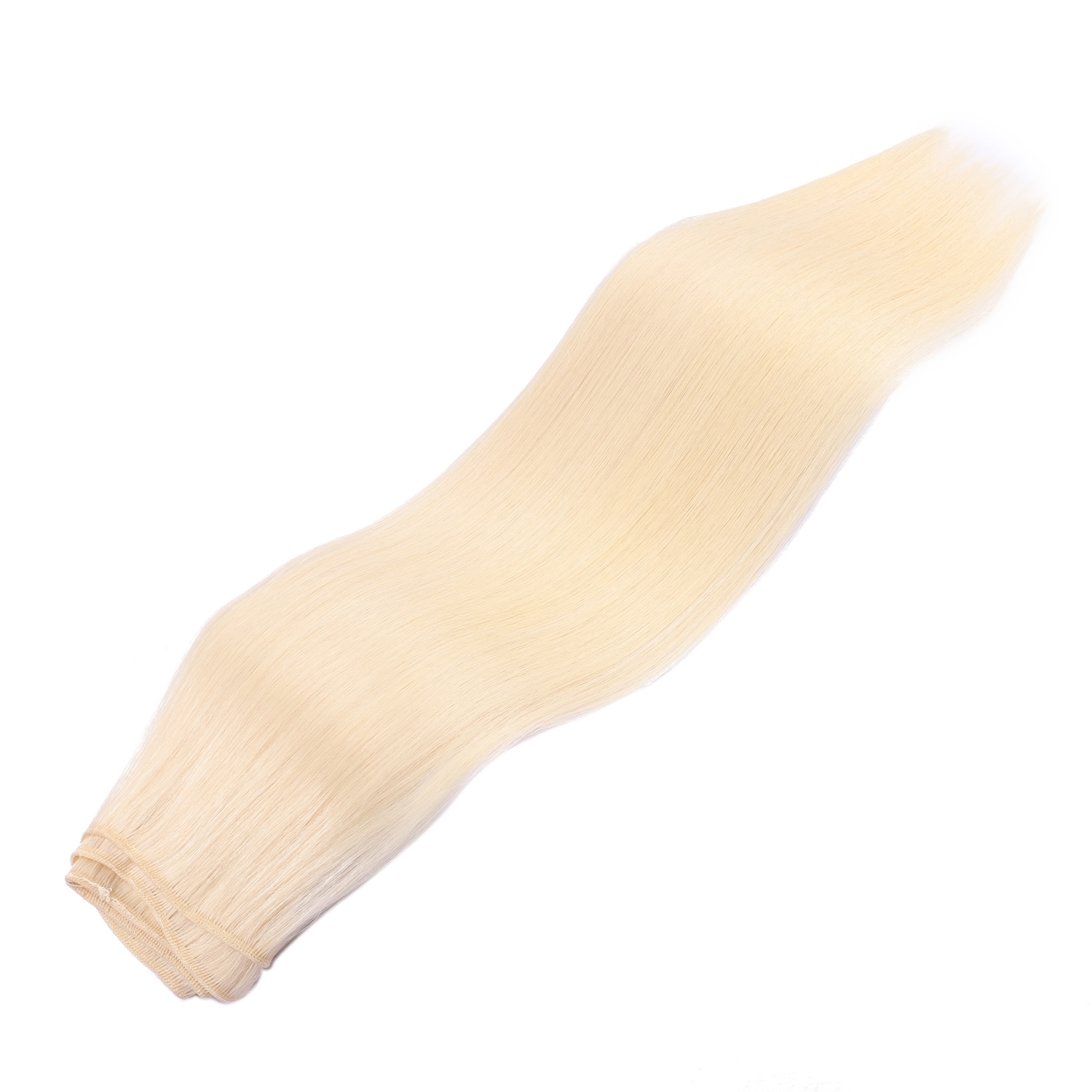
Machine weft hair extensions are high-quality hair wefts industrially stitched for strength and uniformity. Unlike hand-tied extensions, these wefts are created using specialized sewing machines that bind hair strands tightly to a reinforced fabric or silicone base. This automated process ensures consistent density and durability, making them a popular choice for clients who want long-lasting, voluminous hair without frequent replacements.
How They’re Made:
- Hair Preparation – Virgin or Remy human hair is sorted, aligned, and sterilized.
- Machine Sewing – Strands are stitched in layered rows onto a sturdy base, creating a thick, uniform weft.
- Quality Control – Each weft is inspected for secure stitching and minimal shedding.
Key Advantages:
- Affordability – Faster production lowers costs compared to hand-tied extensions.
- High Volume – The dense weft structure adds instant thickness, ideal for clients with medium to thick hair.
- Longevity – With proper care, machine wefts last 6–12 months, resisting tangling and shedding better than delicate hand-tied wefts.
Best For:
- Budget-conscious buyers who want salon-quality hair at a lower price.
- Those needing dramatic volume for ponytails or updos.
- Long-term wearers who prefer low-maintenance extensions.
Maintenance Tip: Machine wefts are heavier, so proper installation (sewn-in, clip-ins, or tape-in methods) is crucial to avoid scalp strain. Regular conditioning prevents dryness at the stitched base.
Key Differences Between Hand-Tied & Machine Weft Extensions
When choosing between hand-tied and machine weft hair extensions, understanding their fundamental differences in construction, comfort, and performance is crucial. Below, we break down five key comparison points to help you select the best option for your hair goals, lifestyle, and budget.
A. Construction: How They’re Made
Hand-Tied Extensions
- Delicate, Ultra-Thin Wefts: Each weft is meticulously hand-sewn by a skilled technician, strand by strand, onto a thin, flexible silicone or fabric base.
- Customizable Density: The hair is distributed unevenly to mimic natural growth—thicker at the bottom and finer toward the top.
- Labor-Intensive Process: Because they’re handmade, production takes longer, contributing to their higher price.
Machine Weft Extensions
- Thicker, Tightly Sewn Wefts: Industrial sewing machines bind hair strands in tight, uniform rows onto a reinforced base (usually silicone or polyurethane).
- Mass-Produced for Consistency: The automated process ensures each weft has the same density, making them sturdier but less flexible.
- Efficient Manufacturing: Faster production keeps costs lower compared to hand-tied extensions.
Which to Choose?
- Hand-Tied if you want a featherlight, undetectable finish.
- Machine Weft if you need durable, high-volume extensions at a lower cost.
B. Comfort & Weight
Hand-Tied Extensions
- Lighter & More Flexible: The thin weft base reduces scalp tension, making them ideal for all-day comfort.
- Better for Sensitive Scalps: Less bulk means less pulling, which is great for those prone to irritation.
Machine Weft Extensions
- Slightly Heavier but Sturdy: The dense stitching adds weight, which can feel noticeable—especially with multiple wefts.
- Strong Hold for Thick Hair: The extra weight helps anchor extensions securely in coarse or thick hair.
Which to Choose?
- Hand-Tied if you prioritize lightweight, barely-there comfort.
- Machine Weft if you have thick hair and don’t mind a firmer feel.
C. Natural Look & Blending
Hand-Tied Extensions
- Seamless, Lies Flatter: The ultra-thin base blends invisibly, even when hair is pulled up (e.g., ponytails or updos).
- Ideal for Fine/Thin Hair: Mimics natural hair distribution without visible tracks.
Machine Weft Extensions
- May Require Extra Blending: The thicker base can be more noticeable on fine hair unless properly layered.
- Best for Medium to Thick Hair: The density works well with naturally voluminous hair.
Which to Choose?
- Hand-Tied if you want a flawless, no-trace finish.
- Machine Weft if you have enough natural hair to conceal the weft.
D. Durability & Longevity
Hand-Tied Extensions
- Lasts ~3-6 Months with Care: The delicate stitching is prone to loosening over time, especially with frequent styling.
- Requires Gentle Maintenance: Avoid excessive heat and tugging to prolong lifespan.
Machine Weft Extensions
- Lasts 6-12 Months: The tight machine stitching resists shedding and withstands more wear and tear.
- Lower Maintenance: Holds up better to heat, brushing, and repeated washing.
Which to Choose?
- Hand-Tied if you prefer short-term, high-end extensions.
- Machine Weft if you want long-lasting, low-fuss wear.
E. Cost Comparison
Hand-Tied Extensions
- More Expensive ($$$): The handmade process increases labor and material costs.
- Higher Installation Fees: Often requires a skilled stylist for bead/sewn-in methods.
Machine Weft Extensions
- Budget-Friendly ($-$$): Mass production makes them more affordable.
- Versatile Installation: Works with sew-in, clip-in, or tape-in methods at varying price points.
Which to Choose?
- Hand-Tied if you’re willing to invest in premium quality.
- Machine Weft if you need cost-effective volume.
Final Verdict
- Hand-Tied Wins For: Natural look, comfort, and seamless blending (best for fine/thin hair).
- Machine Weft Wins For: Affordability, durability, and volume (ideal for thick hair or long-term wear).
By weighing these factors—construction, comfort, blending, longevity, and cost—you can confidently choose the right extensions for your needs.
Benefits of Hand-Tied Hair Extensions
Hand-tied hair extensions are the gold standard for clients seeking undetectable, luxurious hair enhancement. Unlike bulkier alternatives, these extensions offer three standout advantages that make them a top choice for stylists and wearers alike.
1. Lightweight & Comfortable for Daily Wear
- Featherlight Design: The ultra-thin, hand-sewn weft base eliminates bulk, making them virtually weightless on the scalp.
- Reduced Tension: Unlike thicker wefts, they don’t pull on natural hair, preventing discomfort during long-term wear.
- All-Day Versatility: Perfect for active lifestyles—sleep, workout, or style without feeling “heavy” or restrictive.
2. Ideal for Fine or Thin Hair
- Seamless Blending: The delicate weft lies flat against the scalp, creating a no-track illusion—even in updos or high ponytails.
- No Visible Bulk: Unlike machine wefts, hand-tied extensions won’t create awkward “bumps” or reveal extension lines in sparse hair.
- Mimics Natural Density: Graduated thickness (thinner at top, fuller at ends) replicates real hair growth patterns.
3. Customizable Placement for a Natural Look
- Stylist-Friendly: Can be strategically placed around the crown, hairline, or layers for targeted volume where needed.
- Movement & Realism: The flexible weft allows hair to flow naturally, avoiding the “stiff” look of pre-made tracks.
- Personalized Styling: Works with various installation methods (beaded, sewn-in, or Halo hybrids) for tailored results.
Pro Tip: While hand-tied extensions require a higher initial investment, their realism and comfort make them a favorite for clients prioritizing quality over quantity. Regular maintenance (every 6–8 weeks) ensures longevity.
Benefits of Machine Weft Hair Extensions
Machine weft hair extensions offer a practical, high-performance solution for those seeking dramatic transformation without breaking the bank. Their durable construction and budget-friendly pricing make them ideal for clients who prioritize volume, longevity, and value. Here’s why they’re a smart choice:
1. More Affordable for High-Volume Needs
- Cost-Effective Production: Machine-sewn wefts require less labor, making them significantly cheaper than hand-tied extensions—perfect for clients on a budget.
- Salon-Quality at Lower Prices: Delivers professional-grade thickness without the premium price tag of handmade alternatives.
- Ideal for Full-Head Applications: Need multiple wefts for maximum volume? Machine wefts provide more hair per dollar compared to delicate hand-tied options.
2. Stronger Hold, Less Prone to Shedding
- Industrial-Strength Stitching: Tight, reinforced seams prevent strands from loosening, even with frequent washing or styling.
- Minimal Shedding: The machine-sewn base keeps hair securely in place, maintaining fullness longer than hand-tied wefts.
- Withstands Heat & Styling: Durable enough for curling, straightening, and updos without compromising integrity.
3. Great for Thick Hair or Long-Term Use
- Built for Density: The thicker weft structure blends seamlessly with coarse or voluminous natural hair, avoiding a “see-through” effect.
- Extended Lifespan (6–12 Months): Holds up to daily wear better than delicate hand-tied extensions, making it a long-term investment.
- Low-Maintenance: Requires less frequent adjustments or replacements, saving time and money over time.
Pro Tip: For best results, pair machine wefts with a professional sew-in or clip-in installation to distribute weight evenly. Regular conditioning keeps the hair soft and tangle-free.
Who Should Choose Hand-Tied Hair Extensions?
Hand-tied extensions are the ultimate luxury choice for clients who value natural aesthetics and comfort over extreme volume. Here’s who benefits most from this premium option:
1. Those with Fine or Thin Hair
- The ultra-thin, lightweight wefts lie flat against the scalp, creating an undetectable finish that thicker machine wefts can’t match.
- Blends seamlessly without revealing tracks, even in updos or windy conditions.
2. People Prioritizing Comfort & a Seamless Blend
- Ideal for sensitive scalps—no bulky seams or tension to cause irritation.
- Moves and flows like natural hair, making it perfect for clients who want a “no-extensions” look.
3. Willing to Invest in Higher Maintenance
- Requires professional installation (usually bead or sew-in methods) and salon upkeep every 6–8 weeks.
- More delicate than machine wefts—gentle care (sulfate-free products, minimal heat) extends longevity.
Best For:
- Brides, professionals, or anyone wanting invisible, high-end extensions.
- Those willing to pay more for quality, realism, and scalp comfort.
Who Should Choose Machine Weft Hair Extensions?
Machine weft extensions are the go-to solution for clients who want dramatic volume without compromise. Here’s who benefits most from this durable, budget-friendly option:
1. Those Wanting Volume on a Budget
- Delivers instant thickness at a fraction of the cost of hand-tied extensions.
- Ideal for clients who need full-head coverage without luxury pricing.
2. People with Thick or Strong Hair
- The sturdy, dense wefts blend effortlessly with coarse or voluminous natural hair.
- Holds up to styling (curling, braiding) without losing shape or shedding excessively.
3. Prefer Low-Maintenance, Long-Lasting Wear
- Requires fewer salon visits than delicate hand-tied extensions.
- Lasts 6–12 months with proper care—perfect for clients who don’t want frequent replacements.
Best For:
- Students, busy professionals, or anyone seeking affordable, high-impact hair.
- Those with active lifestyles who need durable, hassle-free extensions.
Maintenance & Care Tips for Hair Extensions
Hand-Tied Extensions:
- Wash gently with sulfate-free shampoo, focusing on the mid-lengths to ends.
- Avoid excessive tugging or brushing near the wefts to prevent loosening.
- Use a wide-tooth comb or extension brush, starting from the bottom and working upward.
- Schedule salon maintenance every 6-8 weeks for tightening and adjustments.
Machine Weft Extensions:
- Apply hydrating conditioner regularly to prevent dryness at the stitched base.
- Detangle carefully before washing to minimize stress on the wefts.
- Secure in a loose braid before sleeping to reduce friction and tangling.
- Opt for professional removal when reinstalling to maintain weft integrity.
Pro Tip: For both types, avoid high heat near the bonds/wefts and use heat protectant when styling.
Conclusion: Choosing the Right Hair Extensions
Hand-tied and machine weft extensions each offer unique benefits—seamless blending vs. durable volume. Your choice depends on:
- Hair Type (Fine/thin? Hand-tied. Thick/strong? Machine weft.)
- Budget (Premium investment? Hand-tied. Affordable fullness? Machine weft.)
- Lifestyle (Low-maintenance? Machine weft. Ultimate realism? Hand-tied.)
Consult your stylist to match your goals with the perfect extensions.
Alove Hair – Your Trusted Hair Extensions Manufacturer
Alove Hair is a leading Chinese manufacturer specializing in premium Hand-Tied Weft Extensions and Machine Weft Extensions. We use 100% high-quality human hair and advanced craftsmanship to deliver durable, natural-looking extensions for salons and clients worldwide.
Our Hand-Tied extensions offer seamless blending for a lightweight, undetectable finish, while our Machine Weft extensions provide long-lasting volume at a competitive price. With customizable lengths, colors, and densities, we cater to all hair needs.
Global clients welcome! Contact us today for wholesale inquiries, OEM services, and exclusive deals. Elevate your hair business with Alove Hair’s professional-grade extensions.
Email: info@alovehair.com
Website: https://www.alovehair.com/

Alove Hair is a professional Chinese manufacturer of premium 100% Remy human hair extensions, wigs, and hair systems. Established in 2014, the company specializes in supplying global salons and distributors with high-quality, cuticle-intact hair products and offers comprehensive OEM/ODM private label services.


