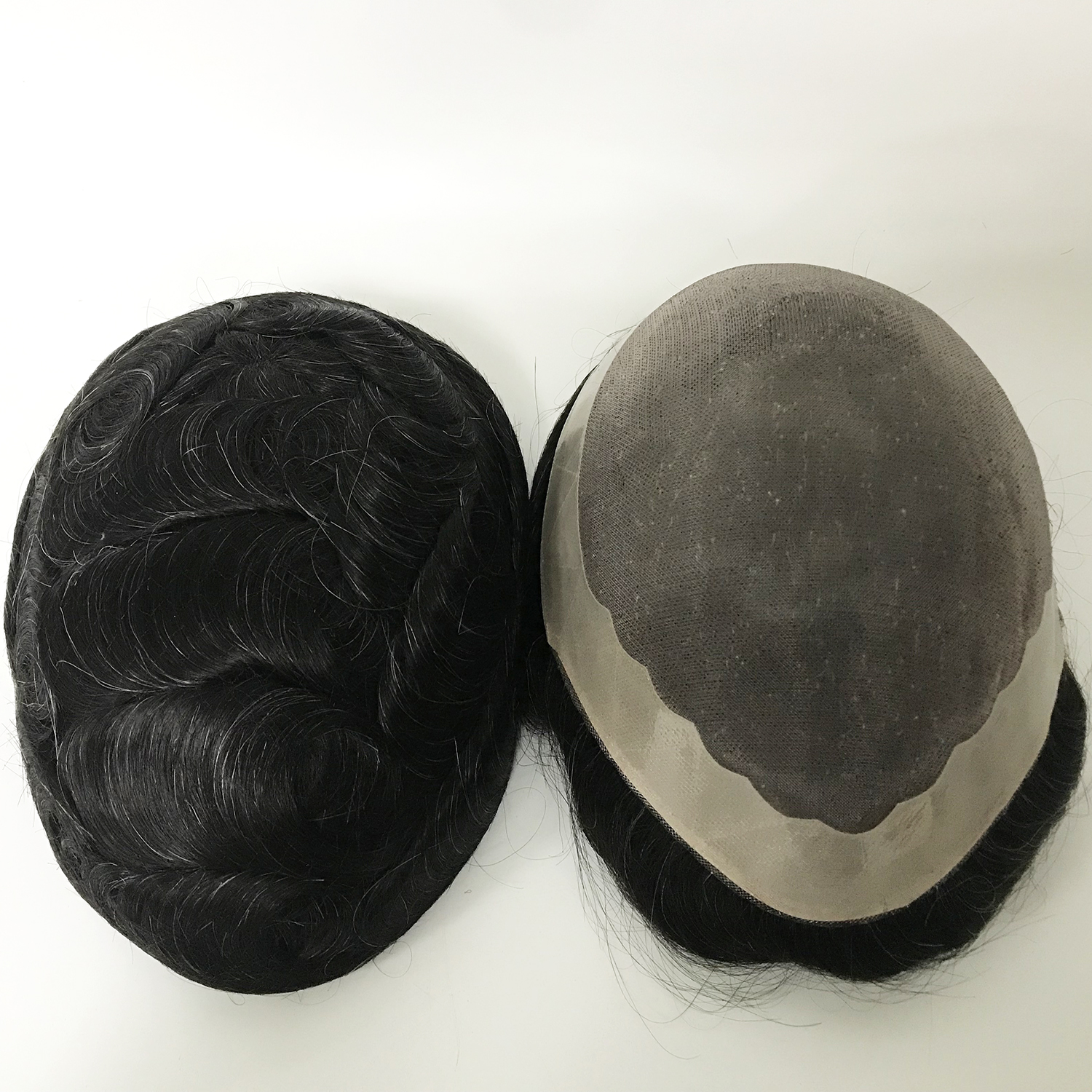
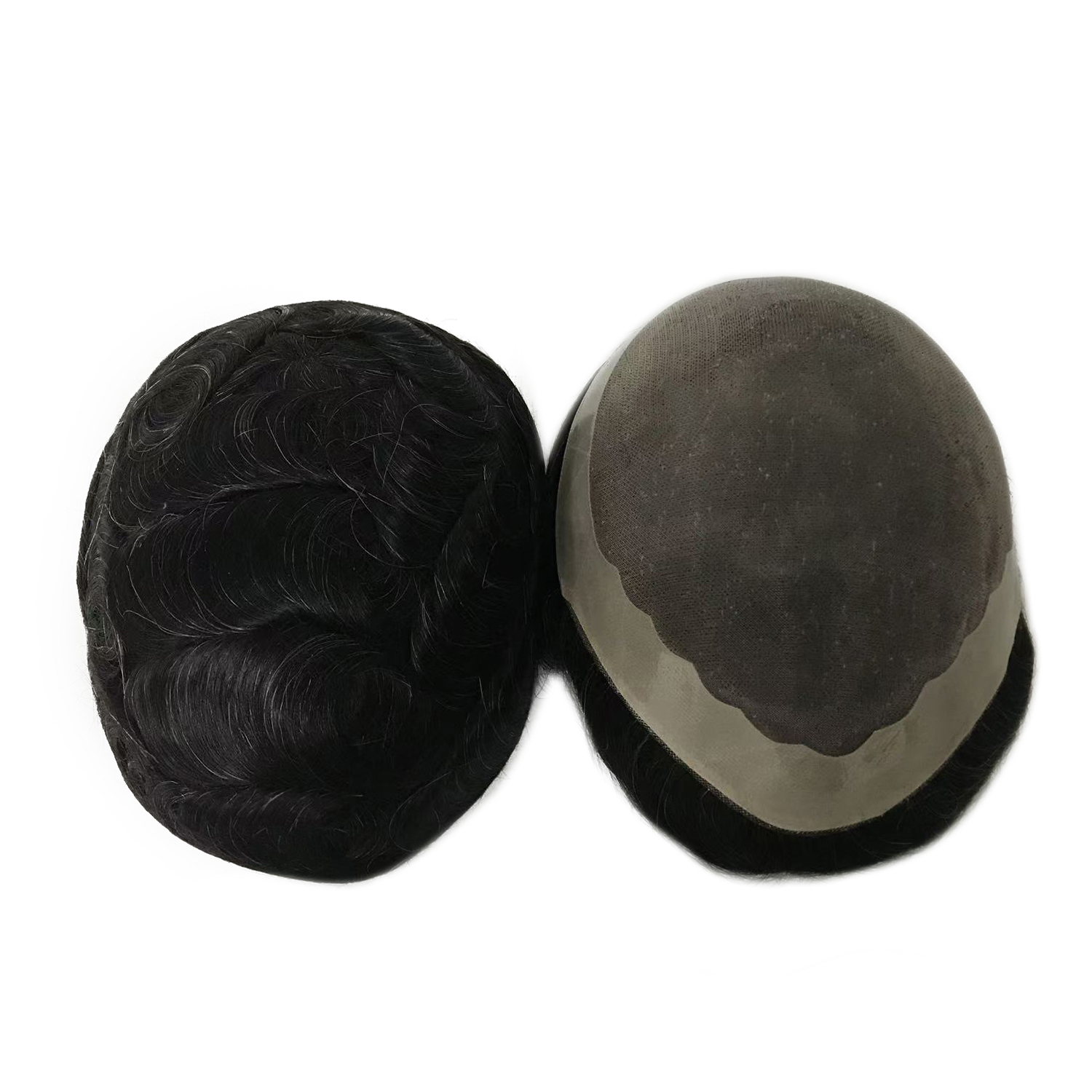
How much is a toupee? In 2026, a toupee can cost anywhere from around $150 to more than $4,000, depending on whether you choose a basic stock hairpiece, a premium human hair system, a custom-made unit, or a complete salon service package.
A standard stock toupee purchased online may cost approximately $200–$700. Custom systems can cost considerably more, especially when professional measurement, fitting, cutting, and ongoing maintenance are included.
However, the purchase price is only one part of the total investment. Base material, hair quality, density, coverage size, customization, and replacement frequency all influence what you spend over time.
At ALOVEHAIR, we supply men’s hair systems in different base constructions, including Swiss lace, monofilament, and PU. This guide explains current market price ranges, what makes one toupee more expensive than another, and how to choose a suitable system for your budget or business.
How Much Does a Toupee Cost in 2026?
The price of a toupee depends on its construction, hair material, size, and sales channel. Buying a stock hairpiece directly from a supplier is different from purchasing a customized system through a professional hair replacement salon.
The following table provides a practical overview of publicly listed market prices.
| Toupee Type |
Approximate Price Range (USD) |
Typical Purchase Situation |
| Basic or smaller stock hairpiece |
$150–$300 |
Entry-level or partial coverage |
| Standard stock toupee |
$200–$700 |
Ready-made hair replacement system |
| Premium human hair stock system |
$250–$700+ |
Buyers prioritizing natural hair appearance |
| Custom hair system from a direct supplier |
Around $329+ at some suppliers |
Personalized base and hair specifications |
| Custom system with professional services |
$800–$2,000+ |
Individual measurements and salon involvement |
| Complete professional hair replacement package |
$1,500–$4,000+ |
System, fitting, styling, and ongoing services |
These are market reference ranges, not fixed prices from ALOVEHAIR. Published supplier examples include Lordhair stock systems starting at approximately $209 and custom systems from around $329. Superhairpieces lists some human hair toupees in the $199–$369 range, while LaVivid lists standard stock systems around $269–$519.
Professional service packages can cost substantially more because the quoted price may include services beyond the hairpiece itself.
Why Do Toupee Prices Vary So Much?
Two toupees can look similar in product photographs but have very different prices. The difference often comes from materials, construction, hair quality, and customization.
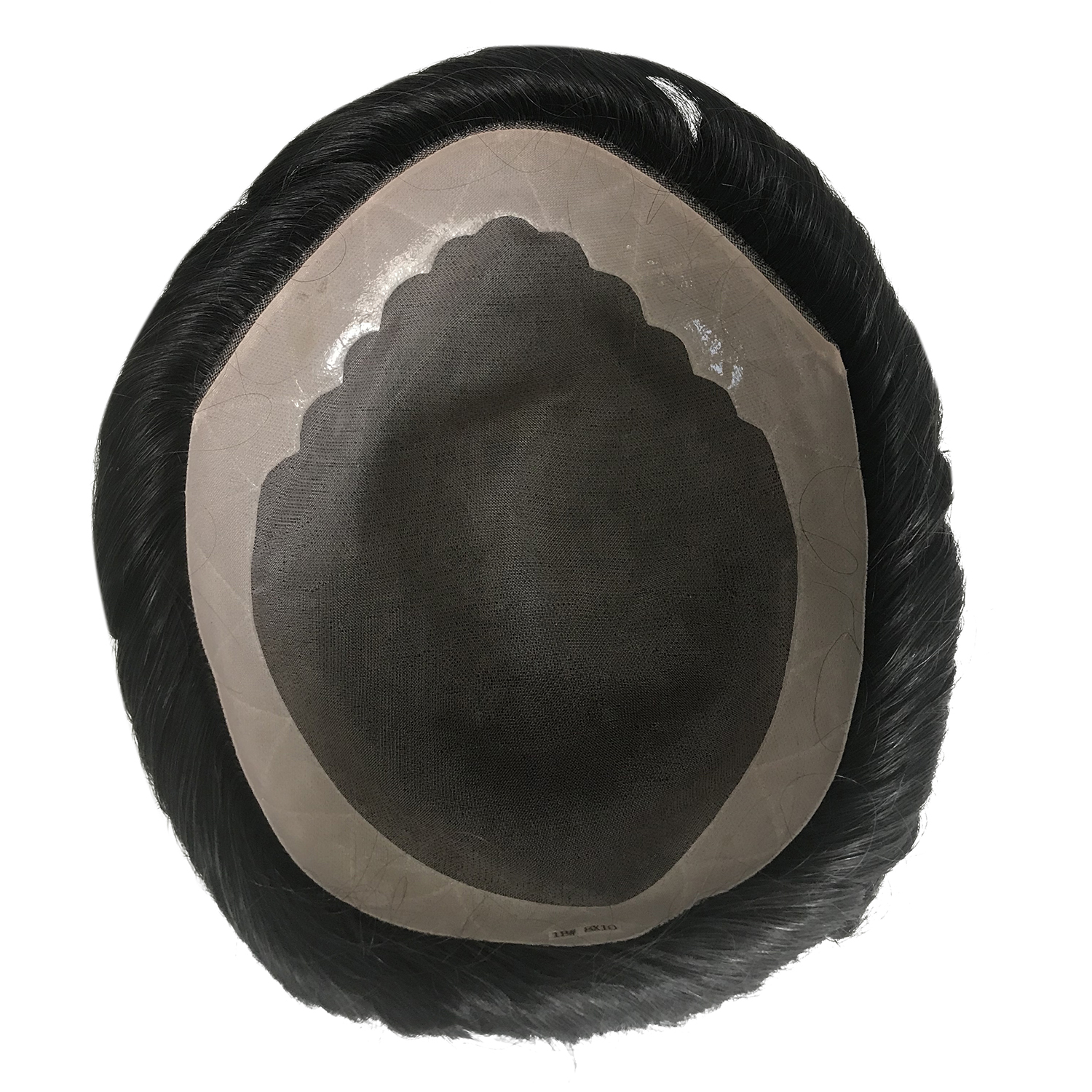
1. Base Material: Lace, Mono, or PU
The base is one of the most important factors affecting the price and wearing experience of a toupee.
It determines how the system sits against the scalp, how much air can pass through, how the front hairline looks, and how the unit is attached and maintained.
| Base Type |
Main Characteristics |
Main Advantage |
Buying Consideration |
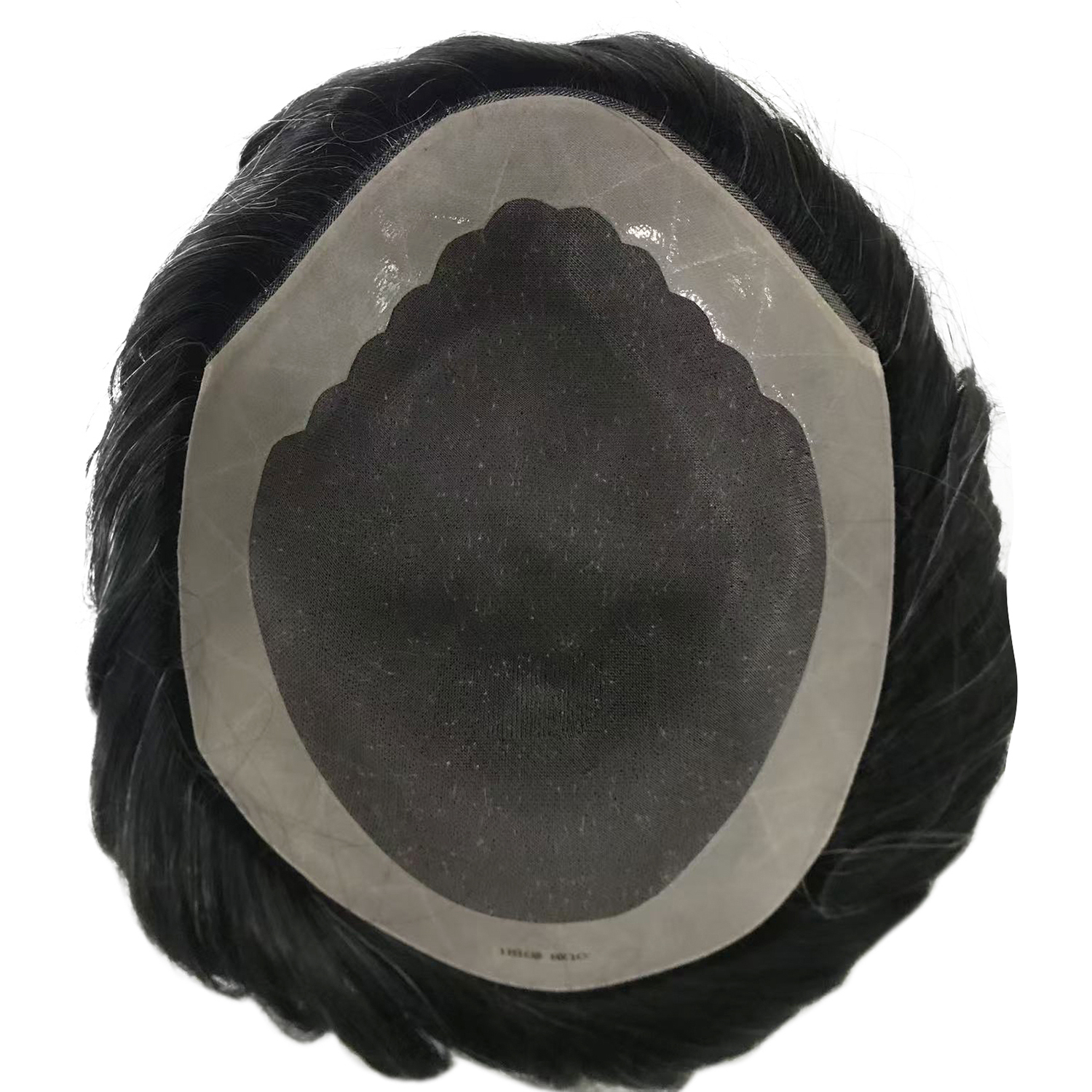
| Swiss Lace |
Fine and lightweight mesh |
Natural-looking hairline and airflow |
Delicate and requires careful handling |
| French Lace |
Slightly stronger lace construction |
Balance between breathability and durability |
May be less delicate than Swiss lace |
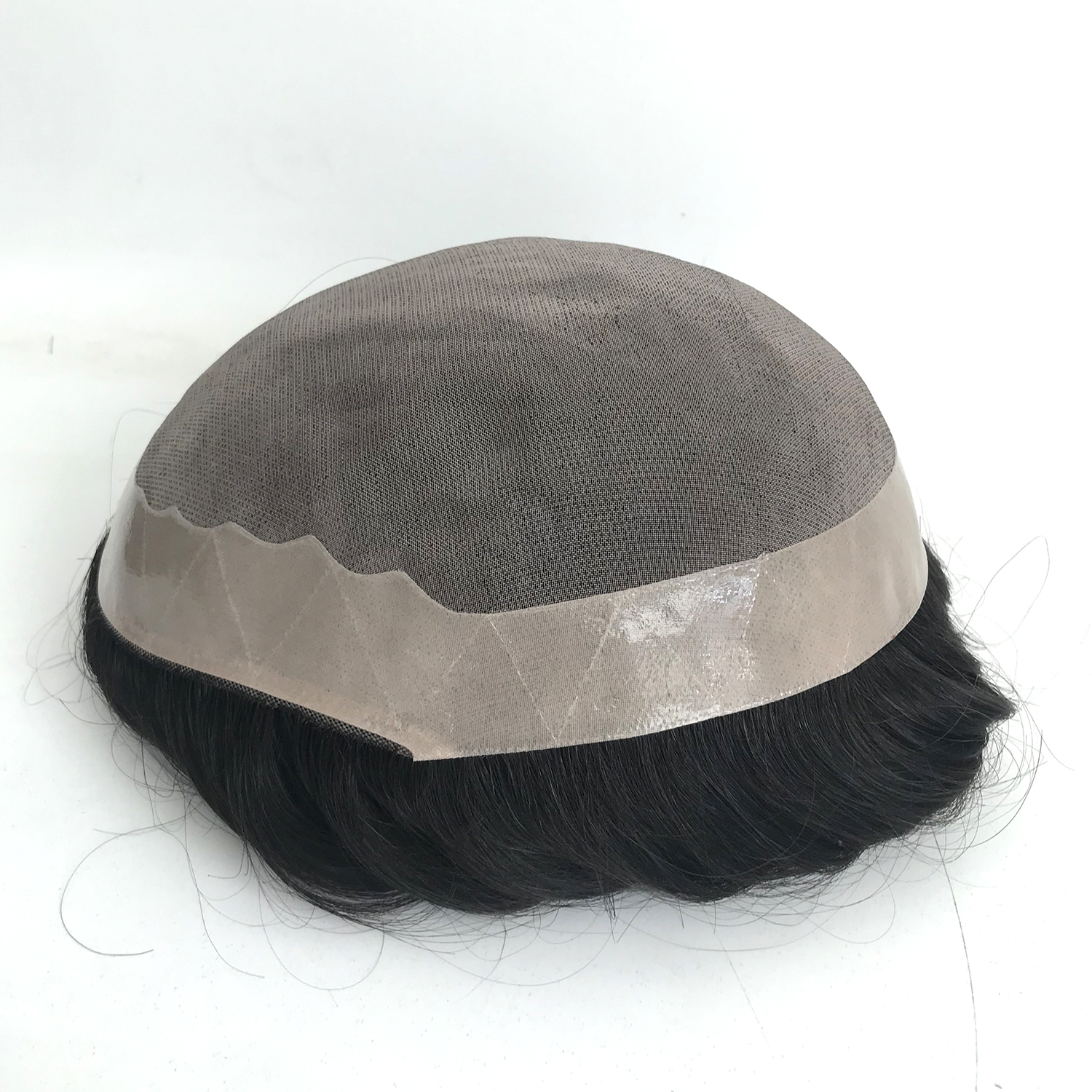
| Monofilament (Mono) |
Durable mesh base |
Good balance of breathability and strength |
Not always as invisible as ultra-thin skin |
| PU / Skin |
Thin polyurethane base |
Smooth, scalp-like appearance and easier adhesive cleaning |
Less breathable; thinner versions can be fragile |
| Hybrid |
Combination of base materials |
Balances different construction advantages |
Price depends on the material combination |
For example, ALOVEHAIR’s Swiss Lace Men’s Toupee is designed for customers who prioritize breathability and a natural-looking hairline.
Its MONO Men’s Toupee focuses on a durable mesh construction, while the PU Men’s Toupee offers different PU thickness options.
A thinner base is not automatically the best value. Buyers should balance appearance, comfort, durability, maintenance requirements, and replacement frequency.
2. Human Hair vs. Synthetic Hair
Hair material also has a major influence on price.
Human Hair Toupees
Human hair systems generally cost more because they use real hair and can offer more natural movement and styling flexibility.
Depending on the hair quality and construction, human hair systems can be washed, blow-dried, curled, and restyled using suitable techniques.
Remy human hair is valued for maintaining a consistent cuticle direction, which helps reduce friction between strands when properly processed and maintained.
Synthetic Hair Toupees
Synthetic hair systems are often more affordable and can retain a predetermined hairstyle with less daily styling.
However, styling flexibility depends on the fiber type. Standard synthetic fibers may not tolerate high heat, and their appearance or texture can change with wear.
For wholesale buyers, the important question is not simply whether the hair is human or synthetic. You should also confirm hair grade, processing, density, color, and construction.
3. Hair Density and Coverage Size
A larger base generally requires more material and more hair. Higher density can also increase the amount of hair used in production.
For example, a small crown hairpiece and a full-size men’s toupee are not directly comparable, even when their hair material is similar.
When requesting a quotation, specify:
- Base dimensions.
- Coverage area.
- Hair density.
- Hair length.
- Hair direction.
- Front hairline design.
- Whether the system needs partial or full coverage of the target area.
A product with more hair is not necessarily better. Excessive density can make the result look unnatural when it does not match the wearer’s original hair.
4. Customization and Hairline Design
Custom toupees usually cost more than standard stock units because the supplier must produce the system according to individual specifications.
Customization may involve:
- Custom base size and shape.
- Hair color and grey percentage.
- Straight, body wave, or curly texture.
- Hair density.
- Hair length.
- Hair direction and ventilation.
- Hairline shape and graduation.
- Knotting, V-looping, or injection techniques.
For a professional hair replacement brand, these details can be important differentiators. A well-designed hairline and appropriate density often contribute more to a natural-looking result than simply choosing a more expensive base.
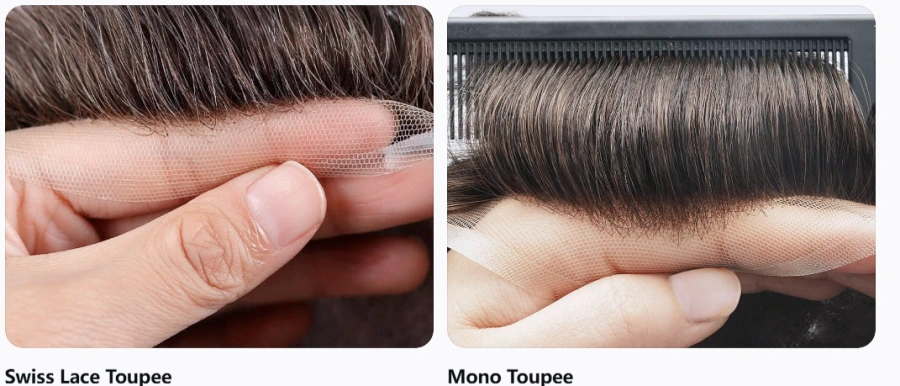
How Much Does Each Type of Toupee Cost?
Different base constructions serve different needs. Understanding their advantages and limitations makes it easier to compare prices.
Swiss Lace Toupee Cost
Swiss lace toupees are popular among customers who want a lightweight base and a natural front hairline.
The fine mesh allows airflow and can create a realistic appearance when properly fitted and attached. It is often considered for customers who prefer breathable systems or hairstyles that expose the front hairline.
ALOVEHAIR’s Swiss lace product focuses on:
- Fine and lightweight lace construction.
- Natural-looking front hairline.
- Good airflow.
- Freestyle styling and parting.
- Professional hair replacement applications.
The main trade-off is that fine Swiss lace requires careful handling. Aggressive cleaning, incorrect adhesive removal, or rough brushing around the base may shorten its useful life.
Explore our Lace Toupee collection to review lace-based options.
Mono Toupee Cost
Monofilament toupees use a mesh material designed to balance breathability and durability.
They are worth considering for customers who wear a hair system regularly and want a stronger base construction.
ALOVEHAIR’s MONO Men’s Toupee offers:
- Breathable monofilament material.
- Hand-tied hair construction.
- Flexible styling and parting.
- A durable structure for regular use.
- Options for different mono configurations.
Mono systems may not create the same ultra-thin appearance as very fine skin or lace at every point. However, their structural strength can make them an appealing option for buyers who prioritize durability.
PU Skin Toupee Cost
PU toupees use a polyurethane base that sits close to the scalp. The smooth surface can provide a realistic skin-like appearance and is generally easier to clean than a mesh base.
ALOVEHAIR lists PU options including:
| PU Thickness |
Construction Positioning |
Main Consideration |
| 0.03 mm |
Ultra-thin skin |
Very natural appearance but delicate |
| 0.06–0.08 mm |
Thin PU options |
Different balance of appearance and handling |
Some ultra-thin PU systems prioritize an almost invisible appearance but require more delicate handling and may need more frequent replacement.
Thicker PU options are generally considered when buyers want a stronger base and easier routine cleaning.
To compare the actual cost, ask your supplier to confirm the precise thickness, hair attachment method, size, and expected service conditions for each model.
See the ALOVEHAIR PU Men’s Toupee for current product details.
What Does a Toupee Cost Over One Year?
A common mistake is comparing toupees only by their initial purchase price.
A hair system is a wearable product that requires cleaning, attachment supplies, maintenance, and eventual replacement. Your annual budget depends on how frequently you wear it and how long each unit remains usable.
A practical first-year budget should include:
| Cost Component |
What to Include |
| Hair system |
Stock or custom unit price |
| Initial fitting |
Base preparation, attachment, cutting, and styling |
| Adhesives and tape |
Products used for attachment |
| Cleaning supplies |
Solvents and system-safe cleansing products |
| Maintenance |
Reattachment, cleaning, and professional adjustment |
| Replacement |
New units when the base or hair becomes worn |
| Shipping and tax |
Delivery and applicable import or sales costs |
An Example of Initial Purchase Cost
Superhairpieces publishes a human hair toupee price range of approximately $199–$369 and an estimated salon installation range of around $160–$200.
Using those separate market references, a simple first purchase calculation would look like this:
| Item |
Lower Example |
Higher Example |
| Toupee |
$199 |
$369 |
| Initial salon installation |
$160 |
$200 |
| Initial subtotal |
$359 |
$569 |
This is an illustrative calculation, not a combined quotation from one supplier. It excludes adhesive supplies, later maintenance, shipping, taxes, and replacement units.
Annual Cost Estimates
HairClub publishes the following general industry illustrations for different hair replacement arrangements:
| Hair Replacement Option |
Illustrative Annual Cost |
| Stock toupee / hairpiece |
$1,200–$2,500 |
| Custom hair system |
$2,000–$4,000 |
| System with professional services |
$3,000–$5,000 |
These figures are provider-level budgeting references, not universal prices or a guarantee of what an individual will spend.
The most useful approach is to compare the total expected cost across the actual system, attachment routine, maintenance schedule, and replacement needs.
How Long Does a Toupee Last?
The lifespan of a toupee depends on its base material, hair quality, attachment method, wearing frequency, and maintenance.
ALOVEHAIR’s men’s hair system guidance gives a broad typical range of approximately 2–6 months, while other supplier guides show that some constructions may have shorter or longer replacement cycles.
For example, Lordhair’s published comparison gives approximate ranges of 2–4 months for lace, 1–6 months for skin depending on thickness, and 3–6 months for mono systems.
These are supplier-specific estimates, not guaranteed product lifespans. Daily wear, sweating, friction, adhesive removal, washing frequency, and storage can all change the outcome.
Here are practical ways to protect your investment:
- Follow the supplier’s cleaning and removal instructions.
- Avoid pulling or stretching the base during maintenance.
- Use products suitable for the specific base material.
- Detangle the hair gently, starting from the ends.
- Store the unit carefully when it is not being worn.
- Arrange professional checks when the attachment or base begins to deteriorate.
A durable base can offer better long-term value, but the best choice still depends on the wearer’s priorities and maintenance habits.
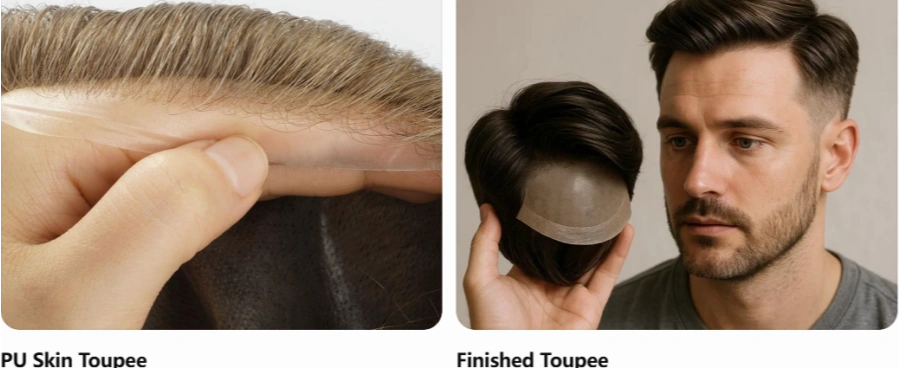
How to Choose the Best Toupee for Your Budget
Before buying a toupee, decide which features matter most to you. A system designed for an exposed hairline may require different construction from one chosen primarily for durability.
Choose Swiss Lace for a Natural Hairline
Swiss lace is worth considering when a lightweight, breathable base and natural-looking front hairline are priorities.
It is particularly relevant for wearers who prefer styling flexibility and want to expose the front hairline.
The trade-off is careful handling and cleaning.
Choose Mono for a Balance of Durability and Breathability
Mono is a practical option for wearers who place greater emphasis on base strength and regular use.
It offers a mesh construction that balances airflow and durability, although its appearance may differ from an ultra-thin lace or skin system.
Choose PU for a Smooth, Skin-Like Appearance
PU bases are often selected for their smooth surface, scalp-like appearance, and easier removal of tape or adhesive residue.
The exact PU thickness matters. Ultra-thin versions can look very natural but may be more fragile, while thicker versions can offer a different balance between realism and durability.
Match Hair Density and Color
The best toupee should blend with the wearer’s existing hair or desired appearance.
When choosing a system, pay attention to:
- Natural hair color and undertone.
- Grey percentage, if applicable.
- Density around the surrounding hair.
- Hair direction and hairstyle.
- Hair length and texture.
- Front hairline shape.
For custom orders, an accurate hair sample or clear reference photographs can make color and texture matching easier.
Stock Toupee vs. Custom Toupee: Which Offers Better Value?
Stock and custom systems serve different buying situations.
| Factor |
Stock Toupee |
Custom Toupee |
| Initial Price |
Usually lower |
Usually higher |
| Availability |
Ready-made sizes and specifications |
Made to requested specifications |
| Base Size |
Limited standard options |
Can be customized |
| Hair Density |
Available standard choices |
Can be specified |
| Color |
Existing shade options |
More flexible customization |
| Hairline |
Standard design |
Custom hairline options |
| Production Time |
Usually faster |
Requires a production period |
| Best For |
First-time buyers and common requirements |
Specific fit and brand requirements |
A stock system can be a sensible starting point when its size, color, and density fit the wearer.
A custom toupee makes more sense when standard dimensions or styling specifications do not meet the requirement.
For a business, custom production can also help establish a differentiated product range rather than selling exactly the same specification as every other retailer.
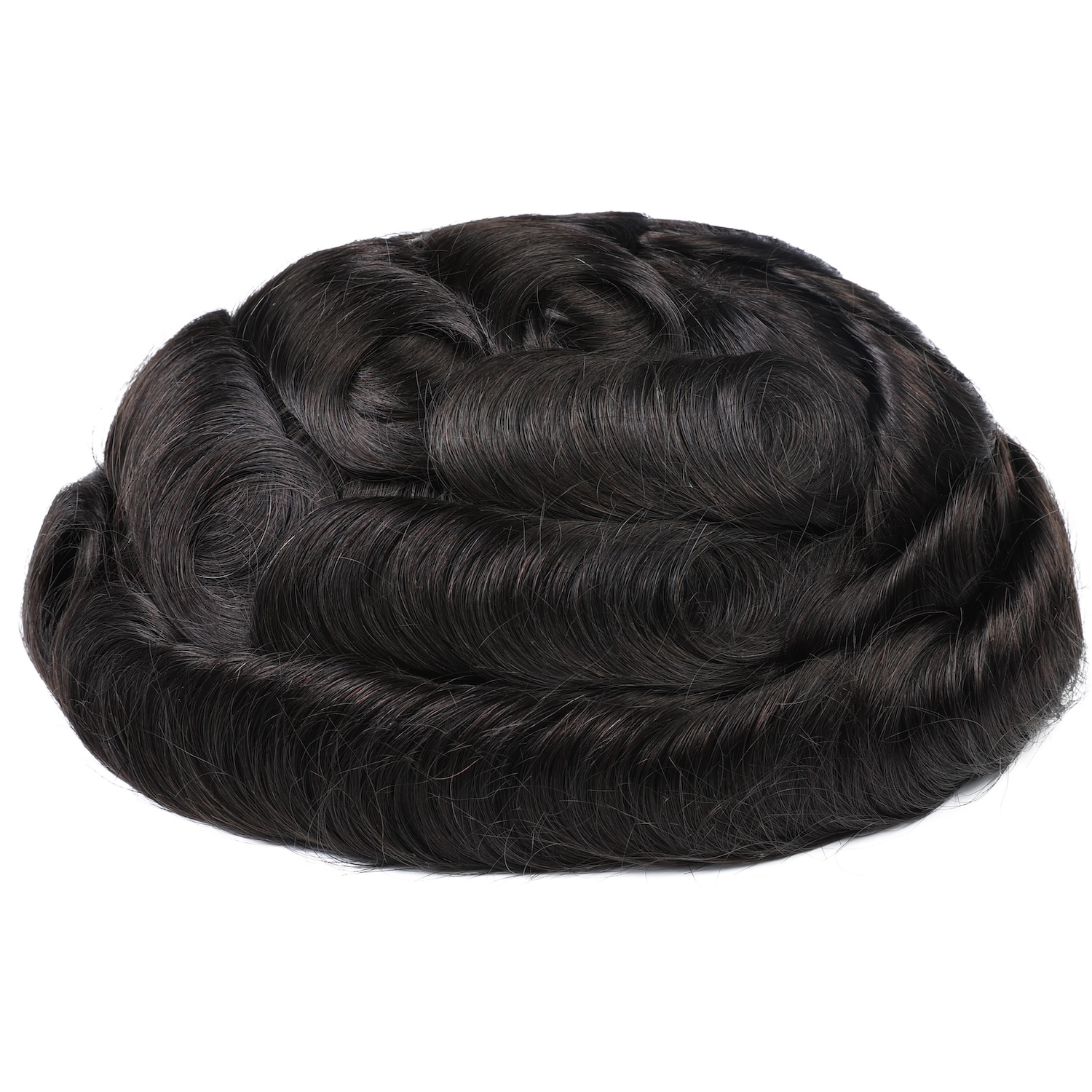
Wholesale Toupee Prices: What Should Salons and Distributors Consider?
Individual retail pricing is only part of the market. Hair replacement salons, barbershops, distributors, and private-label brands may purchase toupees directly from manufacturers.
Wholesale quotations depend on the product specification and order quantity. A supplier cannot give a meaningful comparison based on the word “toupee” alone.
Before requesting a quotation, prepare the following information:
| Specification |
Information to Confirm |
| Product Type |
Lace, Mono, PU, or Hybrid |
| Hair Material |
Human hair or synthetic fiber |
| Hair Length |
Required finished length |
| Base Size |
Standard or custom dimensions |
| Hair Density |
Percentage or agreed density reference |
| Hair Color |
Color code or physical reference |
| Hair Texture |
Straight, body wave, curly, or custom |
| Hairline |
Standard or custom graduated hairline |
| Hair Attachment |
Hand-tied, V-looped, injected, or other construction |
| Order Quantity |
Samples, stock units, or bulk order |
| Packaging |
Standard or private-label packaging |
Why Wholesale Prices Differ Between Manufacturers
Two suppliers may quote very different prices for what appears to be the same product.
The difference can come from:
- Raw hair sourcing and quality.
- Human hair versus synthetic material.
- Base material and thickness.
- Hair length and density.
- Ventilation and knotting technique.
- Base dimensions and hairline design.
- Quality inspection and finishing.
- Packaging and branding requirements.
- Order volume and production complexity.
For serious buyers, it is better to compare two quotations using the same written specification. Otherwise, a lower price may simply represent a different product.
What to Ask Before Placing a Bulk Order
A professional supplier should be able to clarify the following:
- Can you provide a sample in the selected base construction?
- What are the available base sizes and thicknesses?
- Can the hair density, color, texture, and hairline be customized?
- What is the MOQ for standard and custom systems?
- What are the sample and bulk production lead times?
- How do you inspect hair attachment, base construction, and finished appearance?
- Can you support OEM packaging and private-label branding?
- What is your policy for verified manufacturing defects?
A sample is particularly valuable for checking the base, hair direction, knotting, density, and overall appearance before approving a larger order.
Why Source Men’s Toupees from ALOVEHAIR?
ALOVEHAIR is a human hair and hair system manufacturer and supplier based in Qingdao, China. The company developed from raw hair collection and supply into customized hair production and international export, and the ALOVE HAIR brand was established in 2014.
Our men’s hair system range includes different base constructions designed for different appearance, comfort, and maintenance priorities.
Three Main Men’s Toupee Options
Swiss Lace Men’s Toupee
Designed for buyers who prioritize a lightweight base, breathability, and a natural-looking front hairline.
MONO Men’s Toupee
Designed around a breathable mesh structure, with a focus on base durability and flexible styling.
PU Men’s Toupee
Offers PU base thickness options, including 0.03 mm and 0.06–0.08 mm products, for different application requirements.
View the complete ALOVEHAIR men’s hair system collection to compare the available options.
Customization for Professional Buyers
ALOVEHAIR’s men’s hair system range supports customization discussions covering:
- Base size and shape.
- Hair density.
- Hair color.
- Wave pattern and texture.
- Hairline design.
- Hair material and attachment construction.
- OEM and ODM requirements.
The final available specifications depend on the selected system and order requirements.
For salon owners, distributors, and private-label brands, this flexibility can help develop products for different customer groups instead of relying on one standard model.
Learn more about ALOVEHAIR and its manufacturing background.
A Supplier for More Than One Hair Category
Businesses developing a broader hair product line may also benefit from sourcing complementary products from one supplier.
ALOVEHAIR offers additional hair accessories and a range of human hair extensions, allowing professional buyers to review related product categories when planning their catalog.
You can also visit our hair product knowledge blog for additional information about hair products and professional applications.
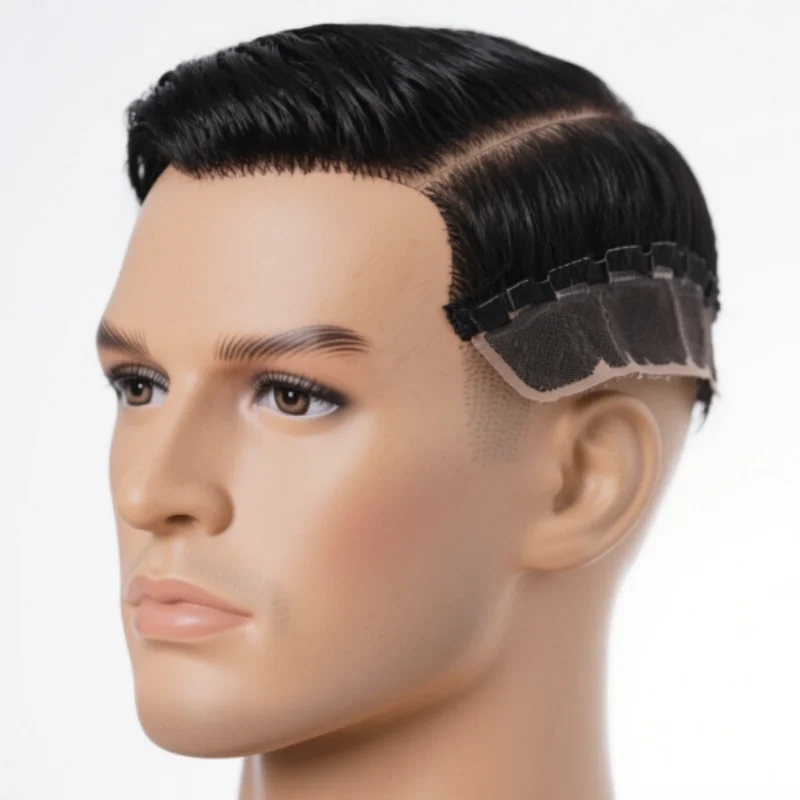
Frequently Asked Questions About Toupee Prices
How much should I pay for a good toupee?
A standard stock toupee may cost approximately $200–$700, while custom or professionally serviced systems can cost much more. The right budget depends on the base, hair material, coverage size, and included services.
Is a human hair toupee more expensive than a synthetic one?
Usually, yes. Human hair offers natural movement and greater styling flexibility, while synthetic systems can be more affordable and retain a predetermined style. Exact prices depend on hair quality and construction.
What is the cheapest type of toupee?
Basic stock systems and smaller partial hairpieces are usually among the least expensive options. However, compare replacement frequency and maintenance costs before deciding that the lowest initial price offers the best value.
Is a custom toupee worth the extra cost?
A custom toupee may be worth the investment when standard base sizes, density, color, texture, or hairline designs do not fit the user’s requirements. Customization is also useful for brands developing a distinct product specification.
Which toupee base is the most durable?
Mono and some thicker PU constructions are often considered when durability is a priority. However, the actual lifespan depends on material thickness, ventilation, attachment, cleaning, and everyday handling.
How long does a human hair toupee last?
There is no universal lifespan. ALOVEHAIR’s men’s hair system guidance gives a broad typical range of approximately 2–6 months, while some supplier products may last for shorter or longer periods. Base construction and maintenance make a significant difference.
Does the price include installation?
Not always. Online product prices usually refer to the unit itself. Professional fitting, blending, cutting, adhesives, and maintenance may be charged separately.
Can I order a toupee directly from a manufacturer?
Yes. Manufacturers can supply stock and customized systems to salons, distributors, hair replacement businesses, and private-label brands. Buyers should confirm product specifications, minimum order quantities, samples, lead times, and shipping costs.
Does ALOVEHAIR offer wholesale toupees?
ALOVEHAIR offers men’s hair systems for professional and wholesale buyers. Product options include Swiss lace, Mono, and PU constructions. Wholesale pricing depends on the required specifications and order quantity.
Can I customize a toupee with my own brand?
ALOVEHAIR supports OEM and ODM discussions for business customers. Buyers can discuss product configurations, custom specifications, and private-label requirements with the team.
Request a Toupee Quote from ALOVEHAIR
Looking for a supplier of men’s toupees for your hair replacement business, barbershop, salon, distribution company, or private-label brand?
ALOVEHAIR can help you compare Swiss lace, Mono, and PU systems according to your target market and product requirements.
For a more accurate quotation, please include:
- Preferred base material and thickness.
- Standard or custom base size.
- Hair material and length.
- Hair density and color.
- Hair texture and hairline design.
- Estimated quantity.
- Sample or bulk order requirements.
- Private-label packaging details.
- Destination country.
Contact ALOVEHAIR
Website: https://alovehair.com/
Email: info@alovehair.com
WhatsApp: +86-15092106628
Location: Qingdao, China
Contact ALOVEHAIR for Men’s Toupee Samples and Wholesale Pricing
Choose the right base, confirm the specifications, and build a hair system collection that matches your customers’ expectations and your business budget.
Alove Hair is a professional Chinese manufacturer of premium 100% Remy human hair extensions, wigs, and hair systems. Established in 2014, the company specializes in supplying global salons and distributors with high-quality, cuticle-intact hair products and offers comprehensive OEM/ODM private label services.