
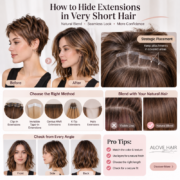
How to Hide Extensions in Very Short Hair for a Natural Look
Adding length and volume to very short hair can be exciting, but making hair extensions look natural is not always easy. When your natural hair is only a few inches long, visible clips, bulky attachment points, uneven ends, and obvious length differences can quickly give away the secret.
So, how do you hide extensions in very short hair without making your hairstyle look unnatural?
The key is to do more than conceal the attachment points. You need to choose an extension method that suits your hair length, create enough coverage around the attachment areas, match the color and texture, and blend the final shape with your natural haircut.
Whether you have a pixie cut, a short bob, or a layered crop, this guide explains how to hide hair extensions, avoid common blending mistakes, and achieve a more seamless finish.
Can You Hide Extensions in Very Short Hair?
Yes, you can hide extensions in some very short hairstyles, but the results depend on your natural hair length, density, haircut, and the type of extensions you choose.
Short hair creates two main challenges:
- Attachment visibility: There may not be enough natural hair to cover clips, tapes, beads, or weft edges.
- Length separation: Your natural hair may form a short, blunt layer above the longer extensions, creating an obvious line.
A short bob with enough hair around the back and sides is generally easier to blend than a close-cropped pixie cut.
There is no universal minimum hair length for every extension method. As a practical starting point, around 3–4 inches of healthy hair may make certain methods easier to work with, but this is not a guarantee. Hair density, growth direction, and the placement of the attachment points matter just as much.
If your hair is extremely short, especially around the crown, temples, or nape, a stylist should assess whether there is enough coverage before recommending an installation.
9 Expert Tips on How to Hide Extensions in Very Short Hair
1. Choose an Extension Length That Matches Your Starting Haircut
One of the biggest mistakes people make is choosing extensions that are dramatically longer than their natural hair.
For example, adding 24-inch extensions to a very short bob can create an obvious contrast between the short upper layers and the long, heavy ends.
Instead, consider a more gradual transformation.
If you have a chin-length bob, a moderate increase in length may create a more believable result than immediately choosing waist-length extensions.
Think about the final silhouette rather than simply selecting the longest available option.
Your extensions should create a balanced shape from the crown to the ends, without looking like a separate layer underneath your natural hair.
2. Place Extensions Where Your Natural Hair Can Actually Cover Them
Strategic placement is essential when working with very short hair.
Unlike long hair, which usually provides plenty of coverage, short hairstyles have limited areas where attachment points can be concealed.
Before installing extensions, examine your hair from the back, sides, and crown.
Pay special attention to:
- The nape, where short hairs may not cover lower attachment points.
- The area behind the ears, where side sections can reveal clips or bonds.
- The crown, where thin or short layers may expose upper attachments.
- The parting, where attachments can become visible when your hair moves.
For clip-in extensions, avoid placing clips directly beneath short, exposed layers. Leave enough natural hair above each attachment to cover it comfortably.
Professional methods such as tape-ins, K-tips, and wefts also require careful placement. A flatter attachment does not automatically mean it will be invisible if the surrounding hair is too short or sparse.
3. Use Smaller, More Discreet Extension Sections
A full set of wide, bulky extensions is not always the best choice for short hair.
Smaller sections give you more flexibility when working around uneven layers, shorter side pieces, and limited coverage areas.
For clip-ins, narrower pieces can be easier to position without creating visible gaps or excessive bulk.
For professionally installed extensions, a stylist can select an appropriate attachment size and distribute the added hair according to your natural density.
The goal is to create balanced coverage, not to attach as much hair as possible.
Too much extension weight can flatten the natural hair, increase tension, and make attachment points more difficult to conceal.
4. Match the Extension Color to Your Natural Hair Ends
Color matching becomes especially important when your natural hair is short.
With longer hair, different shades can sometimes blend through several inches of natural movement. With short hair, the transition area is much smaller, making even subtle color differences easier to notice.
When choosing extensions, compare the shade against the mid-lengths and ends of your natural hair rather than focusing only on your roots.
Consider these details:
- Warm versus cool undertones.
- Natural highlights and lowlights.
- Root shadow and balayage patterns.
- Color differences between indoor and natural lighting.
If your hair has multiple tones, a dimensional shade may create a softer transition than a completely solid color.
When possible, check the color in daylight before committing to a full set.
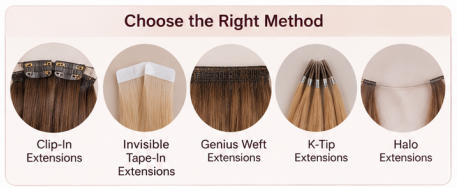
Choose the Right Method
5. Blend the Natural Hair and Extensions Through Strategic Layering
This is one of the most important steps for achieving a natural finish.
Even when the extension attachments are completely hidden, short natural hair can still form a visible horizontal line above the added length.
This is particularly common with blunt bobs and short layered haircuts.
A professional blending cut can help connect the two lengths.
Rather than leaving your natural hair as one solid layer, a stylist can carefully shape the extensions to complement your existing haircut.
For example:
- Soft layers can reduce the appearance of a blunt transition.
- Face-framing pieces can connect the front sections with the added length.
- Carefully shaped ends can prevent extensions from looking too heavy.
- Balanced side layers can make the back and front appear more consistent.
Always have extensions customized by someone familiar with extension cutting techniques. Avoid aggressively thinning your natural hair just to make the extensions blend.
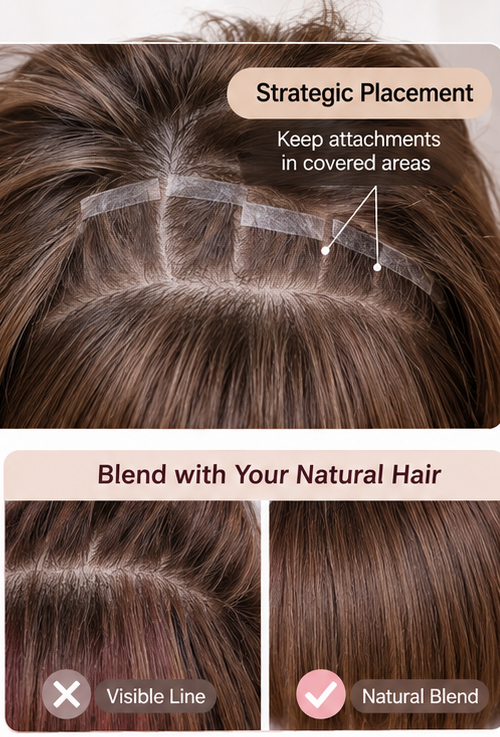
Blend with Your Natural Hair
6. Choose a Texture That Works With Your Natural Hair
Straight extensions against naturally wavy or curly short hair can make the transition particularly obvious.
Instead of trying to force two different textures together, choose extensions that complement your natural hair.
If your hair has a natural wave, consider a matching body-wave texture. If it is straight, a straight extension texture may be easier to integrate.
You can also create soft waves after installation to connect the natural hair and extensions visually.
The most important rule is to style both sections together rather than treating them as two separate hairstyles.
Use an appropriate heat protectant when heat styling human hair extensions, and always follow the manufacturer’s care instructions.
7. Use Face-Framing Layers to Make the Blend Look More Natural
One overlooked detail in short-hair extension styling is the front profile.
Extensions may look convincing from the back but appear disconnected around the cheeks, ears, or jawline.
Face-framing layers help create a gradual transition between your natural haircut and the added length.
If you have a short bob, leaving a few natural pieces around the face can make the hairstyle look more balanced.
For layered pixie cuts, the stylist should pay particular attention to the side sections. These areas often have less coverage than the back of the head.
The goal is to make the added hair look like part of your original hairstyle, not an isolated section attached underneath it.
8. Check Your Extensions From Every Angle
A hairstyle that looks perfect in front of a mirror may reveal attachment points when you move.
After installation, check your hair from several angles:
- Turn your head from side to side.
- Gently move your hair behind your ears.
- Look down and then lift your head.
- Check the back of your head with a handheld mirror.
- Move around in natural light to identify visible seams.
Pay attention to whether your natural hair separates and exposes the attachment points.
If a clip, tape tab, or bond becomes visible, do not simply add more hairspray or accessories. The placement or extension method may need to be reconsidered.
A natural-looking result should remain convincing during ordinary movement, not just in one carefully arranged photograph.
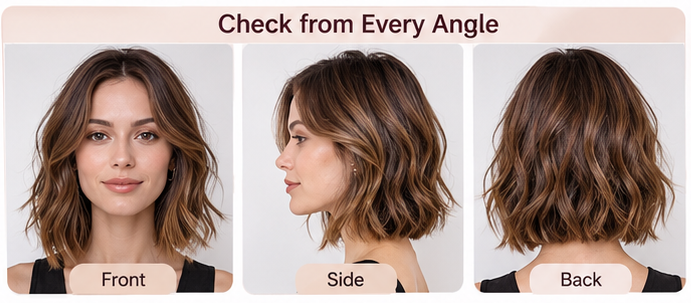
Check from Every Angle
9. Choose a Different Solution If Your Hair Is Too Short for Concealment
Sometimes, the best way to achieve a natural result is to recognize the limitations of your current haircut.
If you have a very close pixie cut with insufficient coverage around the attachment areas, traditional clip-in extensions may not be suitable.
Trying to force them into place can lead to visible clips, uncomfortable tension, or unnecessary stress on fragile hair.
Depending on your hair condition and styling goals, alternatives may include:
- Waiting for additional natural growth before installing extensions.
- Using a professionally fitted hair topper for targeted coverage.
- Considering a half wig or another suitable hairpiece.
- Consulting an experienced extension stylist about discreet professional methods.
Remember that a suitable method should be secure, comfortable, and appropriate for your natural hair. No extension system can guarantee an invisible result on every haircut.
What Are the Best Hair Extensions for Very Short Hair?
Choosing the right extension type is just as important as learning how to hide it.
Different attachment methods offer different levels of flexibility, coverage, and maintenance.
Clip-In Hair Extensions
Clip-in extensions are removable pieces that attach to your natural hair using small clips.
They are convenient for temporary transformations and special occasions because you can put them in and remove them without committing to a long-term installation.
However, very short hair can make clips difficult to conceal.
Best for: Short bobs and layered cuts with enough natural hair to cover the clips.
Considerations: Choose lightweight sections and avoid placing clips where the natural hair cannot cover them.
Invisible Tape-In Hair Extensions
Invisible tape-in extensions feature thin adhesive attachment areas designed to create a flatter appearance.
Their discreet construction can be useful when a stylist needs a low-profile attachment method.
However, tape-ins still require sufficient natural hair for secure placement and coverage. Extremely short or sparse hair may not be suitable.
Best for: Suitable short hairstyles with adequate coverage and professional installation.
Considerations: Placement, section size, maintenance, and proper removal are essential.
Explore invisible tape-in hair extensions to learn more about this low-profile option.
Genius Weft Hair Extensions
Genius Wefts are designed with a slim, flexible weft structure.
For suitable hair types, their relatively flat construction can help reduce bulky attachment lines when professionally installed.
They also offer stylists flexibility when customizing the weft layout.
Best for: Clients whose hair density and foundation can support a professional weft installation.
Considerations: The installation still needs to be planned around the natural haircut, available coverage, and scalp comfort.
Discover Genius Weft hair extensions for more information about their construction.
K-Tip Hair Extensions
K-tip extensions use individual keratin bonds to attach extension strands to small sections of natural hair.
Because they are installed strand by strand, they offer greater flexibility in distributing added hair around different areas.
However, this does not mean they are automatically suitable for extremely short hair. Each section must have enough healthy natural hair to support the bond.
Best for: Suitable candidates looking for customized, professional extension placement.
Considerations: Installation and removal should be handled by an experienced professional.
Halo Hair Extensions
Halo extensions use a transparent wire or similar support system to hold the extension piece around the head.
They avoid the need for individual clip or bond attachment points, which can make them an appealing alternative for some users.
However, very short hair may not provide enough coverage to conceal the wire or blend the added length.
Best for: Suitable short bobs and longer short hairstyles with enough coverage over the wire.
Considerations: Fit, hair length, and the transition between natural and extension hair all matter.
You can also explore our guide to halo hair extensions to understand their application.
Common Mistakes That Make Short Hair Extensions Look Obvious
Even good-quality extensions can look unnatural when the installation or styling is not appropriate.
Here are some common mistakes to avoid.
Choosing extensions that are too long
A dramatic difference between natural and extension length can create an unbalanced appearance. Start with a realistic transformation.
Installing extensions too close to the hairline
Attachments near exposed areas can become visible when you move or change your parting.
Using too much extension hair
More hair does not always mean a better result. Excessive density can create bulk and put unnecessary tension on natural strands.
Ignoring the nape and side sections
The back of the head is not the only area that matters. Short hairs around the neck and ears can expose attachment points.
Relying entirely on curls to hide poor placement
Waves can help soften the transition, but they cannot fix incorrectly placed attachments or an unsuitable installation method.
Skipping professional maintenance
As natural hair grows, attachment points move away from the scalp. Regular maintenance helps maintain a comfortable and natural-looking result.
For more information, read our hair extension care and maintenance guide.
How to Choose Extensions Based on Your Short Haircut
Not every short hairstyle requires the same approach.
Use the following comparison as a starting point before choosing an extension method.
| Natural Haircut | Main Challenge | Recommended Approach |
|---|---|---|
| Close Pixie Cut | Insufficient coverage | Consider a topper, half wig, or waiting for growth |
| Grown-Out Pixie | Uneven layers and limited side coverage | Professional assessment and customized placement |
| Chin-Length Bob | Blunt perimeter and visible length transition | Strategic layering and balanced extension density |
| Layered Short Hair | Uneven lengths and exposed attachment areas | Smaller sections and customized placement |
| Shoulder-Length Lob | Visible transition between natural ends and extensions | Color matching and professional blending |
The most important consideration is not how much length you want to add, but whether your natural hair can support and conceal the chosen extension method.
Frequently Asked Questions
How short is too short for hair extensions?
There is no single minimum length that applies to every extension type. Some methods may work with approximately 3–4 inches of suitable natural hair, while others require more coverage.
A close-cropped pixie cut may not have enough hair to conceal traditional clips or support certain professional attachment methods. A stylist should assess your hair before installation.
Can you hide clip-in extensions in a pixie cut?
It depends on how grown out your pixie cut is.
If you have enough length around the back and sides, smaller clip-in pieces may work in selected areas. However, a very short pixie cut may expose the clips or make them difficult to secure.
Do not force clips into sections that cannot comfortably support them.
How do you hide hair extension clips in short hair?
Choose a placement area with enough natural hair above the clip. Keep clips away from exposed hairlines, short nape sections, and thin crown areas.
Use lightweight pieces and check the finished style from multiple angles. If your natural hair cannot cover the clip, a different method may be more suitable.
Are tape-in extensions good for very short hair?
They can work for some short hairstyles, but suitability depends on natural hair length, density, and the amount of coverage available.
Invisible tape-in designs can provide a flatter attachment profile, but they cannot compensate for insufficient natural hair. Professional assessment is recommended.
How do you blend extensions with a blunt bob?
A blunt bob often needs additional attention around the bottom perimeter.
Choose a realistic extension length, balance the density through the back and sides, and consider professional layering to soften the horizontal line between your natural hair and the extensions.
Soft waves can also help create a more gradual visual transition.
Do human hair extensions look more natural in short hair?
Human hair extensions offer styling flexibility and can be customized to match natural hair texture and movement.
However, the material alone does not guarantee a natural result. Color matching, attachment placement, weight distribution, and professional blending are equally important.
How can I make my extensions look natural without damaging my hair?
Choose an extension method that suits your natural hair density, avoid excessive weight and tension, and follow the correct installation and removal procedures.
Do not sleep in removable clip-in extensions, pull on attachment points, or attempt to remove professional bonds yourself. If you experience pain, persistent scalp irritation, or unusual breakage, consult a qualified stylist.
Final Thoughts
Learning how to hide extensions in very short hair is about much more than covering clips or attachment points. The real secret is creating a hairstyle in which your natural hair and extensions work together.
Start by assessing your natural hair length and coverage, choose an appropriate extension method, match the color and texture, and invest in professional blending when necessary.
For some short bobs and grown-out pixie cuts, extensions can create beautiful additional length and volume. For extremely short hairstyles, waiting for more growth or choosing an alternative hairpiece may deliver a better result.
At ALOVE HAIR, we believe that the right extension solution starts with understanding your natural hair and choosing quality hair that complements your desired look. Explore our collection of professional human hair extensions or contact ALOVE HAIR to discover different extension constructions and possibilities for your next hairstyle.

Alove Hair is a professional Chinese manufacturer of premium 100% Remy human hair extensions, wigs, and hair systems. Established in 2014, the company specializes in supplying global salons and distributors with high-quality, cuticle-intact hair products and offers comprehensive OEM/ODM private label services.


