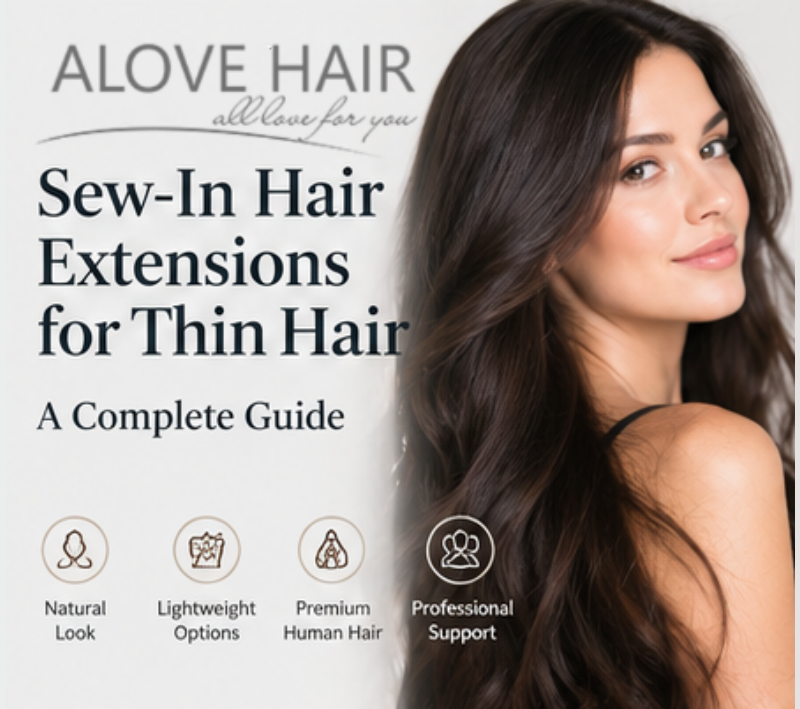
Sew-In Hair Extensions for Thin Hair: A Complete Guide
Thin or fine hair can make it challenging to achieve fuller, longer hairstyles without visible attachment points or excessive weight. If you are considering sew-in hair extensions for thin hair, choosing the right weft, installation method, and amount of added hair is essential for achieving a natural-looking result.
The good news is that some people with fine or low-density hair can wear sew-in extensions successfully when their natural hair is suitable for installation and a professional stylist selects an appropriate method. However, traditional sew-in techniques are not right for everyone. Hair strength, scalp condition, existing hair density, and the weight of the extensions all need to be considered.
In this guide, we will explain how sew-in extensions work on thin hair, compare popular weft types, discuss potential risks, and share practical tips for choosing high-quality human hair extensions that blend naturally with your own hair.
Can You Get Sew-In Hair Extensions with Thin Hair?
Yes, some people with thin hair can wear sew-in hair extensions, but suitability depends on the condition and density of their natural hair, not simply on how thin it looks.
Before choosing an installation method, it is important to understand the difference between fine hair and thin hair.
- Fine hair refers to the diameter of individual hair strands. Fine strands may be more delicate and less able to tolerate excessive pulling.
- Thin hair generally refers to lower overall hair density, meaning fewer strands cover the scalp.
- Fine and thin hair describes hair that has both a small strand diameter and relatively low density, which may require additional care when considering extensions.
Someone with fine strands but relatively high hair density may have more installation options than someone experiencing significant thinning around the crown, temples, or hairline.
When Can Sew-In Extensions Work for Thin Hair?
Sew-in hair extensions may be an option when:
- The natural hair is strong enough to support the proposed installation method.
- There is sufficient healthy hair to create a stable, comfortable foundation.
- The stylist can distribute the added weight appropriately.
- The wefts can be concealed without placing excessive tension on fragile areas.
- The client is willing to follow suitable maintenance and removal instructions.
A professional stylist should assess the hair and scalp before recommending a sew-in method. There is no single weft weight or number of extensions that is suitable for every person with thin hair.
When Should You Avoid Sew-In Extensions?
Sew-in extensions may not be appropriate when the natural hair is severely weakened, actively breaking, or experiencing unexplained hair loss. They may also be unsuitable if the installation would place tension on already fragile areas.
If you experience scalp pain, persistent tenderness, increased breakage, or signs of hair loss around the hairline, do not try to solve the problem by adding more hair or tightening the installation. Seek professional advice, and consult a dermatologist if hair loss or scalp symptoms persist.
The goal should always be to achieve the desired appearance without compromising the health of the natural hair.
Are Sew-In Hair Extensions Safe for Thin Hair?
Sew-in hair extensions can be worn successfully by some people with thin hair, but they are not automatically safe for every hair type. The installation technique, extension weight, tension, and maintenance routine all influence the result.
Traditional sew-in extensions are often attached to a braided foundation. If the foundation is too tight or the extensions are too heavy for the supporting hair, repeated tension can contribute to breakage and traction alopecia, a form of hair loss associated with prolonged pulling on the hair.
What Are the Main Risks?
Excessive weight: Adding too much hair can increase the load on the natural strands supporting the installation.
Tight braiding or sewing: An overly tight foundation can cause discomfort and unnecessary tension on the scalp and hair follicles.
Visible attachment points: Thin hair may not provide enough coverage to conceal thick wefts or poorly positioned attachment points.
Difficult removal: Removing extensions incorrectly can pull on the natural hair and contribute to breakage.
Inadequate maintenance: Neglecting the installation or waiting too long to address discomfort can allow problems to worsen.
How Can You Reduce the Risk?
Start with a professional consultation and choose an installation method that matches the condition of your natural hair. Ask your stylist to consider the weight and construction of the weft, the distribution of attachment points, and whether the finished style will be adequately concealed.
An installation should not feel painful or excessively tight. If discomfort, persistent pulling, or unusual breakage develops, contact your stylist promptly and have the installation assessed. Do not wait for your next scheduled maintenance appointment if you suspect damage.
Choosing premium human hair can improve the appearance and manageability of extensions, but hair quality alone cannot prevent damage caused by excessive tension or an unsuitable installation method.
Which Sew-In Hair Extensions Are Best for Thin Hair?
The best sew-in hair extensions for thin hair are those that suit the client’s natural hair density, strength, styling preferences, and desired level of fullness.
Different weft constructions offer different advantages. However, terms such as Genius Weft, Hand-Tied Weft, and Micro Weft do not guarantee a particular weight, thickness, or level of comfort. Specifications can vary between manufacturers, so it is important to compare actual product details.
1. Hand-Tied Weft Extensions
Hand-tied wefts are made by tying hair strands into a relatively slim weft structure. They are often selected for their low-profile construction and ability to create a natural-looking finish when installed appropriately.
Potential advantages:
- A relatively slim attachment profile can help with concealment.
- The hair can blend naturally when the color, texture, and placement are well matched.
- They offer professional stylists flexibility when designing a customized installation.
What to consider:
Hand-tied wefts can require careful handling and installation. Some constructions are not designed to be cut freely because cutting may compromise the integrity of the weft. The specific manufacturer’s instructions should always be followed.
For clients with fine hair, a stylist should assess whether the weft and installation method provide sufficient support without creating excessive tension.
2. Genius Weft Extensions
Genius Weft extensions are another option for professional stylists who want to create customized weft installations. Their suitability for thin hair depends on the actual construction, thickness, weight, and application requirements of the product.
Potential advantages:
- They provide another weft option for customized professional installations.
- Depending on the design, the weft may offer a relatively low-profile attachment.
- Different lengths, shades, and textures can help stylists match individual client needs.
What to consider:
Not every Genius Weft product has identical specifications. Before choosing one for thin hair, check the weft dimensions, weight per piece, cutting requirements, and recommended installation technique.
A low-profile weft may help reduce visible bulk, but it does not automatically mean that the complete installation will be lightweight or suitable for fragile hair.
At Qingdao ALOVE HAIR PRODUCTS Co., Ltd., Genius Weft is a flagship product within a broader range of human hair extension solutions. Professional buyers can evaluate the available specifications and color options to determine whether a particular product suits their salon’s requirements.
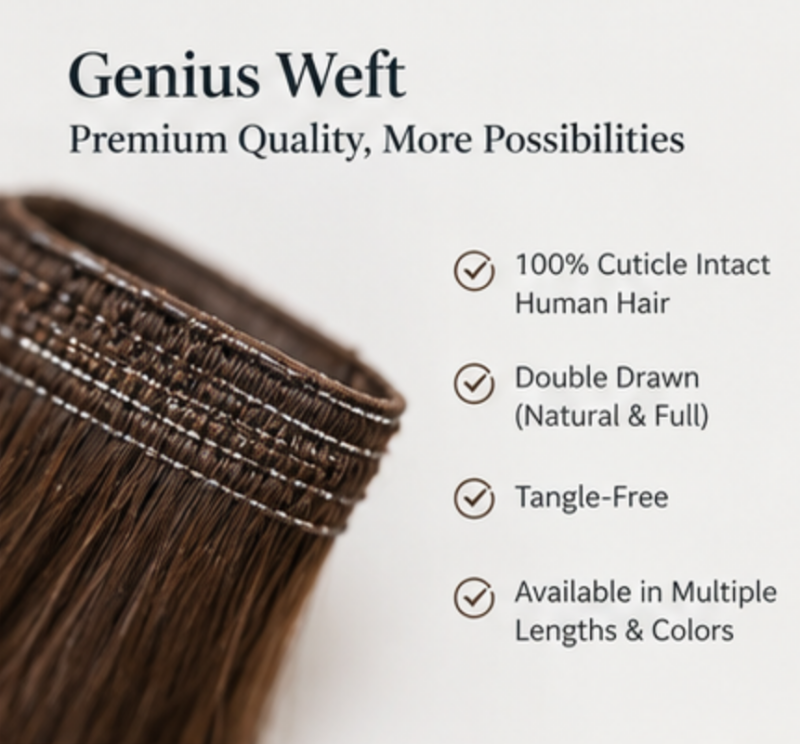
Genius wefts are a great option for those with thin hair.
3. Micro Weft Extensions
Micro Weft extensions are designed around a weft format that can be used in professional extension installations. Their suitability depends on the specific construction and how the stylist incorporates them into the natural hair.
Potential advantages:
- They provide an additional option for customized weft placement.
- Depending on the product, their construction may help create a relatively discreet attachment.
- They can be considered when comparing different weft formats for professional salon services.
What to consider:
The word “micro” does not necessarily mean that a product is the lightest option. Check the actual weight, attachment requirements, and compatibility with the client’s natural hair before making a decision.
4. Flat Weft Extensions
Flat wefts are designed with a relatively flat attachment structure. Depending on their construction, they may help reduce the appearance of bulky attachment points.
Potential advantages:
- A flatter profile may make concealment easier in suitable installations.
- They offer another construction to consider when comparing weft options.
- They can be selected according to the client’s desired hairstyle and the stylist’s installation method.
What to consider:
A flat weft can still be too heavy or too visible for some clients with very thin hair. The stylist should evaluate the complete installation rather than choosing a product based on its name alone.
Quick Comparison of Weft Types
| Weft type | Potential benefit | Important consideration |
|---|---|---|
| Hand-Tied Weft | Slim construction in many designs | Check cutting limitations and installation requirements |
| Genius Weft | Flexible professional weft option | Verify actual dimensions and weight |
| Micro Weft | Additional option for customized placement | The name does not guarantee lower weight |
| Flat Weft | Relatively flat attachment profile in suitable designs | Flatness alone does not determine suitability |
There is no universal winner for thin hair. The right choice depends on the actual product specifications, the client’s natural hair, and the stylist’s ability to create a secure installation without excessive tension.
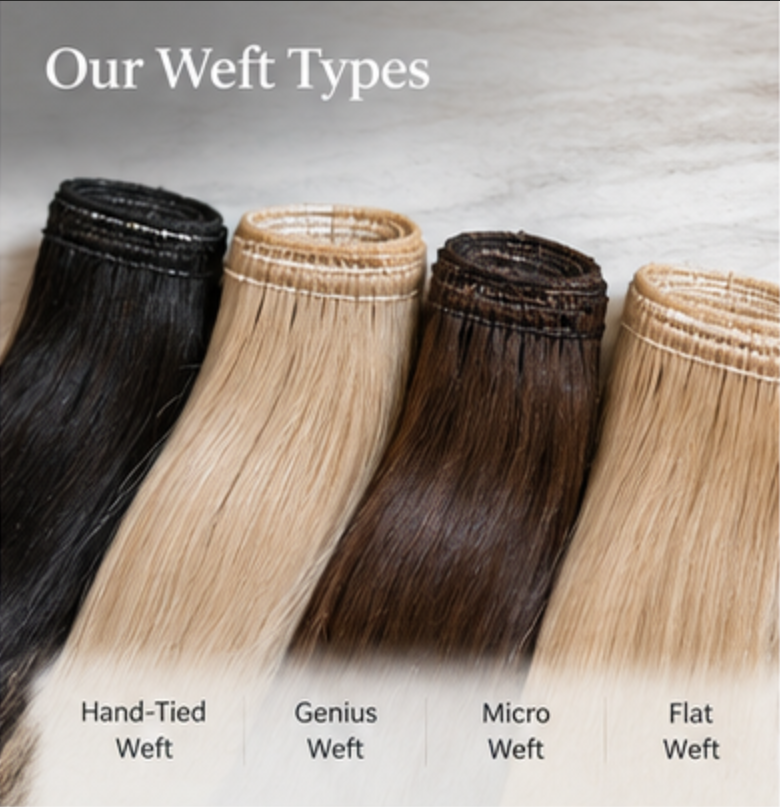
Choosing the Best sew-in Hair Extensions
Sew-In vs. Tape-In, Clip-In, and Halo Extensions for Thin Hair
Sew-in extensions are not the only option for people who want fuller-looking hair. Comparing different installation methods can help you choose an approach that suits your hair condition, lifestyle, and styling goals.
| Extension type | Main characteristics | Considerations for thin hair |
|---|---|---|
| Sew-in wefts | Attached using a professional sewing method, often with a braided foundation | Requires sufficient supporting hair and careful tension management |
| Tape-in extensions | Hair sections are attached using adhesive tape tabs | Placement and tab size matter; adhesive and removal can affect fragile strands |
| Clip-in extensions | Removable pieces secured with clips | Useful for occasional styling, but heavy clips or repeated pulling may cause problems |
| Halo extensions | A hairpiece supported by a transparent wire or similar design | Avoids sewn attachment points, but fit, weight, and friction still matter |
Which Option Should You Choose?
For a professional, longer-term style: Sew-in or other professionally installed methods may be considered if the natural hair can support them and the stylist determines that the installation is appropriate.
For occasional volume: Clip-in or halo extensions may be worth considering because they can be removed when not needed. However, their weight and attachment pressure still require attention.
For fragile or actively thinning hair: Avoid assuming that any extension method is automatically safe. A temporary option may reduce the need for a fixed installation, but the safest choice depends on the condition and cause of the thinning.
The best solution is not necessarily the method that adds the most hair. It is the one that provides the desired appearance while minimizing unnecessary stress on the natural hair.
How to Choose the Right Weft for Thin Hair
Selecting the right human hair weft involves more than choosing a product labeled “lightweight” or “for fine hair.” Several practical factors influence how natural the result looks and how comfortably the extensions can be worn.
1. Consider the Weight of the Weft
The total weight of the installed hair matters more than a product label alone. Ask about the weight of each weft and how much hair the stylist intends to install.
Adding more hair does not always produce a better result. For someone with low-density hair, a smaller amount of well-matched hair may create a more natural appearance than a very full installation.
The appropriate amount should be determined individually rather than based on a universal gram recommendation.
2. Match the Length to Your Natural Hair
Very long extensions can create a noticeable contrast between thin natural ends and fuller extension lengths.
Choosing a more moderate length may help the finished style blend naturally and avoid adding unnecessary weight. The stylist can also evaluate whether the natural hair needs shaping to create a smoother transition.
3. Choose the Right Color and Texture
Color matching is essential for discreet extensions. A close match to the natural hair, including root color, mid-length tones, and ends, can make the transition less noticeable.
For highlighted, balayage, or multi-tonal hair, a carefully selected blend of shades may look more natural than a single flat color.
Texture matters too. Straight extensions may blend differently with naturally wavy or curly hair. Choosing a compatible texture can reduce the amount of heat styling required.
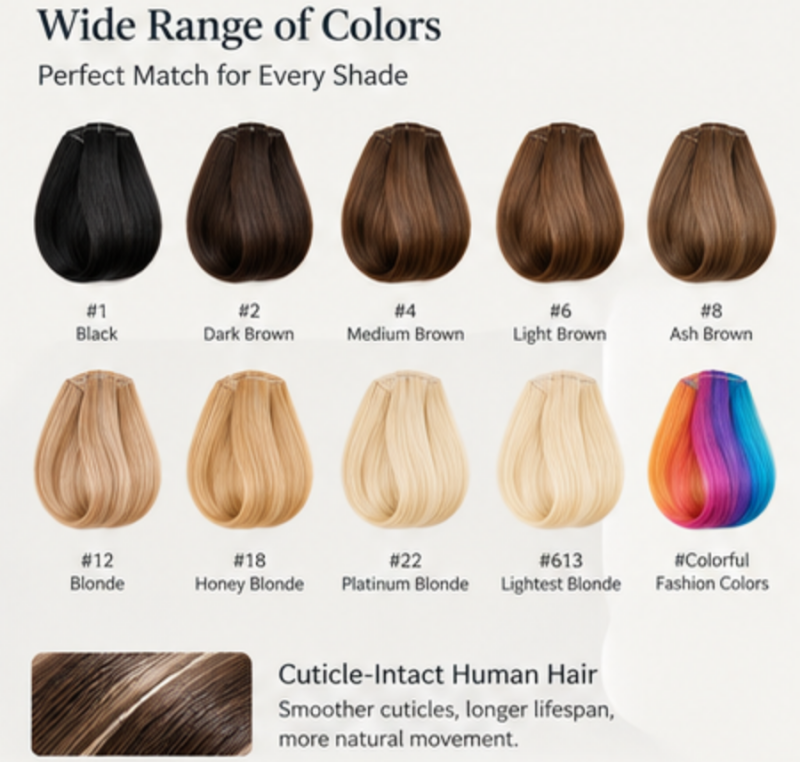
Choosing the right color is crucial for hair extensions.
4. Check the Weft Construction and Attachment Profile
A slim weft may be easier to conceal, particularly around areas where the natural hair provides limited coverage. However, the attachment profile is only one part of the decision.
Ask your stylist or supplier about:
- Weft thickness and width.
- Weight per weft or per unit of hair.
- Whether the weft can be cut.
- The recommended installation method.
- The amount of natural hair needed for support.
- The manufacturer’s maintenance and removal instructions.
These details allow you to compare products more meaningfully than relying on names or general marketing claims.
5. Choose Quality Human Hair
When purchasing human hair extensions, look for clear information about hair sourcing, processing, texture, and product consistency.
Cuticle-intact human hair is designed to retain the hair’s cuticle structure. This is a relevant consideration when evaluating hair quality and processing methods. Double-drawn hair is generally selected for a fuller appearance through the lengths and ends.
However, these characteristics do not determine whether an installation is suitable for thin hair. A premium hair bundle can still be too heavy for a particular client, and careful installation remains essential.
How to Install and Maintain Sew-In Extensions on Thin Hair
Professional installation and consistent maintenance are essential for preserving the appearance of extensions and reducing avoidable stress on the natural hair.
Before Installation
A stylist should assess the natural hair’s density, strength, condition, and any areas of active thinning. The planned hairstyle should be discussed before choosing the weft and installation method.
Important steps include:
- Selecting an appropriate extension weight.
- Planning attachment points that avoid unnecessary tension.
- Checking that the foundation is secure without being overly tight.
- Ensuring the wefts can be concealed with the client’s natural hair.
- Explaining maintenance, removal, and warning signs before installation.
If the natural hair cannot support the planned style, the stylist should recommend an alternative rather than forcing the installation.
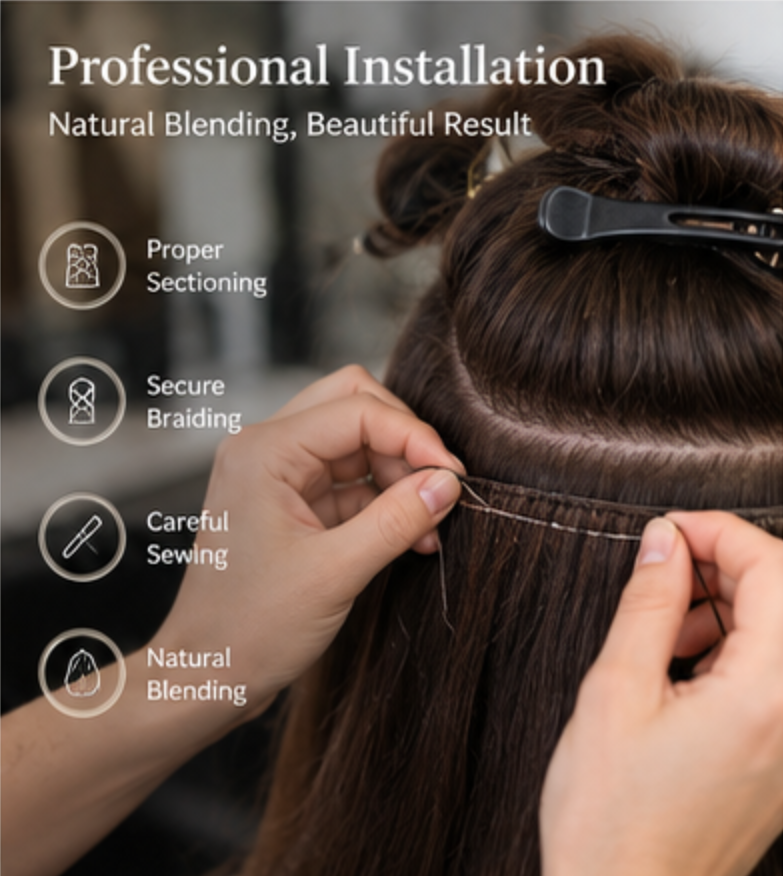
Proper installation yields better results.
During Daily Care
Gentle handling helps reduce tangling and unnecessary pulling.
- Brush carefully, supporting the hair near the roots when detangling.
- Avoid forceful brushing or pulling at the weft attachment points.
- Follow the stylist’s instructions for washing and drying.
- Use heat styling carefully and avoid repeatedly applying high heat to the same sections.
- Follow appropriate sleeping and styling practices recommended for the specific installation.
The correct routine may vary according to the weft construction, installation technique, hair texture, and products used.
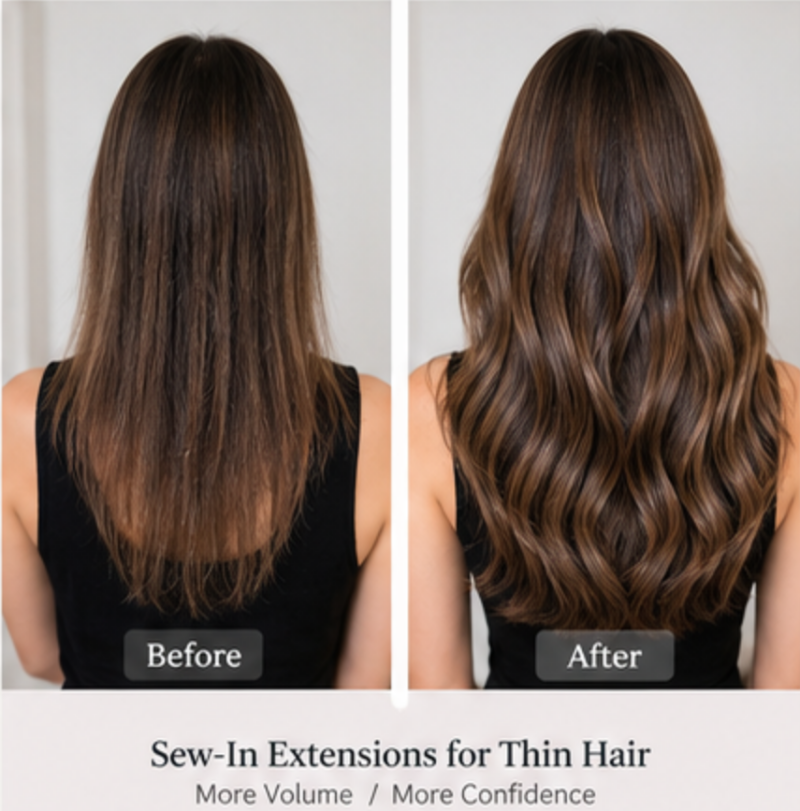
Before and after hair extensions.
When Should Sew-In Extensions Be Removed?
There is no single maintenance or removal schedule that is appropriate for every installation.
Follow the professional stylist’s recommended maintenance plan and arrange an assessment if the weft shifts, becomes uncomfortable, or starts placing tension on the natural hair.
Do not continue wearing extensions through persistent scalp pain, significant itching, unusual breakage, or increasing tension. Prompt assessment and appropriate removal may help prevent further stress.
If thinning or hair loss continues after the extensions are removed, consult a qualified healthcare professional to determine the cause.
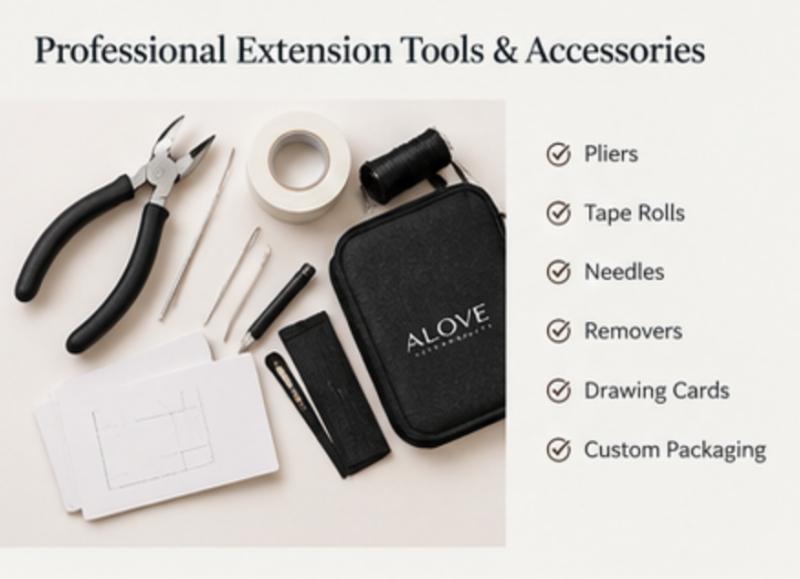
Use appropriate hair extension tools for both installation and removal.
Why Hair Quality Matters When Choosing Weft Extensions
Once you have determined that a weft installation is appropriate for your natural hair, the next step is choosing hair that meets your expectations for appearance, texture, and maintenance.
For salon owners, professional stylists, and wholesale buyers, product consistency is also important. The hair needs to match the salon’s service requirements and the preferences of its clients.
Cuticle-Intact Human Hair
Cuticle-intact human hair retains its cuticle structure and can be an important consideration when comparing processing methods and hair quality.
The condition of the hair, the direction and alignment of the cuticles, and the processing used can all influence how the finished product behaves. Buyers should request clear product information and evaluate samples when possible rather than relying on a label alone.
Double-Drawn Hair for Fuller-Looking Ends
Double-drawn hair is commonly chosen when a fuller appearance through the lengths and ends is desired.
For thin-haired clients, the objective should be balanced fullness rather than maximum density. The stylist should select a suitable amount of hair and blend it with the natural ends to avoid an abrupt or overly heavy finish.
Color Options for Natural Blending
A wide range of shades can help stylists match different natural hair colors and salon color services.
For clients with highlights, balayage, or customized shades, access to multiple colors can make it easier to create a blended result. Professional buyers should confirm shade availability, color consistency, and any relevant processing details with their supplier.
Why Choose ALOVE Hair Extensions?
Qingdao ALOVE HAIR PRODUCTS Co., Ltd. has been involved in the human hair industry since the 1980s, evolving from raw hair collection and supply into specialized manufacturing and international export.
The company supplies human hair extension products to salons, stylists, and trade customers in markets including the United States, the United Kingdom, Canada, Australia, and Europe.
ALOVE’s product range includes Genius Weft, Micro Weft, Flat Weft, Hand-Tied Weft, sew-in extensions, tape-in extensions, I-tip extensions, and colorful hair extensions.
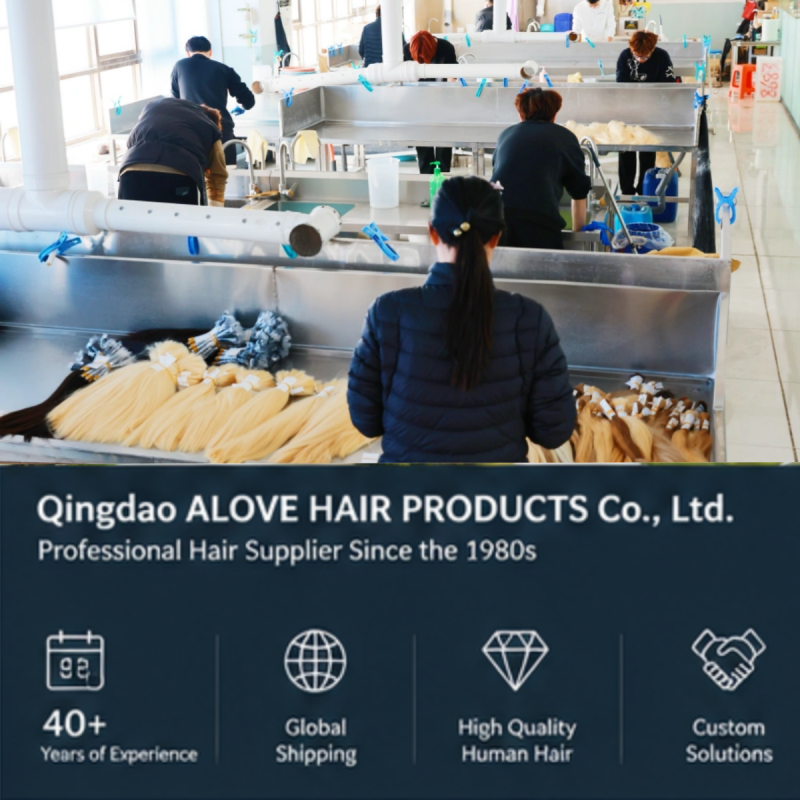
A Range of Weft Options
ALOVE’s product range gives professional buyers multiple weft formats to evaluate for different salon services and client requirements.
For clients with thin hair, the appropriate product should be selected according to the actual weft specifications, installation requirements, and the client’s natural hair condition.
Human Hair Quality and Color Processing
ALOVE focuses on cuticle-intact human hair and double-drawn options, with a particular emphasis on colored hair extensions.
The company also offers color customization options to support different salon preferences and market requirements. Buyers can discuss the available shades, specifications, and processing details when evaluating products for their businesses.
Wholesale Supply and Custom Solutions
With experience in international trade and a range of hair extension tools and accessories, ALOVE supports professional buyers looking for a supplier for their salon or wholesale business.
Depending on the product and order requirements, buyers can inquire about available specifications, color options, accessories, and custom packaging.
For salon owners, distributors, and professional hair extension businesses, working with a supplier that can explain product construction and provide clear specifications makes it easier to evaluate products for different applications.
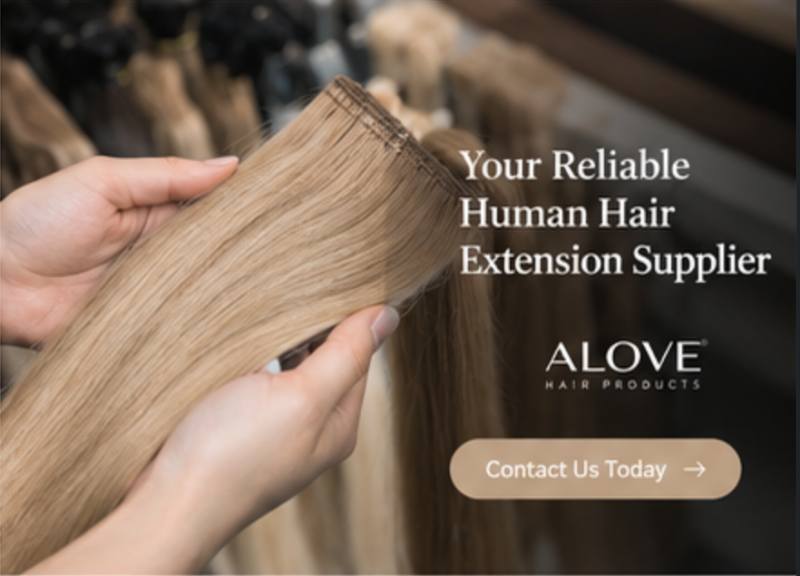
If you are sourcing human hair wefts for your business, contact ALOVE to discuss your requirements and explore the available product options.
Frequently Asked Questions
Can I get sew-in extensions if my hair is very thin?
Possibly, but very thin hair requires careful assessment. If there is insufficient healthy hair to support the installation or the scalp is experiencing active hair loss, a traditional sew-in method may not be appropriate. A professional stylist should assess your hair before recommending an installation.
Are hand-tied wefts better than traditional sew-ins for fine hair?
Not necessarily. Hand-tied wefts may offer a relatively slim attachment profile, but suitability depends on the product construction, installation technique, hair density, and total extension weight. A comparison of actual specifications is more useful than relying on the product name alone.
How do I hide sew-in extensions in thin hair?
Choose a weft and installation method that suit your natural hair density. Color and texture matching, appropriate placement, and a balanced amount of added hair can improve concealment. If the attachment points remain visible, ask your stylist to reassess the installation rather than adding more hair automatically.
Can sew-in extensions cause hair breakage?
Yes. Excessive weight, tight braiding, repeated pulling, and improper removal can contribute to breakage. Persistent tension may also contribute to traction alopecia. Professional installation, appropriate maintenance, and prompt attention to discomfort are important.
What type of human hair weft looks most natural?
No single weft type looks most natural on everyone. The result depends on the weft construction, hair quality, color, texture, length, placement, and the amount of hair added. The most suitable option is the one that blends with the client’s natural hair while meeting the installation requirements.
Are Genius Weft extensions suitable for thin hair?
They may be suitable for some clients, depending on the actual product specifications and the installation method. Before choosing a Genius Weft for thin hair, evaluate the weft’s weight, dimensions, attachment requirements, and the condition of the natural hair. A professional stylist should make the final recommendation.
What should salons consider when sourcing human hair wefts?
Professional buyers should consider hair quality, weft construction, product consistency, available lengths and shades, processing information, supplier communication, and the suitability of the product for their target market. Requesting samples and confirming specifications before placing a larger order can help support more informed purchasing decisions.
Final Thoughts
Sew-in hair extensions for thin hair can be an option for some people, but success depends on more than choosing a particular weft name. The condition of the natural hair, the weight of the extensions, the installation method, and ongoing maintenance all play important roles.
Hand-Tied Weft, Genius Weft, Micro Weft, and Flat Weft products each offer different construction options to evaluate. Rather than assuming that one type is universally best, compare the actual specifications and consult a professional stylist who can assess your individual needs.
For salon owners, stylists, and wholesale buyers, choosing a reliable human hair supplier is another important part of the process. Qingdao ALOVE HAIR PRODUCTS Co., Ltd. offers a range of human hair extension products, color options, and professional supply solutions for businesses serving different markets.
Looking for a human hair weft supplier for your salon or wholesale business? Contact ALOVE to discuss Genius Weft, Hand-Tied Weft, Micro Weft, custom color options, and your product requirements.
Alove Hair is a professional Chinese manufacturer of premium 100% Remy human hair extensions, wigs, and hair systems. Established in 2014, the company specializes in supplying global salons and distributors with high-quality, cuticle-intact hair products and offers comprehensive OEM/ODM private label services.


