
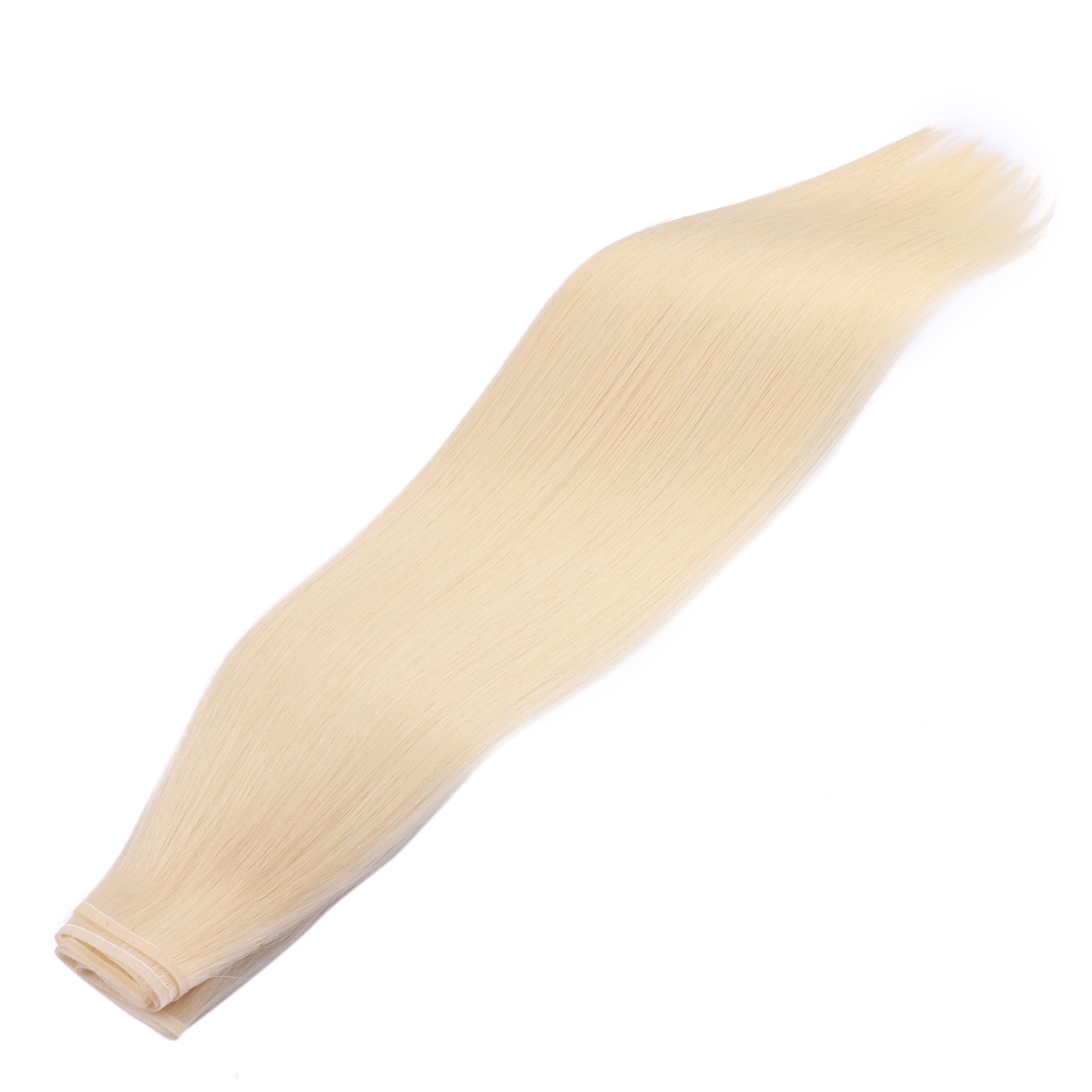
Description
The Ultimate Guide to Flat Weft Hair Extensions: Engineering, Advantages, and Comparisons
The hair extension industry has seen immense evolution over the last few decades. From early bonded strands to chunky machine tracks, the goal has always remained the same: to achieve realistic length, volume, and movement without damaging the natural hair or revealing the attachments.
For years, stylists and clients had to make a strict compromise. If you wanted something highly durable that could be customized and cut to fit any head shape, you chose traditional machine wefts—but you had to tolerate a bulky, heavy attachment line. If you wanted something incredibly thin, lightweight, and invisible, you chose hand-tied wefts—but you lost the ability to cut the track, and you had to deal with irritating “return hair” (the short hairs at the top of the weft).
Flat wefts bridge this gap entirely. As a hybrid innovation, they combine the seamless concealment of a hand-tied weft with the structural durability and customization of a machine weft.
1. What is a Flat Weft?
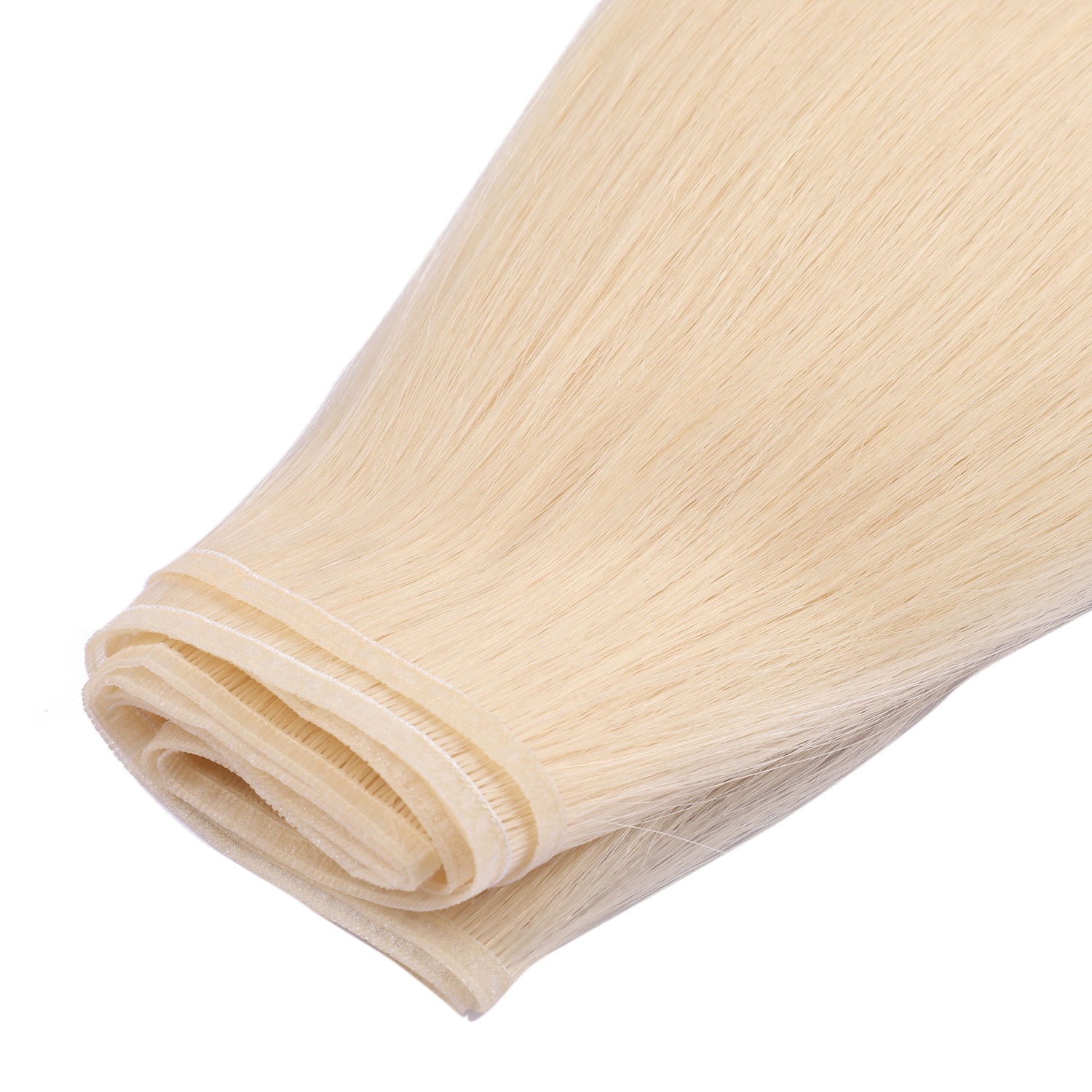
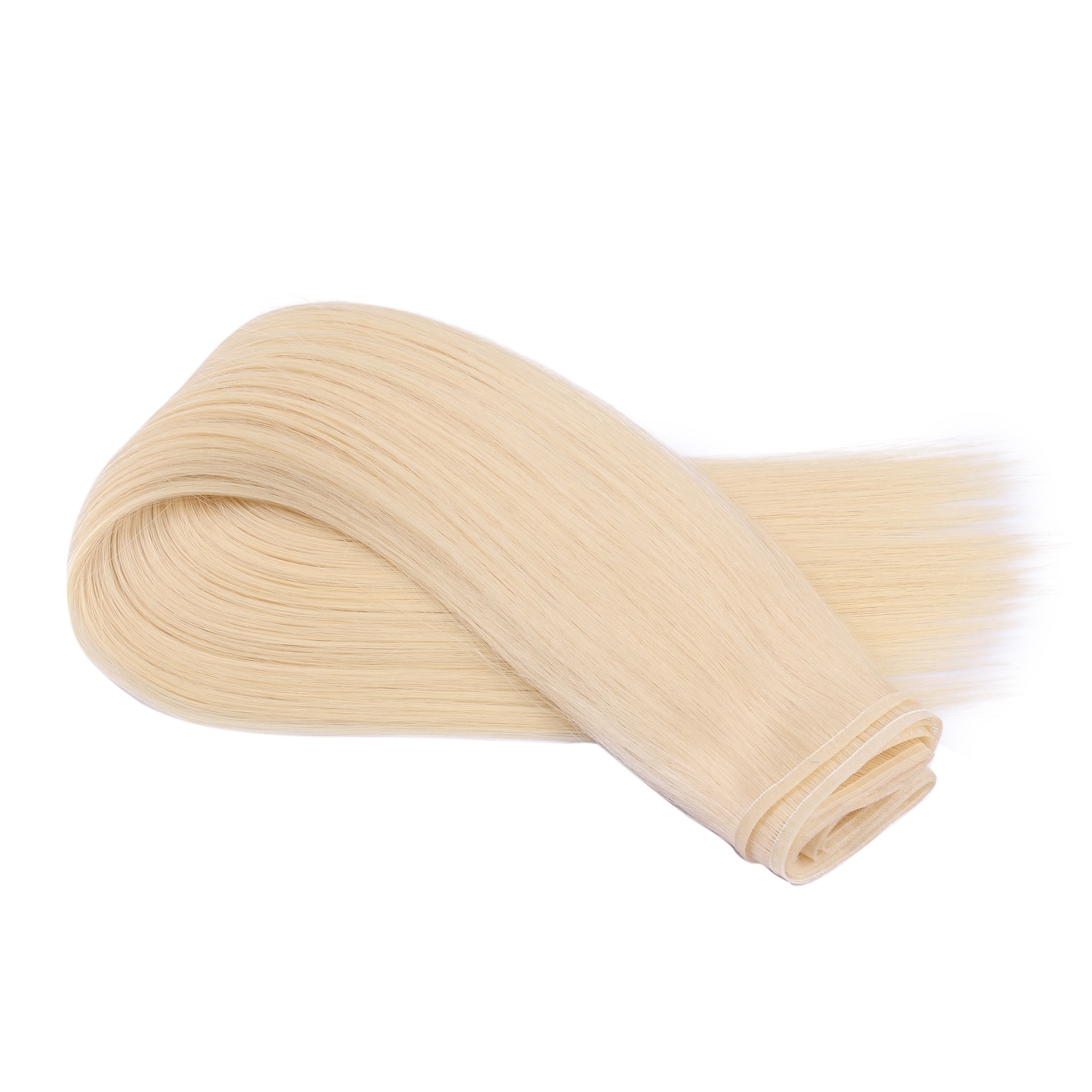
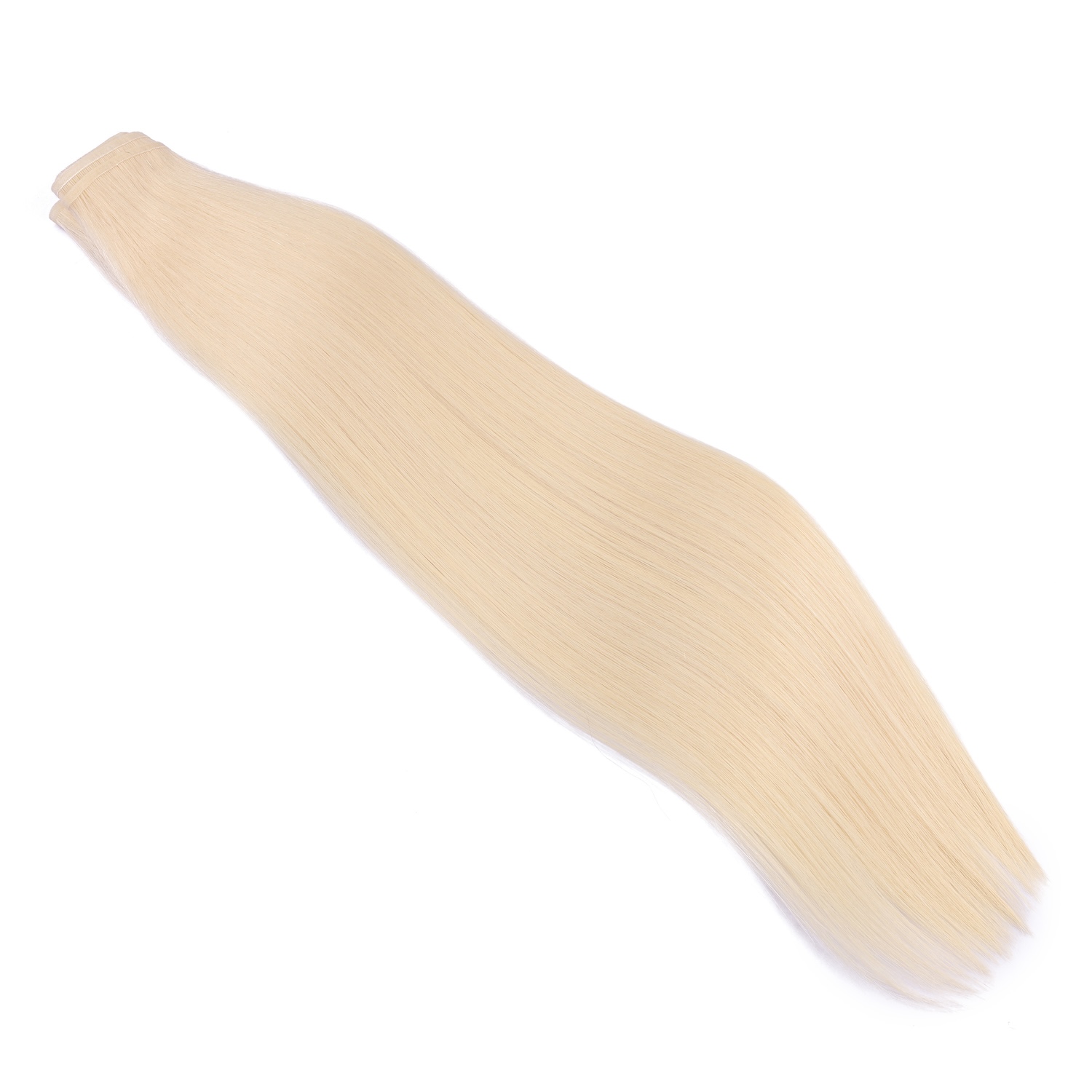
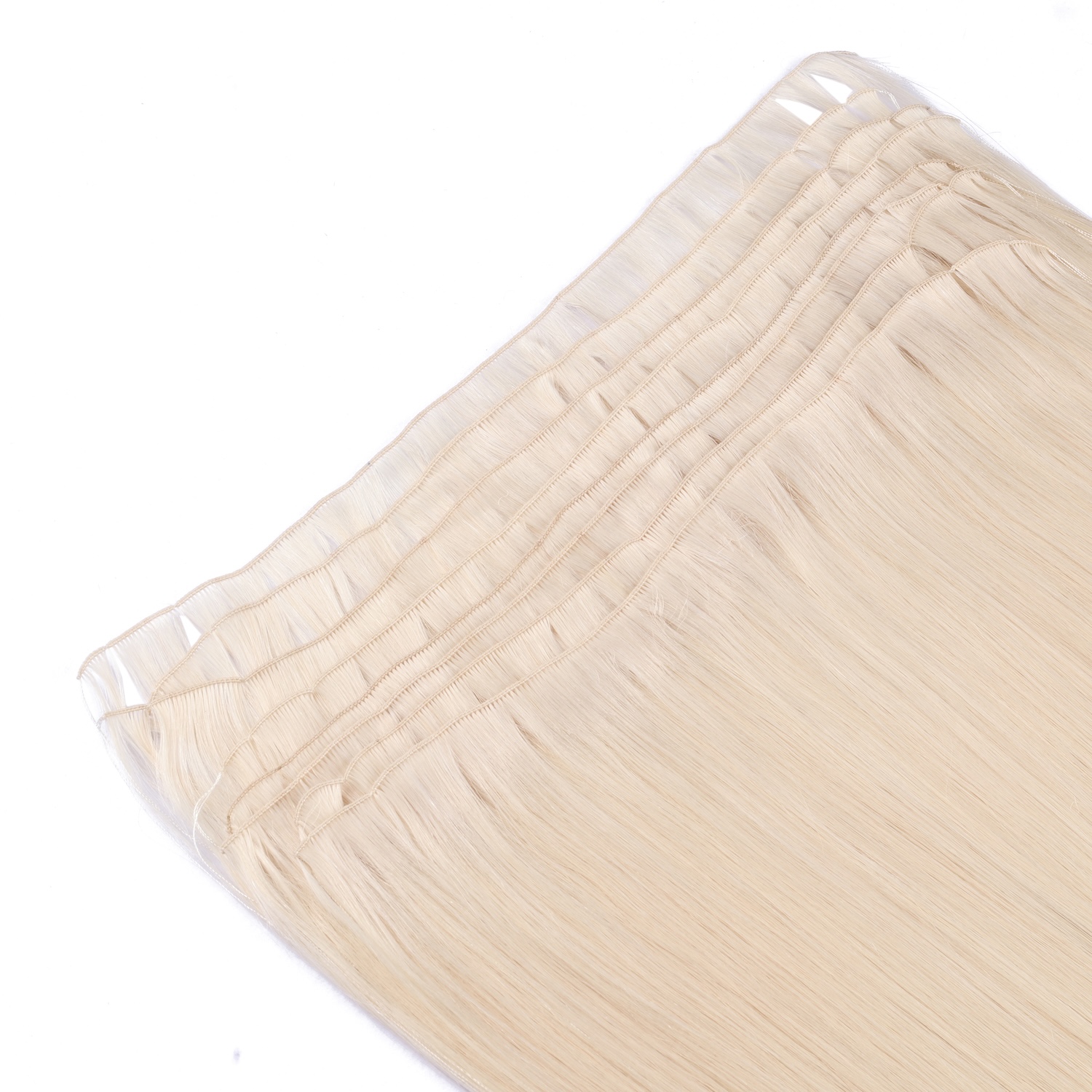
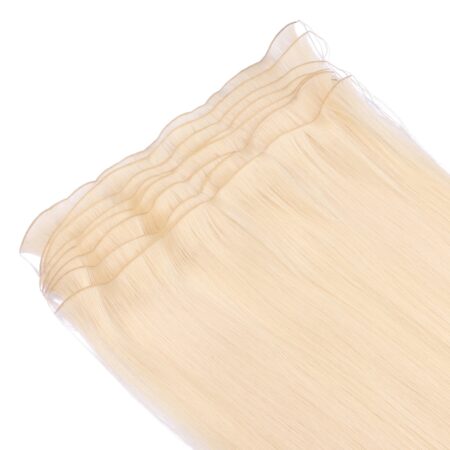
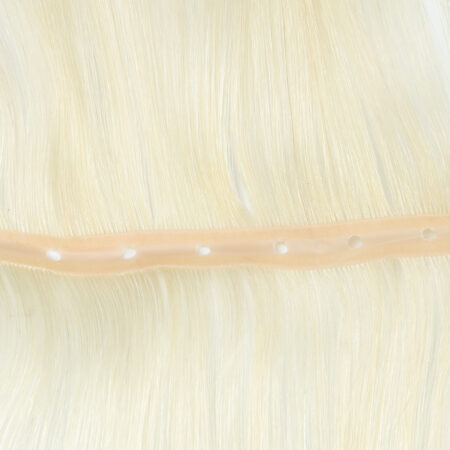
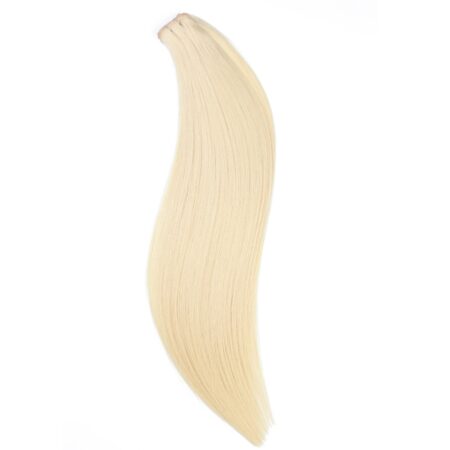
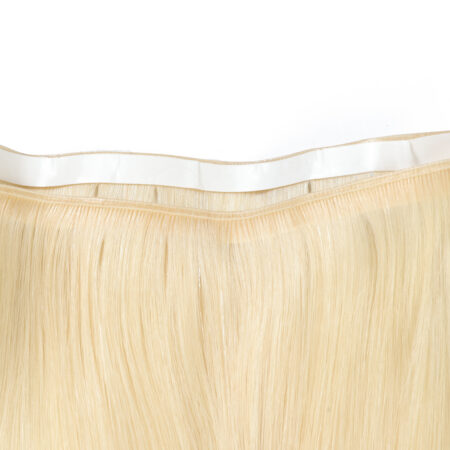
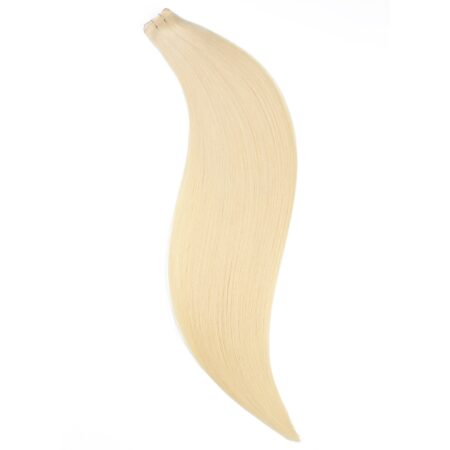
A flat weft is a type of hair extension track where the individual hair strands are securely sealed onto an incredibly thin, flat base using a specialized polyurethane (PU) or ultra-thin textile bonding tape.
Unlike traditional machine-sewn tracks that require folding the hair over and stitching it down (creating a thick, round ridge), a flat weft bonds the hair flatly along a single plane.
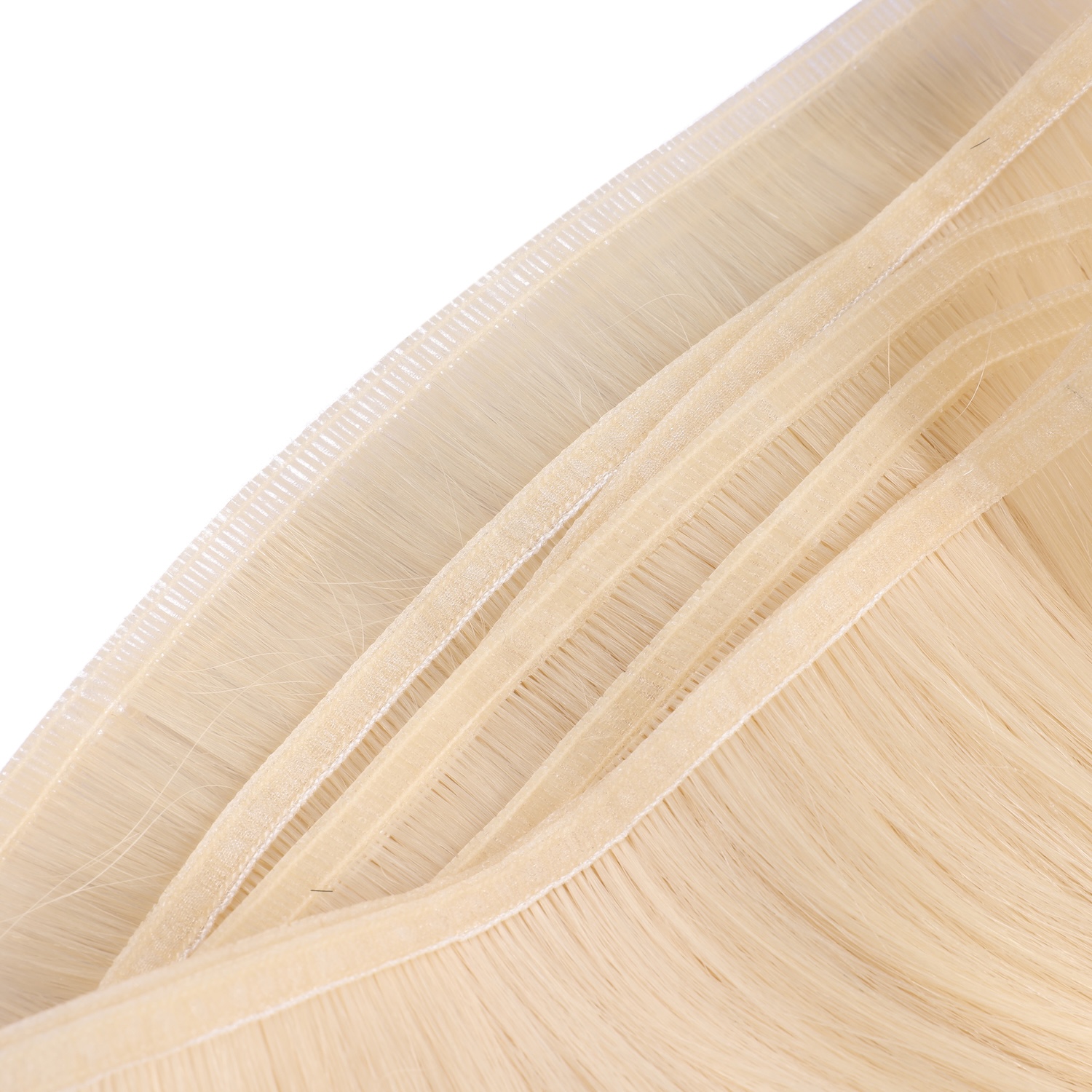
Key Characteristics:
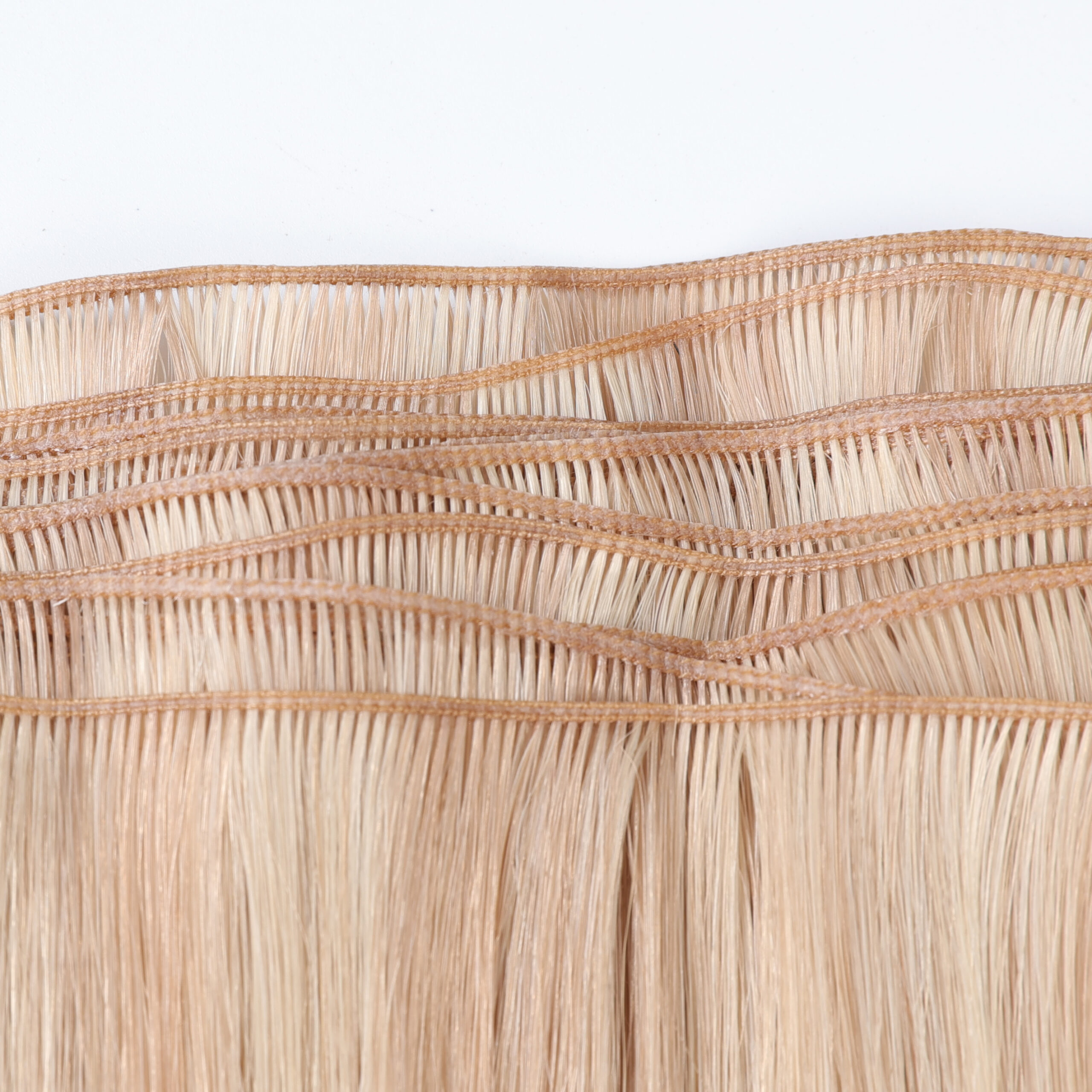
The Return-Free Construction: Traditional wefts feature a short mustache of hair—known as the return hair—stretching about 0.5 to 1 inch from the top seam. This return hair can cause itching against sensitive scalps and add unnecessary bulk. Flat wefts feature completely clean, return-free tops.
The 1mm Threshold: The actual attachment band of a premium flat weft typically measures less than 1 millimeter in thickness. When pressed against the scalp, it lays flat, creating an illusion that the extension hair is growing straight out of the skin.
Trimmable Base: The advanced adhesive matrices used in quality flat wefts allow stylists to cut the track horizontally at any point to perfectly match a client’s specific head shape, without causing the hair to unravel or shed.
2. Analyzing Quality: The Anatomy of Premium Flat Wefts
The quality of a flat weft is determined by two separate components: the raw hair material and the engineering of the flat track. Because flat wefts are an investment designed to last through multiple salon move-ups, understanding these components prevents premature shedding, matting, or structural failure.
The Raw Hair: Virgin vs. Remy Human Hair
Premium extensions rely exclusively on Remy Human Hair or Virgin Cuticle Hair. The word “Remy” means that every single hair strand is arranged in the same directional orientation from root to tip.
Why Cuticle Alignment Matters: Every human hair strand is covered in microscopic, overlapping shingles called cuticles. If the cuticles are aligned in the same direction, they glide past one another smoothly. If they are mixed randomly (non-Remy hair), the cuticles catch on each other like interlocking gears, leading to severe matting, bird-nesting tangles, and chemical damage within weeks of installation.
To keep costs down, lower-grade manufacturers strip the cuticles using aggressive acid baths and coat the damaged hair strands with heavy industrial silicone to make them feel temporarily smooth. Within a few washes, this silicone washes away, exposing porous, dry, and unmanageable hair. High-end flat wefts utilize gentle, slow-cold decolorization processing to preserve the cuticle layer intact, ensuring the hair remains soft and healthy for up to a year of continuous wear.
| Feature | Low-Quality Tracks | Premium Flat Weft Tracks |
|---|---|---|
| Bonding Material | Rigid, thick industrial plastics | Flexible, ultra-thin medical-grade polyurethane (PU) or silicone polymers |
| Flexibility | Stiff construction; may crack or deform under tension | Highly flexible; conforms naturally to the shape of the scalp |
| Edge Sealing | Poorly sealed edges that may fray and shed hair when cut | Micro-sealed borders that securely lock individual hairs in place |
| Comfort | Can feel bulky or rigid against the scalp | Lightweight and comfortable for long-term wear |
| Durability | More prone to cracking, splitting, and premature wear | Excellent durability with strong resistance to daily stress |
| Hair Shedding | Higher risk of shedding over time | Minimal shedding due to advanced sealing technology |
| Appearance | Thicker track may be more visible through the hair | Flat, discreet track for a seamless and natural look |
| Customization | Limited; cutting may increase fraying and hair loss | Easily customized with minimal risk of unraveling |
| Installation Performance | Less adaptable to curved head contours | Sits flush against the scalp for a smoother installation |
| Best For | Budget-conscious applications and short-term wear | Professional salon installations and premium hair extension services |
Core Advantages of Flat Weft Extensions
Flat wefts have surged in popularity among professional salon extensionists due to a series of mechanical and aesthetic advantages over older methods.
Extreme Discretion and Concealment
Because the track thickness is negligible, flat wefts do not bulge or create visible bumps beneath the natural hair. This allows stylists to place extensions higher up on the head, or closer to the hairline and crown, without risk of the track showing through when the wind blows or when the hair is pulled back into a high ponytail or updo.
No Matted “Mustache” or Scalp Irritation
The omission of return hair solves one of the oldest complaints in the extension world: the itch factor. Return hair stands perpendicular to the scalp, trapping sweat, dry shampoo, and dead skin cells, which can cause follicle inflammation (folliculitis) or general itching. Flat wefts provide a clean, smooth surface that rests comfortably against the scalp.
Customization Without Shedding
With traditional hand-tied wefts, cutting the thread of the track ruins the entire piece, causing the hair to immediately unravel and fall out. If a hand-tied weft is too wide for a client’s head, the stylist must awkwardly fold the corners over, adding localized bulk. Flat wefts can be chopped precisely with shears at any point along the track to fit the exact contours of the client’s bead line.
High Weight-to-Volume Ratio
Because they don’t feature a heavy fabric seam or folded hair layers, flat wefts pack more density into a lighter footprint. Clients can achieve dramatic volume and length with fewer rows and less overall weight on their roots, preserving natural hair health over long-term wear.
4. Head-to-Head Comparison: Flat Wefts vs. Other Sew-In Extensions
To fully appreciate the design of flat wefts, it helps to see how they perform alongside alternative sew-in extension formats like traditional machine wefts, hand-tied wefts, and newer “Genius” wefts.
Flat Wefts vs. Traditional Machine Wefts
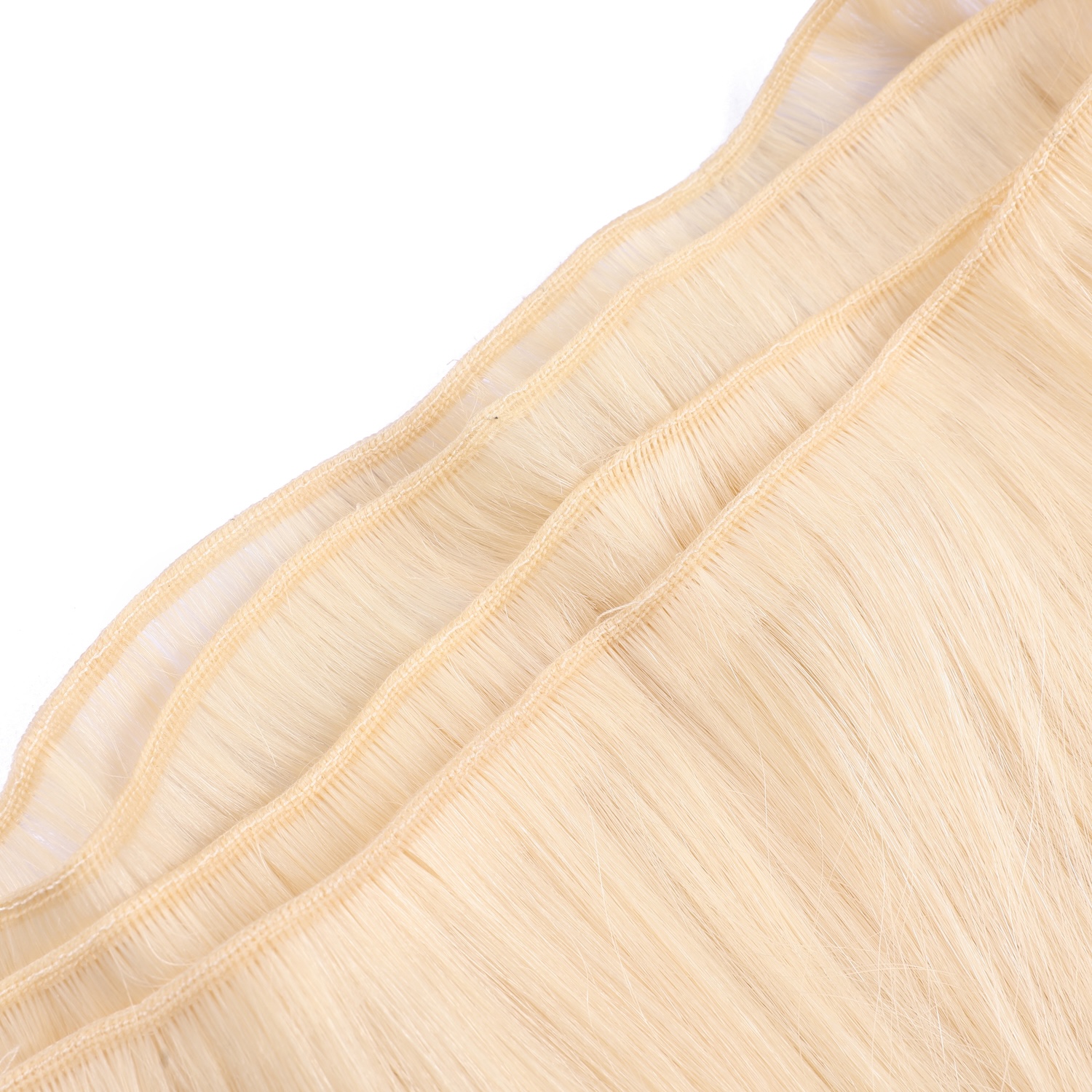
Traditional machine wefts are made by gathering hair loose and passing it through a heavy sewing machine that folds the roots over and stitches them together with strong threads.
Thickness: Machine wefts are thick, rope-like, and bulky. Flat wefts are paper-thin and rest flush against the head.
Weight Distribution: Machine wefts concentrate heavy weight onto a narrow band, which can strain fine hair. Flat wefts distribute weight smoothly across a wider, flat surface area.
Longevity:Both can be cut safely, but machine wefts are much more prone to shedding over time as the threads stretch out and loosen under water exposure.
Flat Wefts vs. Hand-Tied Wefts
Hand-tied wefts are woven manually by artisans using delicate, high-strength strings. They are prized for being light and thin.
Altering the Track:Hand-tied wefts cannot be cut under any circumstances. Flat wefts offer the same slim profile but can be cut freely.
The Return Line:Hand-tied wefts always feature a mandatory return mustache of hair at the top seam. Flat wefts are totally smooth and hair-free on the upper band.
Thickness Consistency:Because human hands weave them, hand-tied wefts can sometimes vary slightly in thickness and density across the track. Flat wefts are uniformly manufactured to a precise thickness.
Flat Wefts vs. Genius Wefts
Genius wefts are another modern design trying to balance hand-tied aesthetics with machine versatility. They are incredibly small and thin.
Track Architecture: Genius wefts are typically even thinner vertically than flat wefts, making them almost identical to a delicate string. However, because they are so thin, they generally support less hair weight per centimeter.
Density Selection:Flat wefts are excellent for full, dense transformations because the wider flat polyurethane strip can hold a greater quantity of hair per row compared to a ultra-delicate Genius weft. Stylists often choose flat wefts for medium-to-thick hair clients who need maximum volume, while reserving Genius wefts for extremely fragile hair.
Structural Comparison Summary
| Attribute | Flat Weft | Machine Weft | Hand-Tied Weft | Genius Weft |
|---|---|---|---|---|
| Track Thickness | Ultra-Thin (~1 mm) | Thick (~3–4 mm) | Very Thin (~1 mm) | Micro-Thin (<1 mm) |
| Can Be Cut? | Yes | Yes | No (may unravel) | Yes |
| Has Return Hair? | No | Yes | Yes | No |
| Density Level | Medium to High | High | Light to Medium | Medium |
| Flexibility | Excellent | Moderate | Excellent | Excellent |
| Visibility | Very discreet and flat | More noticeable due to thicker seam | Very natural appearance | Nearly invisible |
| Comfort Level | High | Medium (can feel bulky) | High | Exceptionally High |
| Durability | Excellent | Excellent | Moderate to Good | Excellent |
| Customization | Easy to customize and trim | Can be customized but may fray | Limited; cannot be cut | Easy to customize and trim |
| Installation Time | Moderate | Fast | Moderate | Moderate |
| Best For | All hair types; clients wanting density and comfort | Thick, coarse hair needing maximum volume | Fine to normal hair seeking lightweight wear | Fine, fragile hair requiring the most discreet installation |
5. Ideal Candidates for Flat Wefts
While flat wefts are dynamic enough to suit almost any client, they solve specific issues for certain groups of users:
The Fine-Haired Client
People with low density or fine hair strands struggle to hide traditional machine extensions because their natural hair splits easily, exposing the thick tracks underneath. Flat wefts lay flat and smooth, allowing even a sparse layer of natural hair to cleanly veil the attachment points.
Clients with Active Lifestyles
If you work out frequently, swim, or wear your hair up in high buns or gym ponytails, bulky extensions are your worst enemy. Flat wefts fold and curve naturally along with the hair’s movement, meaning they won’t stick out awkwardly when you invert your styling direction.
Individuals with Sensitive Scalps
The absence of a return line means that those prone to scalp redness, tension bumps, or tactile itching from abrasive materials find flat wefts to be a much more comfortable, low-sensory extension experience.
6. Installation, Maintenance, and Longevity
To protect your investment and ensure your natural hair stays completely safe, proper installation and home care routines are crucial.
The Installation Process
Flat wefts are most commonly applied using a beaded row foundation method (often called Hidden Rows or Volume Sew-Ins).
1. Sectioning:The stylist maps out a curved row along the natural fall of the hair.
2.Beading: Small silicone-lined aluminum or copper micro-beads are clamped onto tiny sections of the client’s natural hair to build a continuous, solid anchor row.
3. Placing and Stitching:The flat weft is measured, cut to size, and pinned directly over the bead foundation. Using a specialized needle and nylon thread, the stylist stitches through the polyurethane top band and around the beads, distributing the weight evenly across the entire row.
Salon Maintenance Schedule
As your natural hair grows, the bead foundation moves down your head. To avoid matting at the roots and unnecessary leverage pull on your hair follicles, you must return to the salon every 6 to 8 weeksfor a move-up. The stylist will remove the thread, open the beads, slide them back up close to the scalp, clamp them securely, and re-sew the flat weft.
At-Home Aftercare Protocols
With proper care, high-quality flat weft hair can be reused for 12 to 24 months.
Washing:Use sulfate-free, extension-safe shampoos. Focus product application on the scalp, and avoid violently scrubbing the top polymer band of the weft. Apply a nourishing conditioner from the mid-lengths down to the tips, keeping it completely clear of the attachment line to prevent slipping.
Drying: Never leave the top band of your flat wefts wet or damp for extended periods. Leaving moisture trapped at the polyurethane attachment line can weaken the polymer structure over time. Gently blow-dry the top track on a cool-to-medium heat setting immediately after washing.
Brushing: Hold the root of your extensions with one hand to counteract pull, and use an extension loop brush or a soft boar-bristle brush to gently detangle from the ends upward.
7. Conclusion
Flat wefts represent a massive design leap forward for hair enhancement technology. By eliminating the structural limitations of hand-tied craftsmanship and discarding the uncomfortable bulk of heavy machine processing, they offer a highly reliable, invisible, and versatile option for both stylists and clients. Whether your primary goal is boosting fine hair with realistic volume, adding sweeping length, or prioritizing long-term comfort against a sensitive scalp, flat wefts deliver premium, long-lasting performance without compromise.


Reviews
There are no reviews yet.