Hair Extension Care & Maintenance Guide
How to Protect, Maintain, and Extend the Lifespan of Your Luxury Investment
Congratulations on investing in premium-grade hair extensions! Whether you have chosen Genius wefts, tape-in-extensions, or Keratin-bonding Hair Extensions, you have taken a major step toward achieving the hair of your dreams.
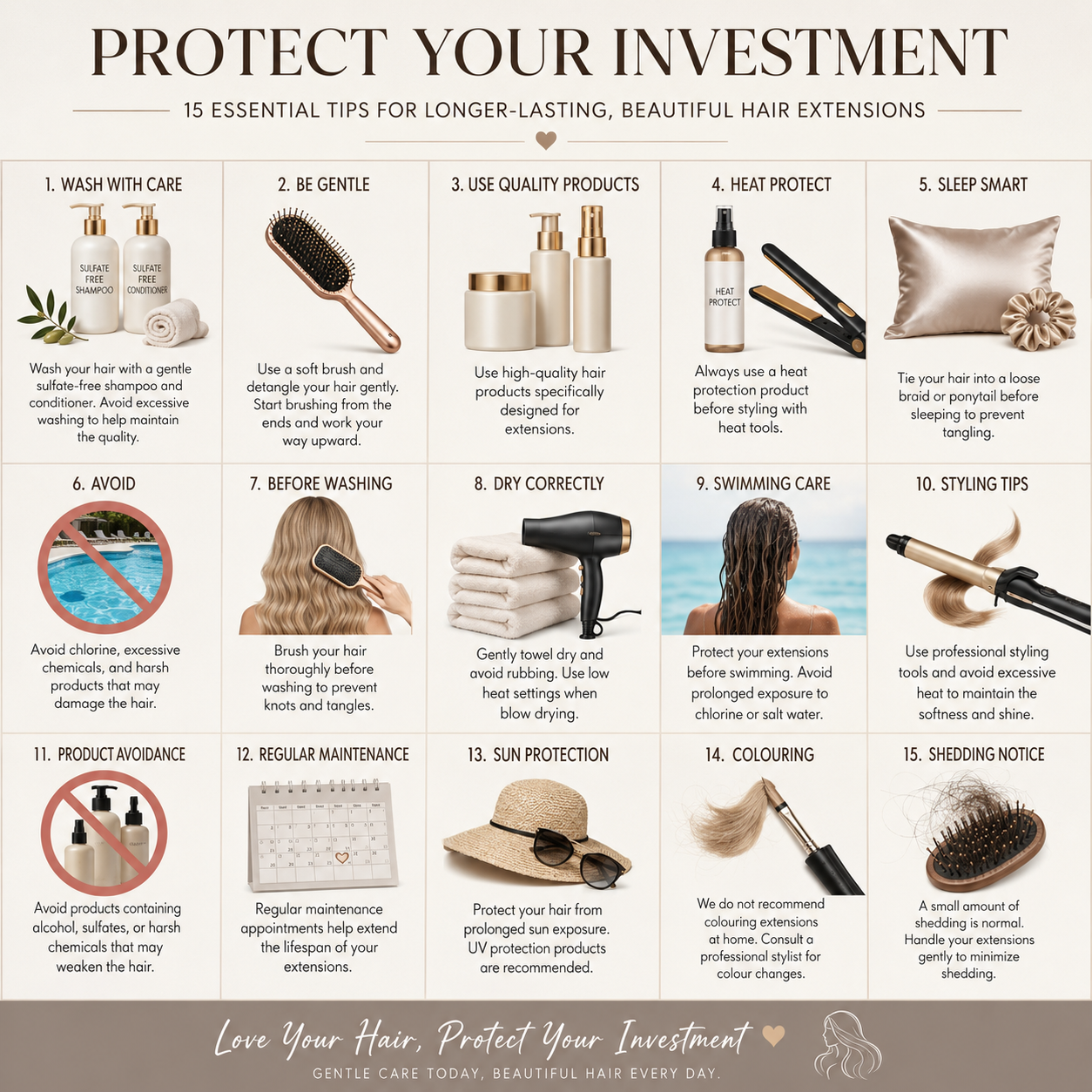
Unlike your natural hair, hair extensions do not receive a continuous supply of natural oils (sebum) from your scalp. Because of this, they require specialized care, deliberate hydration, and gentle handling to remain soft, glossy, and tangle-free. This comprehensive, step-by-step guide is designed to walk you through the professional secrets of extension maintenance. By integrating these 15 essential rules into your daily routine, you will protect your investment and keep your hair looking flawless for months to come.
Chapter 1: The Golden Rules of Washing & Hydration
Washing your hair extensions is a critical process. Done correctly, it restores vitality and bounce; done poorly, it can cause severe tangling, slipping, and dryness.
[ PRE-WASH ]
Brush Thoroughly From Ends
Gently brush the hair starting from the ends and gradually move upward to remove tangles before washing.
↓
[ THE WASH ]
Use Gentle, Sulfate-Free Shampoo Only
Massage the scalp gently.
Avoid rubbing or twisting the mid-lengths and ends to prevent tangling.
↓
[ CONDITIONING ]
Apply Conditioner From Mid-Lengths To Ends Only
Keep conditioner away from the attachment points to maintain the strength and durability of the extensions.
↓
[ DRYING ]
Squeeze With A Microfiber Towel
Do not rub the hair aggressively.
Apply heat protectant and blow-dry using a low heat setting.
1. Pre-Wash Prep: Brush Before Wetting (Rule 7)
Never jump straight into the shower with tangled hair. When hair gets wet, the water swells the cuticle, making it highly susceptible to snapping and knotting.
-
The Routine: Take a few extra minutes before washing to brush your hair thoroughly.
-
The Technique: Use an extension-safe brush (such as a loop brush or a soft boar-bristle brush). Hold your hair in a ponytail with one hand to secure the bonds or wefts, and gently detangle from the tips, gradually working your way up to the roots. This ensures that when water hits your hair, it flows smoothly down the shaft without creating stubborn knots.
2. Wash with Utmost Care (Rule 1)
Washing extensions requires a delicate touch. You should never scrub or pile your hair on top of your head, as this roughs up the cuticles and causes instant tangling.
-
The Technique: Stand upright under the shower head and let the water flow downward. Gently massage your shampoo into your scalp and around the attachment points using your fingertips. Avoid vigorous circular motions. Allow the shampoo suds to glide down the mid-lengths and ends naturally—this is usually enough to cleanse them without drying them out.
-
Frequency: Avoid excessive washing. Washing your extensions 1 to 2 times a week is generally sufficient. Over-washing strips away essential moisture, leading to premature dryness and frizz.
3. Smart Product Avoidance (Rule 11)
The longevity of your extensions depends heavily on the chemical composition of the products you use.
-
What to Avoid: Strictly avoid any shampoos, conditioners, or styling products containing sulfates, parabens, or denatured alcohol. Sulfates are harsh detergents that strip away the hair’s protective outer layer, while alcohol evaporates moisture, leaving the extensions brittle and straw-like.
-
Bond Safety: Avoid applying heavy oils or silicone-based conditioners directly onto the attachment points (tapes, beads, or keratin bonds). These ingredients can break down the adhesives or cause the micro-rings to slip down your natural hair.
4. Drying Correctly (Rule 8)
When wet, your hair is at its most fragile state. Rough towel drying can break hair fibers and weaken the extension bonds.
-
Towel Prep: Gently squeeze excess water out of your hair with a microfiber towel or a soft cotton t-shirt. Never rub or wring your hair.
-
Blow-Drying: Apply your leave-in conditioner and heat protectant first. Use a hair dryer on a low-to-medium heat setting. Dry the roots and attachment points completely first—leaving the bonds damp for prolonged periods can cause tape adhesive to disintegrate or mold to form in wefts. Once the roots are dry, blow-dry the lengths downward to smooth the cuticle and seal in shine.
Chapter 2: Daily Styling, Detangling & Structural Integrity
Daily wear-and-tear is inevitable, but how you brush and style your extensions determines how long they will maintain their luxury texture.
5. The Gentle Detangling Method (Rule 2)
Brushing is a daily necessity, but ripping through knots with a standard plastic brush will shred your extensions and damage your natural hair follicles.
-
The Tool: Invest in a high-quality extension brush. Loop brushes are designed with looped nylon bristles that slide over bonds without snagging, while flexible boar-bristle brushes distribute natural oils beautifully.
-
The Method: Always hold the section of hair you are brushing near the scalp with your free hand to absorb the tension. Start detangling at the very ends of the hair. Once the bottom few inches are smooth, move up to the mid-lengths, and finally brush from the roots downward.
6. Use Dedicated Extension-Safe Products (Rule 3)
Standard drugstore hair care is often formulated with cheap fillers and silicones that build up on extensions, making them look dull and limp.
-
The Solution: Use professional-grade, salon-exclusive products specifically formulated for dry, color-treated, or extension hair. These products focus on deep hydration, lightweight protein replenishment, and cuticle smoothing.
-
Pro Tip: Incorporate a lightweight, professional hair oil or serum daily on the mid-lengths and ends to lock in moisture and prevent static.
Salon Secret: Extensions do not receive nutrients from your body. Weekly deep-conditioning masks applied strictly to the ends are vital to replenish lost moisture and maintain that signature “factory-fresh” softness.
7. Absolute Heat Protection (Rule 4)
Because extensions cannot repair themselves, heat damage is irreversible. Once the protein bonds inside the hair shaft are burnt, the hair will split and break.
-
The Rule: Never touch a flat iron, curling wand, or hot air brush to your extensions without applying a premium heat protectant spray first.
-
Barrier Creation: Heat protectants create a microscopic thermal barrier that deflects heat and locks in moisture. Ensure the product is evenly distributed through the hair before styling.
8. Professional Styling Tools & Temperature Tips (Rule 10)
When using hot tools, moderation is key. High-temperature settings are the fastest way to ruin your extensions.
-
Temperature Control: Keep your styling tools set between 150°C and 180°C (300°F and 350°F). Never go above this threshold.
-
Placement: Keep hot irons well away from the attachment points. Direct heat can melt keratin bonds, warp tape-in adhesives, and weaken weft threads. Always prioritize professional-grade tools with ceramic or titanium plates, as they distribute heat evenly and prevent hot spots that burn the hair.
Chapter 3: Lifestyle Care, Sleep Security & Environmental Protection
Active lifestyles, sleeping habits, and environmental exposure present unique challenges to hair extensions. Protecting them outside the salon is key to making your investment last
DAILY LIFESTYLE CARE
AT BEDTIME
- Brush thoroughly before sleeping
- Secure hair in a low braid or ponytail
- Sleep on a silk or satin pillowcase
AT THE POOL
- Soak hair with clean water before swimming
- Apply a leave-in conditioner for added protection
- Secure hair in a high bun
- Rinse immediately after swimming
IN THE SUN
- Apply a UV-protective hair mist
- Wear a wide-brim hat during prolonged sun exposure
- Protect hair from excessive heat and UV damage
9. Smart Sleep Prep (Rule 5)
Friction is the ultimate enemy of hair extensions. When you toss and turn at night, the friction between your head and the pillowcase roughs up the hair cuticle and causes tight, painful matting at the nape of your neck.
-
The Nighttime Ritual: Before going to bed, brush your hair thoroughly to remove all day-time tangles.
-
The Style: Secure your hair into a loose, low braid or a soft ponytail using a silk scrunchie. This keeps the hair organized and prevents it from rubbing against itself.
-
The Pillowcase: Upgrade your bedding to a 100% mulberry silk or satin pillowcase. Unlike cotton, which absorbs moisture and creates friction, silk allows the hair to glide smoothly, reducing frizz and preserving your blowout.
10. Avoid Harsh Chemicals & Chlorine (Rule 6 & Rule 11)
Chemical exposure can rapidly degrade the integrity of the human hair used in your extensions, leading to severe discoloration, dryness, and structural damage.
-
What to Avoid: Keep your hair away from household cleaning chemicals, heavy hairsprays containing denatured alcohol, and over-the-counter clarifying treatments.
-
The “Peach/Pink” Color Shift: Be extremely cautious around sunscreens containing Avobenzone or Octocrylene. If these chemicals rub off your shoulders onto your extensions and are then exposed to UV light and mineral-heavy water, a chemical reaction can turn blonde extensions a brassy orange, peach, or pink shade. Choose mineral-based (zinc oxide) sunscreens instead.
11. Advanced Swimming Care (Rule 9)
Chlorine in swimming pools and salt in ocean water are highly dehydrating agents that can chemically alter hair, fade color, and strip away protective glazes.
-
The Pre-Swim Routine: If you must swim, wet your hair thoroughly with clean tap water first, then coat the mid-lengths and ends with a generous amount of leave-in conditioner or a clean hair oil. Because hair is porous, soaking it with fresh water and conditioner first prevents it from absorbing the salty or chlorinated water.
-
The Swim Style: Braid your hair and secure it in a high bun to keep it out of the water as much as possible.
-
Post-Swim: Wash your hair immediately after leaving the pool or ocean with a clarifying shampoo, followed by an ultra-hydrating hair mask to restore moisture levels.
12. Sun and UV Defense (Rule 13)
Just as UV rays damage your skin, they break down the chemical bonds and pigments in hair, leading to rapid fading, dryness, and brittle ends.
-
Sun Protection: If you plan on spending a long day outdoors under the direct sun, wear a stylish, wide-brimmed hat or wrap your hair in a chic silk scarf.
-
UV Sprays: Use a lightweight, leave-in UV protection spray formulated specifically for hair. Spritz it evenly over your extensions before stepping outside to shield them from color-stripping UV rays.
Chapter 4: Professional Maintenance & Structural Longevity
No matter how meticulous your home-care routine is, extensions must be maintained by a professional stylist to protect both the extensions and your natural hair.
13. Regular Maintenance Appointments (Rule 12)
Your natural hair sheds between 50 to 100 strands per day. Since these shed hairs are locked inside the extension attachments, they cannot fall away naturally. Over time, this natural shedding decreases the amount of anchor hair supporting the weight of the extension.
-
The Schedule: Depending on the extension method you wear, you must return to the salon for maintenance appointments on a strict schedule:
-
Tape-Ins: Every 6 to 8 weeks (for removal, re-taping, and re-application).
-
Wefts (Beaded/Sew-in): Every 6 to 8 weeks (for a move-up or reinstall).
-
K-Tips / Individual Bonds: Every 3 to 4 months (for complete removal and replacement).
-
-
Why it matters: Delaying maintenance causes the grown-out bonds to tangle with each other, leading to severe matting at the roots that can damage your natural hair.
14. Absolutely No At-Home Coloring (Rule 14)
Extensions undergo a complex, highly specialized manufacturing process to lift their color slowly and gently. Because of this pre-treatment, they do not react to hair dye the same way your natural hair does.
-
The Rule: Never attempt to color, bleach, tone, or apply purple shampoo to your extensions at home.
-
The Risk: At-home chemical treatments can yield highly unpredictable results, such as uneven color absorption, extreme dryness, or complete destruction of the hair cuticle. If you wish to change your hair color, always consult your professional, certified extension stylist. They can safely use professional demi-permanent glazes or customized toning methods to achieve your desired shade.
15. The Reality of Shedding (Rule 15)
It is completely normal to see a small amount of shedding from your extensions.
-
Why it happens: Because the extensions are made of real human hair woven into a weft or bound in keratin, minor shedding is expected as loose strands find their way out of the bundle over time.
-
How to minimize it: You can significantly reduce shedding by handling your hair gently. Avoid pulling, dragging brushes through tangles, and using heavy tension when styling. Treat your extensions like a delicate silk garment—with patience, gentleness, and high-quality care.
Quick Reference: Care Cheat Sheet
| Category | Recommended Actions (DO) | Dangerous Actions (DON’T) |
| Washing |
• Wash 1-2 times a week
• Use sulfate/alcohol-free shampoo
• Let water flow downward |
• Don’t wash every day
• Don’t scrub hair vigorously
• Don’t use heavy products on bonds |
| Brushing |
• Use a loop or soft boar-bristle brush
• Brush from ends upward
• Support roots with your hand |
• Don’t rip through wet hair
• Don’t use standard hard-plastic brushes
• Don’t yank on stubborn knots |
| Styling |
• Apply heat protectant every time
• Keep tools below 180°C (350°F)
• Keep heat away from bonds |
• Don’t use hot tools without protection
• Don’t apply high heat directly to tapes/bonds
• Don’t dye extensions at home |
| Sleeping |
• Brush hair before bed
• Sleep in a loose braid/ponytail
• Use a silk/satin pillowcase |
• Don’t sleep on wet or damp hair
• Don’t sleep with loose, unbraided hair
• Don’t use rough cotton pillowcases |
| Lifestyle |
• Pre-soak hair with clean water before swimming
• Wear hats/UV protection in the sun
• Keep appointments |
• Don’t let chlorinated/salt water dry in hair
• Don’t use sunscreens with Avobenzone
• Don’t skip scheduled salon appointments |
By committing to this comprehensive care routine, you are protecting your luxury investment, preserving the health of your natural hair, and ensuring that your extensions remain incredibly soft, voluminous, and gorgeous day after day. Treat them with love, and they will love you back!

Alove Hair is a professional Chinese manufacturer of premium 100% Remy human hair extensions, wigs, and hair systems. Established in 2014, the company specializes in supplying global salons and distributors with high-quality, cuticle-intact hair products and offers comprehensive OEM/ODM private label services.